✨ New Arrivals Just Dropped!Explore
Victron Energy LiFePO4 Battery 12.8V 100Ah NG BAT512110620 1.28kWh Compact Lightweight 9kg Marine Motorhome Caravan
HomeStore

Victron Energy LiFePO4 Battery 12.8V 100Ah NG BAT512110620 1.28kWh Compact Lightweight 9kg Marine Motorhome Caravan

Victron Energy LiFePO4 Battery 12.8V 100Ah NG BAT512110620 1.28kWh Compact Lightweight 9kg Marine Motorhome Caravan

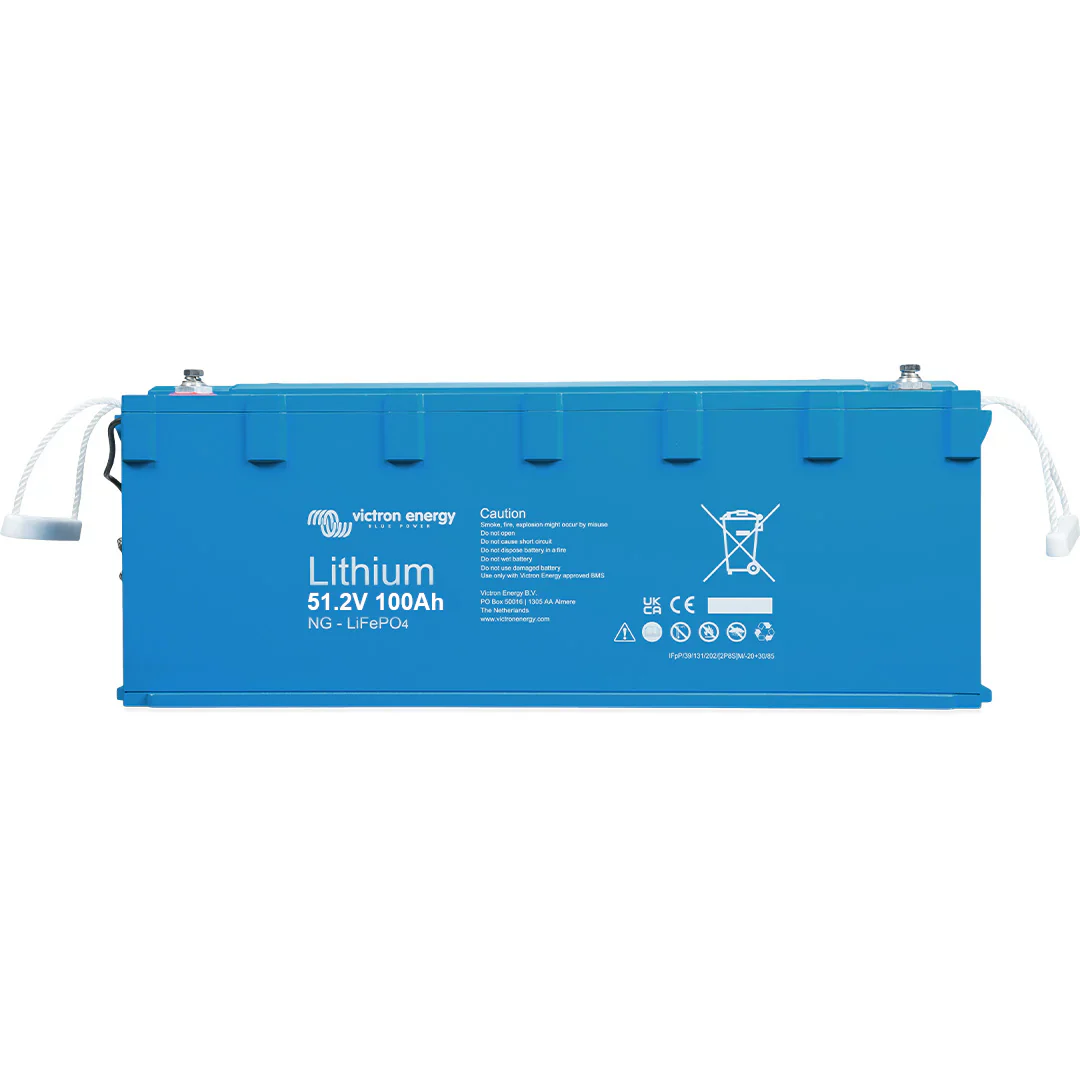
The Victron Energy LiFePO₄ 12.8 V / 100 Ah NG (BAT512110620) is the compact entry point in Victron’s Next Generation (NG) lithium battery series, delivering 1,280 Wh (1.28 kWh) of stored energy in a lightweight 9 kg, 235 × 197 × 160 mm package. Designed for space- and weight-sensitive applications — marine, motorhome, caravan, off-grid cabin and backup power — it delivers up to 100 A continuous discharge and 200 A peak (10 s) with a 92 % round-trip efficiency and 2 mΩ internal resistance. The integrated shunt monitors individual cell voltages and temperatures, transmitting data to the mandatory Lynx Smart BMS NG (sold separately) for full visibility in the VictronConnect app, GX devices and VRM portal. Up to 50 batteries can operate per BMS, building banks to 64 kWh on a 12 V system. IP65 rated. Bracket mounting included. 5,000 cycles at 50 % DoD.

1.28 kWh
Stored energy
100A
Continuous discharge
200A
Peak discharge (10s)
9 kg
Module weight
IP65
Ingress protection
5,000
Cycles @ 50% DoD
⚠ Lynx Smart BMS NG is mandatory — sold separately: The NG battery series cannot operate without a Lynx Smart BMS NG. Either the Lynx Smart BMS NG 500A or Lynx Smart BMS NG 1000A is required for every battery bank. NG batteries cannot be mixed with non-NG (Lithium Smart) batteries. The BMS manages all cell protection, monitoring, communication and firmware updates.
What’s in the Box
LiFePO₄ Battery Module
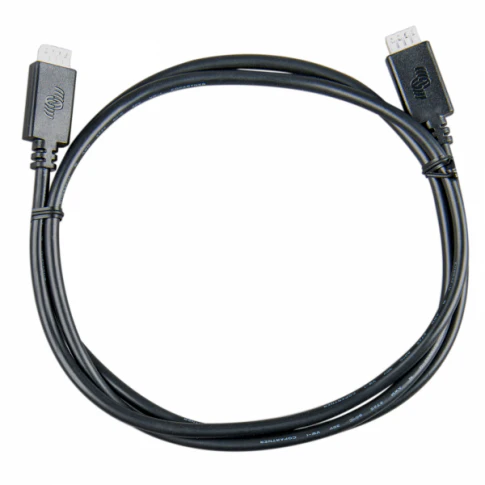
12.8 V / 100 Ah / 1.28 kWh. Integrated shunt and cell-balancing circuit. M8 power terminals and 50 cm BMS interface cable.
Mounting Brackets
Two brackets for secure installation preventing sliding and tipping. Compatible with vertical and side-mount orientations.
M8 Terminal Hardware
Threaded M8 inserts and bolts. Tighten to 10 N m. Observe polarity.
BMS Interface Cable (50 cm)
Male + female M8 circular connector. Daisy-chains to the next battery or to the BMS. Extension cables 1 – 5 m available separately.
Victron LiFePO₄ NG 12.8 V Range — Choose by Capacity
Model Energy Continuous discharge Pulse (10s) Dimensions (H × W × D) Weight
★ 100Ah — this product 1.28 kWh 100A (1C) 200A (2C) 235 × 197 × 160 mm 9 kg
150Ah 1.92 kWh 150A (1C) 300A (2C) 205 × 250 × 205 mm 14 kg
200Ah 2.56 kWh 200A (1C) 400A (2C) 235 × 341 × 160 mm 19 kg
300Ah 3.84 kWh 300A (1C) 600A (2C) 206 × 447 × 205 mm 29 kg

All models share the same cycle life, IP65 protection and BMS compatibility. The 100Ah is the lightest and smallest option — ideal when weight and space matter more than maximum capacity.

Typical Applications
⛵ Marine
At 9 kg and 235 mm tall, the 100Ah fits under-berth, in anchor lockers and in confined spaces where larger modules cannot. IP65 protection handles the damp marine environment. 1.28 kWh powers navigation electronics, cabin lighting and autopilot for a full day on passage.
🚐 Motorhome / Caravan
Weight matters in mobile applications. Two 100Ah batteries in parallel give 2.56 kWh at just 18 kg — a practical leisure battery replacement for a standard motorhome auxiliary bank with full flexibility in physical layout.
☀️ Off-Grid Cabin
A single 100Ah provides overnight capacity for LED lighting, a 12V fridge and phone/laptop charging. The compact footprint suits under-bench plant rooms, and low self-discharge (≤3 %/month) means the battery survives months of non-use between visits.
🔋 Backup Power
As a 12V backup battery behind a Victron Multiplus, the 100Ah provides 1.28 kWh for running critical loads during short grid outages. Scalable: add more batteries to the same BMS as requirements grow.
Cycle Life at Different Depths of Discharge
DoD per cycle Usable capacity Guaranteed cycles Equivalent years (1 cycle/day)
50 % DoD 640 Wh per cycle 5,000 cycles ~13.7 years
70 % DoD 896 Wh per cycle 3,000 cycles ~8.2 years
80 % DoD 1,024 Wh per cycle 2,500 cycles ~6.8 years

Cycles at 80 % DoD guarantee ≥80 % remaining capacity. Year estimates based on one cycle per day. Capacity loss <1 % per 100 cycles at 25°C.

Key Features
9 kg, 235 × 197 × 160 mm — The Lightest and Smallest NG 12V Module
The 100Ah is the most compact and lightest module in the NG 12.8 V range. At 9 kg it is 5 kg lighter than the 150Ah, 10 kg lighter than the 200Ah, and 20 kg lighter than the 300Ah. The 235 × 197 × 160 mm footprint fits spaces that are inaccessible to larger modules: under-berth lockers on yachts, alcoves in motorhome floors, compact plant room shelves in off-grid cabins. At 9 kg it can be safely handled by a single installer in confined or difficult-access locations without lifting equipment.
9 kg235 × 197 × 160mmLightest 12V NG module
100 A Continuous / 200 A Peak — Full 1C Discharge Rate
The 100Ah battery sustains its full 1C continuous discharge rate of 100 A, providing a steady 1,280 W of DC output at 12.8 V. This comfortably runs a 1 kW inverter at full load, a 12V compressor fridge, navigation instruments and cabin lighting simultaneously. The 200 A / 10 s peak handles inverter start surges and motor inrush without BMS intervention. The 2 mΩ internal resistance keeps voltage stable under full-load conditions.
100A continuous (1C)200A peak / 10s2mΩ internal resistance
IP65 — Dust-Tight and Water-Jet Resistant
IP65 means the battery is completely sealed against dust and can withstand low-pressure water jets from any direction. The previous Lithium Smart series was rated IP24, offering only limited drip/splash resistance from certain angles. For the 100Ah’s primary use cases — marine, motorhome, off-grid — IP65 provides the durability needed: bilge condensation, road splash, dusty generator sheds and spray-prone engine rooms are all within spec.
IP65 (dust + water-jet)Upgrade from IP24
Individual Cell Monitoring — Voltages and Temperatures per Cell
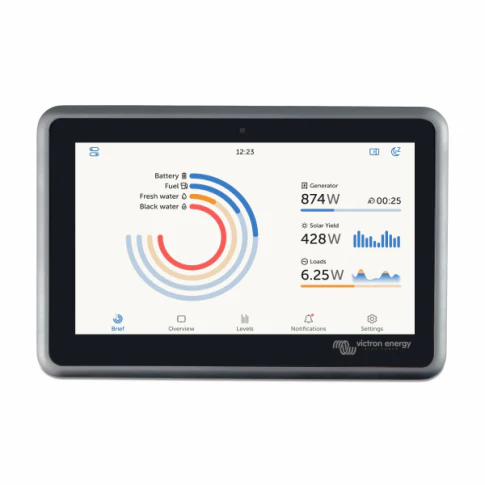
Each cell is monitored individually for voltage and temperature. The BMS uses this data to calculate SoC, issue pre-alarms when any cell approaches 3.0 V, disconnect loads below 2.8 V per cell, and stop charging above 3.6 V per cell. All parameters are visible in real time in VictronConnect via Bluetooth on the BMS, on a GX device display, and remotely on the VRM portal. This granularity was not available in the previous Lithium Smart generation.
Per-cell voltages + temperaturesVictronConnect / GX / VRM
Integrated Shunt — Accurate SoC Without a Separate BMV
The battery contains a precision internal shunt that feeds every ampere measurement to the BMS for SoC calculation. No separate SmartShunt or BMV battery monitor is needed to track remaining energy. SoC, voltage, current, temperature and cell health are all presented in VictronConnect with no additional components beyond the BMS itself.
Integrated shuntNo BMV requiredSoC in VictronConnect
Scalable to 64 kWh — Up to 50 Batteries per BMS
Up to 50 NG batteries can be connected per Lynx Smart BMS NG, giving a maximum of 64 kWh on a 12 V system. Batteries can be paralleled to increase capacity at 12 V, connected in series pairs for 25.6 V (24 V) banks, or combined in series/parallel configurations. The BMS detects system voltage and battery count automatically at startup, and for larger installations, up to 5 Lynx Smart BMS NG units can be paralleled.
Up to 50 batteries per BMS64 kWh max (12V)Auto-detected by BMS
Automatic OTA Firmware Updates via BMS
Battery firmware is updated automatically whenever the Lynx Smart BMS NG receives a new release. Delivery is via VictronConnect over Bluetooth, or through the VRM portal when a GX device with internet is connected. When additional batteries are added to the bank later, their firmware is automatically updated to match the system version. No scheduled maintenance visits are required to keep firmware current.
OTA via BMSVictronConnect or VRMNew batteries auto-updated
Low Self-Discharge — ≤3 %/Month for Seasonal Storage
A maximum self-discharge of 3 % per month at 25°C means the battery holds over 97 % of charge through a month of idle storage. For seasonal installations — a yacht over winter, a caravan between trips, an off-grid cabin unused for months — this significantly reduces the capacity loss seen with AGM batteries during extended idle periods. Victron recommends storing at 40 – 60 % SoC and recharging if any cell drops below 3.0 V.
≤3%/monthSeasonal and marine useStorage: −45 to +70°C
Repairable — Screwed Cover for Authorised Service
The NG battery uses a screwed cover rather than a permanently sealed case, allowing Victron-authorised service centres to open and repair the battery without replacing the entire module. In a marine or vehicle installation where the battery is difficult to access and expensive to ship, repairability significantly reduces total cost of ownership over the battery’s 10 – 13-year service life.
Removable coverAuthorised repairLower lifetime cost
Technical Specifications
Electrical — 12.8V / 100Ah NG
Model / SKU BAT512110620
Nominal voltage 12.8 V
Nominal capacity @ 25°C 100 Ah (1,280 Wh / 1.28 kWh)
Round-trip efficiency 92 %
Internal resistance 2 mΩ
Discharge
Max continuous discharge current 100 A (1C)
Max pulse discharge current (10 s) 200 A (2C)
End of discharge voltage 11.2 V
Charge
Charge voltage range 14.0 V – 14.4 V
Float voltage 13.5 V
Max continuous charge current 100 A (1C)
Max pulse charge current (10 s) 200 A (2C)
Cycle Life
Cycles @ 80 % DoD (≥80 % capacity remaining) 2,500
Cycles @ 70 % DoD 3,000
Cycles @ 50 % DoD 5,000
Capacity loss per 100 cycles (25°C, 100 % DoD) <1 %
Physical
Dimensions (H × W × D) 235 × 197 × 160 mm
Weight 9 kg
Protection class IP65
Power terminals M8 threaded inserts (10 N m torque)
BMS interface cable 50 cm, M8 circular connector (male + female)
Mounting Straps or brackets (brackets included); side-mount permitted; never terminals-down
Operating Conditions
Discharge temperature −20°C to +50°C
Charge temperature +5°C to +50°C (no charging below +5°C)
Storage temperature −45°C to +70°C
Humidity (non-condensing) Max 95 %
Self-discharge rate ≤3 % per month @ 25°C
System Integration
Required BMS Lynx Smart BMS NG 500A or 1000A (sold separately)
Cell monitoring Individual cell voltages + temperatures
Max batteries per BMS 50 (up to 64 kWh on 12 V system)
Connectivity Bluetooth (via BMS), VictronConnect, GX devices, VRM portal
Firmware updates Automatic OTA via BMS
Repairable Yes — cover removable with screws
Standards
Cell safety UL1973, UL9540A, IEC 62619
Battery performance IEC 62620
EMC EN 61000-6-3, EN 61000-6-2
Automotive ECE R10-6
Frequently Asked Questions
Why choose the 100Ah rather than the 150Ah or 200Ah?
The 100Ah is the right choice when weight or space is the primary constraint. At 9 kg it weighs 5 kg less than the 150Ah and 10 kg less than the 200Ah. It also has the smallest physical footprint in the range. If you have the space and weight budget, the larger modules offer more capacity per BMS cost. However, two 100Ah units in parallel (2.56 kWh, 18 kg) compare closely to one 200Ah (2.56 kWh, 19 kg) — similar total weight with more flexibility in layout.
How many 100Ah NG batteries replace an existing AGM bank?
LiFePO₄ cells are usable to around 80 – 95 % DoD without damaging cycle life. AGM batteries are typically only used to 50 % DoD for comparable longevity. One 100Ah LiFePO₄ (80 Ah usable at 80 % DoD) replaces approximately one 160 Ah AGM in terms of usable capacity. For a 200 Ah AGM bank, two 100Ah NG batteries (160 Ah usable combined) is a practical replacement. For a full nominal capacity match, consider one 200Ah NG module instead.
Can I charge this battery from an alternator?
An alternator can charge LiFePO₄ batteries, but a standard alternator regulator charges to 14.4 V – 14.7 V, which is within spec for LFP. However, connecting an LFP battery directly to a vehicle alternator is not recommended because LFP batteries accept charge so readily that they can pull too much current and overheat the alternator. A Victron Orion-Tr Smart DC-DC charger (isolated) is the recommended solution: it decouples the starter battery from the LFP bank, limits the charge current to a safe rate for the alternator, and applies the correct LFP charge profile.
What is the minimum temperature for safe charging?
Charging is only permitted at +5°C or above. The Lynx Smart BMS NG halts charging automatically below this threshold to prevent lithium plating on the anode, which permanently reduces capacity. Discharge is permitted down to −20°C, though capacity is reduced at low temperatures. For marine and caravan installations in cold UK winters, consider an insulated battery box or a self-heating LFP solution if regular charging below +5°C is expected.
Can this battery be used as a drop-in replacement for an AGM in a standard installation?
Functionally, yes — it fits the same role as a 12V auxiliary battery. However, several adjustments are needed for a correct installation: the charger must be set to a LiFePO₄ or lithium profile (charge to 14.0 – 14.4 V, float 13.5 V); a Lynx Smart BMS NG must be installed — it is mandatory and not optional; and any battery monitor should be reconfigured for LFP chemistry. The BMS provides load and charger disconnect protection. A standard AGM-spec alternator regulator will not damage the LFP battery if its absorption voltage is 14.4 V or below.
How does VRM remote monitoring work with this battery?
The Lynx Smart BMS NG has Bluetooth connectivity. When the BMS is connected to a Victron GX device (Cerbo GX, CCGX, etc.) that has internet access (via the boat’s Wi-Fi, SIM card or marina ethernet), all battery data is automatically uploaded to the Victron VRM portal at vrm.victronenergy.com. From there, you can view real-time battery state, historical energy data, alarm logs and cell voltages remotely from any internet-connected device. No additional subscriptions are required for VRM monitoring.
Related Products
Victron Lynx Smart BMS NG 500A
Mandatory BMS for all NG battery banks — sold separately
Victron LiFePO₄ 12.8V/300Ah NG (BAT512130620)
Largest 12V NG module — 3.84 kWh, 29 kg
Victron Orion-Tr Smart DC-DC Charger (12/12-18A)
Isolated DC-DC charger for safe alternator charging of LFP batteries
Victron SmartSolar MPPT 100/20
Compact MPPT solar charge controller for 12V LFP systems
$307.52

Original: $878.64

-65%
Victron Energy LiFePO4 Battery 12.8V 100Ah NG BAT512110620 1.28kWh Compact Lightweight 9kg Marine Motorhome Caravan

$878.64

$307.52

Victron Energy LiFePO4 Battery 12.8V 100Ah NG BAT512110620 1.28kWh Compact Lightweight 9kg Marine Motorhome Caravan

The Victron Energy LiFePO₄ 12.8 V / 100 Ah NG (BAT512110620) is the compact entry point in Victron’s Next Generation (NG) lithium battery series, delivering 1,280 Wh (1.28 kWh) of stored energy in a lightweight 9 kg, 235 × 197 × 160 mm package. Designed for space- and weight-sensitive applications — marine, motorhome, caravan, off-grid cabin and backup power — it delivers up to 100 A continuous discharge and 200 A peak (10 s) with a 92 % round-trip efficiency and 2 mΩ internal resistance. The integrated shunt monitors individual cell voltages and temperatures, transmitting data to the mandatory Lynx Smart BMS NG (sold separately) for full visibility in the VictronConnect app, GX devices and VRM portal. Up to 50 batteries can operate per BMS, building banks to 64 kWh on a 12 V system. IP65 rated. Bracket mounting included. 5,000 cycles at 50 % DoD.

1.28 kWh
Stored energy
100A
Continuous discharge
200A
Peak discharge (10s)
9 kg
Module weight
IP65
Ingress protection
5,000
Cycles @ 50% DoD
⚠ Lynx Smart BMS NG is mandatory — sold separately: The NG battery series cannot operate without a Lynx Smart BMS NG. Either the Lynx Smart BMS NG 500A or Lynx Smart BMS NG 1000A is required for every battery bank. NG batteries cannot be mixed with non-NG (Lithium Smart) batteries. The BMS manages all cell protection, monitoring, communication and firmware updates.
What’s in the Box
LiFePO₄ Battery Module
12.8 V / 100 Ah / 1.28 kWh. Integrated shunt and cell-balancing circuit. M8 power terminals and 50 cm BMS interface cable.
Mounting Brackets
Two brackets for secure installation preventing sliding and tipping. Compatible with vertical and side-mount orientations.
M8 Terminal Hardware
Threaded M8 inserts and bolts. Tighten to 10 N m. Observe polarity.
BMS Interface Cable (50 cm)
Male + female M8 circular connector. Daisy-chains to the next battery or to the BMS. Extension cables 1 – 5 m available separately.
Victron LiFePO₄ NG 12.8 V Range — Choose by Capacity
Model Energy Continuous discharge Pulse (10s) Dimensions (H × W × D) Weight
★ 100Ah — this product 1.28 kWh 100A (1C) 200A (2C) 235 × 197 × 160 mm 9 kg
150Ah 1.92 kWh 150A (1C) 300A (2C) 205 × 250 × 205 mm 14 kg
200Ah 2.56 kWh 200A (1C) 400A (2C) 235 × 341 × 160 mm 19 kg
300Ah 3.84 kWh 300A (1C) 600A (2C) 206 × 447 × 205 mm 29 kg

All models share the same cycle life, IP65 protection and BMS compatibility. The 100Ah is the lightest and smallest option — ideal when weight and space matter more than maximum capacity.

Typical Applications
⛵ Marine
At 9 kg and 235 mm tall, the 100Ah fits under-berth, in anchor lockers and in confined spaces where larger modules cannot. IP65 protection handles the damp marine environment. 1.28 kWh powers navigation electronics, cabin lighting and autopilot for a full day on passage.
🚐 Motorhome / Caravan
Weight matters in mobile applications. Two 100Ah batteries in parallel give 2.56 kWh at just 18 kg — a practical leisure battery replacement for a standard motorhome auxiliary bank with full flexibility in physical layout.
☀️ Off-Grid Cabin
A single 100Ah provides overnight capacity for LED lighting, a 12V fridge and phone/laptop charging. The compact footprint suits under-bench plant rooms, and low self-discharge (≤3 %/month) means the battery survives months of non-use between visits.
🔋 Backup Power
As a 12V backup battery behind a Victron Multiplus, the 100Ah provides 1.28 kWh for running critical loads during short grid outages. Scalable: add more batteries to the same BMS as requirements grow.
Cycle Life at Different Depths of Discharge
DoD per cycle Usable capacity Guaranteed cycles Equivalent years (1 cycle/day)
50 % DoD 640 Wh per cycle 5,000 cycles ~13.7 years
70 % DoD 896 Wh per cycle 3,000 cycles ~8.2 years
80 % DoD 1,024 Wh per cycle 2,500 cycles ~6.8 years

Cycles at 80 % DoD guarantee ≥80 % remaining capacity. Year estimates based on one cycle per day. Capacity loss <1 % per 100 cycles at 25°C.

Key Features
9 kg, 235 × 197 × 160 mm — The Lightest and Smallest NG 12V Module
The 100Ah is the most compact and lightest module in the NG 12.8 V range. At 9 kg it is 5 kg lighter than the 150Ah, 10 kg lighter than the 200Ah, and 20 kg lighter than the 300Ah. The 235 × 197 × 160 mm footprint fits spaces that are inaccessible to larger modules: under-berth lockers on yachts, alcoves in motorhome floors, compact plant room shelves in off-grid cabins. At 9 kg it can be safely handled by a single installer in confined or difficult-access locations without lifting equipment.
9 kg235 × 197 × 160mmLightest 12V NG module
100 A Continuous / 200 A Peak — Full 1C Discharge Rate
The 100Ah battery sustains its full 1C continuous discharge rate of 100 A, providing a steady 1,280 W of DC output at 12.8 V. This comfortably runs a 1 kW inverter at full load, a 12V compressor fridge, navigation instruments and cabin lighting simultaneously. The 200 A / 10 s peak handles inverter start surges and motor inrush without BMS intervention. The 2 mΩ internal resistance keeps voltage stable under full-load conditions.
100A continuous (1C)200A peak / 10s2mΩ internal resistance
IP65 — Dust-Tight and Water-Jet Resistant
IP65 means the battery is completely sealed against dust and can withstand low-pressure water jets from any direction. The previous Lithium Smart series was rated IP24, offering only limited drip/splash resistance from certain angles. For the 100Ah’s primary use cases — marine, motorhome, off-grid — IP65 provides the durability needed: bilge condensation, road splash, dusty generator sheds and spray-prone engine rooms are all within spec.
IP65 (dust + water-jet)Upgrade from IP24
Individual Cell Monitoring — Voltages and Temperatures per Cell
Each cell is monitored individually for voltage and temperature. The BMS uses this data to calculate SoC, issue pre-alarms when any cell approaches 3.0 V, disconnect loads below 2.8 V per cell, and stop charging above 3.6 V per cell. All parameters are visible in real time in VictronConnect via Bluetooth on the BMS, on a GX device display, and remotely on the VRM portal. This granularity was not available in the previous Lithium Smart generation.
Per-cell voltages + temperaturesVictronConnect / GX / VRM
Integrated Shunt — Accurate SoC Without a Separate BMV
The battery contains a precision internal shunt that feeds every ampere measurement to the BMS for SoC calculation. No separate SmartShunt or BMV battery monitor is needed to track remaining energy. SoC, voltage, current, temperature and cell health are all presented in VictronConnect with no additional components beyond the BMS itself.
Integrated shuntNo BMV requiredSoC in VictronConnect
Scalable to 64 kWh — Up to 50 Batteries per BMS
Up to 50 NG batteries can be connected per Lynx Smart BMS NG, giving a maximum of 64 kWh on a 12 V system. Batteries can be paralleled to increase capacity at 12 V, connected in series pairs for 25.6 V (24 V) banks, or combined in series/parallel configurations. The BMS detects system voltage and battery count automatically at startup, and for larger installations, up to 5 Lynx Smart BMS NG units can be paralleled.
Up to 50 batteries per BMS64 kWh max (12V)Auto-detected by BMS
Automatic OTA Firmware Updates via BMS
Battery firmware is updated automatically whenever the Lynx Smart BMS NG receives a new release. Delivery is via VictronConnect over Bluetooth, or through the VRM portal when a GX device with internet is connected. When additional batteries are added to the bank later, their firmware is automatically updated to match the system version. No scheduled maintenance visits are required to keep firmware current.
OTA via BMSVictronConnect or VRMNew batteries auto-updated
Low Self-Discharge — ≤3 %/Month for Seasonal Storage
A maximum self-discharge of 3 % per month at 25°C means the battery holds over 97 % of charge through a month of idle storage. For seasonal installations — a yacht over winter, a caravan between trips, an off-grid cabin unused for months — this significantly reduces the capacity loss seen with AGM batteries during extended idle periods. Victron recommends storing at 40 – 60 % SoC and recharging if any cell drops below 3.0 V.
≤3%/monthSeasonal and marine useStorage: −45 to +70°C
Repairable — Screwed Cover for Authorised Service
The NG battery uses a screwed cover rather than a permanently sealed case, allowing Victron-authorised service centres to open and repair the battery without replacing the entire module. In a marine or vehicle installation where the battery is difficult to access and expensive to ship, repairability significantly reduces total cost of ownership over the battery’s 10 – 13-year service life.
Removable coverAuthorised repairLower lifetime cost
Technical Specifications
Electrical — 12.8V / 100Ah NG
Model / SKU BAT512110620
Nominal voltage 12.8 V
Nominal capacity @ 25°C 100 Ah (1,280 Wh / 1.28 kWh)
Round-trip efficiency 92 %
Internal resistance 2 mΩ
Discharge
Max continuous discharge current 100 A (1C)
Max pulse discharge current (10 s) 200 A (2C)
End of discharge voltage 11.2 V
Charge
Charge voltage range 14.0 V – 14.4 V
Float voltage 13.5 V
Max continuous charge current 100 A (1C)
Max pulse charge current (10 s) 200 A (2C)
Cycle Life
Cycles @ 80 % DoD (≥80 % capacity remaining) 2,500
Cycles @ 70 % DoD 3,000
Cycles @ 50 % DoD 5,000
Capacity loss per 100 cycles (25°C, 100 % DoD) <1 %
Physical
Dimensions (H × W × D) 235 × 197 × 160 mm
Weight 9 kg
Protection class IP65
Power terminals M8 threaded inserts (10 N m torque)
BMS interface cable 50 cm, M8 circular connector (male + female)
Mounting Straps or brackets (brackets included); side-mount permitted; never terminals-down
Operating Conditions
Discharge temperature −20°C to +50°C
Charge temperature +5°C to +50°C (no charging below +5°C)
Storage temperature −45°C to +70°C
Humidity (non-condensing) Max 95 %
Self-discharge rate ≤3 % per month @ 25°C
System Integration
Required BMS Lynx Smart BMS NG 500A or 1000A (sold separately)
Cell monitoring Individual cell voltages + temperatures
Max batteries per BMS 50 (up to 64 kWh on 12 V system)
Connectivity Bluetooth (via BMS), VictronConnect, GX devices, VRM portal
Firmware updates Automatic OTA via BMS
Repairable Yes — cover removable with screws
Standards
Cell safety UL1973, UL9540A, IEC 62619
Battery performance IEC 62620
EMC EN 61000-6-3, EN 61000-6-2
Automotive ECE R10-6
Frequently Asked Questions
Why choose the 100Ah rather than the 150Ah or 200Ah?
The 100Ah is the right choice when weight or space is the primary constraint. At 9 kg it weighs 5 kg less than the 150Ah and 10 kg less than the 200Ah. It also has the smallest physical footprint in the range. If you have the space and weight budget, the larger modules offer more capacity per BMS cost. However, two 100Ah units in parallel (2.56 kWh, 18 kg) compare closely to one 200Ah (2.56 kWh, 19 kg) — similar total weight with more flexibility in layout.
How many 100Ah NG batteries replace an existing AGM bank?
LiFePO₄ cells are usable to around 80 – 95 % DoD without damaging cycle life. AGM batteries are typically only used to 50 % DoD for comparable longevity. One 100Ah LiFePO₄ (80 Ah usable at 80 % DoD) replaces approximately one 160 Ah AGM in terms of usable capacity. For a 200 Ah AGM bank, two 100Ah NG batteries (160 Ah usable combined) is a practical replacement. For a full nominal capacity match, consider one 200Ah NG module instead.
Can I charge this battery from an alternator?
An alternator can charge LiFePO₄ batteries, but a standard alternator regulator charges to 14.4 V – 14.7 V, which is within spec for LFP. However, connecting an LFP battery directly to a vehicle alternator is not recommended because LFP batteries accept charge so readily that they can pull too much current and overheat the alternator. A Victron Orion-Tr Smart DC-DC charger (isolated) is the recommended solution: it decouples the starter battery from the LFP bank, limits the charge current to a safe rate for the alternator, and applies the correct LFP charge profile.
What is the minimum temperature for safe charging?
Charging is only permitted at +5°C or above. The Lynx Smart BMS NG halts charging automatically below this threshold to prevent lithium plating on the anode, which permanently reduces capacity. Discharge is permitted down to −20°C, though capacity is reduced at low temperatures. For marine and caravan installations in cold UK winters, consider an insulated battery box or a self-heating LFP solution if regular charging below +5°C is expected.
Can this battery be used as a drop-in replacement for an AGM in a standard installation?
Functionally, yes — it fits the same role as a 12V auxiliary battery. However, several adjustments are needed for a correct installation: the charger must be set to a LiFePO₄ or lithium profile (charge to 14.0 – 14.4 V, float 13.5 V); a Lynx Smart BMS NG must be installed — it is mandatory and not optional; and any battery monitor should be reconfigured for LFP chemistry. The BMS provides load and charger disconnect protection. A standard AGM-spec alternator regulator will not damage the LFP battery if its absorption voltage is 14.4 V or below.
How does VRM remote monitoring work with this battery?
The Lynx Smart BMS NG has Bluetooth connectivity. When the BMS is connected to a Victron GX device (Cerbo GX, CCGX, etc.) that has internet access (via the boat’s Wi-Fi, SIM card or marina ethernet), all battery data is automatically uploaded to the Victron VRM portal at vrm.victronenergy.com. From there, you can view real-time battery state, historical energy data, alarm logs and cell voltages remotely from any internet-connected device. No additional subscriptions are required for VRM monitoring.
Related Products
Victron Lynx Smart BMS NG 500A
Mandatory BMS for all NG battery banks — sold separately
Victron LiFePO₄ 12.8V/300Ah NG (BAT512130620)
Largest 12V NG module — 3.84 kWh, 29 kg
Victron Orion-Tr Smart DC-DC Charger (12/12-18A)
Isolated DC-DC charger for safe alternator charging of LFP batteries
Victron SmartSolar MPPT 100/20
Compact MPPT solar charge controller for 12V LFP systems

Product Information

Shipping & Returns

Description

The Victron Energy LiFePO₄ 12.8 V / 100 Ah NG (BAT512110620) is the compact entry point in Victron’s Next Generation (NG) lithium battery series, delivering 1,280 Wh (1.28 kWh) of stored energy in a lightweight 9 kg, 235 × 197 × 160 mm package. Designed for space- and weight-sensitive applications — marine, motorhome, caravan, off-grid cabin and backup power — it delivers up to 100 A continuous discharge and 200 A peak (10 s) with a 92 % round-trip efficiency and 2 mΩ internal resistance. The integrated shunt monitors individual cell voltages and temperatures, transmitting data to the mandatory Lynx Smart BMS NG (sold separately) for full visibility in the VictronConnect app, GX devices and VRM portal. Up to 50 batteries can operate per BMS, building banks to 64 kWh on a 12 V system. IP65 rated. Bracket mounting included. 5,000 cycles at 50 % DoD.

1.28 kWh
Stored energy
100A
Continuous discharge
200A
Peak discharge (10s)
9 kg
Module weight
IP65
Ingress protection
5,000
Cycles @ 50% DoD
⚠ Lynx Smart BMS NG is mandatory — sold separately: The NG battery series cannot operate without a Lynx Smart BMS NG. Either the Lynx Smart BMS NG 500A or Lynx Smart BMS NG 1000A is required for every battery bank. NG batteries cannot be mixed with non-NG (Lithium Smart) batteries. The BMS manages all cell protection, monitoring, communication and firmware updates.
What’s in the Box
LiFePO₄ Battery Module
12.8 V / 100 Ah / 1.28 kWh. Integrated shunt and cell-balancing circuit. M8 power terminals and 50 cm BMS interface cable.
Mounting Brackets
Two brackets for secure installation preventing sliding and tipping. Compatible with vertical and side-mount orientations.
M8 Terminal Hardware
Threaded M8 inserts and bolts. Tighten to 10 N m. Observe polarity.
BMS Interface Cable (50 cm)
Male + female M8 circular connector. Daisy-chains to the next battery or to the BMS. Extension cables 1 – 5 m available separately.
Victron LiFePO₄ NG 12.8 V Range — Choose by Capacity
Model Energy Continuous discharge Pulse (10s) Dimensions (H × W × D) Weight
★ 100Ah — this product 1.28 kWh 100A (1C) 200A (2C) 235 × 197 × 160 mm 9 kg
150Ah 1.92 kWh 150A (1C) 300A (2C) 205 × 250 × 205 mm 14 kg
200Ah 2.56 kWh 200A (1C) 400A (2C) 235 × 341 × 160 mm 19 kg
300Ah 3.84 kWh 300A (1C) 600A (2C) 206 × 447 × 205 mm 29 kg

All models share the same cycle life, IP65 protection and BMS compatibility. The 100Ah is the lightest and smallest option — ideal when weight and space matter more than maximum capacity.

Typical Applications
⛵ Marine
At 9 kg and 235 mm tall, the 100Ah fits under-berth, in anchor lockers and in confined spaces where larger modules cannot. IP65 protection handles the damp marine environment. 1.28 kWh powers navigation electronics, cabin lighting and autopilot for a full day on passage.
🚐 Motorhome / Caravan
Weight matters in mobile applications. Two 100Ah batteries in parallel give 2.56 kWh at just 18 kg — a practical leisure battery replacement for a standard motorhome auxiliary bank with full flexibility in physical layout.
☀️ Off-Grid Cabin
A single 100Ah provides overnight capacity for LED lighting, a 12V fridge and phone/laptop charging. The compact footprint suits under-bench plant rooms, and low self-discharge (≤3 %/month) means the battery survives months of non-use between visits.
🔋 Backup Power
As a 12V backup battery behind a Victron Multiplus, the 100Ah provides 1.28 kWh for running critical loads during short grid outages. Scalable: add more batteries to the same BMS as requirements grow.
Cycle Life at Different Depths of Discharge
DoD per cycle Usable capacity Guaranteed cycles Equivalent years (1 cycle/day)
50 % DoD 640 Wh per cycle 5,000 cycles ~13.7 years
70 % DoD 896 Wh per cycle 3,000 cycles ~8.2 years
80 % DoD 1,024 Wh per cycle 2,500 cycles ~6.8 years

Cycles at 80 % DoD guarantee ≥80 % remaining capacity. Year estimates based on one cycle per day. Capacity loss <1 % per 100 cycles at 25°C.

Key Features
9 kg, 235 × 197 × 160 mm — The Lightest and Smallest NG 12V Module
The 100Ah is the most compact and lightest module in the NG 12.8 V range. At 9 kg it is 5 kg lighter than the 150Ah, 10 kg lighter than the 200Ah, and 20 kg lighter than the 300Ah. The 235 × 197 × 160 mm footprint fits spaces that are inaccessible to larger modules: under-berth lockers on yachts, alcoves in motorhome floors, compact plant room shelves in off-grid cabins. At 9 kg it can be safely handled by a single installer in confined or difficult-access locations without lifting equipment.
9 kg235 × 197 × 160mmLightest 12V NG module
100 A Continuous / 200 A Peak — Full 1C Discharge Rate
The 100Ah battery sustains its full 1C continuous discharge rate of 100 A, providing a steady 1,280 W of DC output at 12.8 V. This comfortably runs a 1 kW inverter at full load, a 12V compressor fridge, navigation instruments and cabin lighting simultaneously. The 200 A / 10 s peak handles inverter start surges and motor inrush without BMS intervention. The 2 mΩ internal resistance keeps voltage stable under full-load conditions.
100A continuous (1C)200A peak / 10s2mΩ internal resistance
IP65 — Dust-Tight and Water-Jet Resistant
IP65 means the battery is completely sealed against dust and can withstand low-pressure water jets from any direction. The previous Lithium Smart series was rated IP24, offering only limited drip/splash resistance from certain angles. For the 100Ah’s primary use cases — marine, motorhome, off-grid — IP65 provides the durability needed: bilge condensation, road splash, dusty generator sheds and spray-prone engine rooms are all within spec.
IP65 (dust + water-jet)Upgrade from IP24
Individual Cell Monitoring — Voltages and Temperatures per Cell
Each cell is monitored individually for voltage and temperature. The BMS uses this data to calculate SoC, issue pre-alarms when any cell approaches 3.0 V, disconnect loads below 2.8 V per cell, and stop charging above 3.6 V per cell. All parameters are visible in real time in VictronConnect via Bluetooth on the BMS, on a GX device display, and remotely on the VRM portal. This granularity was not available in the previous Lithium Smart generation.
Per-cell voltages + temperaturesVictronConnect / GX / VRM
Integrated Shunt — Accurate SoC Without a Separate BMV
The battery contains a precision internal shunt that feeds every ampere measurement to the BMS for SoC calculation. No separate SmartShunt or BMV battery monitor is needed to track remaining energy. SoC, voltage, current, temperature and cell health are all presented in VictronConnect with no additional components beyond the BMS itself.
Integrated shuntNo BMV requiredSoC in VictronConnect
Scalable to 64 kWh — Up to 50 Batteries per BMS
Up to 50 NG batteries can be connected per Lynx Smart BMS NG, giving a maximum of 64 kWh on a 12 V system. Batteries can be paralleled to increase capacity at 12 V, connected in series pairs for 25.6 V (24 V) banks, or combined in series/parallel configurations. The BMS detects system voltage and battery count automatically at startup, and for larger installations, up to 5 Lynx Smart BMS NG units can be paralleled.
Up to 50 batteries per BMS64 kWh max (12V)Auto-detected by BMS
Automatic OTA Firmware Updates via BMS
Battery firmware is updated automatically whenever the Lynx Smart BMS NG receives a new release. Delivery is via VictronConnect over Bluetooth, or through the VRM portal when a GX device with internet is connected. When additional batteries are added to the bank later, their firmware is automatically updated to match the system version. No scheduled maintenance visits are required to keep firmware current.
OTA via BMSVictronConnect or VRMNew batteries auto-updated
Low Self-Discharge — ≤3 %/Month for Seasonal Storage
A maximum self-discharge of 3 % per month at 25°C means the battery holds over 97 % of charge through a month of idle storage. For seasonal installations — a yacht over winter, a caravan between trips, an off-grid cabin unused for months — this significantly reduces the capacity loss seen with AGM batteries during extended idle periods. Victron recommends storing at 40 – 60 % SoC and recharging if any cell drops below 3.0 V.
≤3%/monthSeasonal and marine useStorage: −45 to +70°C
Repairable — Screwed Cover for Authorised Service
The NG battery uses a screwed cover rather than a permanently sealed case, allowing Victron-authorised service centres to open and repair the battery without replacing the entire module. In a marine or vehicle installation where the battery is difficult to access and expensive to ship, repairability significantly reduces total cost of ownership over the battery’s 10 – 13-year service life.
Removable coverAuthorised repairLower lifetime cost
Technical Specifications
Electrical — 12.8V / 100Ah NG
Model / SKU BAT512110620
Nominal voltage 12.8 V
Nominal capacity @ 25°C 100 Ah (1,280 Wh / 1.28 kWh)
Round-trip efficiency 92 %
Internal resistance 2 mΩ
Discharge
Max continuous discharge current 100 A (1C)
Max pulse discharge current (10 s) 200 A (2C)
End of discharge voltage 11.2 V
Charge
Charge voltage range 14.0 V – 14.4 V
Float voltage 13.5 V
Max continuous charge current 100 A (1C)
Max pulse charge current (10 s) 200 A (2C)
Cycle Life
Cycles @ 80 % DoD (≥80 % capacity remaining) 2,500
Cycles @ 70 % DoD 3,000
Cycles @ 50 % DoD 5,000
Capacity loss per 100 cycles (25°C, 100 % DoD) <1 %
Physical
Dimensions (H × W × D) 235 × 197 × 160 mm
Weight 9 kg
Protection class IP65
Power terminals M8 threaded inserts (10 N m torque)
BMS interface cable 50 cm, M8 circular connector (male + female)
Mounting Straps or brackets (brackets included); side-mount permitted; never terminals-down
Operating Conditions
Discharge temperature −20°C to +50°C
Charge temperature +5°C to +50°C (no charging below +5°C)
Storage temperature −45°C to +70°C
Humidity (non-condensing) Max 95 %
Self-discharge rate ≤3 % per month @ 25°C
System Integration
Required BMS Lynx Smart BMS NG 500A or 1000A (sold separately)
Cell monitoring Individual cell voltages + temperatures
Max batteries per BMS 50 (up to 64 kWh on 12 V system)
Connectivity Bluetooth (via BMS), VictronConnect, GX devices, VRM portal
Firmware updates Automatic OTA via BMS
Repairable Yes — cover removable with screws
Standards
Cell safety UL1973, UL9540A, IEC 62619
Battery performance IEC 62620
EMC EN 61000-6-3, EN 61000-6-2
Automotive ECE R10-6
Frequently Asked Questions
Why choose the 100Ah rather than the 150Ah or 200Ah?
The 100Ah is the right choice when weight or space is the primary constraint. At 9 kg it weighs 5 kg less than the 150Ah and 10 kg less than the 200Ah. It also has the smallest physical footprint in the range. If you have the space and weight budget, the larger modules offer more capacity per BMS cost. However, two 100Ah units in parallel (2.56 kWh, 18 kg) compare closely to one 200Ah (2.56 kWh, 19 kg) — similar total weight with more flexibility in layout.
How many 100Ah NG batteries replace an existing AGM bank?
LiFePO₄ cells are usable to around 80 – 95 % DoD without damaging cycle life. AGM batteries are typically only used to 50 % DoD for comparable longevity. One 100Ah LiFePO₄ (80 Ah usable at 80 % DoD) replaces approximately one 160 Ah AGM in terms of usable capacity. For a 200 Ah AGM bank, two 100Ah NG batteries (160 Ah usable combined) is a practical replacement. For a full nominal capacity match, consider one 200Ah NG module instead.
Can I charge this battery from an alternator?
An alternator can charge LiFePO₄ batteries, but a standard alternator regulator charges to 14.4 V – 14.7 V, which is within spec for LFP. However, connecting an LFP battery directly to a vehicle alternator is not recommended because LFP batteries accept charge so readily that they can pull too much current and overheat the alternator. A Victron Orion-Tr Smart DC-DC charger (isolated) is the recommended solution: it decouples the starter battery from the LFP bank, limits the charge current to a safe rate for the alternator, and applies the correct LFP charge profile.
What is the minimum temperature for safe charging?
Charging is only permitted at +5°C or above. The Lynx Smart BMS NG halts charging automatically below this threshold to prevent lithium plating on the anode, which permanently reduces capacity. Discharge is permitted down to −20°C, though capacity is reduced at low temperatures. For marine and caravan installations in cold UK winters, consider an insulated battery box or a self-heating LFP solution if regular charging below +5°C is expected.
Can this battery be used as a drop-in replacement for an AGM in a standard installation?
Functionally, yes — it fits the same role as a 12V auxiliary battery. However, several adjustments are needed for a correct installation: the charger must be set to a LiFePO₄ or lithium profile (charge to 14.0 – 14.4 V, float 13.5 V); a Lynx Smart BMS NG must be installed — it is mandatory and not optional; and any battery monitor should be reconfigured for LFP chemistry. The BMS provides load and charger disconnect protection. A standard AGM-spec alternator regulator will not damage the LFP battery if its absorption voltage is 14.4 V or below.
How does VRM remote monitoring work with this battery?
The Lynx Smart BMS NG has Bluetooth connectivity. When the BMS is connected to a Victron GX device (Cerbo GX, CCGX, etc.) that has internet access (via the boat’s Wi-Fi, SIM card or marina ethernet), all battery data is automatically uploaded to the Victron VRM portal at vrm.victronenergy.com. From there, you can view real-time battery state, historical energy data, alarm logs and cell voltages remotely from any internet-connected device. No additional subscriptions are required for VRM monitoring.
Related Products
Victron Lynx Smart BMS NG 500A
Mandatory BMS for all NG battery banks — sold separately
Victron LiFePO₄ 12.8V/300Ah NG (BAT512130620)
Largest 12V NG module — 3.84 kWh, 29 kg
Victron Orion-Tr Smart DC-DC Charger (12/12-18A)
Isolated DC-DC charger for safe alternator charging of LFP batteries
Victron SmartSolar MPPT 100/20
Compact MPPT solar charge controller for 12V LFP systems