✨ New Arrivals Just Dropped!Explore
SolarEdge EV Charger 7.4kW 1-Phase 6m Tethered Type 2 Cable UK
HomeStore

SolarEdge EV Charger 7.4kW 1-Phase 6m Tethered Type 2 Cable UK

SolarEdge EV Charger 7.4kW 1-Phase 6m Tethered Type 2 Cable UK

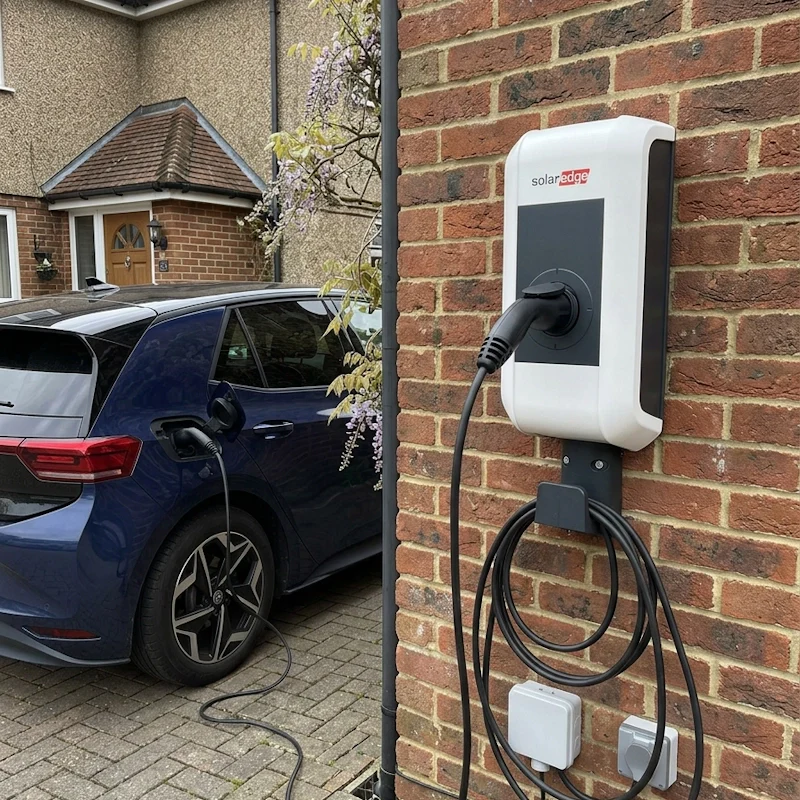
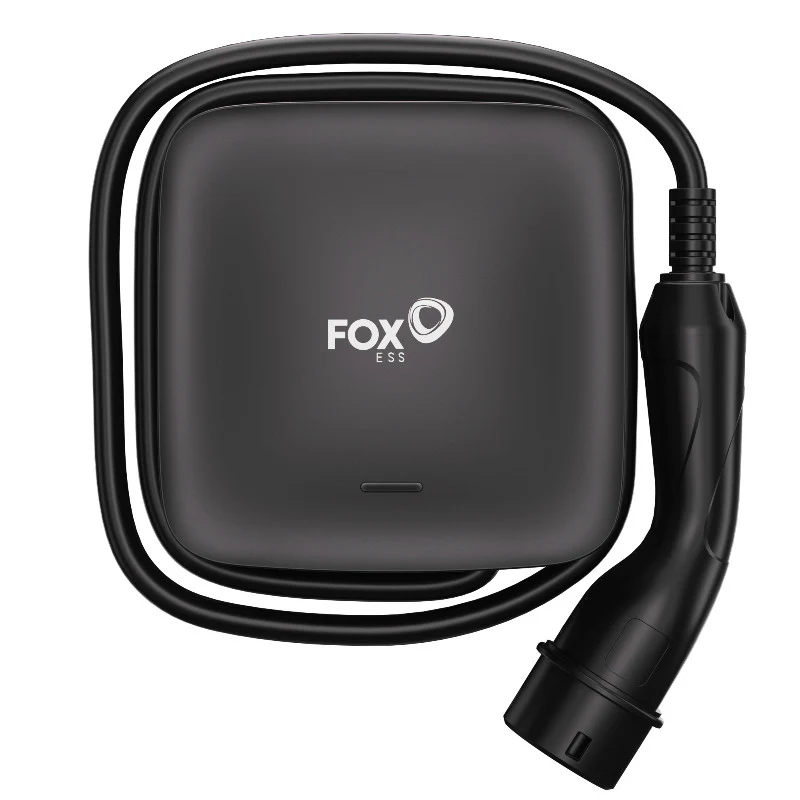
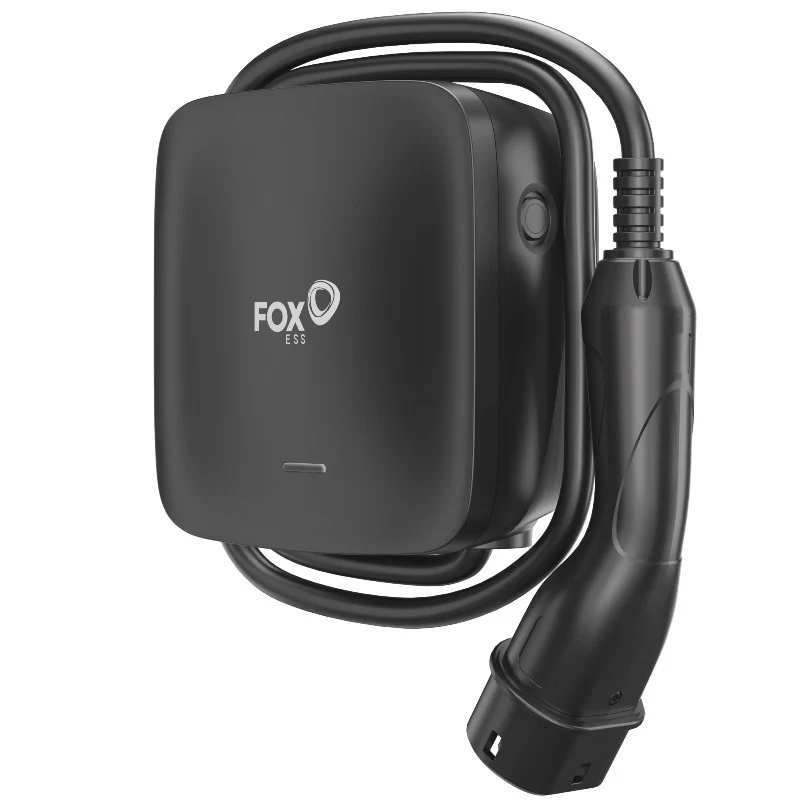
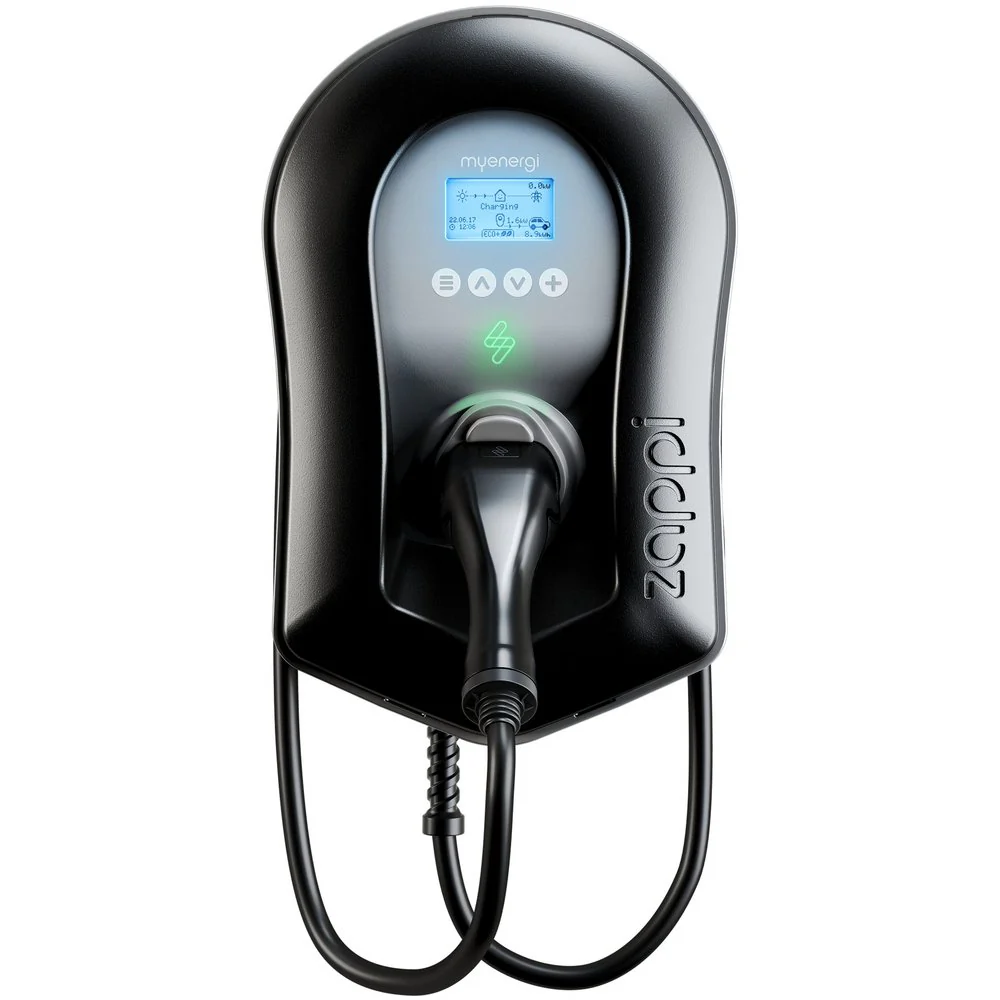
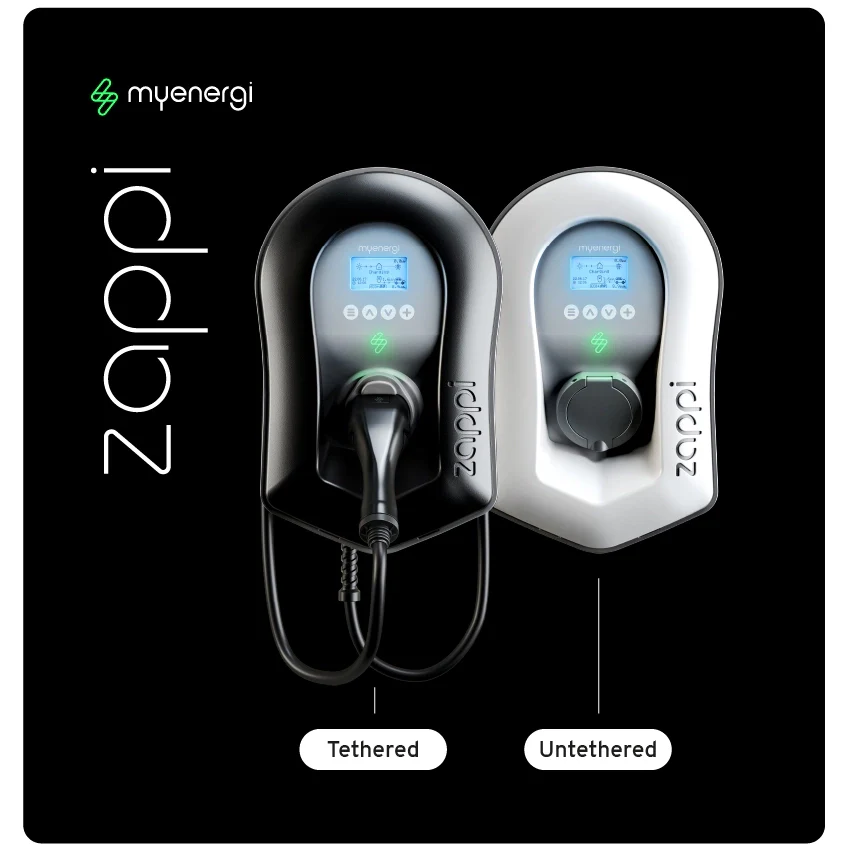
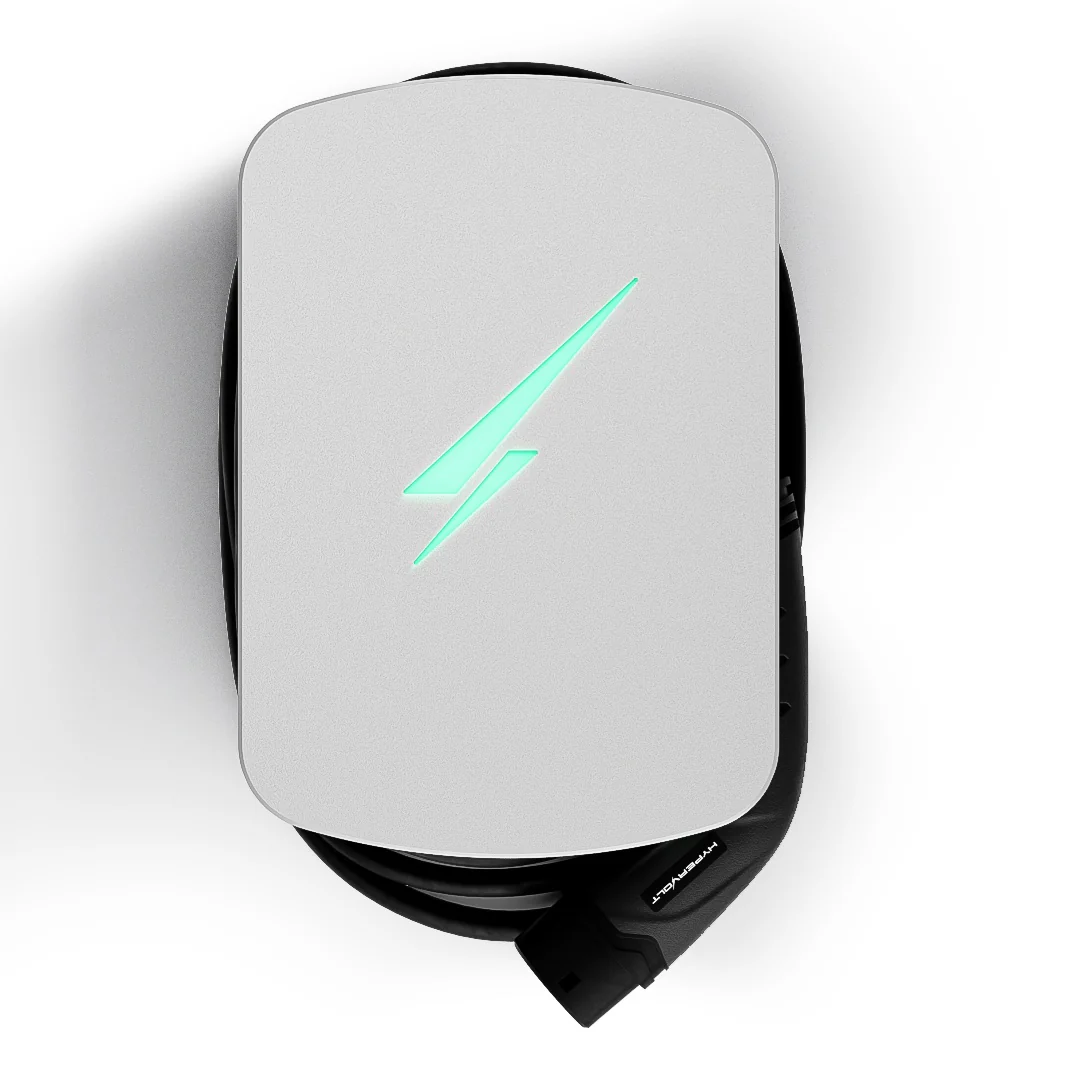
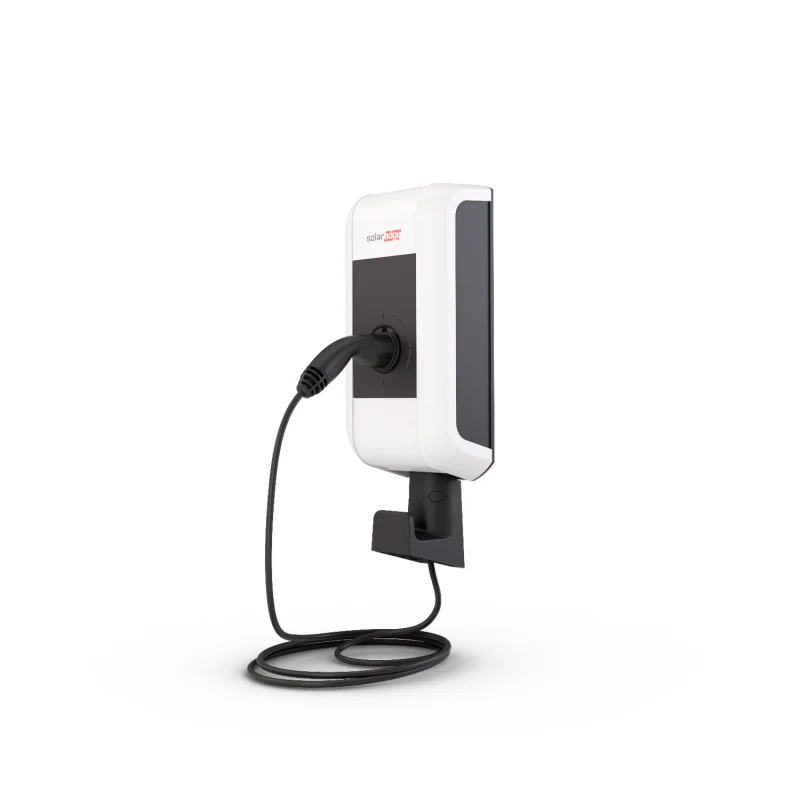
The SolarEdge EV Charger 7.4kW 1-Phase (SE-EVK74C00-01) is a smart, tethered home EV charger designed to integrate directly with the SolarEdge Home ecosystem. It uses excess solar PV generation to charge your EV from the sun, reducing electricity costs, and allows full monitoring and scheduling via the mySolarEdge app. The charger comes with a 6-metre Type 2 tethered cable, configurable current output from 10 A to 32 A, and is suitable for both indoor and outdoor installation. It is G100 Issue 2 Amendment 2 compliant (via Ethernet connection to the inverter) and UKCA marked. A 3-year warranty is included.

7.4 kW
Max output (1PH)
6 m
Type 2 tethered cable
IP54 / IK10
Indoor & outdoor
G100
Issue 2 Amend. 2
3 years
Warranty
⚠ Installer Note — Installation must be carried out by a qualified electrician registered with a competent persons scheme (e.g. NICEIC, NAPIT). A dedicated 32 A circuit is required for full 7.4 kW output (minimum 5 × 6.0 mm² supply cable at 32 A rated current). G100 Issue 2 Amendment 2 compliance requires the charger to be connected to the same router as the SolarEdge inverter via Ethernet.
⚡ Compatibility — Compatible with all SolarEdge SetApp-enabled residential inverters up to SE15K, excluding the Single Phase Inverter with Compact Technology. A SolarEdge inverter and energy meter (or Backup Interface) must be present on site for G100 compliance. Maximum 1 charger per inverter. RFID card authentication and MID meter are not available on this single-phase model — see the SE-EVK22URM-01 (3-phase, socket) for those features.
Technical Specifications
Part Number SE-EVK74C00-01
Rated AC Power Output Up to 7.4 kW
Rated Current (configurable) 10 / 13 / 16 / 20 / 25 / 32 A
Nominal AC Output Voltage 230 V (single phase)
Line Frequency 50 Hz
Mains Forms TT / TN / IT
Charge Mode Mode 3 — IEC 61851-1 AC charging
Cable / Connector 6 m tethered Type 2 (EN 62196-1, VDE-AR-E 2623-2-2), up to 32 A / 400 V AC
Supply Cable — Minimum (16 A) 5 × 2.5 mm²
Supply Cable — Minimum (32 A) 5 × 6.0 mm²
AC Terminal Cable Range Rigid/flexible: 0.2–16 mm²; flexible with ferrule: 0.25–10 mm²
Protection Class (IP) IP54
Mechanical Impact (IK) IK10
Internal Consumption Idle: 4 W / Plugged in: 5 W / Charging: 7 W
Communication Ethernet (LSA+ terminals or RJ45), Wi-Fi 802.11 b/g/n 2.4 GHz
RFID / MID Meter Not included (available on SE-EVK22URM-01 only)
Tamper Protection SolarEdge Tampering Alert System
OCPP SolarEdge OCPP pre-configured
G100 Compliance Issue 2 Amendment 2 — requires Ethernet connection to inverter + energy meter or Backup Interface
Operating Temperature (@16 A) –25°C to +50°C (no direct sunlight)
Operating Temperature (@32 A) –25°C to +40°C (no direct sunlight)
Installation Environment Indoor and outdoor
Cable Feed Top (surface mount) or back side (flush mount)
Dimensions (H × W × D) 643 × 240 × 142 mm (with cable)
Weight 7.8 kg
Certification UKCA
Warranty 3 years
Frequently Asked Questions
How does solar-optimised EV charging work?
When the SolarEdge system detects excess PV generation beyond the home's current consumption, it automatically diverts that surplus to charge the EV rather than exporting it to the grid. This allows homeowners to fill their car battery with free solar electricity during the day. Charging can also be scheduled via the mySolarEdge app to run during off-peak tariff periods overnight — whichever is cheaper at the time.
Do I need to connect it via Ethernet, or does Wi-Fi work?
Wi-Fi is sufficient for most functions — app control, scheduling, and monitoring all work over Wi-Fi. However, G100 Issue 2 Amendment 2 compliance requires an Ethernet connection between the charger and the same router/switch as the SolarEdge inverter. If your DNO has imposed an export limitation condition that requires G100 compliance, Ethernet must be used. The charger has both LSA+ terminal and RJ45 Ethernet options.
What current rating should I configure the charger at?
The charger is configurable from 10 A to 32 A. The maximum output of 7.4 kW requires 32 A, which needs a 5 × 6.0 mm² dedicated circuit. At 16 A (3.7 kW), a 5 × 2.5 mm² circuit is acceptable. Your installer will set the rated current to match the circuit installed — the charger software also allows adjustment later via the app.
Is RFID authentication available on this model?
No — RFID card authentication and the MID-certified energy meter are only available on the three-phase socket model (SE-EVK22URM-01). The SE-EVK74C00-01 is a residential tethered charger designed for single-household use where RFID access control and legal metering are not required. If you need RFID for access management or MID for billing/reimbursement, specify the 3-phase variant instead.
$556.00

Original: $1,588.56

-65%
SolarEdge EV Charger 7.4kW 1-Phase 6m Tethered Type 2 Cable UK

$1,588.56

$556.00

More Images

SolarEdge EV Charger 7.4kW 1-Phase 6m Tethered Type 2 Cable UK - Image 2

SolarEdge EV Charger 7.4kW 1-Phase 6m Tethered Type 2 Cable UK

The SolarEdge EV Charger 7.4kW 1-Phase (SE-EVK74C00-01) is a smart, tethered home EV charger designed to integrate directly with the SolarEdge Home ecosystem. It uses excess solar PV generation to charge your EV from the sun, reducing electricity costs, and allows full monitoring and scheduling via the mySolarEdge app. The charger comes with a 6-metre Type 2 tethered cable, configurable current output from 10 A to 32 A, and is suitable for both indoor and outdoor installation. It is G100 Issue 2 Amendment 2 compliant (via Ethernet connection to the inverter) and UKCA marked. A 3-year warranty is included.

7.4 kW
Max output (1PH)
6 m
Type 2 tethered cable
IP54 / IK10
Indoor & outdoor
G100
Issue 2 Amend. 2
3 years
Warranty
⚠ Installer Note — Installation must be carried out by a qualified electrician registered with a competent persons scheme (e.g. NICEIC, NAPIT). A dedicated 32 A circuit is required for full 7.4 kW output (minimum 5 × 6.0 mm² supply cable at 32 A rated current). G100 Issue 2 Amendment 2 compliance requires the charger to be connected to the same router as the SolarEdge inverter via Ethernet.
⚡ Compatibility — Compatible with all SolarEdge SetApp-enabled residential inverters up to SE15K, excluding the Single Phase Inverter with Compact Technology. A SolarEdge inverter and energy meter (or Backup Interface) must be present on site for G100 compliance. Maximum 1 charger per inverter. RFID card authentication and MID meter are not available on this single-phase model — see the SE-EVK22URM-01 (3-phase, socket) for those features.
Technical Specifications
Part Number SE-EVK74C00-01
Rated AC Power Output Up to 7.4 kW
Rated Current (configurable) 10 / 13 / 16 / 20 / 25 / 32 A
Nominal AC Output Voltage 230 V (single phase)
Line Frequency 50 Hz
Mains Forms TT / TN / IT
Charge Mode Mode 3 — IEC 61851-1 AC charging
Cable / Connector 6 m tethered Type 2 (EN 62196-1, VDE-AR-E 2623-2-2), up to 32 A / 400 V AC
Supply Cable — Minimum (16 A) 5 × 2.5 mm²
Supply Cable — Minimum (32 A) 5 × 6.0 mm²
AC Terminal Cable Range Rigid/flexible: 0.2–16 mm²; flexible with ferrule: 0.25–10 mm²
Protection Class (IP) IP54
Mechanical Impact (IK) IK10
Internal Consumption Idle: 4 W / Plugged in: 5 W / Charging: 7 W
Communication Ethernet (LSA+ terminals or RJ45), Wi-Fi 802.11 b/g/n 2.4 GHz
RFID / MID Meter Not included (available on SE-EVK22URM-01 only)
Tamper Protection SolarEdge Tampering Alert System
OCPP SolarEdge OCPP pre-configured
G100 Compliance Issue 2 Amendment 2 — requires Ethernet connection to inverter + energy meter or Backup Interface
Operating Temperature (@16 A) –25°C to +50°C (no direct sunlight)
Operating Temperature (@32 A) –25°C to +40°C (no direct sunlight)
Installation Environment Indoor and outdoor
Cable Feed Top (surface mount) or back side (flush mount)
Dimensions (H × W × D) 643 × 240 × 142 mm (with cable)
Weight 7.8 kg
Certification UKCA
Warranty 3 years
Frequently Asked Questions
How does solar-optimised EV charging work?
When the SolarEdge system detects excess PV generation beyond the home's current consumption, it automatically diverts that surplus to charge the EV rather than exporting it to the grid. This allows homeowners to fill their car battery with free solar electricity during the day. Charging can also be scheduled via the mySolarEdge app to run during off-peak tariff periods overnight — whichever is cheaper at the time.
Do I need to connect it via Ethernet, or does Wi-Fi work?
Wi-Fi is sufficient for most functions — app control, scheduling, and monitoring all work over Wi-Fi. However, G100 Issue 2 Amendment 2 compliance requires an Ethernet connection between the charger and the same router/switch as the SolarEdge inverter. If your DNO has imposed an export limitation condition that requires G100 compliance, Ethernet must be used. The charger has both LSA+ terminal and RJ45 Ethernet options.
What current rating should I configure the charger at?
The charger is configurable from 10 A to 32 A. The maximum output of 7.4 kW requires 32 A, which needs a 5 × 6.0 mm² dedicated circuit. At 16 A (3.7 kW), a 5 × 2.5 mm² circuit is acceptable. Your installer will set the rated current to match the circuit installed — the charger software also allows adjustment later via the app.
Is RFID authentication available on this model?
No — RFID card authentication and the MID-certified energy meter are only available on the three-phase socket model (SE-EVK22URM-01). The SE-EVK74C00-01 is a residential tethered charger designed for single-household use where RFID access control and legal metering are not required. If you need RFID for access management or MID for billing/reimbursement, specify the 3-phase variant instead.

Product Information

Shipping & Returns

Description

The SolarEdge EV Charger 7.4kW 1-Phase (SE-EVK74C00-01) is a smart, tethered home EV charger designed to integrate directly with the SolarEdge Home ecosystem. It uses excess solar PV generation to charge your EV from the sun, reducing electricity costs, and allows full monitoring and scheduling via the mySolarEdge app. The charger comes with a 6-metre Type 2 tethered cable, configurable current output from 10 A to 32 A, and is suitable for both indoor and outdoor installation. It is G100 Issue 2 Amendment 2 compliant (via Ethernet connection to the inverter) and UKCA marked. A 3-year warranty is included.

7.4 kW
Max output (1PH)
6 m
Type 2 tethered cable
IP54 / IK10
Indoor & outdoor
G100
Issue 2 Amend. 2
3 years
Warranty
⚠ Installer Note — Installation must be carried out by a qualified electrician registered with a competent persons scheme (e.g. NICEIC, NAPIT). A dedicated 32 A circuit is required for full 7.4 kW output (minimum 5 × 6.0 mm² supply cable at 32 A rated current). G100 Issue 2 Amendment 2 compliance requires the charger to be connected to the same router as the SolarEdge inverter via Ethernet.
⚡ Compatibility — Compatible with all SolarEdge SetApp-enabled residential inverters up to SE15K, excluding the Single Phase Inverter with Compact Technology. A SolarEdge inverter and energy meter (or Backup Interface) must be present on site for G100 compliance. Maximum 1 charger per inverter. RFID card authentication and MID meter are not available on this single-phase model — see the SE-EVK22URM-01 (3-phase, socket) for those features.
Technical Specifications
Part Number SE-EVK74C00-01
Rated AC Power Output Up to 7.4 kW
Rated Current (configurable) 10 / 13 / 16 / 20 / 25 / 32 A
Nominal AC Output Voltage 230 V (single phase)
Line Frequency 50 Hz
Mains Forms TT / TN / IT
Charge Mode Mode 3 — IEC 61851-1 AC charging
Cable / Connector 6 m tethered Type 2 (EN 62196-1, VDE-AR-E 2623-2-2), up to 32 A / 400 V AC
Supply Cable — Minimum (16 A) 5 × 2.5 mm²
Supply Cable — Minimum (32 A) 5 × 6.0 mm²
AC Terminal Cable Range Rigid/flexible: 0.2–16 mm²; flexible with ferrule: 0.25–10 mm²
Protection Class (IP) IP54
Mechanical Impact (IK) IK10
Internal Consumption Idle: 4 W / Plugged in: 5 W / Charging: 7 W
Communication Ethernet (LSA+ terminals or RJ45), Wi-Fi 802.11 b/g/n 2.4 GHz
RFID / MID Meter Not included (available on SE-EVK22URM-01 only)
Tamper Protection SolarEdge Tampering Alert System
OCPP SolarEdge OCPP pre-configured
G100 Compliance Issue 2 Amendment 2 — requires Ethernet connection to inverter + energy meter or Backup Interface
Operating Temperature (@16 A) –25°C to +50°C (no direct sunlight)
Operating Temperature (@32 A) –25°C to +40°C (no direct sunlight)
Installation Environment Indoor and outdoor
Cable Feed Top (surface mount) or back side (flush mount)
Dimensions (H × W × D) 643 × 240 × 142 mm (with cable)
Weight 7.8 kg
Certification UKCA
Warranty 3 years
Frequently Asked Questions
How does solar-optimised EV charging work?
When the SolarEdge system detects excess PV generation beyond the home's current consumption, it automatically diverts that surplus to charge the EV rather than exporting it to the grid. This allows homeowners to fill their car battery with free solar electricity during the day. Charging can also be scheduled via the mySolarEdge app to run during off-peak tariff periods overnight — whichever is cheaper at the time.
Do I need to connect it via Ethernet, or does Wi-Fi work?
Wi-Fi is sufficient for most functions — app control, scheduling, and monitoring all work over Wi-Fi. However, G100 Issue 2 Amendment 2 compliance requires an Ethernet connection between the charger and the same router/switch as the SolarEdge inverter. If your DNO has imposed an export limitation condition that requires G100 compliance, Ethernet must be used. The charger has both LSA+ terminal and RJ45 Ethernet options.
What current rating should I configure the charger at?
The charger is configurable from 10 A to 32 A. The maximum output of 7.4 kW requires 32 A, which needs a 5 × 6.0 mm² dedicated circuit. At 16 A (3.7 kW), a 5 × 2.5 mm² circuit is acceptable. Your installer will set the rated current to match the circuit installed — the charger software also allows adjustment later via the app.
Is RFID authentication available on this model?
No — RFID card authentication and the MID-certified energy meter are only available on the three-phase socket model (SE-EVK22URM-01). The SE-EVK74C00-01 is a residential tethered charger designed for single-household use where RFID access control and legal metering are not required. If you need RFID for access management or MID for billing/reimbursement, specify the 3-phase variant instead.