✨ New Arrivals Just Dropped!Explore
Emlite EMP1-AZNET EMP1.av NET 3-Phase Bi-Directional Generation Meter 100A 1000 Pulse kWh
HomeStore

Emlite EMP1-AZNET EMP1.av NET 3-Phase Bi-Directional Generation Meter 100A 1000 Pulse kWh

Emlite EMP1-AZNET EMP1.av NET 3-Phase Bi-Directional Generation Meter 100A 1000 Pulse kWh

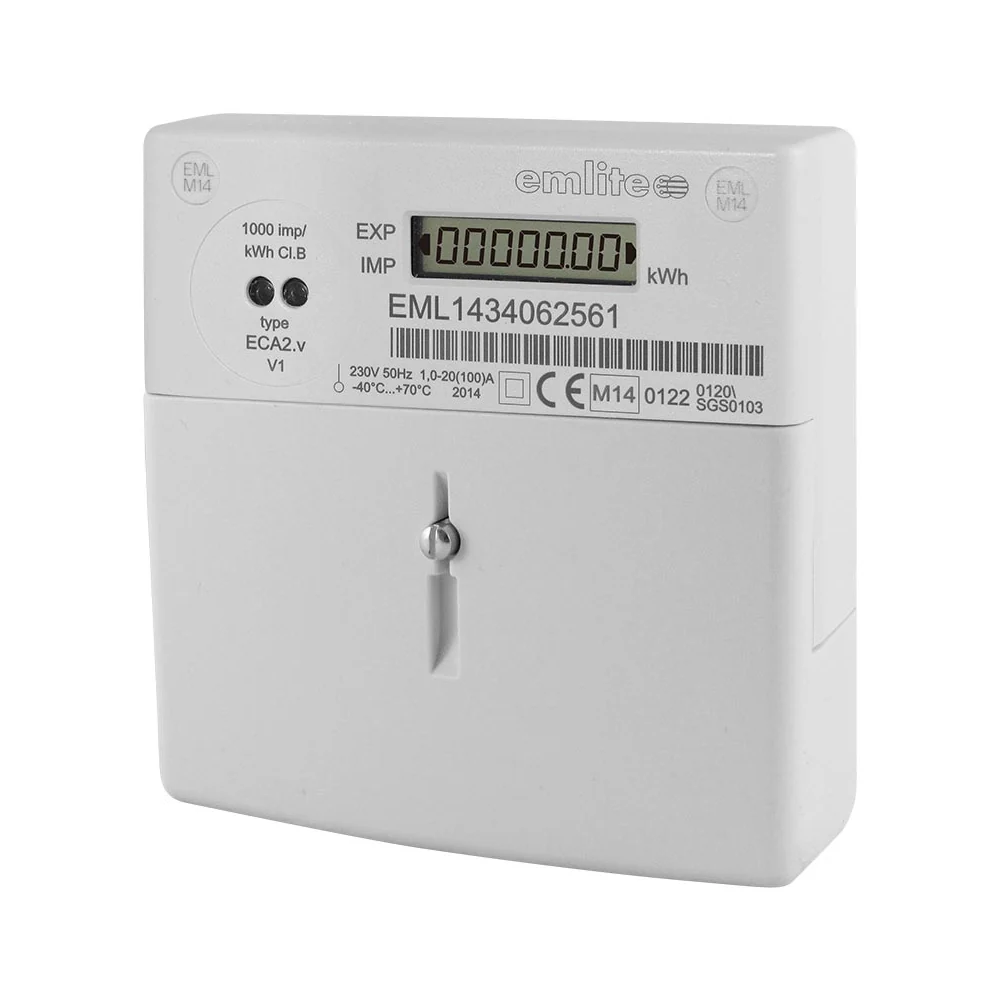
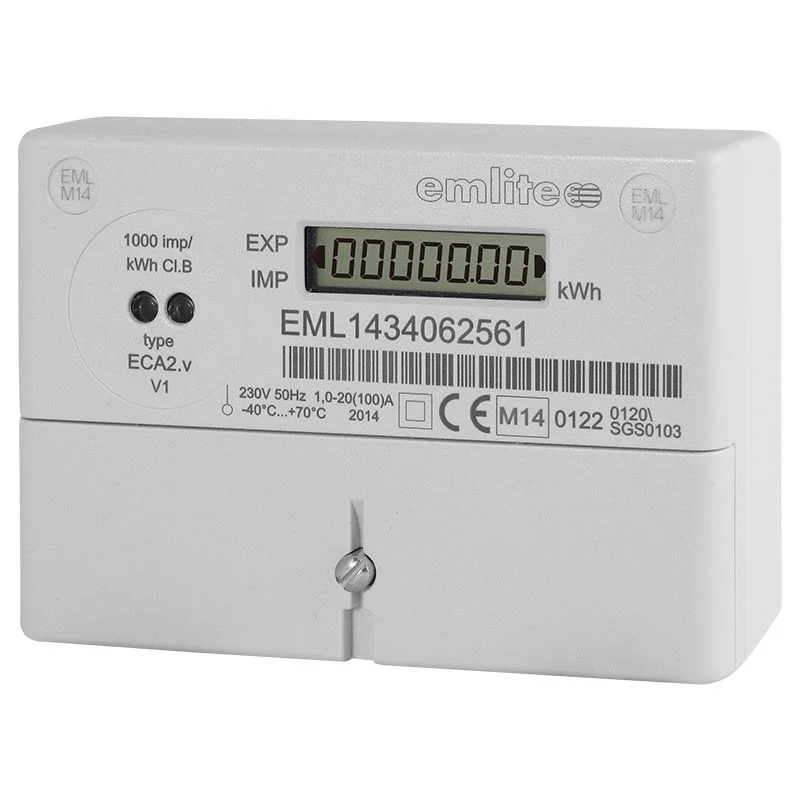
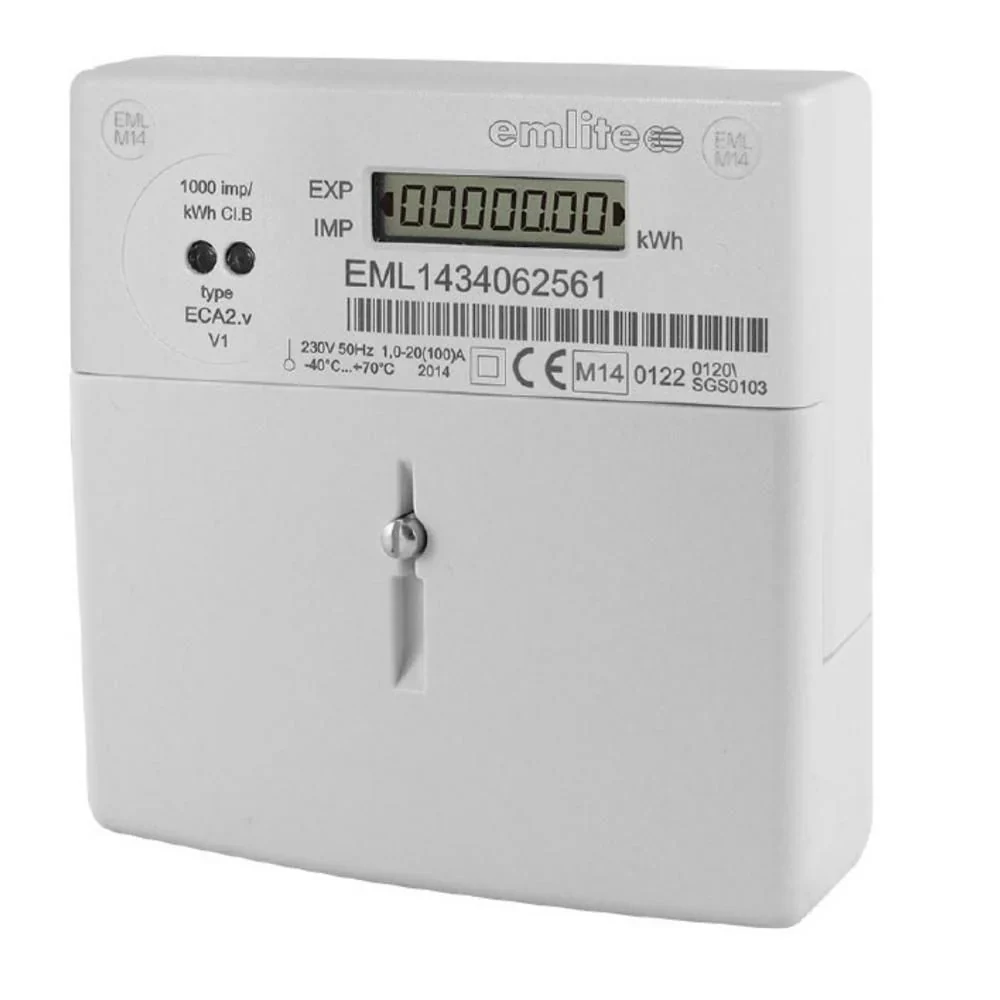
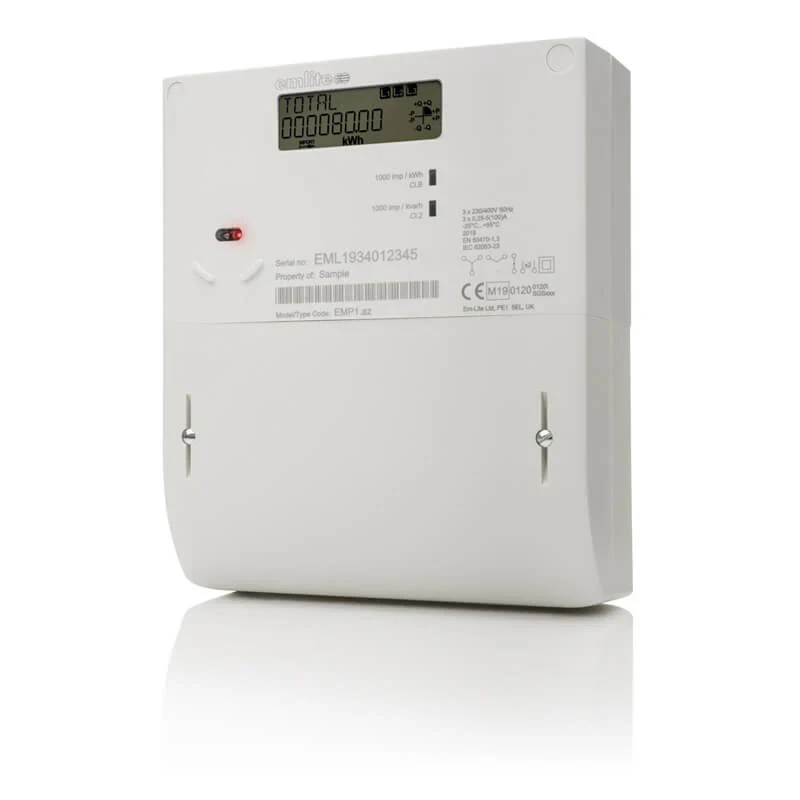
The Emlite EMP1-AZNET (EMP1.av NET) is a three-phase, direct-connect 100A per phase MID-approved bi-directional electricity meter with 1000 pulse/kWh output, factory-configured to display Import, Export, and NET registers — with NET as the primary reading for MCS and SEG compliance. It is the correct generation meter for three-phase solar PV installations co-located with DC-coupled or hybrid battery storage, where the MCS and Ofgem SEG co-location guidance (SEG v6.1) requires a NET export figure rather than a gross generation reading. Where a standard generation meter counts all kWh produced by the array (including energy used to charge the battery from the grid), the EMP1-AZNET's NET register deducts grid import from export — delivering the true net amount of energy that left the property. Required for battery retrofits on existing three-phase PV systems, and for new three-phase hybrid inverter installations from the outset. Fully MID approved to Class B (1% accuracy, EN 50470-1/3) for active energy and Class 2 (IEC 62053-23) for reactive energy.

ℹ EMP1-AZNET vs EMP1-AZ — Choosing the Right Three-Phase Meter
EMP1-AZ (standard bi-directional): Suitable for three-phase PV-only installations or where basic import and export registers are sufficient. Shows Import and Export with the NET accessible on the display cycle.

EMP1-AZNET (this meter — NET configured): Required where the NET figure is the primary compliance reading — specifically for DC-coupled storage, hybrid inverters, and any three-phase installation co-locating battery storage under Ofgem's SEG v6.1 co-location guidance. The NET register (Export minus Import) ensures grid-charged battery discharge is not counted as solar generation in the official kWh figure submitted to MCS and the SEG energy supplier. This meter is also used when replacing a legacy generation meter on an existing three-phase PV system where battery storage has been retrofitted.
⚠ Qualified Installation Required — Must be installed by a qualified electrician in accordance with BS 7671, Part P of the Building Regulations, and the Emlite EMP1 installation manual. The meter must be installed correctly to measure the generation circuit accurately — incorrect connection on a three-phase system will result in erroneous NET figures. Verify connection polarity and phase assignment before commissioning. The meter is not fitted with a disconnection switch — a suitable isolator must be provided.
3-phase
100A per phase
NET configured
Import · Export · NET
MID Class B
1% accuracy
1000 pulse
per kWh
IP54
Ingress protected
Features & Benefits
✔ NET Register — The Critical Figure for Battery Co-Location
The NET reading (Export minus Import) is the figure that MCS and Ofgem's SEG v6.1 co-location guidance require when a battery is present in the system. Without a NET meter, a standard generation meter would count grid energy used to charge the battery as solar generation — inflating the kWh figures submitted for MCS commissioning and SEG payments. The EMP1-AZNET's NET register ensures only the genuine surplus that left the property counts. All three registers — Import, Export, and NET — auto-cycle on the LCD and are individually readable via the optical port for reporting and commissioning documentation.
✔ MID Approved — Legal for MCS & SEG Compliance
MID (Measuring Instruments Directive 2004/22/EC) approval is the legal requirement for generation and export meters used in UK MCS commissioning and SEG energy supplier registration. Without a MID-approved meter, an installation cannot be officially signed off and the homeowner cannot register for SEG payments. The EMP1-AZNET carries full MID approval to Class B (1% accuracy, EN 50470-1/3) for active energy, satisfying all DNO and MCS submission requirements for three-phase solar plus storage systems.
✔ 4-Quadrant Energy Measurement Across All 3 Phases
The EMP1-AZNET measures 4-quadrant active energy across all three phases simultaneously — tracking import and export in both forward and reverse directions. This correctly handles mixed-direction energy flow, which occurs in three-phase battery systems where different phases may have different generation and load profiles at any given moment. Separate registers for each quadrant are stored and accessible via the optical port. Optional power quality data (per-phase voltage, current, and power) is also available for system performance analysis and G99 compliance monitoring.
✔ 1000 Pulse/kWh — Opto-Isolated Output
The 1000 pulse per kWh opto-isolated output (IEC 62053-31, conforming to class A) on the auxiliary terminals feeds real-time energy data into energy management systems, BMS, AMR data loggers, and inverter monitoring platforms. Each pulse represents 1Wh of energy — at 1000 pulses/kWh the resolution is fine enough for accurate sub-hourly monitoring of net export. Compatible with most commercial three-phase inverter and monitoring platforms that accept an S0 or open-collector pulse input. The opto-isolated output prevents ground-loop issues when connecting to third-party equipment.
✔ 100A Per Phase — Direct Connected — 25mm² Terminals
Direct-connect (whole current) meter rated at 100A per phase — no external current transformers required, covering three-phase solar PV and battery installations up to approximately 69kW combined at 230V per phase. DIN43857-Part 2 terminal arrangement with 150mm fixing centres and solid brass terminals with 8.2mm cable entry accepting up to 25mm² meter tails. Main supply terminals numbered 1/3 (L1), 4/6 (L2), 7/9 (L3), 10/12 (N) with numbered test terminals 2, 5, 8, 11. The meter is not fitted with a supply disconnection switch.
✔ Optical Port — Tamper Resistant — IP54
An optical communications port (IEC 629056-21) enables electronic meter reading using a standard probe — useful for commissioning verification and quarterly remote read submissions. The meter is tamper resistant and suitable for both new installations and replacement of legacy generation meters on existing three-phase PV systems where battery storage is being retrofitted. IP54 ingress protection (BS EN 60529) — protected against dust deposits and water splashing from any direction — suitable for meter board and distribution board installations. Operational from –25°C to +55°C.
Technical Specifications — Emlite EMP1-AZNET (EMP1.av NET)
Manufacturer / MPN Emlite — EMP1-AZNET (EMP1.av NET)
Phase Three phase (3×230V / 400V, four-wire)
Registers Displayed Import · Export · NET (Export minus Import) — auto-cycling LCD
Energy Measurement 4-quadrant active energy (all 3 phases); reactive energy
Nominal Voltage 3 × 230V (phase-to-neutral); 400V withstand continuously
Frequency 50Hz ± 5%
Reference / Max Current Iref 5–20A per phase; Imax 100A per phase — direct connected
Accuracy — Active Energy Class B (1%) — EN 50470-1/3; fully MID approved
Accuracy — Reactive Energy Class 2 — IEC 62053-23
Pulse Output 1000 pulses/kWh — opto-isolated transistor, IEC 62053-31 Class A
Display 8-digit LCD with phase indicators and energy direction symbol
Optical Port IEC 629056-21
Terminal Standard DIN43857-Part 2; 150 ± 1mm fixing centres; 8.2mm solid brass; 25mm² capacity
IP Rating IP54 (BS EN 60529)
Temperature Range –25°C to +55°C
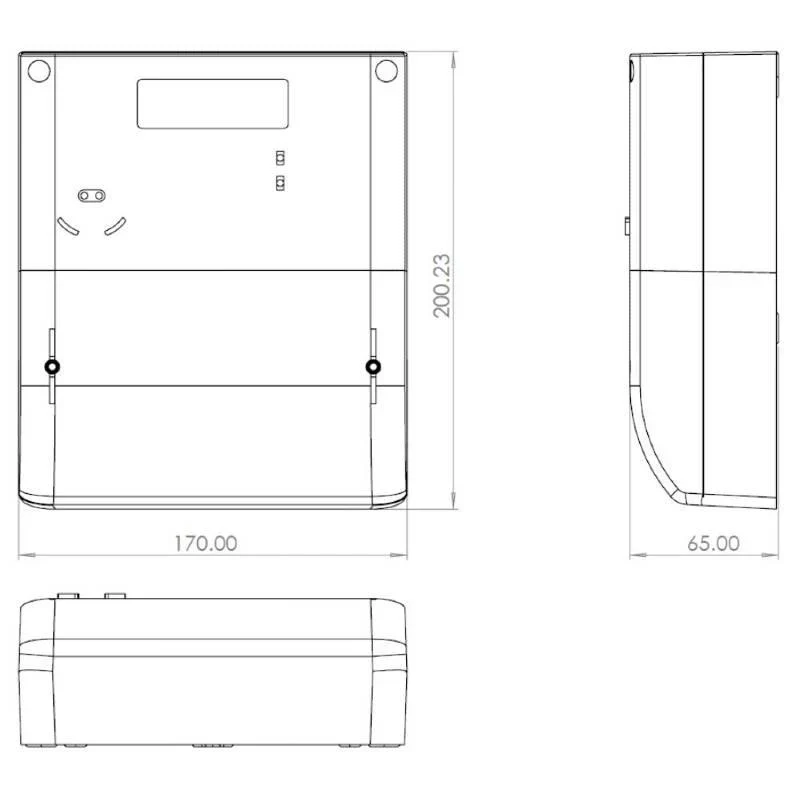
Dimensions (W × H × D) 170 × 200.2 × 65 mm
Frequently Asked Questions
Why is a NET meter required for three-phase solar systems with battery storage?
When a battery is present in a solar PV system, the inverter can charge the battery from the grid — particularly at night on cheap-rate tariffs such as Octopus Go or Economy 7. If a standard generation meter (measuring only outbound energy from the array) were used, grid energy discharged from the battery to the home would not be counted. However, a simple export meter (measuring only outbound energy from the property) could count grid-charged battery discharge as solar export, inflating the export figure and creating false SEG payment claims. The NET meter solves this: it measures both what leaves the property (export) and what enters from the grid (import), and deducts import from export to produce a NET figure — the genuine solar energy that left the building, uncontaminated by any grid-charged battery round-trip. Ofgem's SEG co-location guidance (v6.1) mandates this approach for co-located storage under the Smart Export Guarantee.
What is the difference between the EMP1-AZNET and the EMP1-AZ?
Both the EMP1-AZ and the EMP1-AZNET are three-phase bi-directional meters on the Emlite EMP1 platform, with identical hardware, accuracy class, and physical specifications. The difference is in configuration and intended application. The EMP1-AZ is the standard bi-directional variant where all registers (Import, Export, NET) are available but the meter is not specifically configured for NET-primary display — suitable for general three-phase generation metering and monitoring. The EMP1-AZNET is factory-configured with the NET register as the primary compliance reading and is supplied specifically for battery co-location compliance under MCS and SEG v6.1. If your installation includes battery storage and the DNO or MCS submission explicitly requires a NET meter, specify the EMP1-AZNET. If the application is a PV-only three-phase system without storage, the EMP1-AZ is the appropriate choice.
Can I use this meter to replace an existing generation meter when retrofitting battery storage?
Yes — the EMP1-AZNET is specifically recommended for battery storage retrofits on existing three-phase solar PV installations. When battery storage is added to an existing PV system that already has a standard (non-bi-directional) generation meter, the generation meter must be replaced with a NET meter to comply with the updated MCS and SEG co-location requirements. The EMP1-AZNET can be installed in place of the existing generation meter — same DIN43857 terminal layout and same installation footprint as the standard EMP1 meters means the swap is straightforward. The MCS installer will need to update the MCS certificate to reflect the new meter serial number.
What reading do I give my energy supplier for SEG payments?
For systems with battery storage under the Smart Export Guarantee, you should provide the NET register reading to your energy supplier — not the Import or Export registers. The NET figure (Export minus Import, as accumulated over the period since the last reading) represents the genuine net amount of energy your property exported to the grid over the billing period. Some energy suppliers read the meter remotely via smart meter infrastructure; others require you to submit meter readings. When submitting, clearly identify it as the "NET" register reading from the generation meter — not the house import meter — to avoid confusion. Check your specific SEG tariff agreement for the reading submission process.
Is this meter suitable for large commercial three-phase solar installations?
Yes — the EMP1-AZNET is suitable for three-phase commercial solar PV and battery storage installations up to 100A per phase. At 3×230V, this covers combined installations up to approximately 69kW, encompassing the majority of commercial rooftop solar plus storage systems requiring a direct-connect NET meter. For very large commercial systems where per-phase currents exceed 100A, a CT-metered solution with appropriate current transformers would be required. The MID Class B approval applies to all commercial billing and official reporting contexts, and the meter is compatible with commercial energy management systems via the opto-isolated pulse output and optical port.
Can the pulse output be connected to my inverter monitoring platform?
Yes — the 1000 pulse/kWh opto-isolated output (IEC 62053-31 Class A) connects to energy management systems, BMS, AMR data loggers, and inverter monitoring platforms that accept an S0 or open-collector pulse input. Most commercial three-phase inverter monitoring platforms (Solis, GivEnergy, SolarEdge, Huawei, Fox ESS, etc.) accept a pulse input for independent generation or NET export verification. The output polarity must be observed — consult your monitoring platform's wiring diagram for the correct terminal orientation. The optical port (IEC 629056-21) provides a secondary communications route for electronic meter reading without requiring a pulse input on the monitoring device.
$180.86
Emlite EMP1-AZNET EMP1.av NET 3-Phase Bi-Directional Generation Meter 100A 1000 Pulse kWh
$180.86

More Images

Emlite EMP1-AZNET EMP1.av NET 3-Phase Bi-Directional Generation Meter 100A 1000 Pulse kWh - Image 2
Emlite EMP1-AZNET EMP1.av NET 3-Phase Bi-Directional Generation Meter 100A 1000 Pulse kWh - Image 3

Emlite EMP1-AZNET EMP1.av NET 3-Phase Bi-Directional Generation Meter 100A 1000 Pulse kWh

The Emlite EMP1-AZNET (EMP1.av NET) is a three-phase, direct-connect 100A per phase MID-approved bi-directional electricity meter with 1000 pulse/kWh output, factory-configured to display Import, Export, and NET registers — with NET as the primary reading for MCS and SEG compliance. It is the correct generation meter for three-phase solar PV installations co-located with DC-coupled or hybrid battery storage, where the MCS and Ofgem SEG co-location guidance (SEG v6.1) requires a NET export figure rather than a gross generation reading. Where a standard generation meter counts all kWh produced by the array (including energy used to charge the battery from the grid), the EMP1-AZNET's NET register deducts grid import from export — delivering the true net amount of energy that left the property. Required for battery retrofits on existing three-phase PV systems, and for new three-phase hybrid inverter installations from the outset. Fully MID approved to Class B (1% accuracy, EN 50470-1/3) for active energy and Class 2 (IEC 62053-23) for reactive energy.

ℹ EMP1-AZNET vs EMP1-AZ — Choosing the Right Three-Phase Meter
EMP1-AZ (standard bi-directional): Suitable for three-phase PV-only installations or where basic import and export registers are sufficient. Shows Import and Export with the NET accessible on the display cycle.

EMP1-AZNET (this meter — NET configured): Required where the NET figure is the primary compliance reading — specifically for DC-coupled storage, hybrid inverters, and any three-phase installation co-locating battery storage under Ofgem's SEG v6.1 co-location guidance. The NET register (Export minus Import) ensures grid-charged battery discharge is not counted as solar generation in the official kWh figure submitted to MCS and the SEG energy supplier. This meter is also used when replacing a legacy generation meter on an existing three-phase PV system where battery storage has been retrofitted.
⚠ Qualified Installation Required — Must be installed by a qualified electrician in accordance with BS 7671, Part P of the Building Regulations, and the Emlite EMP1 installation manual. The meter must be installed correctly to measure the generation circuit accurately — incorrect connection on a three-phase system will result in erroneous NET figures. Verify connection polarity and phase assignment before commissioning. The meter is not fitted with a disconnection switch — a suitable isolator must be provided.
3-phase
100A per phase
NET configured
Import · Export · NET
MID Class B
1% accuracy
1000 pulse
per kWh
IP54
Ingress protected
Features & Benefits
✔ NET Register — The Critical Figure for Battery Co-Location
The NET reading (Export minus Import) is the figure that MCS and Ofgem's SEG v6.1 co-location guidance require when a battery is present in the system. Without a NET meter, a standard generation meter would count grid energy used to charge the battery as solar generation — inflating the kWh figures submitted for MCS commissioning and SEG payments. The EMP1-AZNET's NET register ensures only the genuine surplus that left the property counts. All three registers — Import, Export, and NET — auto-cycle on the LCD and are individually readable via the optical port for reporting and commissioning documentation.
✔ MID Approved — Legal for MCS & SEG Compliance
MID (Measuring Instruments Directive 2004/22/EC) approval is the legal requirement for generation and export meters used in UK MCS commissioning and SEG energy supplier registration. Without a MID-approved meter, an installation cannot be officially signed off and the homeowner cannot register for SEG payments. The EMP1-AZNET carries full MID approval to Class B (1% accuracy, EN 50470-1/3) for active energy, satisfying all DNO and MCS submission requirements for three-phase solar plus storage systems.
✔ 4-Quadrant Energy Measurement Across All 3 Phases
The EMP1-AZNET measures 4-quadrant active energy across all three phases simultaneously — tracking import and export in both forward and reverse directions. This correctly handles mixed-direction energy flow, which occurs in three-phase battery systems where different phases may have different generation and load profiles at any given moment. Separate registers for each quadrant are stored and accessible via the optical port. Optional power quality data (per-phase voltage, current, and power) is also available for system performance analysis and G99 compliance monitoring.
✔ 1000 Pulse/kWh — Opto-Isolated Output
The 1000 pulse per kWh opto-isolated output (IEC 62053-31, conforming to class A) on the auxiliary terminals feeds real-time energy data into energy management systems, BMS, AMR data loggers, and inverter monitoring platforms. Each pulse represents 1Wh of energy — at 1000 pulses/kWh the resolution is fine enough for accurate sub-hourly monitoring of net export. Compatible with most commercial three-phase inverter and monitoring platforms that accept an S0 or open-collector pulse input. The opto-isolated output prevents ground-loop issues when connecting to third-party equipment.
✔ 100A Per Phase — Direct Connected — 25mm² Terminals
Direct-connect (whole current) meter rated at 100A per phase — no external current transformers required, covering three-phase solar PV and battery installations up to approximately 69kW combined at 230V per phase. DIN43857-Part 2 terminal arrangement with 150mm fixing centres and solid brass terminals with 8.2mm cable entry accepting up to 25mm² meter tails. Main supply terminals numbered 1/3 (L1), 4/6 (L2), 7/9 (L3), 10/12 (N) with numbered test terminals 2, 5, 8, 11. The meter is not fitted with a supply disconnection switch.
✔ Optical Port — Tamper Resistant — IP54
An optical communications port (IEC 629056-21) enables electronic meter reading using a standard probe — useful for commissioning verification and quarterly remote read submissions. The meter is tamper resistant and suitable for both new installations and replacement of legacy generation meters on existing three-phase PV systems where battery storage is being retrofitted. IP54 ingress protection (BS EN 60529) — protected against dust deposits and water splashing from any direction — suitable for meter board and distribution board installations. Operational from –25°C to +55°C.
Technical Specifications — Emlite EMP1-AZNET (EMP1.av NET)
Manufacturer / MPN Emlite — EMP1-AZNET (EMP1.av NET)
Phase Three phase (3×230V / 400V, four-wire)
Registers Displayed Import · Export · NET (Export minus Import) — auto-cycling LCD
Energy Measurement 4-quadrant active energy (all 3 phases); reactive energy
Nominal Voltage 3 × 230V (phase-to-neutral); 400V withstand continuously
Frequency 50Hz ± 5%
Reference / Max Current Iref 5–20A per phase; Imax 100A per phase — direct connected
Accuracy — Active Energy Class B (1%) — EN 50470-1/3; fully MID approved
Accuracy — Reactive Energy Class 2 — IEC 62053-23
Pulse Output 1000 pulses/kWh — opto-isolated transistor, IEC 62053-31 Class A
Display 8-digit LCD with phase indicators and energy direction symbol
Optical Port IEC 629056-21
Terminal Standard DIN43857-Part 2; 150 ± 1mm fixing centres; 8.2mm solid brass; 25mm² capacity
IP Rating IP54 (BS EN 60529)
Temperature Range –25°C to +55°C
Dimensions (W × H × D) 170 × 200.2 × 65 mm
Frequently Asked Questions
Why is a NET meter required for three-phase solar systems with battery storage?
When a battery is present in a solar PV system, the inverter can charge the battery from the grid — particularly at night on cheap-rate tariffs such as Octopus Go or Economy 7. If a standard generation meter (measuring only outbound energy from the array) were used, grid energy discharged from the battery to the home would not be counted. However, a simple export meter (measuring only outbound energy from the property) could count grid-charged battery discharge as solar export, inflating the export figure and creating false SEG payment claims. The NET meter solves this: it measures both what leaves the property (export) and what enters from the grid (import), and deducts import from export to produce a NET figure — the genuine solar energy that left the building, uncontaminated by any grid-charged battery round-trip. Ofgem's SEG co-location guidance (v6.1) mandates this approach for co-located storage under the Smart Export Guarantee.
What is the difference between the EMP1-AZNET and the EMP1-AZ?
Both the EMP1-AZ and the EMP1-AZNET are three-phase bi-directional meters on the Emlite EMP1 platform, with identical hardware, accuracy class, and physical specifications. The difference is in configuration and intended application. The EMP1-AZ is the standard bi-directional variant where all registers (Import, Export, NET) are available but the meter is not specifically configured for NET-primary display — suitable for general three-phase generation metering and monitoring. The EMP1-AZNET is factory-configured with the NET register as the primary compliance reading and is supplied specifically for battery co-location compliance under MCS and SEG v6.1. If your installation includes battery storage and the DNO or MCS submission explicitly requires a NET meter, specify the EMP1-AZNET. If the application is a PV-only three-phase system without storage, the EMP1-AZ is the appropriate choice.
Can I use this meter to replace an existing generation meter when retrofitting battery storage?
Yes — the EMP1-AZNET is specifically recommended for battery storage retrofits on existing three-phase solar PV installations. When battery storage is added to an existing PV system that already has a standard (non-bi-directional) generation meter, the generation meter must be replaced with a NET meter to comply with the updated MCS and SEG co-location requirements. The EMP1-AZNET can be installed in place of the existing generation meter — same DIN43857 terminal layout and same installation footprint as the standard EMP1 meters means the swap is straightforward. The MCS installer will need to update the MCS certificate to reflect the new meter serial number.
What reading do I give my energy supplier for SEG payments?
For systems with battery storage under the Smart Export Guarantee, you should provide the NET register reading to your energy supplier — not the Import or Export registers. The NET figure (Export minus Import, as accumulated over the period since the last reading) represents the genuine net amount of energy your property exported to the grid over the billing period. Some energy suppliers read the meter remotely via smart meter infrastructure; others require you to submit meter readings. When submitting, clearly identify it as the "NET" register reading from the generation meter — not the house import meter — to avoid confusion. Check your specific SEG tariff agreement for the reading submission process.
Is this meter suitable for large commercial three-phase solar installations?
Yes — the EMP1-AZNET is suitable for three-phase commercial solar PV and battery storage installations up to 100A per phase. At 3×230V, this covers combined installations up to approximately 69kW, encompassing the majority of commercial rooftop solar plus storage systems requiring a direct-connect NET meter. For very large commercial systems where per-phase currents exceed 100A, a CT-metered solution with appropriate current transformers would be required. The MID Class B approval applies to all commercial billing and official reporting contexts, and the meter is compatible with commercial energy management systems via the opto-isolated pulse output and optical port.
Can the pulse output be connected to my inverter monitoring platform?
Yes — the 1000 pulse/kWh opto-isolated output (IEC 62053-31 Class A) connects to energy management systems, BMS, AMR data loggers, and inverter monitoring platforms that accept an S0 or open-collector pulse input. Most commercial three-phase inverter monitoring platforms (Solis, GivEnergy, SolarEdge, Huawei, Fox ESS, etc.) accept a pulse input for independent generation or NET export verification. The output polarity must be observed — consult your monitoring platform's wiring diagram for the correct terminal orientation. The optical port (IEC 629056-21) provides a secondary communications route for electronic meter reading without requiring a pulse input on the monitoring device.

Product Information

Shipping & Returns

Description

The Emlite EMP1-AZNET (EMP1.av NET) is a three-phase, direct-connect 100A per phase MID-approved bi-directional electricity meter with 1000 pulse/kWh output, factory-configured to display Import, Export, and NET registers — with NET as the primary reading for MCS and SEG compliance. It is the correct generation meter for three-phase solar PV installations co-located with DC-coupled or hybrid battery storage, where the MCS and Ofgem SEG co-location guidance (SEG v6.1) requires a NET export figure rather than a gross generation reading. Where a standard generation meter counts all kWh produced by the array (including energy used to charge the battery from the grid), the EMP1-AZNET's NET register deducts grid import from export — delivering the true net amount of energy that left the property. Required for battery retrofits on existing three-phase PV systems, and for new three-phase hybrid inverter installations from the outset. Fully MID approved to Class B (1% accuracy, EN 50470-1/3) for active energy and Class 2 (IEC 62053-23) for reactive energy.

ℹ EMP1-AZNET vs EMP1-AZ — Choosing the Right Three-Phase Meter
EMP1-AZ (standard bi-directional): Suitable for three-phase PV-only installations or where basic import and export registers are sufficient. Shows Import and Export with the NET accessible on the display cycle.

EMP1-AZNET (this meter — NET configured): Required where the NET figure is the primary compliance reading — specifically for DC-coupled storage, hybrid inverters, and any three-phase installation co-locating battery storage under Ofgem's SEG v6.1 co-location guidance. The NET register (Export minus Import) ensures grid-charged battery discharge is not counted as solar generation in the official kWh figure submitted to MCS and the SEG energy supplier. This meter is also used when replacing a legacy generation meter on an existing three-phase PV system where battery storage has been retrofitted.
⚠ Qualified Installation Required — Must be installed by a qualified electrician in accordance with BS 7671, Part P of the Building Regulations, and the Emlite EMP1 installation manual. The meter must be installed correctly to measure the generation circuit accurately — incorrect connection on a three-phase system will result in erroneous NET figures. Verify connection polarity and phase assignment before commissioning. The meter is not fitted with a disconnection switch — a suitable isolator must be provided.
3-phase
100A per phase
NET configured
Import · Export · NET
MID Class B
1% accuracy
1000 pulse
per kWh
IP54
Ingress protected
Features & Benefits
✔ NET Register — The Critical Figure for Battery Co-Location
The NET reading (Export minus Import) is the figure that MCS and Ofgem's SEG v6.1 co-location guidance require when a battery is present in the system. Without a NET meter, a standard generation meter would count grid energy used to charge the battery as solar generation — inflating the kWh figures submitted for MCS commissioning and SEG payments. The EMP1-AZNET's NET register ensures only the genuine surplus that left the property counts. All three registers — Import, Export, and NET — auto-cycle on the LCD and are individually readable via the optical port for reporting and commissioning documentation.
✔ MID Approved — Legal for MCS & SEG Compliance
MID (Measuring Instruments Directive 2004/22/EC) approval is the legal requirement for generation and export meters used in UK MCS commissioning and SEG energy supplier registration. Without a MID-approved meter, an installation cannot be officially signed off and the homeowner cannot register for SEG payments. The EMP1-AZNET carries full MID approval to Class B (1% accuracy, EN 50470-1/3) for active energy, satisfying all DNO and MCS submission requirements for three-phase solar plus storage systems.
✔ 4-Quadrant Energy Measurement Across All 3 Phases
The EMP1-AZNET measures 4-quadrant active energy across all three phases simultaneously — tracking import and export in both forward and reverse directions. This correctly handles mixed-direction energy flow, which occurs in three-phase battery systems where different phases may have different generation and load profiles at any given moment. Separate registers for each quadrant are stored and accessible via the optical port. Optional power quality data (per-phase voltage, current, and power) is also available for system performance analysis and G99 compliance monitoring.
✔ 1000 Pulse/kWh — Opto-Isolated Output
The 1000 pulse per kWh opto-isolated output (IEC 62053-31, conforming to class A) on the auxiliary terminals feeds real-time energy data into energy management systems, BMS, AMR data loggers, and inverter monitoring platforms. Each pulse represents 1Wh of energy — at 1000 pulses/kWh the resolution is fine enough for accurate sub-hourly monitoring of net export. Compatible with most commercial three-phase inverter and monitoring platforms that accept an S0 or open-collector pulse input. The opto-isolated output prevents ground-loop issues when connecting to third-party equipment.
✔ 100A Per Phase — Direct Connected — 25mm² Terminals
Direct-connect (whole current) meter rated at 100A per phase — no external current transformers required, covering three-phase solar PV and battery installations up to approximately 69kW combined at 230V per phase. DIN43857-Part 2 terminal arrangement with 150mm fixing centres and solid brass terminals with 8.2mm cable entry accepting up to 25mm² meter tails. Main supply terminals numbered 1/3 (L1), 4/6 (L2), 7/9 (L3), 10/12 (N) with numbered test terminals 2, 5, 8, 11. The meter is not fitted with a supply disconnection switch.
✔ Optical Port — Tamper Resistant — IP54
An optical communications port (IEC 629056-21) enables electronic meter reading using a standard probe — useful for commissioning verification and quarterly remote read submissions. The meter is tamper resistant and suitable for both new installations and replacement of legacy generation meters on existing three-phase PV systems where battery storage is being retrofitted. IP54 ingress protection (BS EN 60529) — protected against dust deposits and water splashing from any direction — suitable for meter board and distribution board installations. Operational from –25°C to +55°C.
Technical Specifications — Emlite EMP1-AZNET (EMP1.av NET)
Manufacturer / MPN Emlite — EMP1-AZNET (EMP1.av NET)
Phase Three phase (3×230V / 400V, four-wire)
Registers Displayed Import · Export · NET (Export minus Import) — auto-cycling LCD
Energy Measurement 4-quadrant active energy (all 3 phases); reactive energy
Nominal Voltage 3 × 230V (phase-to-neutral); 400V withstand continuously
Frequency 50Hz ± 5%
Reference / Max Current Iref 5–20A per phase; Imax 100A per phase — direct connected
Accuracy — Active Energy Class B (1%) — EN 50470-1/3; fully MID approved
Accuracy — Reactive Energy Class 2 — IEC 62053-23
Pulse Output 1000 pulses/kWh — opto-isolated transistor, IEC 62053-31 Class A
Display 8-digit LCD with phase indicators and energy direction symbol
Optical Port IEC 629056-21
Terminal Standard DIN43857-Part 2; 150 ± 1mm fixing centres; 8.2mm solid brass; 25mm² capacity
IP Rating IP54 (BS EN 60529)
Temperature Range –25°C to +55°C
Dimensions (W × H × D) 170 × 200.2 × 65 mm
Frequently Asked Questions
Why is a NET meter required for three-phase solar systems with battery storage?
When a battery is present in a solar PV system, the inverter can charge the battery from the grid — particularly at night on cheap-rate tariffs such as Octopus Go or Economy 7. If a standard generation meter (measuring only outbound energy from the array) were used, grid energy discharged from the battery to the home would not be counted. However, a simple export meter (measuring only outbound energy from the property) could count grid-charged battery discharge as solar export, inflating the export figure and creating false SEG payment claims. The NET meter solves this: it measures both what leaves the property (export) and what enters from the grid (import), and deducts import from export to produce a NET figure — the genuine solar energy that left the building, uncontaminated by any grid-charged battery round-trip. Ofgem's SEG co-location guidance (v6.1) mandates this approach for co-located storage under the Smart Export Guarantee.
What is the difference between the EMP1-AZNET and the EMP1-AZ?
Both the EMP1-AZ and the EMP1-AZNET are three-phase bi-directional meters on the Emlite EMP1 platform, with identical hardware, accuracy class, and physical specifications. The difference is in configuration and intended application. The EMP1-AZ is the standard bi-directional variant where all registers (Import, Export, NET) are available but the meter is not specifically configured for NET-primary display — suitable for general three-phase generation metering and monitoring. The EMP1-AZNET is factory-configured with the NET register as the primary compliance reading and is supplied specifically for battery co-location compliance under MCS and SEG v6.1. If your installation includes battery storage and the DNO or MCS submission explicitly requires a NET meter, specify the EMP1-AZNET. If the application is a PV-only three-phase system without storage, the EMP1-AZ is the appropriate choice.
Can I use this meter to replace an existing generation meter when retrofitting battery storage?
Yes — the EMP1-AZNET is specifically recommended for battery storage retrofits on existing three-phase solar PV installations. When battery storage is added to an existing PV system that already has a standard (non-bi-directional) generation meter, the generation meter must be replaced with a NET meter to comply with the updated MCS and SEG co-location requirements. The EMP1-AZNET can be installed in place of the existing generation meter — same DIN43857 terminal layout and same installation footprint as the standard EMP1 meters means the swap is straightforward. The MCS installer will need to update the MCS certificate to reflect the new meter serial number.
What reading do I give my energy supplier for SEG payments?
For systems with battery storage under the Smart Export Guarantee, you should provide the NET register reading to your energy supplier — not the Import or Export registers. The NET figure (Export minus Import, as accumulated over the period since the last reading) represents the genuine net amount of energy your property exported to the grid over the billing period. Some energy suppliers read the meter remotely via smart meter infrastructure; others require you to submit meter readings. When submitting, clearly identify it as the "NET" register reading from the generation meter — not the house import meter — to avoid confusion. Check your specific SEG tariff agreement for the reading submission process.
Is this meter suitable for large commercial three-phase solar installations?
Yes — the EMP1-AZNET is suitable for three-phase commercial solar PV and battery storage installations up to 100A per phase. At 3×230V, this covers combined installations up to approximately 69kW, encompassing the majority of commercial rooftop solar plus storage systems requiring a direct-connect NET meter. For very large commercial systems where per-phase currents exceed 100A, a CT-metered solution with appropriate current transformers would be required. The MID Class B approval applies to all commercial billing and official reporting contexts, and the meter is compatible with commercial energy management systems via the opto-isolated pulse output and optical port.
Can the pulse output be connected to my inverter monitoring platform?
Yes — the 1000 pulse/kWh opto-isolated output (IEC 62053-31 Class A) connects to energy management systems, BMS, AMR data loggers, and inverter monitoring platforms that accept an S0 or open-collector pulse input. Most commercial three-phase inverter monitoring platforms (Solis, GivEnergy, SolarEdge, Huawei, Fox ESS, etc.) accept a pulse input for independent generation or NET export verification. The output polarity must be observed — consult your monitoring platform's wiring diagram for the correct terminal orientation. The optical port (IEC 629056-21) provides a secondary communications route for electronic meter reading without requiring a pulse input on the monitoring device.
Emlite EMP1-AZNET EMP1.av NET 3-Phase Bi-Directional Generation Meter 100A 1000 Pulse kWh | AIZO Quality Heating