✨ New Arrivals Just Dropped!Explore
Emlite ECA2 Single Phase Bi-Directional Generation Meter 100A 1000 Pulse kWh MID Import Export NET Solar Battery Hybrid with Cover
HomeStore

Emlite ECA2 Single Phase Bi-Directional Generation Meter 100A 1000 Pulse kWh MID Import Export NET Solar Battery Hybrid with Cover

Emlite ECA2 Single Phase Bi-Directional Generation Meter 100A 1000 Pulse kWh MID Import Export NET Solar Battery Hybrid with Cover

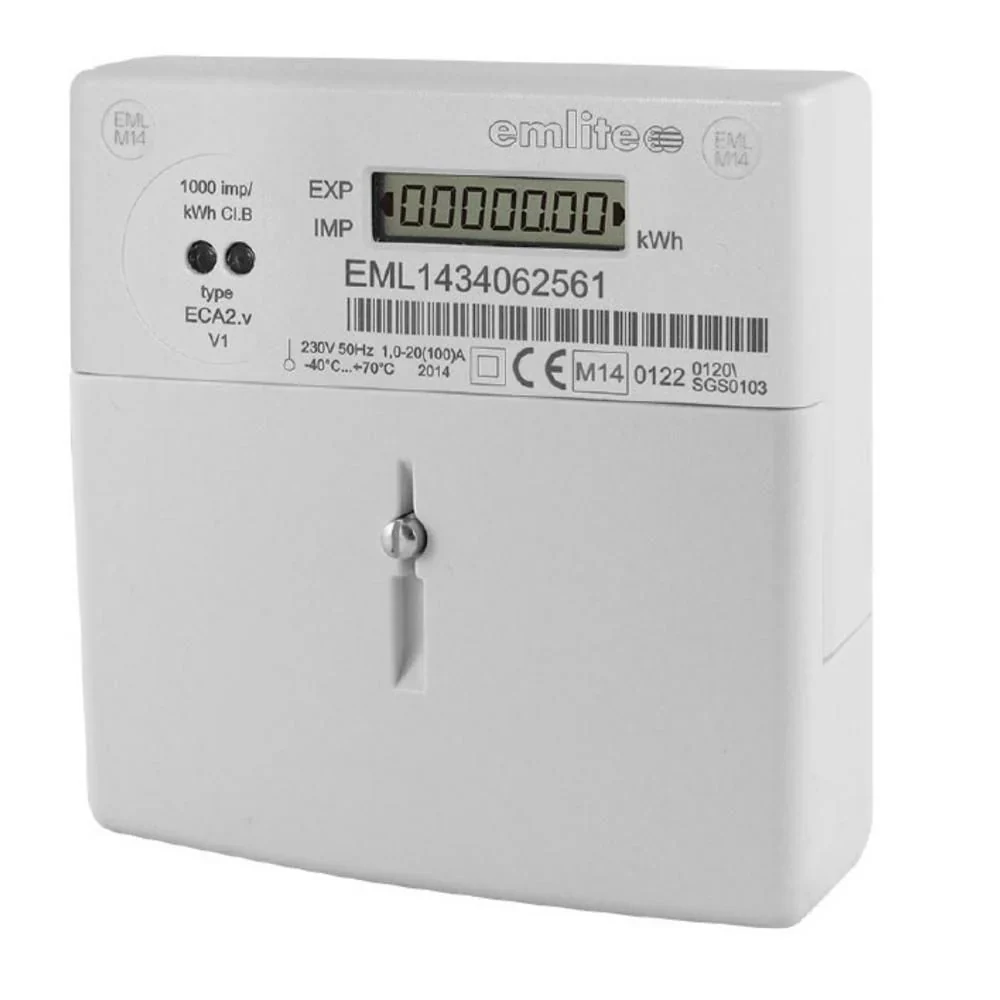
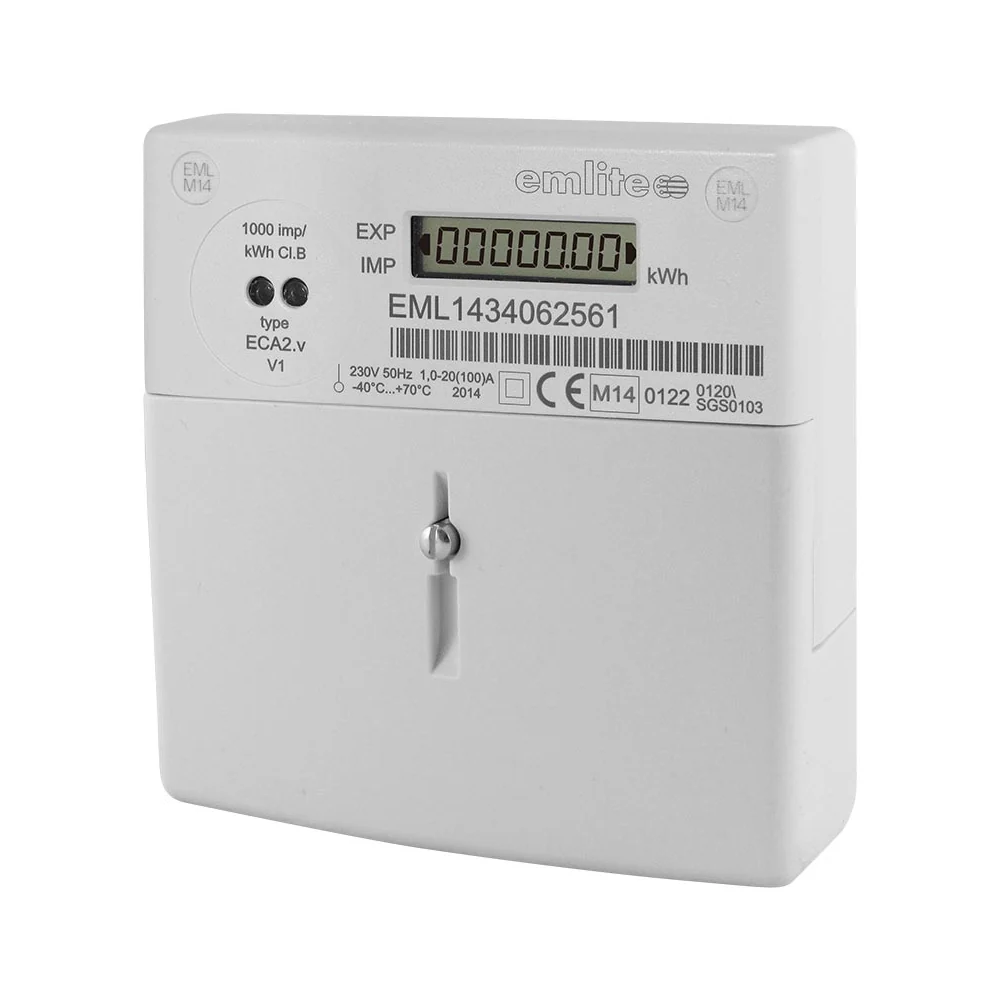
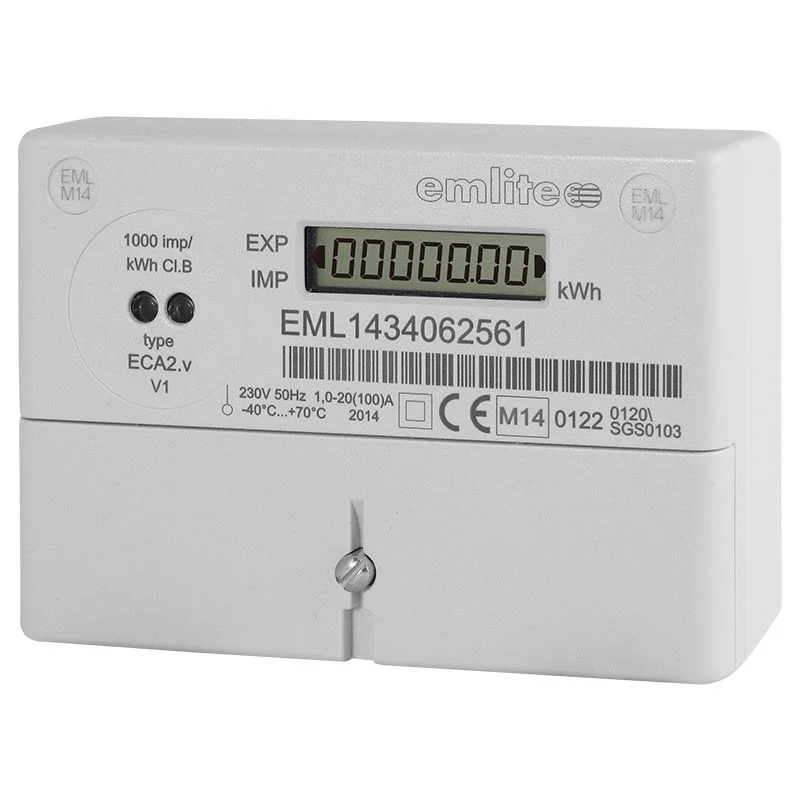
The Emlite ECA2 Bi-Directional is a single-phase, direct-connect 100A MID-approved electricity meter measuring energy in both directions simultaneously — displaying separate Import, Export, and NET registers on the auto-cycling LCD, with a 1000 pulse/kWh output for integration with energy management and monitoring systems. It is the correct meter for hybrid inverter systems with battery storage, where a simple total generation reading would not distinguish between solar energy consumed in the home, battery charge/discharge, and genuine net export to the grid. MCS and DNOs require the NET figure on battery-plus-solar systems for accurate SEG compliance. Supplied with an extended terminal cover. MID approved to Class B (1% accuracy, EN 50470-1/3).

ℹ Bi-Directional vs Total Generation — Which Meter Do You Need?
Total generation meter (ECA2.V): PV-only systems without battery storage. Counts all kWh generated.

Bi-directional meter (this product): Required for hybrid and DC-coupled systems with battery — GivEnergy, Fox ESS, Solis, SolarEdge, etc. The NET register correctly measures only the true net exported energy, eliminating grid-charged battery discharge from the generation count. Check your DNO and energy supplier requirements before ordering.
Features & Benefits
✔ MID Approved — Legal for Billing & MCS Sign-Off
MID (Measuring Instruments Directive 2004/22/EC) approval certifies a meter's accuracy for trade, billing, and official use. For solar PV installations in the UK, a MID-approved generation meter is required by DNOs and MCS as the legally valid measurement of exported or generated electricity — a non-MID meter cannot be used for SEG payments, FiT legacy claims, or MCS commissioning sign-off. The Emlite meters carry full MID approval to Class B (1% accuracy, EN 50470-1/3), satisfying all DNO and MCS submission requirements.
✔ Three Registers — Import, Export & NET
The bi-directional ECA2 auto-cycles through three distinct energy registers: Import (energy drawn from the grid), Export (energy sent to the grid), and NET (the running net balance). For a solar plus battery system, the NET value is the true amount of energy that left the property to the grid — the figure an energy supplier applies SEG rates to. Import and Export are retained separately for system performance analysis and tariff optimisation. All registers are individually accessible via the optical port for remote meter reading.
✔ 1000 Pulse/kWh — Energy Monitor Integration
The 1000 pulse per kWh opto-isolated output on the auxiliary terminals feeds real-time energy data into energy management systems, BMS, AMR data loggers, and smart home platforms. Each pulse represents 1Wh — at 1000 pulses/kWh the resolution supports accurate sub-hourly monitoring. The output conforms to IEC 62053-31 and is electrically isolated, preventing ground-loop issues when connecting to third-party monitoring equipment. Compatible with GivEnergy, SolarEdge, Solis, Fox ESS, myenergi, and most modern inverter monitoring platforms.
✔ Optical Port — Tamper Resistant — Solid Brass Terminals
An optical communications port (IEC 629056-21) enables electronic meter reading using a standard probe and software — useful for commissioning verification and commercial AMR reading. The meter is tamper resistant with reverse energy fraud detection and is sealed for life. Solid brass cable terminals (8.2mm diameter) give robust, low-resistance connections at full 100A rating. The meter withstands high-voltage events and 140% overcurrent without failure — important in grid-connected installations that may experience transients.
✔ Compact — IP52 — Wide Temperature Range
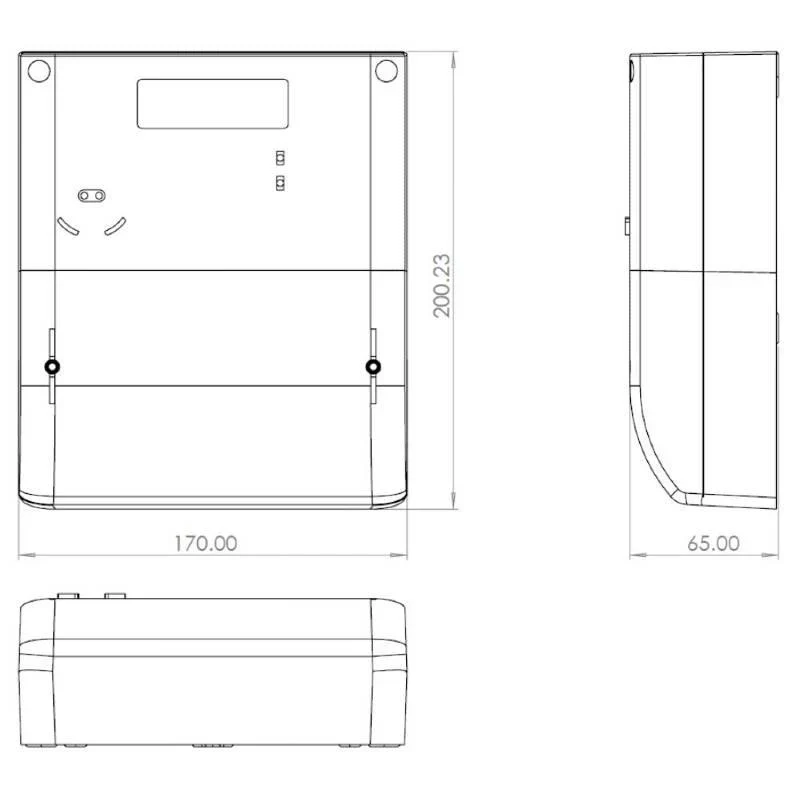
At 91 × 125 × 40mm, the ECA2 body is one of the most compact MID-approved single-phase meters available, fitting space-constrained consumer unit enclosures with the extended cover adding terminal wiring space. IP52 (BS EN 60529) for indoor and protected-location installation. Operational across –40°C to +70°C — suitable for unheated outbuildings and garage boards. Rated to 140% overcurrent and capable of withstanding high-voltage transients without failure.
Technical Specifications
Manufacturer / Model Emlite — ECA2 Bi-Directional (ECA2.NV / ECA2.BI)
Phase Single phase
Registers Import · Export · NET (auto-cycling LCD)
Nominal Voltage 220–240V AC; max 276V; withstand 415V (up to 6 hours)
Frequency 50Hz ± 5%
Reference / Max Current Iref 5–20A; Imax 100A (140% overcurrent rated)
Accuracy Class B (1%) — EN 50470-1/3; fully MID approved
Pulse Output 1000 pulses/kWh — aux terminals, IEC 62053-31, opto-isolated
Optical Port IEC 629056-21
Terminals BS 7856; 8.2mm solid brass
IP Rating IP52 (BS EN 60529)
Temperature Range –40°C to +70°C
Dimensions (H × W × D) 91 × 125 × 40 mm (meter body, excluding extended cover)
Frequently Asked Questions
When do I need a bi-directional meter instead of a standard generation meter?
Use a bi-directional meter whenever battery storage is part of the system. With a standard total generation meter, grid-charged battery discharge can be counted as solar generation — inflating the kWh figure and invalidating MCS and SEG compliance. The bi-directional ECA2 measures import, export, and NET separately: the NET figure is the true net export to the grid, which is the value MCS and most energy suppliers require for SEG registration on systems with storage. Check your DNO's G99 or G98 application requirements and your intended energy supplier's SEG terms before selecting a meter type.
What does the NET reading actually show?
The NET register is the mathematical result of total export minus total import (or vice versa — it tracks the running net balance). For a typical day on a solar plus battery system: the array generates energy during the day, some charges the battery, some powers the home, and any surplus exports. At night the battery discharges to power the home. The NET value accounts for all of this and shows only the kWh that genuinely left the property to the grid. This is the figure that represents the true benefit provided to the grid and is therefore the figure that SEG rates should be applied to — import and export readings are also retained separately for system performance analysis.
Can I use this meter for a PV-only installation without a battery?
Yes — the bi-directional ECA2 works on PV-only systems, but for a straightforward PV-only installation without battery storage, the ECA2.V total generation meter is simpler and equally compliant. The bi-directional model adds the NET and import registers — useful for performance analysis, but not required by MCS or most DNOs for a basic PV system. If there is any possibility of adding battery storage in the future, fitting the bi-directional meter now avoids a meter swap later.
Does the meter need to be located next to the consumer unit?
The generation meter must be accessible for reading, but does not need to be immediately adjacent to the consumer unit. In most domestic installations it is fitted in or next to the consumer unit enclosure for convenience. The pulse output cable can run up to several metres to reach an inverter or monitoring device — check your monitoring system's specifications for maximum cable run on the pulse input. The 1m optical port reading requires the probe to be physically presented to the meter face, so the meter should be accessible without tools.
Is this meter suitable for commercial solar installations?
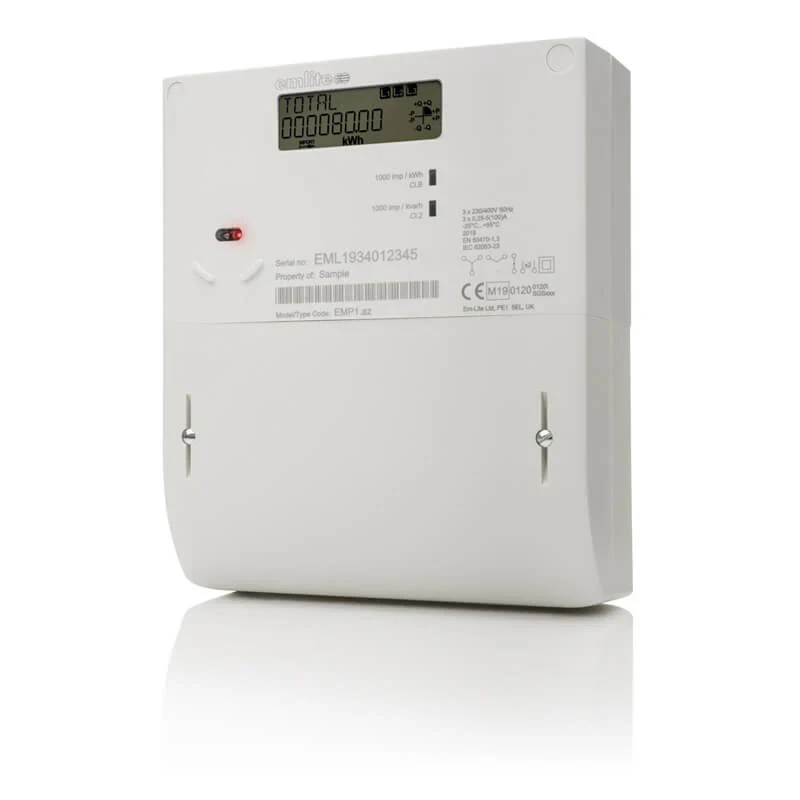
Yes — the ECA2 bi-directional is used in both domestic and commercial single-phase solar installations. The 100A Imax rating covers single-phase supplies up to approximately 23kW at 230V, which encompasses most commercial single-phase inverter capacities. For three-phase commercial installations — where the inverter is a 3-phase model or the supply is 3-phase — the Emlite EMP1-AZ three-phase bi-directional meter is the correct product. The MID approval applies across all applications, making this meter legally valid for billing and FiT/SEG commercial claims.
$21.73

Original: $62.08

-65%
Emlite ECA2 Single Phase Bi-Directional Generation Meter 100A 1000 Pulse kWh MID Import Export NET Solar Battery Hybrid with Cover

$62.08

$21.73

More Images

Emlite ECA2 Single Phase Bi-Directional Generation Meter 100A 1000 Pulse kWh MID Import Export NET Solar Battery Hybrid with Cover - Image 2
Emlite ECA2 Single Phase Bi-Directional Generation Meter 100A 1000 Pulse kWh MID Import Export NET Solar Battery Hybrid with Cover - Image 3

Emlite ECA2 Single Phase Bi-Directional Generation Meter 100A 1000 Pulse kWh MID Import Export NET Solar Battery Hybrid with Cover

The Emlite ECA2 Bi-Directional is a single-phase, direct-connect 100A MID-approved electricity meter measuring energy in both directions simultaneously — displaying separate Import, Export, and NET registers on the auto-cycling LCD, with a 1000 pulse/kWh output for integration with energy management and monitoring systems. It is the correct meter for hybrid inverter systems with battery storage, where a simple total generation reading would not distinguish between solar energy consumed in the home, battery charge/discharge, and genuine net export to the grid. MCS and DNOs require the NET figure on battery-plus-solar systems for accurate SEG compliance. Supplied with an extended terminal cover. MID approved to Class B (1% accuracy, EN 50470-1/3).

ℹ Bi-Directional vs Total Generation — Which Meter Do You Need?
Total generation meter (ECA2.V): PV-only systems without battery storage. Counts all kWh generated.

Bi-directional meter (this product): Required for hybrid and DC-coupled systems with battery — GivEnergy, Fox ESS, Solis, SolarEdge, etc. The NET register correctly measures only the true net exported energy, eliminating grid-charged battery discharge from the generation count. Check your DNO and energy supplier requirements before ordering.
Features & Benefits
✔ MID Approved — Legal for Billing & MCS Sign-Off
MID (Measuring Instruments Directive 2004/22/EC) approval certifies a meter's accuracy for trade, billing, and official use. For solar PV installations in the UK, a MID-approved generation meter is required by DNOs and MCS as the legally valid measurement of exported or generated electricity — a non-MID meter cannot be used for SEG payments, FiT legacy claims, or MCS commissioning sign-off. The Emlite meters carry full MID approval to Class B (1% accuracy, EN 50470-1/3), satisfying all DNO and MCS submission requirements.
✔ Three Registers — Import, Export & NET
The bi-directional ECA2 auto-cycles through three distinct energy registers: Import (energy drawn from the grid), Export (energy sent to the grid), and NET (the running net balance). For a solar plus battery system, the NET value is the true amount of energy that left the property to the grid — the figure an energy supplier applies SEG rates to. Import and Export are retained separately for system performance analysis and tariff optimisation. All registers are individually accessible via the optical port for remote meter reading.
✔ 1000 Pulse/kWh — Energy Monitor Integration
The 1000 pulse per kWh opto-isolated output on the auxiliary terminals feeds real-time energy data into energy management systems, BMS, AMR data loggers, and smart home platforms. Each pulse represents 1Wh — at 1000 pulses/kWh the resolution supports accurate sub-hourly monitoring. The output conforms to IEC 62053-31 and is electrically isolated, preventing ground-loop issues when connecting to third-party monitoring equipment. Compatible with GivEnergy, SolarEdge, Solis, Fox ESS, myenergi, and most modern inverter monitoring platforms.
✔ Optical Port — Tamper Resistant — Solid Brass Terminals
An optical communications port (IEC 629056-21) enables electronic meter reading using a standard probe and software — useful for commissioning verification and commercial AMR reading. The meter is tamper resistant with reverse energy fraud detection and is sealed for life. Solid brass cable terminals (8.2mm diameter) give robust, low-resistance connections at full 100A rating. The meter withstands high-voltage events and 140% overcurrent without failure — important in grid-connected installations that may experience transients.
✔ Compact — IP52 — Wide Temperature Range
At 91 × 125 × 40mm, the ECA2 body is one of the most compact MID-approved single-phase meters available, fitting space-constrained consumer unit enclosures with the extended cover adding terminal wiring space. IP52 (BS EN 60529) for indoor and protected-location installation. Operational across –40°C to +70°C — suitable for unheated outbuildings and garage boards. Rated to 140% overcurrent and capable of withstanding high-voltage transients without failure.
Technical Specifications
Manufacturer / Model Emlite — ECA2 Bi-Directional (ECA2.NV / ECA2.BI)
Phase Single phase
Registers Import · Export · NET (auto-cycling LCD)
Nominal Voltage 220–240V AC; max 276V; withstand 415V (up to 6 hours)
Frequency 50Hz ± 5%
Reference / Max Current Iref 5–20A; Imax 100A (140% overcurrent rated)
Accuracy Class B (1%) — EN 50470-1/3; fully MID approved
Pulse Output 1000 pulses/kWh — aux terminals, IEC 62053-31, opto-isolated
Optical Port IEC 629056-21
Terminals BS 7856; 8.2mm solid brass
IP Rating IP52 (BS EN 60529)
Temperature Range –40°C to +70°C
Dimensions (H × W × D) 91 × 125 × 40 mm (meter body, excluding extended cover)
Frequently Asked Questions
When do I need a bi-directional meter instead of a standard generation meter?
Use a bi-directional meter whenever battery storage is part of the system. With a standard total generation meter, grid-charged battery discharge can be counted as solar generation — inflating the kWh figure and invalidating MCS and SEG compliance. The bi-directional ECA2 measures import, export, and NET separately: the NET figure is the true net export to the grid, which is the value MCS and most energy suppliers require for SEG registration on systems with storage. Check your DNO's G99 or G98 application requirements and your intended energy supplier's SEG terms before selecting a meter type.
What does the NET reading actually show?
The NET register is the mathematical result of total export minus total import (or vice versa — it tracks the running net balance). For a typical day on a solar plus battery system: the array generates energy during the day, some charges the battery, some powers the home, and any surplus exports. At night the battery discharges to power the home. The NET value accounts for all of this and shows only the kWh that genuinely left the property to the grid. This is the figure that represents the true benefit provided to the grid and is therefore the figure that SEG rates should be applied to — import and export readings are also retained separately for system performance analysis.
Can I use this meter for a PV-only installation without a battery?
Yes — the bi-directional ECA2 works on PV-only systems, but for a straightforward PV-only installation without battery storage, the ECA2.V total generation meter is simpler and equally compliant. The bi-directional model adds the NET and import registers — useful for performance analysis, but not required by MCS or most DNOs for a basic PV system. If there is any possibility of adding battery storage in the future, fitting the bi-directional meter now avoids a meter swap later.
Does the meter need to be located next to the consumer unit?
The generation meter must be accessible for reading, but does not need to be immediately adjacent to the consumer unit. In most domestic installations it is fitted in or next to the consumer unit enclosure for convenience. The pulse output cable can run up to several metres to reach an inverter or monitoring device — check your monitoring system's specifications for maximum cable run on the pulse input. The 1m optical port reading requires the probe to be physically presented to the meter face, so the meter should be accessible without tools.
Is this meter suitable for commercial solar installations?
Yes — the ECA2 bi-directional is used in both domestic and commercial single-phase solar installations. The 100A Imax rating covers single-phase supplies up to approximately 23kW at 230V, which encompasses most commercial single-phase inverter capacities. For three-phase commercial installations — where the inverter is a 3-phase model or the supply is 3-phase — the Emlite EMP1-AZ three-phase bi-directional meter is the correct product. The MID approval applies across all applications, making this meter legally valid for billing and FiT/SEG commercial claims.

Product Information

Shipping & Returns

Description

The Emlite ECA2 Bi-Directional is a single-phase, direct-connect 100A MID-approved electricity meter measuring energy in both directions simultaneously — displaying separate Import, Export, and NET registers on the auto-cycling LCD, with a 1000 pulse/kWh output for integration with energy management and monitoring systems. It is the correct meter for hybrid inverter systems with battery storage, where a simple total generation reading would not distinguish between solar energy consumed in the home, battery charge/discharge, and genuine net export to the grid. MCS and DNOs require the NET figure on battery-plus-solar systems for accurate SEG compliance. Supplied with an extended terminal cover. MID approved to Class B (1% accuracy, EN 50470-1/3).

ℹ Bi-Directional vs Total Generation — Which Meter Do You Need?
Total generation meter (ECA2.V): PV-only systems without battery storage. Counts all kWh generated.

Bi-directional meter (this product): Required for hybrid and DC-coupled systems with battery — GivEnergy, Fox ESS, Solis, SolarEdge, etc. The NET register correctly measures only the true net exported energy, eliminating grid-charged battery discharge from the generation count. Check your DNO and energy supplier requirements before ordering.
Features & Benefits
✔ MID Approved — Legal for Billing & MCS Sign-Off
MID (Measuring Instruments Directive 2004/22/EC) approval certifies a meter's accuracy for trade, billing, and official use. For solar PV installations in the UK, a MID-approved generation meter is required by DNOs and MCS as the legally valid measurement of exported or generated electricity — a non-MID meter cannot be used for SEG payments, FiT legacy claims, or MCS commissioning sign-off. The Emlite meters carry full MID approval to Class B (1% accuracy, EN 50470-1/3), satisfying all DNO and MCS submission requirements.
✔ Three Registers — Import, Export & NET
The bi-directional ECA2 auto-cycles through three distinct energy registers: Import (energy drawn from the grid), Export (energy sent to the grid), and NET (the running net balance). For a solar plus battery system, the NET value is the true amount of energy that left the property to the grid — the figure an energy supplier applies SEG rates to. Import and Export are retained separately for system performance analysis and tariff optimisation. All registers are individually accessible via the optical port for remote meter reading.
✔ 1000 Pulse/kWh — Energy Monitor Integration
The 1000 pulse per kWh opto-isolated output on the auxiliary terminals feeds real-time energy data into energy management systems, BMS, AMR data loggers, and smart home platforms. Each pulse represents 1Wh — at 1000 pulses/kWh the resolution supports accurate sub-hourly monitoring. The output conforms to IEC 62053-31 and is electrically isolated, preventing ground-loop issues when connecting to third-party monitoring equipment. Compatible with GivEnergy, SolarEdge, Solis, Fox ESS, myenergi, and most modern inverter monitoring platforms.
✔ Optical Port — Tamper Resistant — Solid Brass Terminals
An optical communications port (IEC 629056-21) enables electronic meter reading using a standard probe and software — useful for commissioning verification and commercial AMR reading. The meter is tamper resistant with reverse energy fraud detection and is sealed for life. Solid brass cable terminals (8.2mm diameter) give robust, low-resistance connections at full 100A rating. The meter withstands high-voltage events and 140% overcurrent without failure — important in grid-connected installations that may experience transients.
✔ Compact — IP52 — Wide Temperature Range
At 91 × 125 × 40mm, the ECA2 body is one of the most compact MID-approved single-phase meters available, fitting space-constrained consumer unit enclosures with the extended cover adding terminal wiring space. IP52 (BS EN 60529) for indoor and protected-location installation. Operational across –40°C to +70°C — suitable for unheated outbuildings and garage boards. Rated to 140% overcurrent and capable of withstanding high-voltage transients without failure.
Technical Specifications
Manufacturer / Model Emlite — ECA2 Bi-Directional (ECA2.NV / ECA2.BI)
Phase Single phase
Registers Import · Export · NET (auto-cycling LCD)
Nominal Voltage 220–240V AC; max 276V; withstand 415V (up to 6 hours)
Frequency 50Hz ± 5%
Reference / Max Current Iref 5–20A; Imax 100A (140% overcurrent rated)
Accuracy Class B (1%) — EN 50470-1/3; fully MID approved
Pulse Output 1000 pulses/kWh — aux terminals, IEC 62053-31, opto-isolated
Optical Port IEC 629056-21
Terminals BS 7856; 8.2mm solid brass
IP Rating IP52 (BS EN 60529)
Temperature Range –40°C to +70°C
Dimensions (H × W × D) 91 × 125 × 40 mm (meter body, excluding extended cover)
Frequently Asked Questions
When do I need a bi-directional meter instead of a standard generation meter?
Use a bi-directional meter whenever battery storage is part of the system. With a standard total generation meter, grid-charged battery discharge can be counted as solar generation — inflating the kWh figure and invalidating MCS and SEG compliance. The bi-directional ECA2 measures import, export, and NET separately: the NET figure is the true net export to the grid, which is the value MCS and most energy suppliers require for SEG registration on systems with storage. Check your DNO's G99 or G98 application requirements and your intended energy supplier's SEG terms before selecting a meter type.
What does the NET reading actually show?
The NET register is the mathematical result of total export minus total import (or vice versa — it tracks the running net balance). For a typical day on a solar plus battery system: the array generates energy during the day, some charges the battery, some powers the home, and any surplus exports. At night the battery discharges to power the home. The NET value accounts for all of this and shows only the kWh that genuinely left the property to the grid. This is the figure that represents the true benefit provided to the grid and is therefore the figure that SEG rates should be applied to — import and export readings are also retained separately for system performance analysis.
Can I use this meter for a PV-only installation without a battery?
Yes — the bi-directional ECA2 works on PV-only systems, but for a straightforward PV-only installation without battery storage, the ECA2.V total generation meter is simpler and equally compliant. The bi-directional model adds the NET and import registers — useful for performance analysis, but not required by MCS or most DNOs for a basic PV system. If there is any possibility of adding battery storage in the future, fitting the bi-directional meter now avoids a meter swap later.
Does the meter need to be located next to the consumer unit?
The generation meter must be accessible for reading, but does not need to be immediately adjacent to the consumer unit. In most domestic installations it is fitted in or next to the consumer unit enclosure for convenience. The pulse output cable can run up to several metres to reach an inverter or monitoring device — check your monitoring system's specifications for maximum cable run on the pulse input. The 1m optical port reading requires the probe to be physically presented to the meter face, so the meter should be accessible without tools.
Is this meter suitable for commercial solar installations?
Yes — the ECA2 bi-directional is used in both domestic and commercial single-phase solar installations. The 100A Imax rating covers single-phase supplies up to approximately 23kW at 230V, which encompasses most commercial single-phase inverter capacities. For three-phase commercial installations — where the inverter is a 3-phase model or the supply is 3-phase — the Emlite EMP1-AZ three-phase bi-directional meter is the correct product. The MID approval applies across all applications, making this meter legally valid for billing and FiT/SEG commercial claims.