✨ New Arrivals Just Dropped!Explore
Aiko Neostar 3S 490W N-Type ABC All Black Mono Glass Solar Panel Gen 3
HomeStore

Aiko Neostar 3S 490W N-Type ABC All Black Mono Glass Solar Panel Gen 3

Aiko Neostar 3S 490W N-Type ABC All Black Mono Glass Solar Panel Gen 3

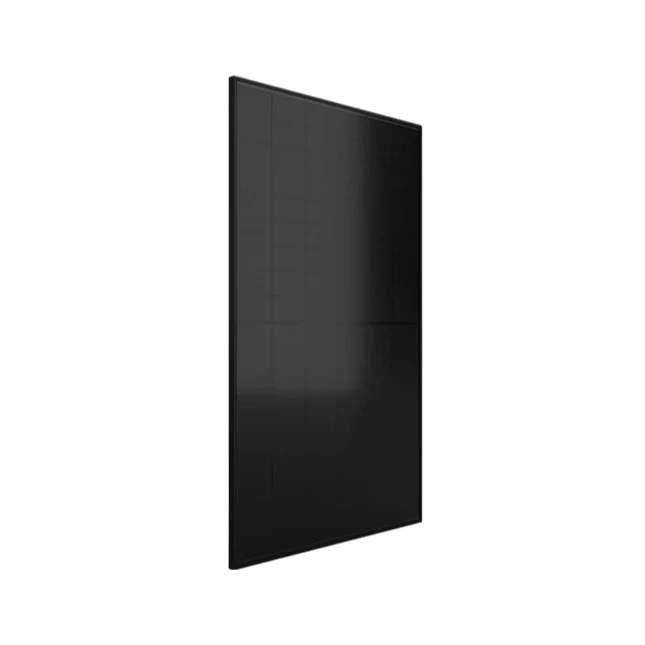
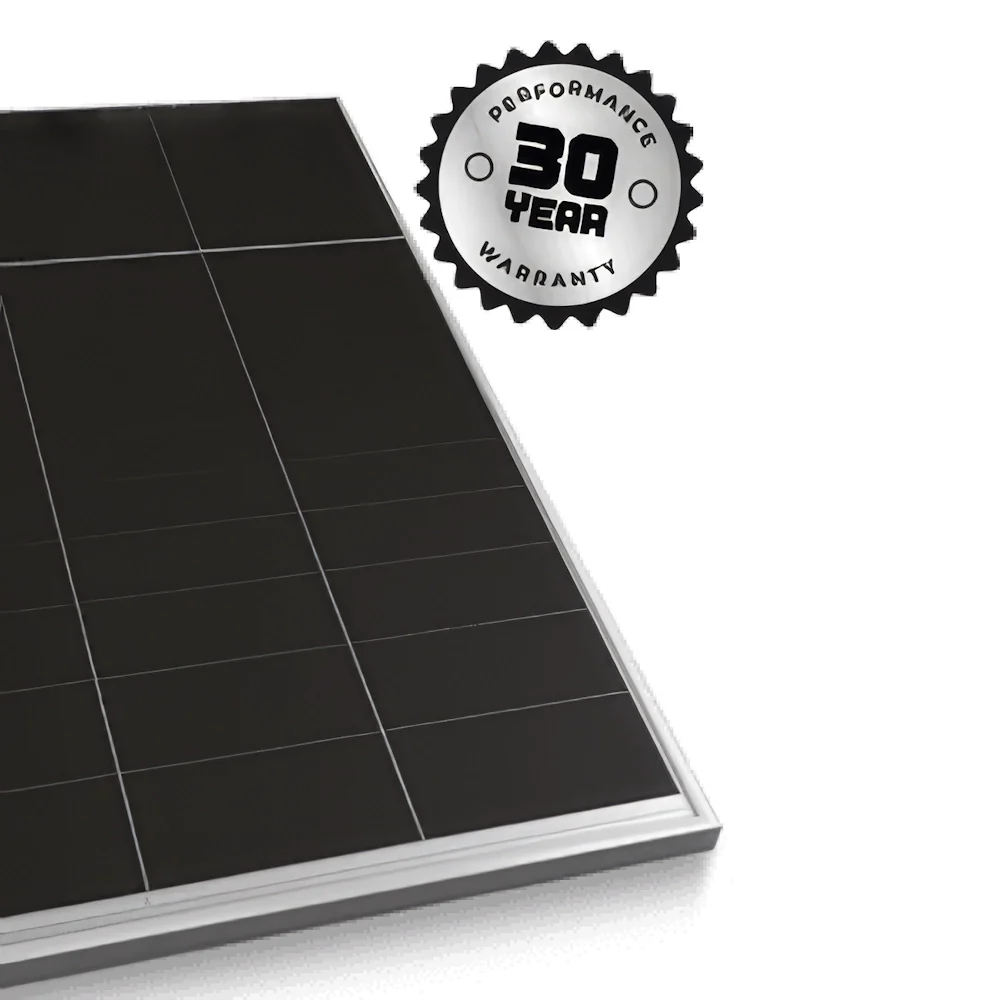
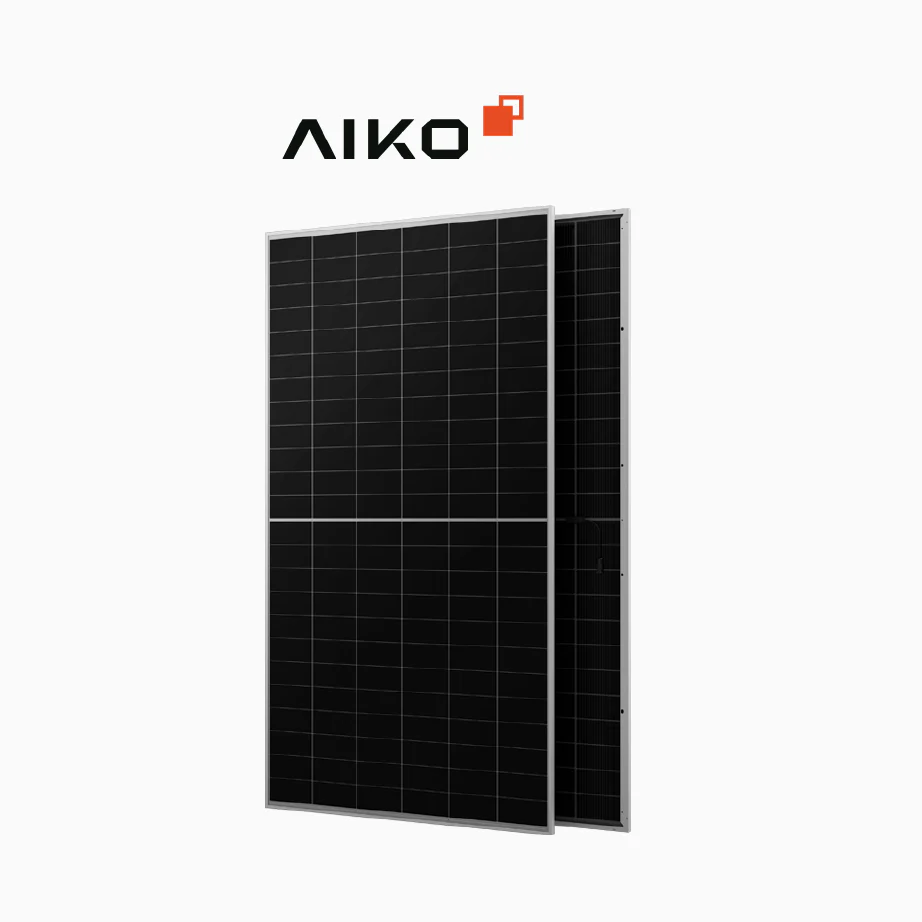
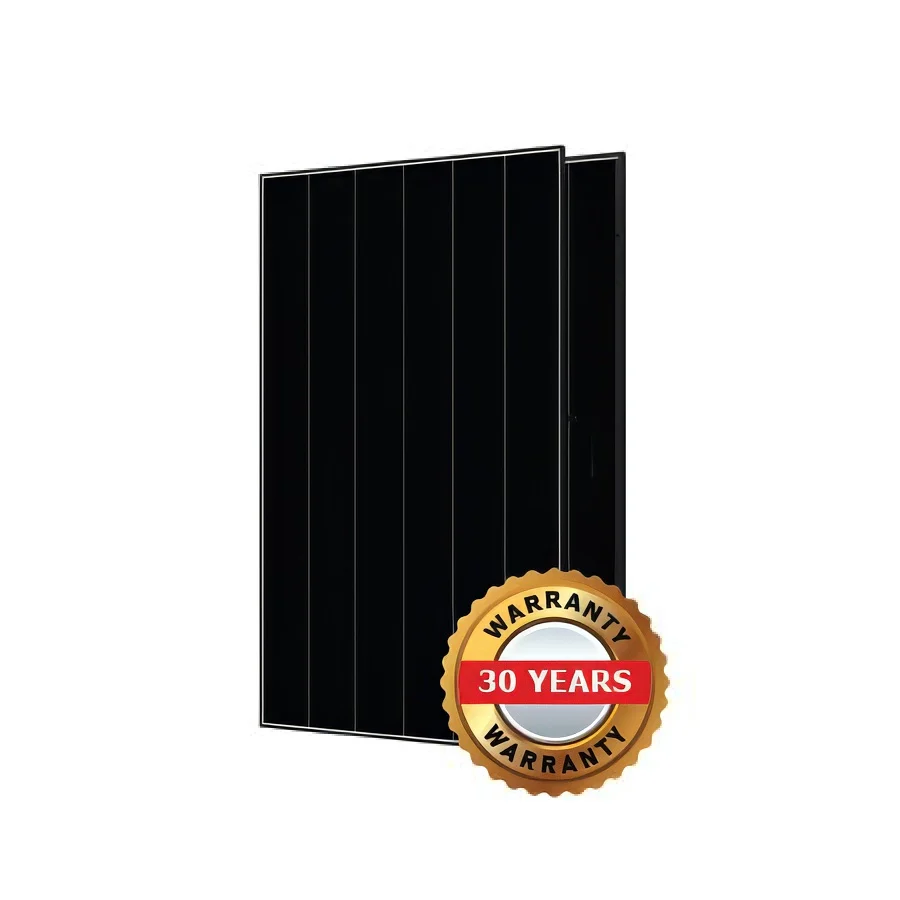
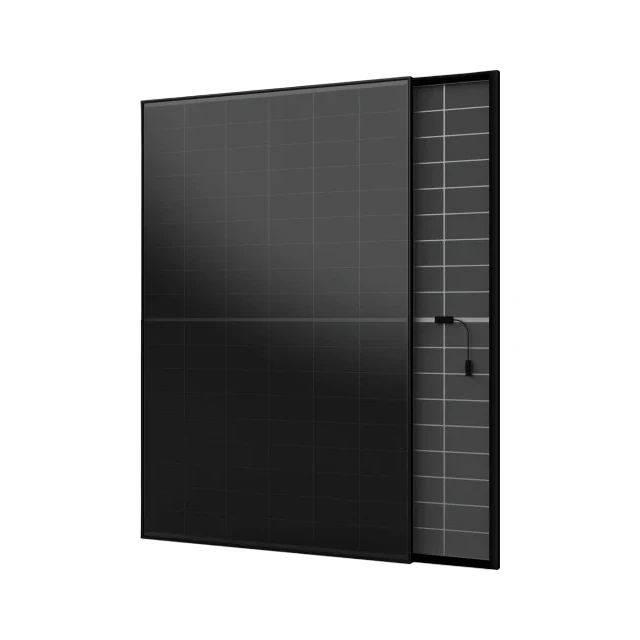
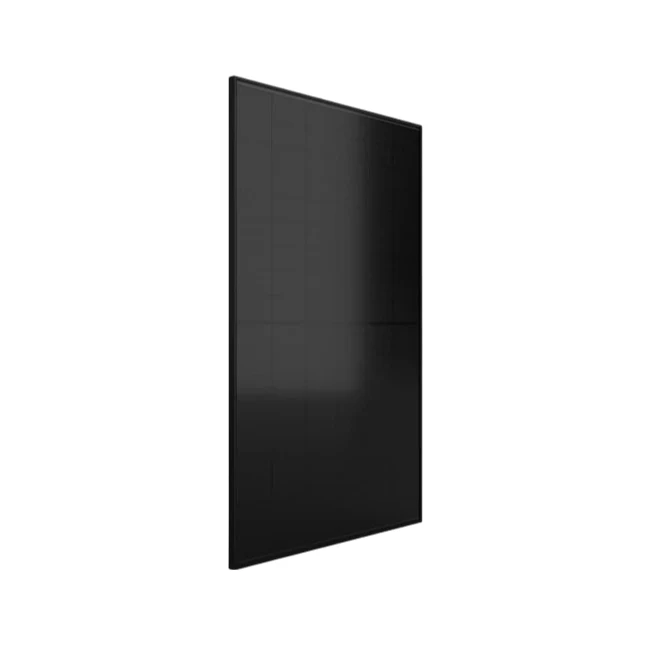
The Aiko Neostar 3S 490W All Black (AIK-A-MCE54-490-AB-G3 / AIKO-A490-MCE54Mb) is the peak-power variant of Aiko's third-generation INFINITE N-Type ABC mono-glass module — delivering 24.5% module efficiency in a sleek, true all-black format with no visible busbars, no cell gaps, and a uniform black polymer backsheet. At 490W from a compact 54-cell 1762 × 1134mm footprint, this panel generates more electricity per square metre than any comparable residential module on the UK market. The all-black aesthetic suits modern roof designs and conservation area installations where panel appearance is a consideration; the N-Type ABC cell architecture delivers the performance that backs up the premium specification. 30-year product warranty and 30-year linear performance warranty. Temperature coefficient of −0.26%/°C — best in independent CEA PV Tech lab testing. MCS certified. Winner of the Intersolar Innovation Award 2023, Red Dot Design Award 2023, and recognised with ESG Transparency 2024. BloombergNEF Tier 1 manufacturer.

ℹ This Is the Mono-Glass All-Black Variant — How It Differs from Dual Glass
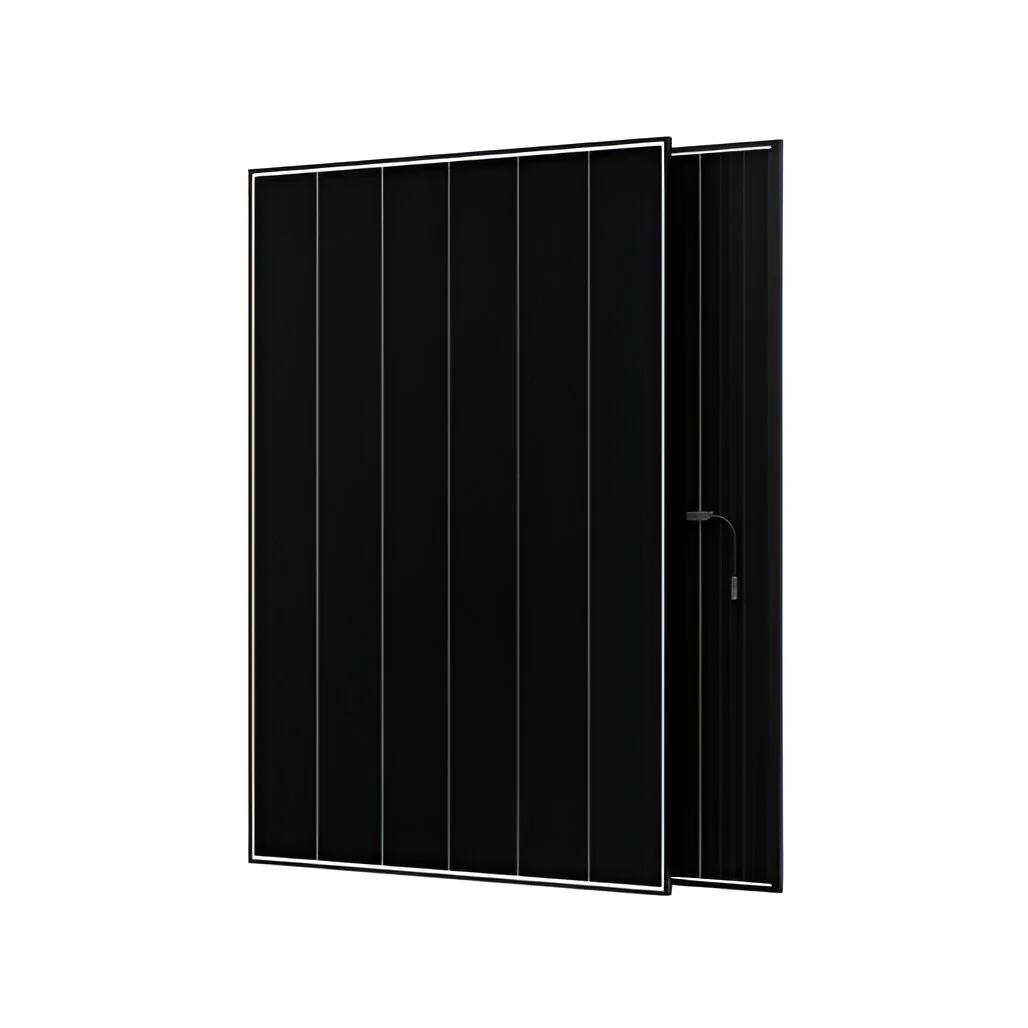
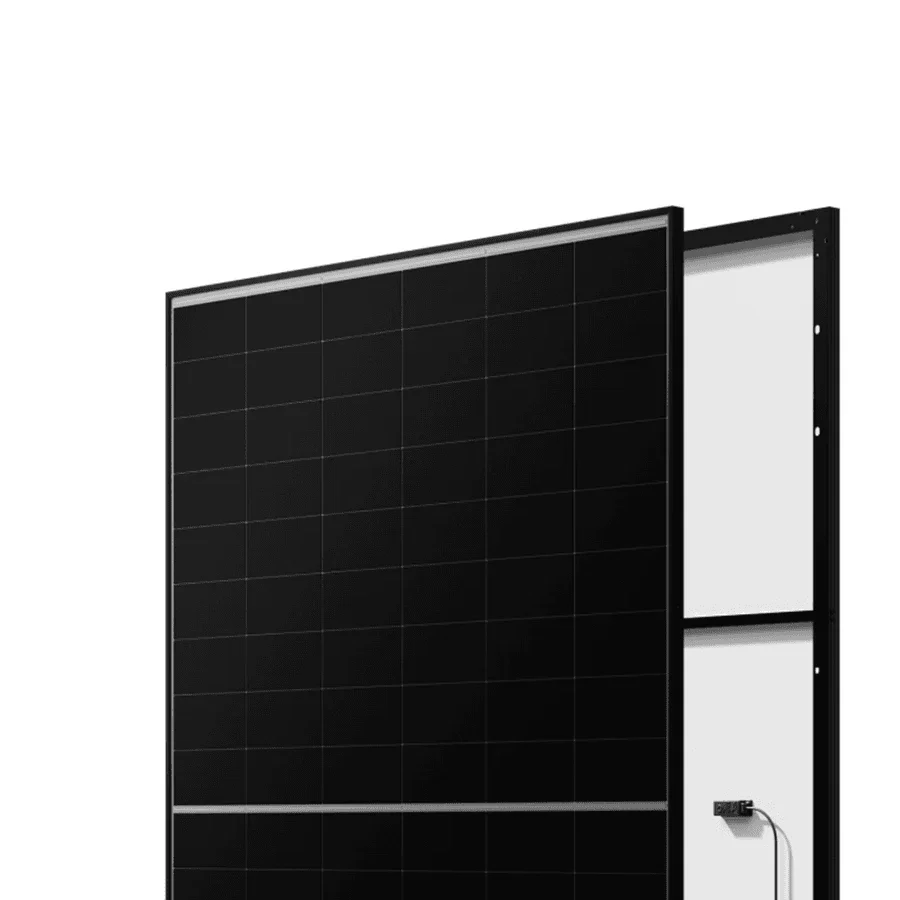
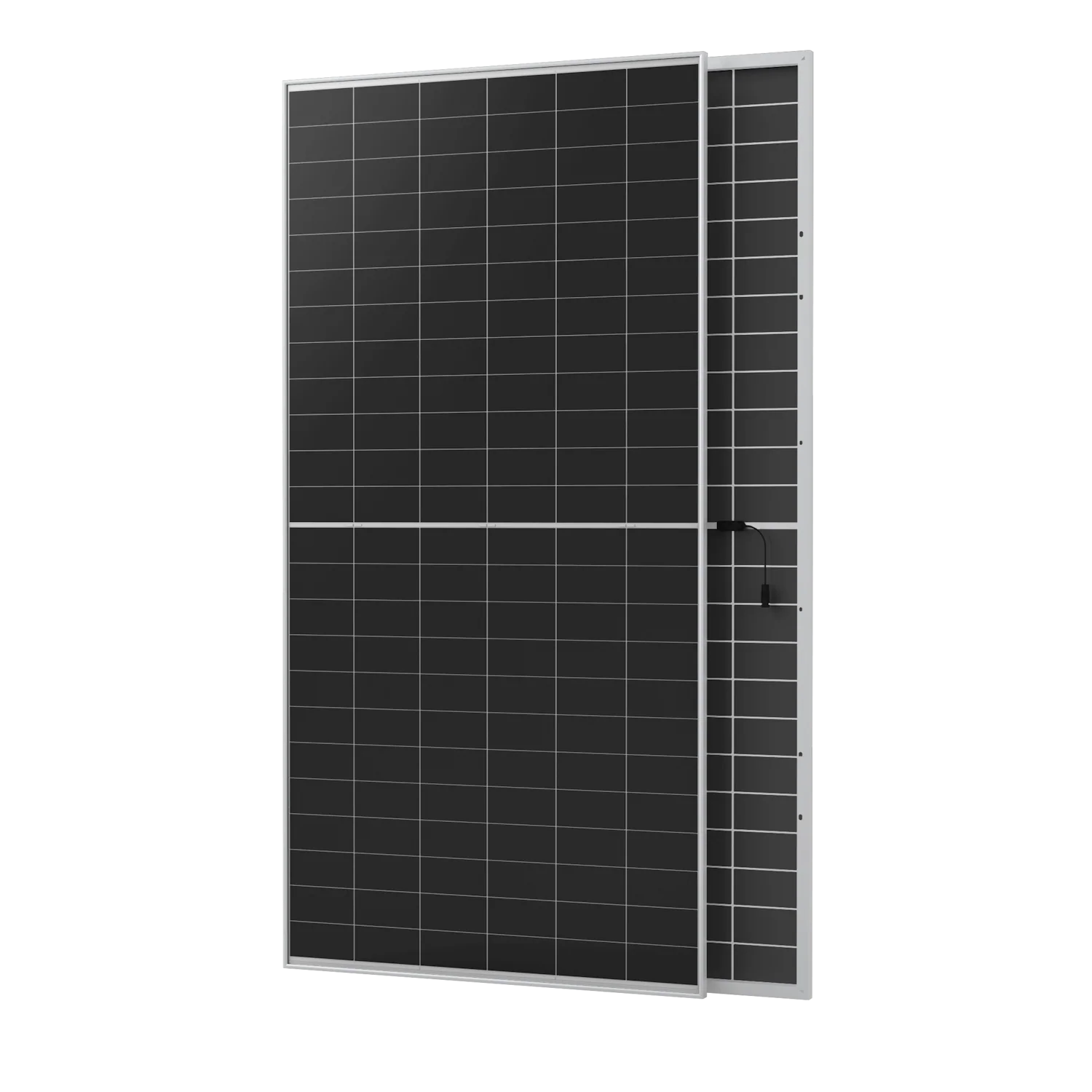
The Neostar 3S (AIK-A-MCE54-490-AB-G3) uses a single 2.0mm tempered glass front and a black polymer backsheet — giving it the lightest weight in the Gen 3 range at 20.6kg and a fully black rear face with no visible silver busbar lines. It is monofacial (front-side illumination only). For installations where rear-side reflected light can be captured, the dual-glass bifacial 3S+ (AIK-A-MCE54-490-AB-DG-G3) is available instead. For a standard pitched UK roof with no significant ground or roof reflection, the mono-glass variant produces comparable real-world yield at a lower mounting weight.
490W
Rated power (STC)
24.5%
Module efficiency
−0.26%/°C
Temp coefficient
≥88.85%
Output at year 30
30 + 30yr
Product + performance
Features & Benefits
✔ ABC Technology — All Contacts on the Rear
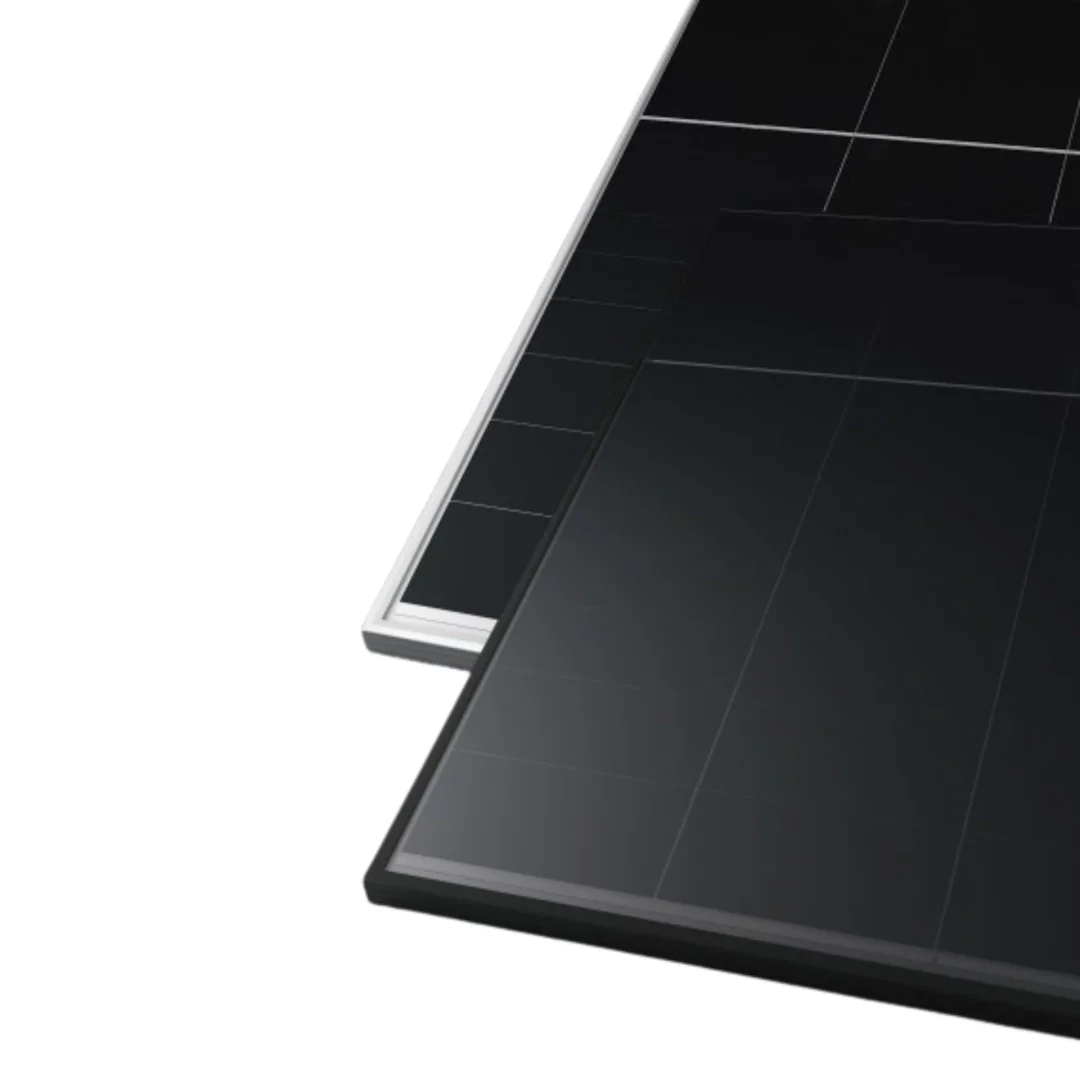
All Back Contact (ABC) relocates every electrical contact — both positive and negative — to the rear face of the cell, leaving the entire front surface available for light absorption. Standard solar cells lose 3–5% of their potentially capturable light under the silver busbars printed on the front. Aiko's ABC cells eliminate this loss entirely. Combined with Precision Overlap Soldering — a Gen 3 advancement that eliminates the gaps between cells — the panel's active generating area is maximised to the largest proportion of total panel area achievable in a residential format. The result is a measurably higher yield from the same roof space.
✔ True All-Black — No Visible Busbars, No Cell Gaps
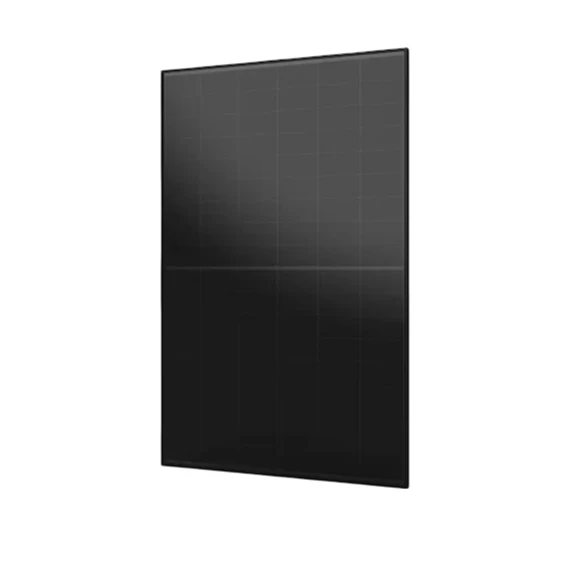
The Neostar 3S All Black achieves a genuinely uniform black appearance — not just a black frame around a blue or silver-veined panel. The ABC rear-contact design means no silver busbars cross the front face, and Precision Overlap Soldering closes the white gaps between cells that are visible on conventional panels. The result is a flat, deeply black surface that reads as a single sheet of colour on the roof rather than a grid of 54 individual cells. The black polymer backsheet completes the aesthetic on the underside. For homeowners, architects, and conservation officers for whom panel appearance is a specification requirement, this is the panel that meets the brief without compromising output.
✔ Cell-Level Partial Shade Optimisation — Unique to Aiko
Aiko's ABC architecture enables partial shading optimisation at the individual cell level — a capability that Aiko claims is unique in the industry. On a conventional solar panel, bypass diodes protect the module by shutting off an entire third of the panel (18 cells) when any cell in that section is shaded. On the Neostar 3S, only the specifically shaded cells are bypassed, while the remaining unshaded cells in the same section continue generating normally. In practice: shading from a chimney, TV aerial, roof vent, or tree affecting one-sixth of the panel results in approximately one-sixth of output loss — not one-third. This requires no external optimiser hardware and adds no additional failure points to the system.
✔ −0.26%/°C — Best Temperature Coefficient
All solar panels lose efficiency as cell temperature rises above 25°C — the temperature coefficient of Pmax quantifies this loss. At −0.26%/°C, the Neostar 3S loses less power per degree of heating than any other panel type in independent CEA PV Tech laboratory testing. A typical P-type PERC panel has a coefficient of −0.35%/°C; HJT panels reach −0.26% but at significantly higher cost. In practical UK terms: on a summer day when panels reach 65°C, the Neostar 3S loses 10.4% of its STC rating from temperature — a PERC panel in the same conditions loses 14%. Over a UK year with a realistic range of operating temperatures, the temperature coefficient advantage compounds into a measurable additional annual yield.
✔ ≤0.35%/year Degradation — 88.85% at Year 30
The Neostar 3S Gen 3 warranty guarantees ≤1% output loss in year 1 (LID/LeTID stabilisation) and ≤0.35%/year degradation from years 2 to 30, with a guaranteed minimum output at year 30 of ≥88.85% of rated power. For context: a standard P-type PERC panel typically degrades at 0.55%/year, leaving approximately 80% of rated output at year 30. The Aiko N-Type ABC cell's inherently lower LID (Light-Induced Degradation) and LeTID (Light and elevated Temperature Induced Degradation) characteristics underpin this low degradation rate — N-Type silicon does not suffer the boron-oxygen complex formation that causes LID in P-type cells. Over 30 years, a system built with these panels will generate substantially more total electricity than an equivalent PERC system of the same initial capacity.
✔ Stäubli MC4-EVO2A — DC 1500V — MCS Certified
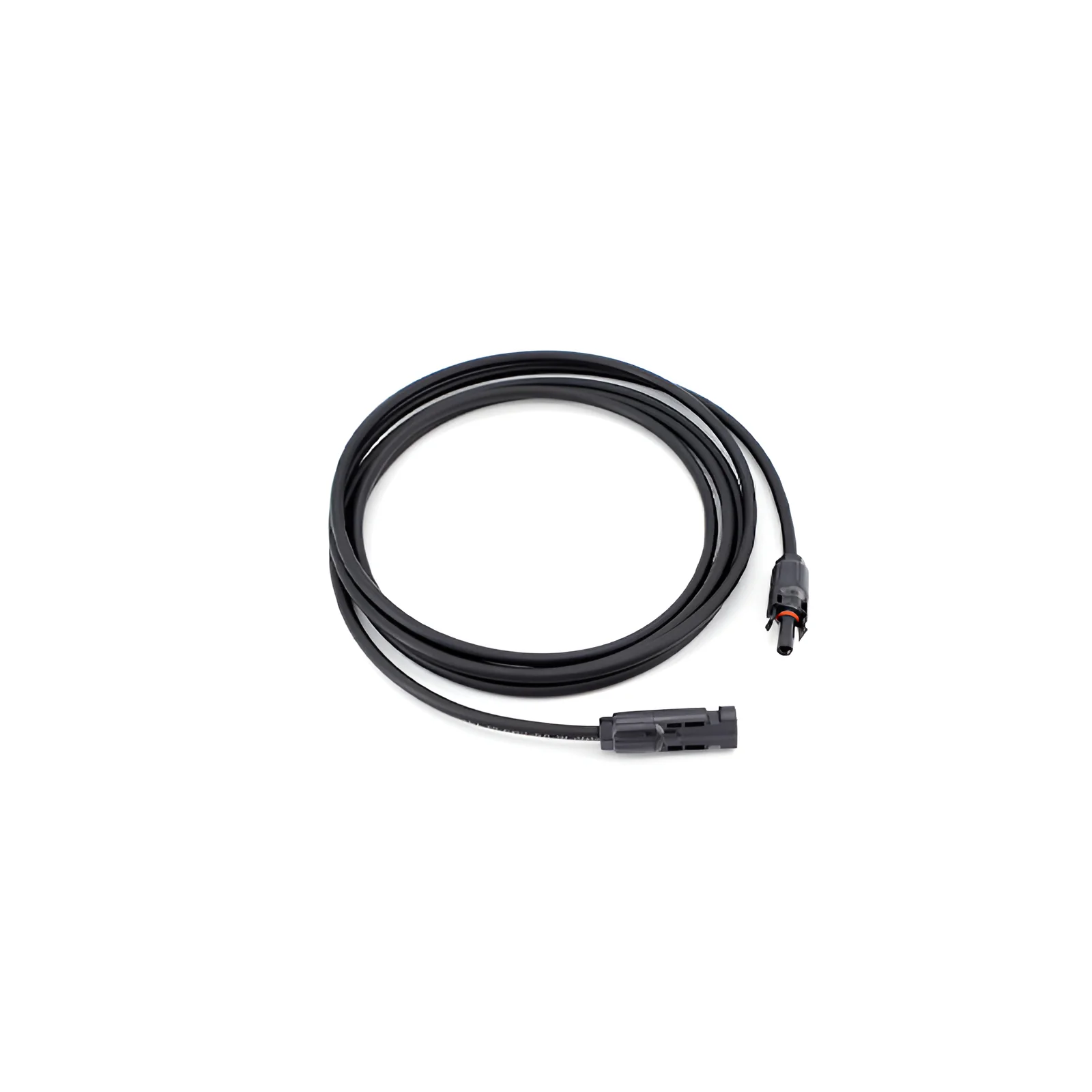
The Neostar 3S is supplied with Stäubli MC4-EVO2A connectors — the industry's most widely trusted PV connector standard, compatible with all major inverter and string combiner DC input connections. Cables are 1.2m length, 4mm² cross-section, giving sufficient length for standard framing arrangements without extensions in most residential layouts. Maximum system voltage of DC 1,500V enables compatibility with high-voltage commercial string configurations and the latest 1,500V hybrid inverters. MCS (Microgeneration Certification Scheme) certified — required for eligibility for UK Smart Export Guarantee (SEG) tariff payments. Clamp position: long side only.
Technical Specifications — AIK-A-MCE54-490-AB-G3 (STC)
Manufacturer / Part No. Aiko Solar (Shanghai AIKO Energy Co., Ltd.) — AIK-A-MCE54-490-AB-G3
Model Code AIKO-A490-MCE54Mb (Neostar 3S54 Mono-Glass All Black)
Cell Technology N-Type ABC (All Back Contact) — INFINITE Technology Gen 3
No. of Cells 54 (6 × 9)
Rated Power (Pmax) 490 W
Module Efficiency 24.5%
Power Tolerance 0 / +5W
Temperature Coefficient (Pmax) −0.26%/°C
Max. System Voltage DC 1,500V
Construction Mono-glass — 2.0mm tempered front glass · black polymer backsheet
Frame Black anodised aluminium — all-black appearance
Dimensions (L × W × D) 1,762 × 1,134 × 30 mm
Weight 20.6 kg
Connector Stäubli MC4-EVO2A · 1.2m cable · 4mm²
Clamp Position Long side only
Fire Classification IEC Class A
Degradation ≤1% year 1 · ≤0.35%/year years 2–30 · ≥88.85% at year 30
Product Warranty 30 years
Performance Warranty 30 years linear
Certifications MCS · TÜV · IEC 61215 · IEC 61730
Awards / Recognition Intersolar Innovation Award 2023 · Red Dot Design Award 2023 · ESG Transparency 2024 · BNEF Tier 1 manufacturer
ℹ Gen 3 vs Gen 2 — What Changed
Third-generation INFINITE modules introduced in summer 2025 bring three advances over Gen 2: (1) Precision Overlap Soldering eliminates the small gaps between cells, increasing the active generating area by several percentage points; (2) higher nominal power — panels in the same 54-cell format gained 15–20W over the equivalent Gen 2 rating; (3) extended product warranty from 25 to 30 years. The 30-year performance warranty and −0.26%/°C temperature coefficient are carried forward unchanged from Gen 2.
Frequently Asked Questions
How much more electricity does 24.5% efficiency actually generate in a real UK installation?
In a typical south-facing, 35° pitch UK roof location with approximately 1,000–1,100 kWh/m²/year of solar irradiance, a 490W panel of 1.998m² active area generates approximately 460–490 kWh/year. A standard 400W PERC panel of the same physical dimensions but 20% efficiency would generate approximately 360–380 kWh/year. The difference — roughly 100 kWh per panel per year — compounds significantly across a 10–16 panel domestic system: a 10-panel PERC system might generate 3,700 kWh/year; the same 10 Aiko panels at 490W might generate 4,700 kWh/year. Over a 30-year system life, considering the Aiko's lower degradation rate, the cumulative generation advantage can represent several additional years' worth of electricity production compared to a standard PERC installation.
Is this panel eligible for the Smart Export Guarantee (SEG)?
Yes — the Aiko Neostar 3S is MCS certified, which is a prerequisite for SEG eligibility for domestic solar PV installations under 50kW. MCS certification of the panel must be combined with MCS certification of the complete installation (installer MCS accredited, system design compliant with MCS 012) for the full system to qualify. The installer must also register the installation on the MCS database. Check with your installer that they hold current MCS accreditation before purchase.
Is this suitable for a south-facing roof, or does ABC technology offer an advantage on east/west orientations?
The Neostar 3S performs excellently on south-facing roofs and delivers its headline efficiency figures under optimal orientation and irradiance. The cell-level shade optimisation is where ABC technology has its most visible real-world advantage on sub-optimal orientations — an east/west split roof where morning or afternoon shading from ridges and valleys affects part of the array will see noticeably less inter-string loss with Aiko panels than with conventional bypass diode protection. The low temperature coefficient (−0.26%/°C) also benefits south-facing arrays most, since south-facing panels reach higher cell temperatures in summer. Neither advantage disappears on east/west systems — both compound throughout the year.
What is the difference between the "3S", "3P", and "3P+" designations in the Aiko range?
All three designations use the same N-Type ABC cell technology in the same 54-cell format. The key difference is glass construction and bifaciality. Neostar 3S (this panel — AIK-A-MCE54-490-AB-G3): mono-glass with black backsheet, monofacial, lightest weight (20.6kg). Neostar 3P and 3P+: dual-glass construction (2.0 + 2.0mm glass), bifacial (captures reflected light from the rear), heavier (approx. 24.2kg), more mechanically robust, better suited to ground mounts and commercial ballasted arrays where rear-side irradiance can be realised. For standard UK pitched roof applications, the 3S mono-glass delivers equivalent front-side performance at lower mounting weight and typically lower cost.
How do I verify this is a genuine Aiko product?
Aiko provides a module authenticity verification tool at verify.aikosolar.com — scan the QR code on the panel's data label or enter the panel serial number to confirm the module was manufactured by Aiko Solar and is not a counterfeit. Each panel carries a unique serial number and the AIKO branding on the data plate. Genuine modules also have a consistent all-black rear appearance (no silver contacts visible on the rear face), and the MC4-EVO2A connector housings carry the Stäubli branding. If purchasing through a distributor, request the MCS certificate and TÜV test certificates for the specific part number.
$95.89

Original: $273.98

-65%
Aiko Neostar 3S 490W N-Type ABC All Black Mono Glass Solar Panel Gen 3

$273.98

$95.89

More Images

Aiko Neostar 3S 490W N-Type ABC All Black Mono Glass Solar Panel Gen 3 - Image 2
Aiko Neostar 3S 490W N-Type ABC All Black Mono Glass Solar Panel Gen 3 - Image 3

Aiko Neostar 3S 490W N-Type ABC All Black Mono Glass Solar Panel Gen 3

The Aiko Neostar 3S 490W All Black (AIK-A-MCE54-490-AB-G3 / AIKO-A490-MCE54Mb) is the peak-power variant of Aiko's third-generation INFINITE N-Type ABC mono-glass module — delivering 24.5% module efficiency in a sleek, true all-black format with no visible busbars, no cell gaps, and a uniform black polymer backsheet. At 490W from a compact 54-cell 1762 × 1134mm footprint, this panel generates more electricity per square metre than any comparable residential module on the UK market. The all-black aesthetic suits modern roof designs and conservation area installations where panel appearance is a consideration; the N-Type ABC cell architecture delivers the performance that backs up the premium specification. 30-year product warranty and 30-year linear performance warranty. Temperature coefficient of −0.26%/°C — best in independent CEA PV Tech lab testing. MCS certified. Winner of the Intersolar Innovation Award 2023, Red Dot Design Award 2023, and recognised with ESG Transparency 2024. BloombergNEF Tier 1 manufacturer.

ℹ This Is the Mono-Glass All-Black Variant — How It Differs from Dual Glass
The Neostar 3S (AIK-A-MCE54-490-AB-G3) uses a single 2.0mm tempered glass front and a black polymer backsheet — giving it the lightest weight in the Gen 3 range at 20.6kg and a fully black rear face with no visible silver busbar lines. It is monofacial (front-side illumination only). For installations where rear-side reflected light can be captured, the dual-glass bifacial 3S+ (AIK-A-MCE54-490-AB-DG-G3) is available instead. For a standard pitched UK roof with no significant ground or roof reflection, the mono-glass variant produces comparable real-world yield at a lower mounting weight.
490W
Rated power (STC)
24.5%
Module efficiency
−0.26%/°C
Temp coefficient
≥88.85%
Output at year 30
30 + 30yr
Product + performance
Features & Benefits
✔ ABC Technology — All Contacts on the Rear
All Back Contact (ABC) relocates every electrical contact — both positive and negative — to the rear face of the cell, leaving the entire front surface available for light absorption. Standard solar cells lose 3–5% of their potentially capturable light under the silver busbars printed on the front. Aiko's ABC cells eliminate this loss entirely. Combined with Precision Overlap Soldering — a Gen 3 advancement that eliminates the gaps between cells — the panel's active generating area is maximised to the largest proportion of total panel area achievable in a residential format. The result is a measurably higher yield from the same roof space.
✔ True All-Black — No Visible Busbars, No Cell Gaps
The Neostar 3S All Black achieves a genuinely uniform black appearance — not just a black frame around a blue or silver-veined panel. The ABC rear-contact design means no silver busbars cross the front face, and Precision Overlap Soldering closes the white gaps between cells that are visible on conventional panels. The result is a flat, deeply black surface that reads as a single sheet of colour on the roof rather than a grid of 54 individual cells. The black polymer backsheet completes the aesthetic on the underside. For homeowners, architects, and conservation officers for whom panel appearance is a specification requirement, this is the panel that meets the brief without compromising output.
✔ Cell-Level Partial Shade Optimisation — Unique to Aiko
Aiko's ABC architecture enables partial shading optimisation at the individual cell level — a capability that Aiko claims is unique in the industry. On a conventional solar panel, bypass diodes protect the module by shutting off an entire third of the panel (18 cells) when any cell in that section is shaded. On the Neostar 3S, only the specifically shaded cells are bypassed, while the remaining unshaded cells in the same section continue generating normally. In practice: shading from a chimney, TV aerial, roof vent, or tree affecting one-sixth of the panel results in approximately one-sixth of output loss — not one-third. This requires no external optimiser hardware and adds no additional failure points to the system.
✔ −0.26%/°C — Best Temperature Coefficient
All solar panels lose efficiency as cell temperature rises above 25°C — the temperature coefficient of Pmax quantifies this loss. At −0.26%/°C, the Neostar 3S loses less power per degree of heating than any other panel type in independent CEA PV Tech laboratory testing. A typical P-type PERC panel has a coefficient of −0.35%/°C; HJT panels reach −0.26% but at significantly higher cost. In practical UK terms: on a summer day when panels reach 65°C, the Neostar 3S loses 10.4% of its STC rating from temperature — a PERC panel in the same conditions loses 14%. Over a UK year with a realistic range of operating temperatures, the temperature coefficient advantage compounds into a measurable additional annual yield.
✔ ≤0.35%/year Degradation — 88.85% at Year 30
The Neostar 3S Gen 3 warranty guarantees ≤1% output loss in year 1 (LID/LeTID stabilisation) and ≤0.35%/year degradation from years 2 to 30, with a guaranteed minimum output at year 30 of ≥88.85% of rated power. For context: a standard P-type PERC panel typically degrades at 0.55%/year, leaving approximately 80% of rated output at year 30. The Aiko N-Type ABC cell's inherently lower LID (Light-Induced Degradation) and LeTID (Light and elevated Temperature Induced Degradation) characteristics underpin this low degradation rate — N-Type silicon does not suffer the boron-oxygen complex formation that causes LID in P-type cells. Over 30 years, a system built with these panels will generate substantially more total electricity than an equivalent PERC system of the same initial capacity.
✔ Stäubli MC4-EVO2A — DC 1500V — MCS Certified
The Neostar 3S is supplied with Stäubli MC4-EVO2A connectors — the industry's most widely trusted PV connector standard, compatible with all major inverter and string combiner DC input connections. Cables are 1.2m length, 4mm² cross-section, giving sufficient length for standard framing arrangements without extensions in most residential layouts. Maximum system voltage of DC 1,500V enables compatibility with high-voltage commercial string configurations and the latest 1,500V hybrid inverters. MCS (Microgeneration Certification Scheme) certified — required for eligibility for UK Smart Export Guarantee (SEG) tariff payments. Clamp position: long side only.
Technical Specifications — AIK-A-MCE54-490-AB-G3 (STC)
Manufacturer / Part No. Aiko Solar (Shanghai AIKO Energy Co., Ltd.) — AIK-A-MCE54-490-AB-G3
Model Code AIKO-A490-MCE54Mb (Neostar 3S54 Mono-Glass All Black)
Cell Technology N-Type ABC (All Back Contact) — INFINITE Technology Gen 3
No. of Cells 54 (6 × 9)
Rated Power (Pmax) 490 W
Module Efficiency 24.5%
Power Tolerance 0 / +5W
Temperature Coefficient (Pmax) −0.26%/°C
Max. System Voltage DC 1,500V
Construction Mono-glass — 2.0mm tempered front glass · black polymer backsheet
Frame Black anodised aluminium — all-black appearance
Dimensions (L × W × D) 1,762 × 1,134 × 30 mm
Weight 20.6 kg
Connector Stäubli MC4-EVO2A · 1.2m cable · 4mm²
Clamp Position Long side only
Fire Classification IEC Class A
Degradation ≤1% year 1 · ≤0.35%/year years 2–30 · ≥88.85% at year 30
Product Warranty 30 years
Performance Warranty 30 years linear
Certifications MCS · TÜV · IEC 61215 · IEC 61730
Awards / Recognition Intersolar Innovation Award 2023 · Red Dot Design Award 2023 · ESG Transparency 2024 · BNEF Tier 1 manufacturer
ℹ Gen 3 vs Gen 2 — What Changed
Third-generation INFINITE modules introduced in summer 2025 bring three advances over Gen 2: (1) Precision Overlap Soldering eliminates the small gaps between cells, increasing the active generating area by several percentage points; (2) higher nominal power — panels in the same 54-cell format gained 15–20W over the equivalent Gen 2 rating; (3) extended product warranty from 25 to 30 years. The 30-year performance warranty and −0.26%/°C temperature coefficient are carried forward unchanged from Gen 2.
Frequently Asked Questions
How much more electricity does 24.5% efficiency actually generate in a real UK installation?
In a typical south-facing, 35° pitch UK roof location with approximately 1,000–1,100 kWh/m²/year of solar irradiance, a 490W panel of 1.998m² active area generates approximately 460–490 kWh/year. A standard 400W PERC panel of the same physical dimensions but 20% efficiency would generate approximately 360–380 kWh/year. The difference — roughly 100 kWh per panel per year — compounds significantly across a 10–16 panel domestic system: a 10-panel PERC system might generate 3,700 kWh/year; the same 10 Aiko panels at 490W might generate 4,700 kWh/year. Over a 30-year system life, considering the Aiko's lower degradation rate, the cumulative generation advantage can represent several additional years' worth of electricity production compared to a standard PERC installation.
Is this panel eligible for the Smart Export Guarantee (SEG)?
Yes — the Aiko Neostar 3S is MCS certified, which is a prerequisite for SEG eligibility for domestic solar PV installations under 50kW. MCS certification of the panel must be combined with MCS certification of the complete installation (installer MCS accredited, system design compliant with MCS 012) for the full system to qualify. The installer must also register the installation on the MCS database. Check with your installer that they hold current MCS accreditation before purchase.
Is this suitable for a south-facing roof, or does ABC technology offer an advantage on east/west orientations?
The Neostar 3S performs excellently on south-facing roofs and delivers its headline efficiency figures under optimal orientation and irradiance. The cell-level shade optimisation is where ABC technology has its most visible real-world advantage on sub-optimal orientations — an east/west split roof where morning or afternoon shading from ridges and valleys affects part of the array will see noticeably less inter-string loss with Aiko panels than with conventional bypass diode protection. The low temperature coefficient (−0.26%/°C) also benefits south-facing arrays most, since south-facing panels reach higher cell temperatures in summer. Neither advantage disappears on east/west systems — both compound throughout the year.
What is the difference between the "3S", "3P", and "3P+" designations in the Aiko range?
All three designations use the same N-Type ABC cell technology in the same 54-cell format. The key difference is glass construction and bifaciality. Neostar 3S (this panel — AIK-A-MCE54-490-AB-G3): mono-glass with black backsheet, monofacial, lightest weight (20.6kg). Neostar 3P and 3P+: dual-glass construction (2.0 + 2.0mm glass), bifacial (captures reflected light from the rear), heavier (approx. 24.2kg), more mechanically robust, better suited to ground mounts and commercial ballasted arrays where rear-side irradiance can be realised. For standard UK pitched roof applications, the 3S mono-glass delivers equivalent front-side performance at lower mounting weight and typically lower cost.
How do I verify this is a genuine Aiko product?
Aiko provides a module authenticity verification tool at verify.aikosolar.com — scan the QR code on the panel's data label or enter the panel serial number to confirm the module was manufactured by Aiko Solar and is not a counterfeit. Each panel carries a unique serial number and the AIKO branding on the data plate. Genuine modules also have a consistent all-black rear appearance (no silver contacts visible on the rear face), and the MC4-EVO2A connector housings carry the Stäubli branding. If purchasing through a distributor, request the MCS certificate and TÜV test certificates for the specific part number.

Product Information

Shipping & Returns

Description

The Aiko Neostar 3S 490W All Black (AIK-A-MCE54-490-AB-G3 / AIKO-A490-MCE54Mb) is the peak-power variant of Aiko's third-generation INFINITE N-Type ABC mono-glass module — delivering 24.5% module efficiency in a sleek, true all-black format with no visible busbars, no cell gaps, and a uniform black polymer backsheet. At 490W from a compact 54-cell 1762 × 1134mm footprint, this panel generates more electricity per square metre than any comparable residential module on the UK market. The all-black aesthetic suits modern roof designs and conservation area installations where panel appearance is a consideration; the N-Type ABC cell architecture delivers the performance that backs up the premium specification. 30-year product warranty and 30-year linear performance warranty. Temperature coefficient of −0.26%/°C — best in independent CEA PV Tech lab testing. MCS certified. Winner of the Intersolar Innovation Award 2023, Red Dot Design Award 2023, and recognised with ESG Transparency 2024. BloombergNEF Tier 1 manufacturer.

ℹ This Is the Mono-Glass All-Black Variant — How It Differs from Dual Glass
The Neostar 3S (AIK-A-MCE54-490-AB-G3) uses a single 2.0mm tempered glass front and a black polymer backsheet — giving it the lightest weight in the Gen 3 range at 20.6kg and a fully black rear face with no visible silver busbar lines. It is monofacial (front-side illumination only). For installations where rear-side reflected light can be captured, the dual-glass bifacial 3S+ (AIK-A-MCE54-490-AB-DG-G3) is available instead. For a standard pitched UK roof with no significant ground or roof reflection, the mono-glass variant produces comparable real-world yield at a lower mounting weight.
490W
Rated power (STC)
24.5%
Module efficiency
−0.26%/°C
Temp coefficient
≥88.85%
Output at year 30
30 + 30yr
Product + performance
Features & Benefits
✔ ABC Technology — All Contacts on the Rear
All Back Contact (ABC) relocates every electrical contact — both positive and negative — to the rear face of the cell, leaving the entire front surface available for light absorption. Standard solar cells lose 3–5% of their potentially capturable light under the silver busbars printed on the front. Aiko's ABC cells eliminate this loss entirely. Combined with Precision Overlap Soldering — a Gen 3 advancement that eliminates the gaps between cells — the panel's active generating area is maximised to the largest proportion of total panel area achievable in a residential format. The result is a measurably higher yield from the same roof space.
✔ True All-Black — No Visible Busbars, No Cell Gaps
The Neostar 3S All Black achieves a genuinely uniform black appearance — not just a black frame around a blue or silver-veined panel. The ABC rear-contact design means no silver busbars cross the front face, and Precision Overlap Soldering closes the white gaps between cells that are visible on conventional panels. The result is a flat, deeply black surface that reads as a single sheet of colour on the roof rather than a grid of 54 individual cells. The black polymer backsheet completes the aesthetic on the underside. For homeowners, architects, and conservation officers for whom panel appearance is a specification requirement, this is the panel that meets the brief without compromising output.
✔ Cell-Level Partial Shade Optimisation — Unique to Aiko
Aiko's ABC architecture enables partial shading optimisation at the individual cell level — a capability that Aiko claims is unique in the industry. On a conventional solar panel, bypass diodes protect the module by shutting off an entire third of the panel (18 cells) when any cell in that section is shaded. On the Neostar 3S, only the specifically shaded cells are bypassed, while the remaining unshaded cells in the same section continue generating normally. In practice: shading from a chimney, TV aerial, roof vent, or tree affecting one-sixth of the panel results in approximately one-sixth of output loss — not one-third. This requires no external optimiser hardware and adds no additional failure points to the system.
✔ −0.26%/°C — Best Temperature Coefficient
All solar panels lose efficiency as cell temperature rises above 25°C — the temperature coefficient of Pmax quantifies this loss. At −0.26%/°C, the Neostar 3S loses less power per degree of heating than any other panel type in independent CEA PV Tech laboratory testing. A typical P-type PERC panel has a coefficient of −0.35%/°C; HJT panels reach −0.26% but at significantly higher cost. In practical UK terms: on a summer day when panels reach 65°C, the Neostar 3S loses 10.4% of its STC rating from temperature — a PERC panel in the same conditions loses 14%. Over a UK year with a realistic range of operating temperatures, the temperature coefficient advantage compounds into a measurable additional annual yield.
✔ ≤0.35%/year Degradation — 88.85% at Year 30
The Neostar 3S Gen 3 warranty guarantees ≤1% output loss in year 1 (LID/LeTID stabilisation) and ≤0.35%/year degradation from years 2 to 30, with a guaranteed minimum output at year 30 of ≥88.85% of rated power. For context: a standard P-type PERC panel typically degrades at 0.55%/year, leaving approximately 80% of rated output at year 30. The Aiko N-Type ABC cell's inherently lower LID (Light-Induced Degradation) and LeTID (Light and elevated Temperature Induced Degradation) characteristics underpin this low degradation rate — N-Type silicon does not suffer the boron-oxygen complex formation that causes LID in P-type cells. Over 30 years, a system built with these panels will generate substantially more total electricity than an equivalent PERC system of the same initial capacity.
✔ Stäubli MC4-EVO2A — DC 1500V — MCS Certified
The Neostar 3S is supplied with Stäubli MC4-EVO2A connectors — the industry's most widely trusted PV connector standard, compatible with all major inverter and string combiner DC input connections. Cables are 1.2m length, 4mm² cross-section, giving sufficient length for standard framing arrangements without extensions in most residential layouts. Maximum system voltage of DC 1,500V enables compatibility with high-voltage commercial string configurations and the latest 1,500V hybrid inverters. MCS (Microgeneration Certification Scheme) certified — required for eligibility for UK Smart Export Guarantee (SEG) tariff payments. Clamp position: long side only.
Technical Specifications — AIK-A-MCE54-490-AB-G3 (STC)
Manufacturer / Part No. Aiko Solar (Shanghai AIKO Energy Co., Ltd.) — AIK-A-MCE54-490-AB-G3
Model Code AIKO-A490-MCE54Mb (Neostar 3S54 Mono-Glass All Black)
Cell Technology N-Type ABC (All Back Contact) — INFINITE Technology Gen 3
No. of Cells 54 (6 × 9)
Rated Power (Pmax) 490 W
Module Efficiency 24.5%
Power Tolerance 0 / +5W
Temperature Coefficient (Pmax) −0.26%/°C
Max. System Voltage DC 1,500V
Construction Mono-glass — 2.0mm tempered front glass · black polymer backsheet
Frame Black anodised aluminium — all-black appearance
Dimensions (L × W × D) 1,762 × 1,134 × 30 mm
Weight 20.6 kg
Connector Stäubli MC4-EVO2A · 1.2m cable · 4mm²
Clamp Position Long side only
Fire Classification IEC Class A
Degradation ≤1% year 1 · ≤0.35%/year years 2–30 · ≥88.85% at year 30
Product Warranty 30 years
Performance Warranty 30 years linear
Certifications MCS · TÜV · IEC 61215 · IEC 61730
Awards / Recognition Intersolar Innovation Award 2023 · Red Dot Design Award 2023 · ESG Transparency 2024 · BNEF Tier 1 manufacturer
ℹ Gen 3 vs Gen 2 — What Changed
Third-generation INFINITE modules introduced in summer 2025 bring three advances over Gen 2: (1) Precision Overlap Soldering eliminates the small gaps between cells, increasing the active generating area by several percentage points; (2) higher nominal power — panels in the same 54-cell format gained 15–20W over the equivalent Gen 2 rating; (3) extended product warranty from 25 to 30 years. The 30-year performance warranty and −0.26%/°C temperature coefficient are carried forward unchanged from Gen 2.
Frequently Asked Questions
How much more electricity does 24.5% efficiency actually generate in a real UK installation?
In a typical south-facing, 35° pitch UK roof location with approximately 1,000–1,100 kWh/m²/year of solar irradiance, a 490W panel of 1.998m² active area generates approximately 460–490 kWh/year. A standard 400W PERC panel of the same physical dimensions but 20% efficiency would generate approximately 360–380 kWh/year. The difference — roughly 100 kWh per panel per year — compounds significantly across a 10–16 panel domestic system: a 10-panel PERC system might generate 3,700 kWh/year; the same 10 Aiko panels at 490W might generate 4,700 kWh/year. Over a 30-year system life, considering the Aiko's lower degradation rate, the cumulative generation advantage can represent several additional years' worth of electricity production compared to a standard PERC installation.
Is this panel eligible for the Smart Export Guarantee (SEG)?
Yes — the Aiko Neostar 3S is MCS certified, which is a prerequisite for SEG eligibility for domestic solar PV installations under 50kW. MCS certification of the panel must be combined with MCS certification of the complete installation (installer MCS accredited, system design compliant with MCS 012) for the full system to qualify. The installer must also register the installation on the MCS database. Check with your installer that they hold current MCS accreditation before purchase.
Is this suitable for a south-facing roof, or does ABC technology offer an advantage on east/west orientations?
The Neostar 3S performs excellently on south-facing roofs and delivers its headline efficiency figures under optimal orientation and irradiance. The cell-level shade optimisation is where ABC technology has its most visible real-world advantage on sub-optimal orientations — an east/west split roof where morning or afternoon shading from ridges and valleys affects part of the array will see noticeably less inter-string loss with Aiko panels than with conventional bypass diode protection. The low temperature coefficient (−0.26%/°C) also benefits south-facing arrays most, since south-facing panels reach higher cell temperatures in summer. Neither advantage disappears on east/west systems — both compound throughout the year.
What is the difference between the "3S", "3P", and "3P+" designations in the Aiko range?
All three designations use the same N-Type ABC cell technology in the same 54-cell format. The key difference is glass construction and bifaciality. Neostar 3S (this panel — AIK-A-MCE54-490-AB-G3): mono-glass with black backsheet, monofacial, lightest weight (20.6kg). Neostar 3P and 3P+: dual-glass construction (2.0 + 2.0mm glass), bifacial (captures reflected light from the rear), heavier (approx. 24.2kg), more mechanically robust, better suited to ground mounts and commercial ballasted arrays where rear-side irradiance can be realised. For standard UK pitched roof applications, the 3S mono-glass delivers equivalent front-side performance at lower mounting weight and typically lower cost.
How do I verify this is a genuine Aiko product?
Aiko provides a module authenticity verification tool at verify.aikosolar.com — scan the QR code on the panel's data label or enter the panel serial number to confirm the module was manufactured by Aiko Solar and is not a counterfeit. Each panel carries a unique serial number and the AIKO branding on the data plate. Genuine modules also have a consistent all-black rear appearance (no silver contacts visible on the rear face), and the MC4-EVO2A connector housings carry the Stäubli branding. If purchasing through a distributor, request the MCS certificate and TÜV test certificates for the specific part number.