✨ New Arrivals Just Dropped!Explore
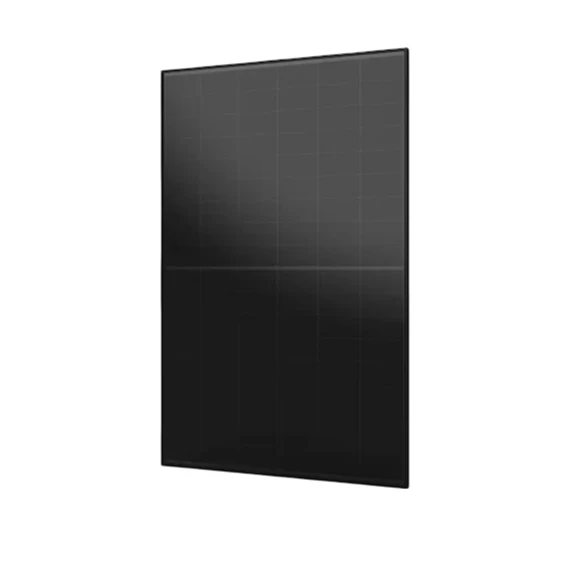
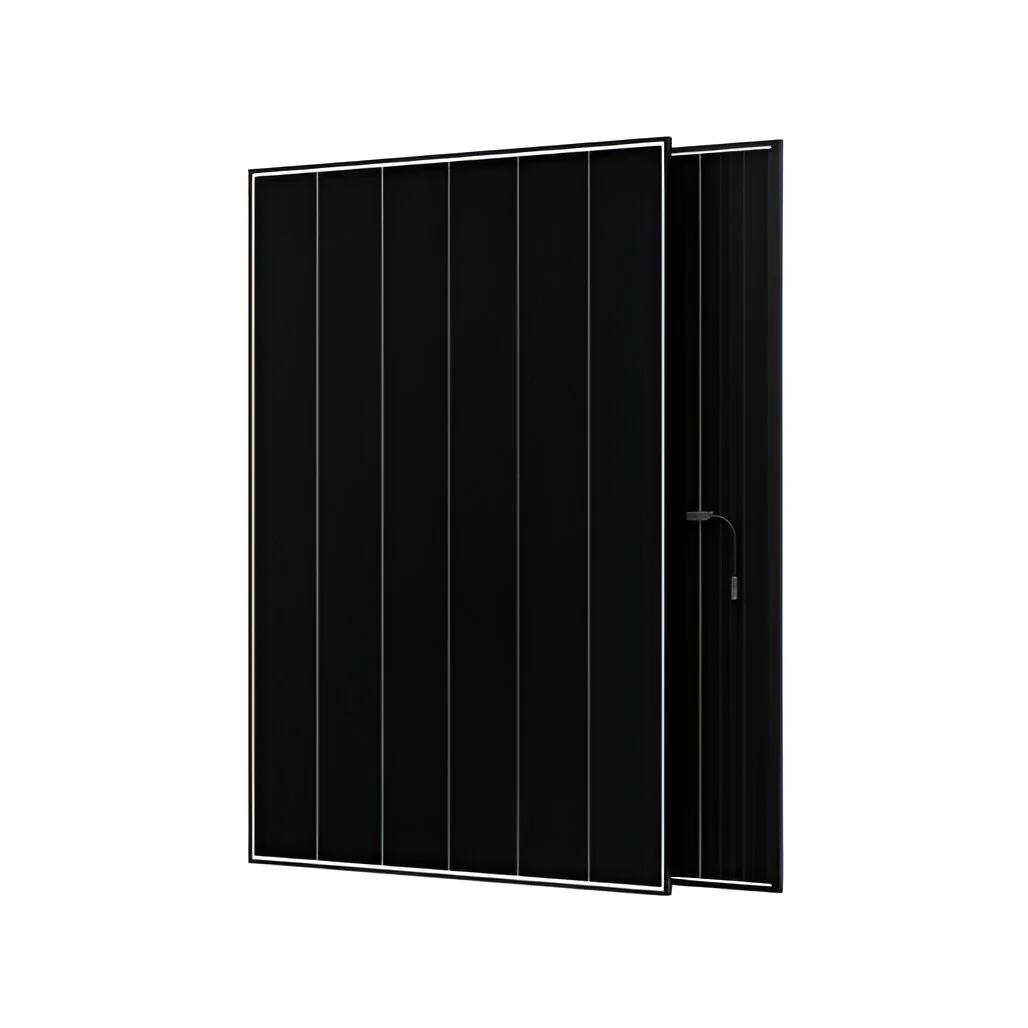
Aiko 490W Neostar 3P+ N-Type ABC Dual-Glass Bifacial Solar Panel AIKO-A490-MCE54Dw 24.5% Efficiency Gen 3 Black Frame MC4
HomeStore

Aiko 490W Neostar 3P+ N-Type ABC Dual-Glass Bifacial Solar Panel AIKO-A490-MCE54Dw 24.5% Efficiency Gen 3 Black Frame MC4

Aiko 490W Neostar 3P+ N-Type ABC Dual-Glass Bifacial Solar Panel AIKO-A490-MCE54Dw 24.5% Efficiency Gen 3 Black Frame MC4

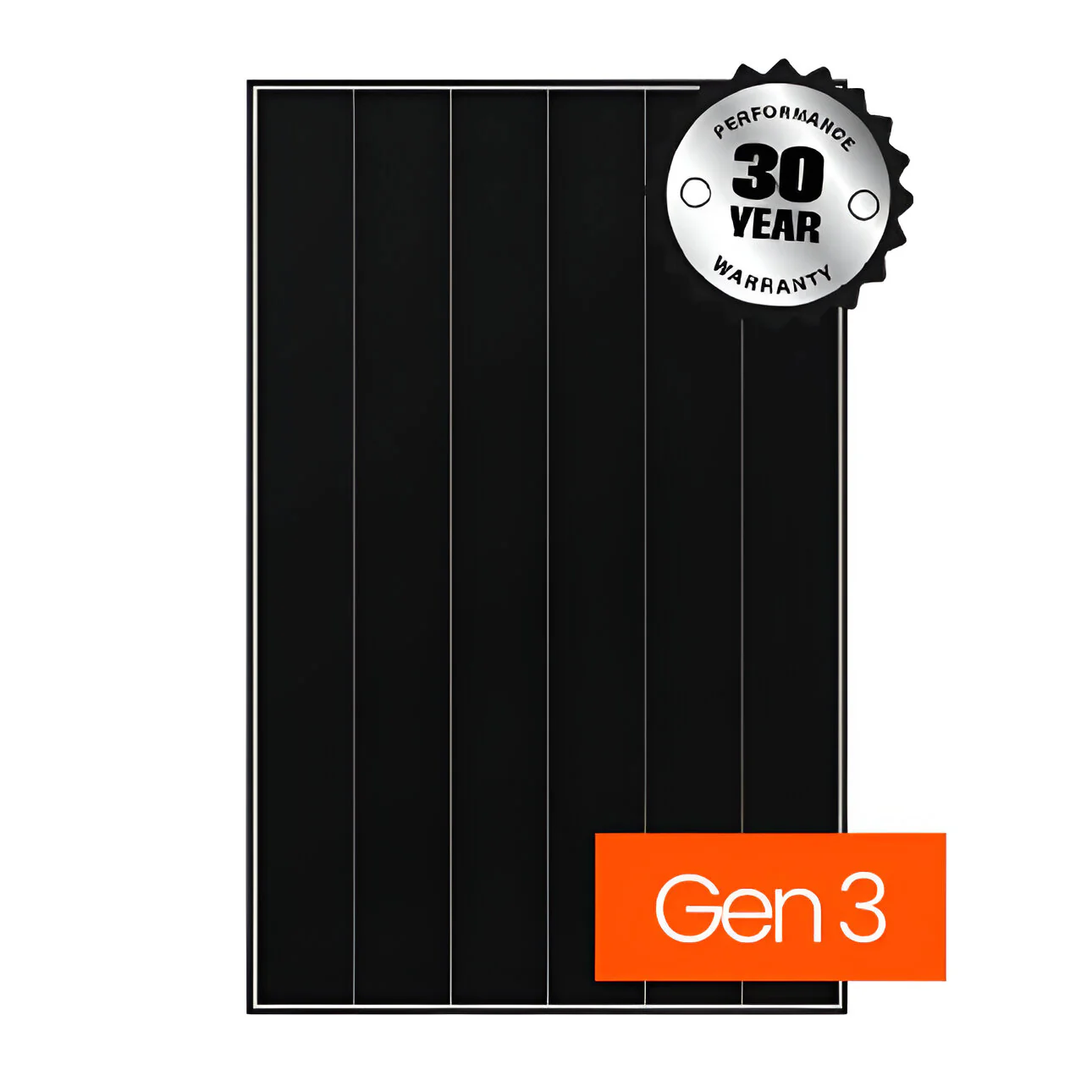
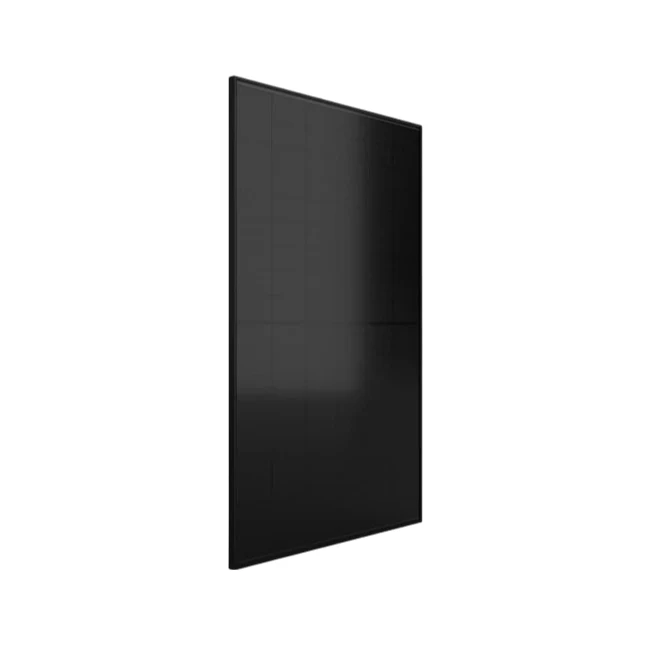
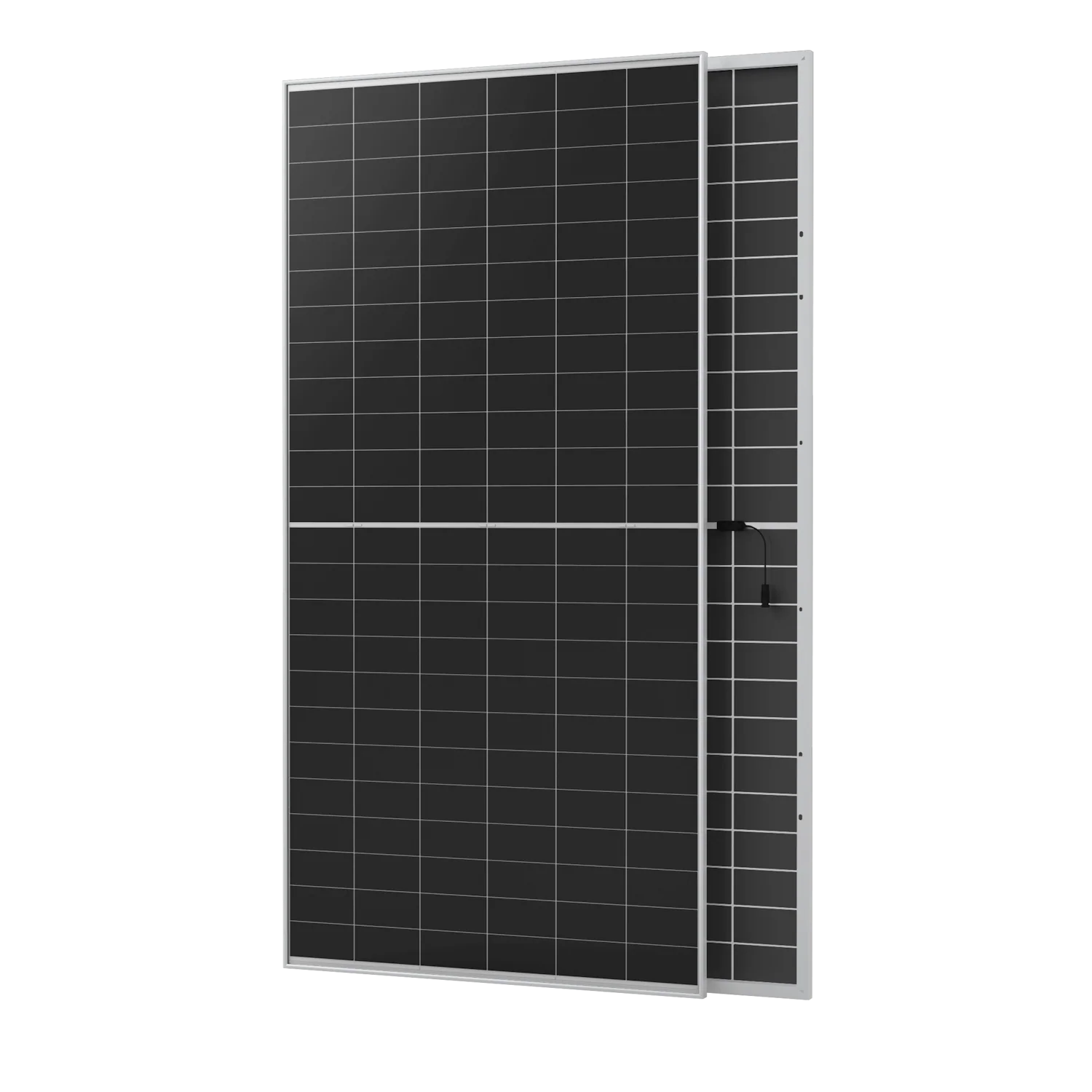
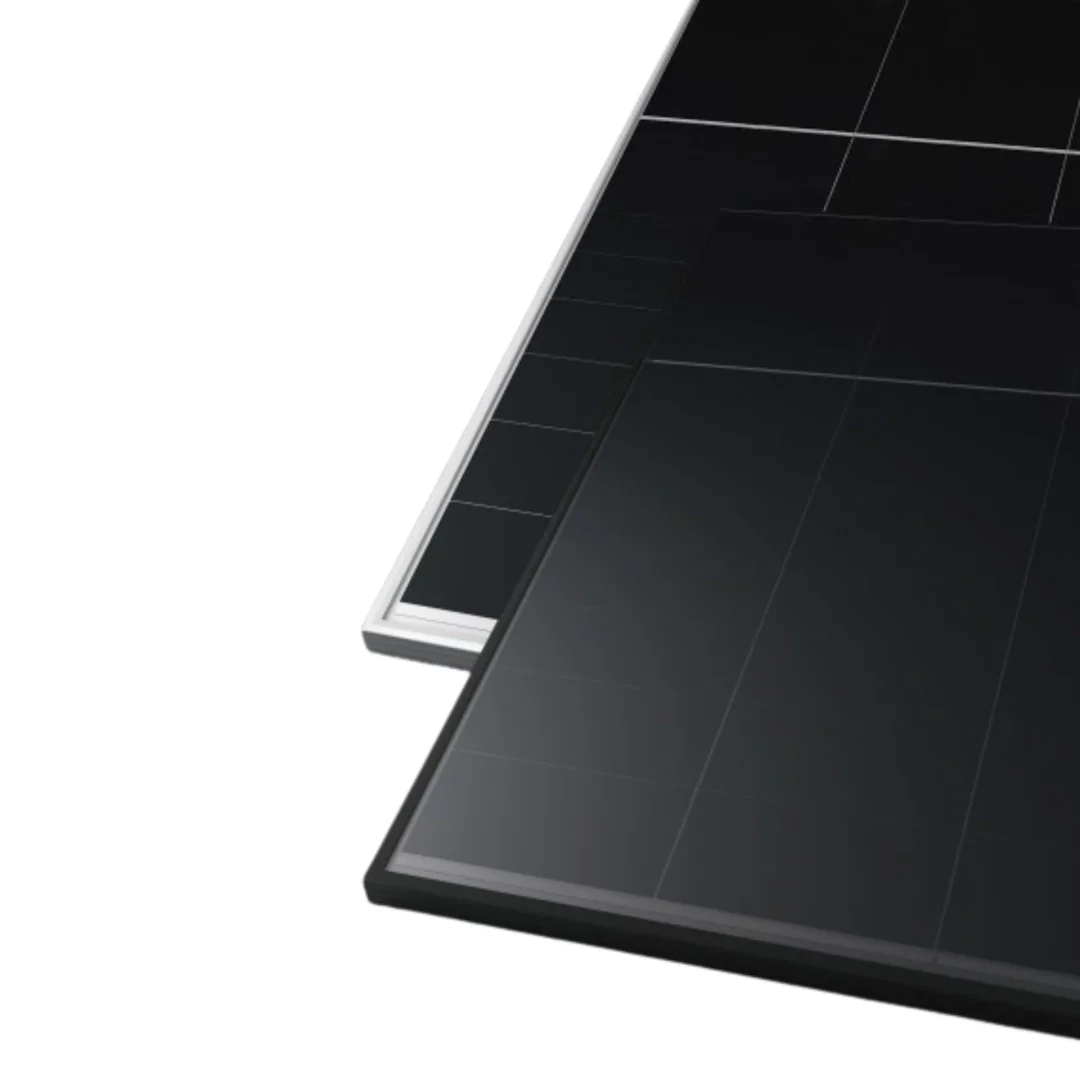
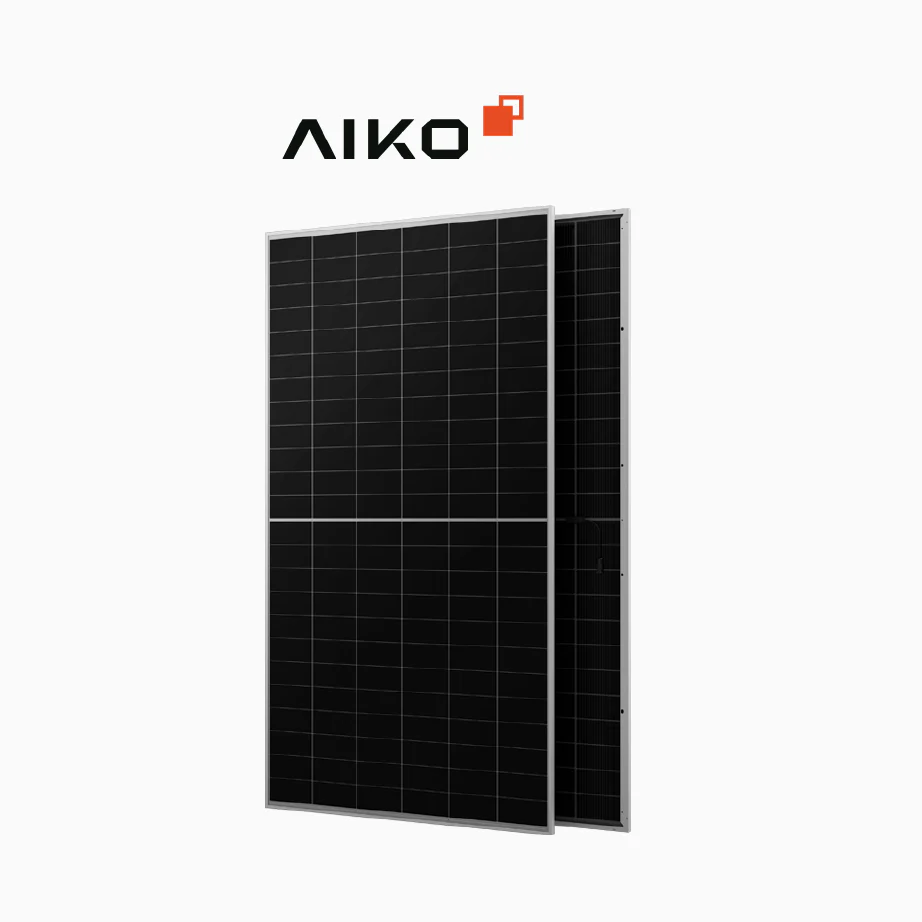
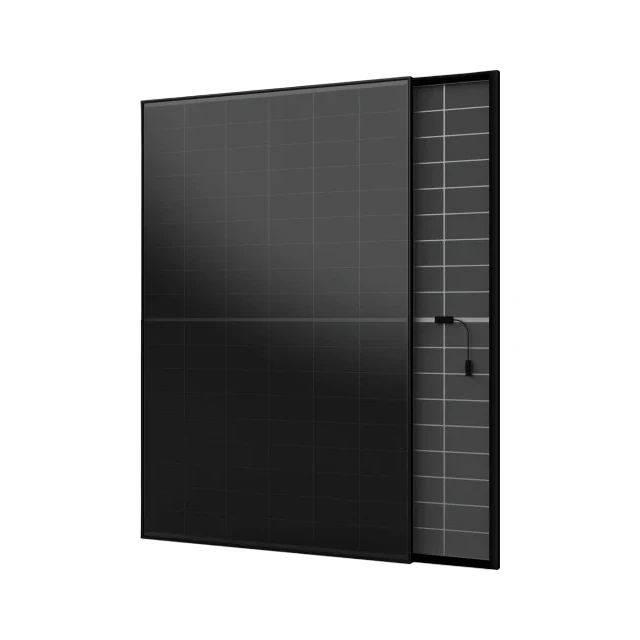
The Aiko 490W Neostar 3P+ Dual-Glass (AIKO-A490-MCE54Dw) is the highest-efficiency residential solar panel currently available on the UK market, delivering 24.5 % module efficiency from Aiko’s third-generation N-type ABC (All-Back-Contact) technology. ABC moves every electrical contact to the rear of the cell, leaving the entire front face unobstructed for maximum light absorption. Combined with Infinite Technology — eliminating busbars and cell gaps — and cell-level partial shading optimisation unique to Aiko, this 54-cell bifacial dual-glass module produces more energy per square metre than any comparable residential panel. The dual 2.0 + 2.0 mm glass construction enables bifacial rear-side gain and provides exceptional mechanical durability (5,400 Pa snow / 2,400 Pa wind). Temperature coefficient of just −0.26 %/°C — confirmed as the best result in the CEA PV Tech laboratory test report. 30-year linear performance warranty; 15-year product warranty (extendable to 25 years). Winner of the Intersolar Innovation Award 2023 and Red Dot Design Award 2023.

490W
Rated output
24.5%
Module efficiency
ABC Infinite
Cell technology
−0.26 %/°C
Temp. coefficient
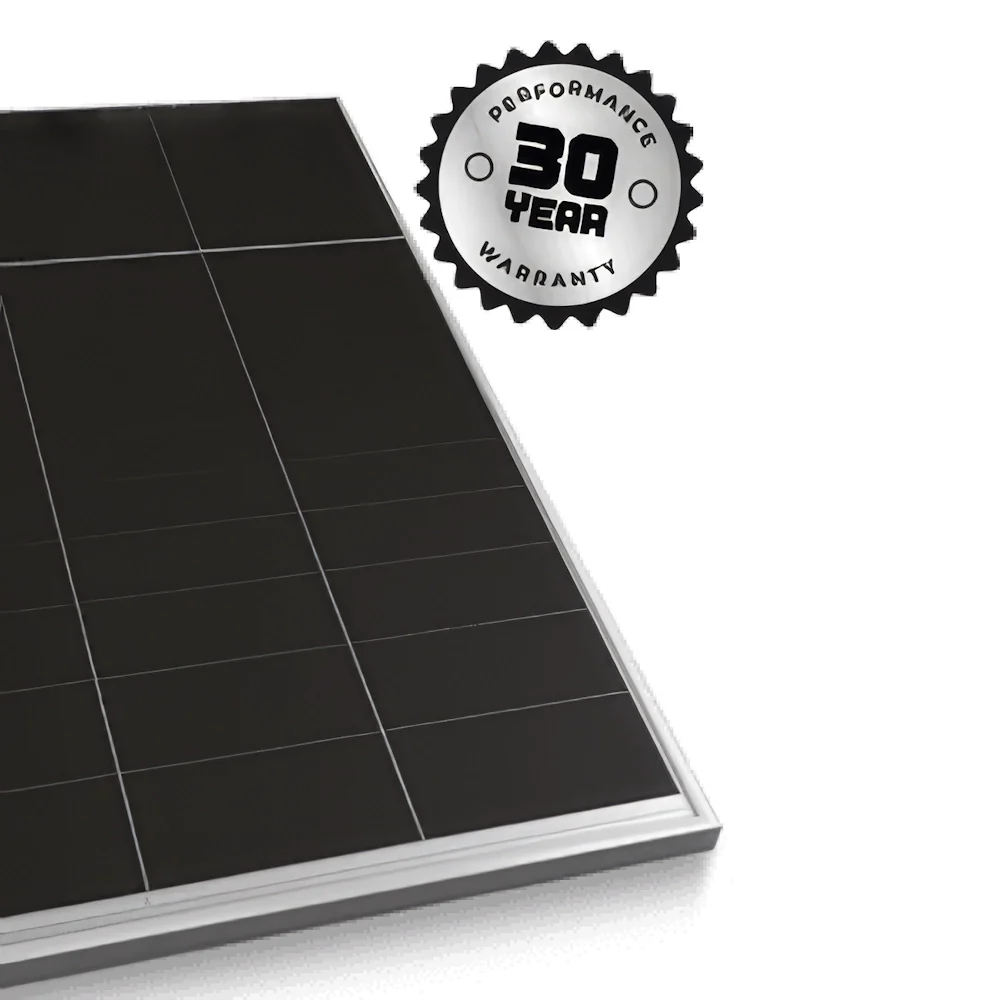
30 yrs
Performance warranty
Bifacial Dual Glass
Construction
★ Award-winning technology: Intersolar Innovation Award 2023 · Red Dot Design Award 2023 · ESG Transparency Award 2024 · CEA PV Tech laboratory report: best-in-class temperature coefficient of −0.26 %/°C
ABC vs TOPCon vs PERC — Why Cell Architecture Matters
Aiko ABC (this panel) N-type TOPCon P-type PERC
Module efficiency 24.5 % 22 – 23.5 % 20 – 21 %
Front contacts Zero — all moved to rear Busbars on front Busbars on front
Shading optimisation Cell-level (unique) Module-level only Module-level only
Temperature coefficient −0.26 %/°C −0.29 %/°C −0.35 %/°C
Light-induced degradation Virtually zero (N-type) Virtually zero 0.5 – 2 %
Annual degradation (yr 2+) 0.35 %/yr 0.40 %/yr (typ) 0.55 %/yr (typ)
Output at 30 years ≥88.85 % ~87 % ~80 %

Efficiency and degradation values are indicative. STC conditions apply. ABC cell-level shading optimisation is an Aiko proprietary feature with no equivalent in TOPCon or PERC technology.

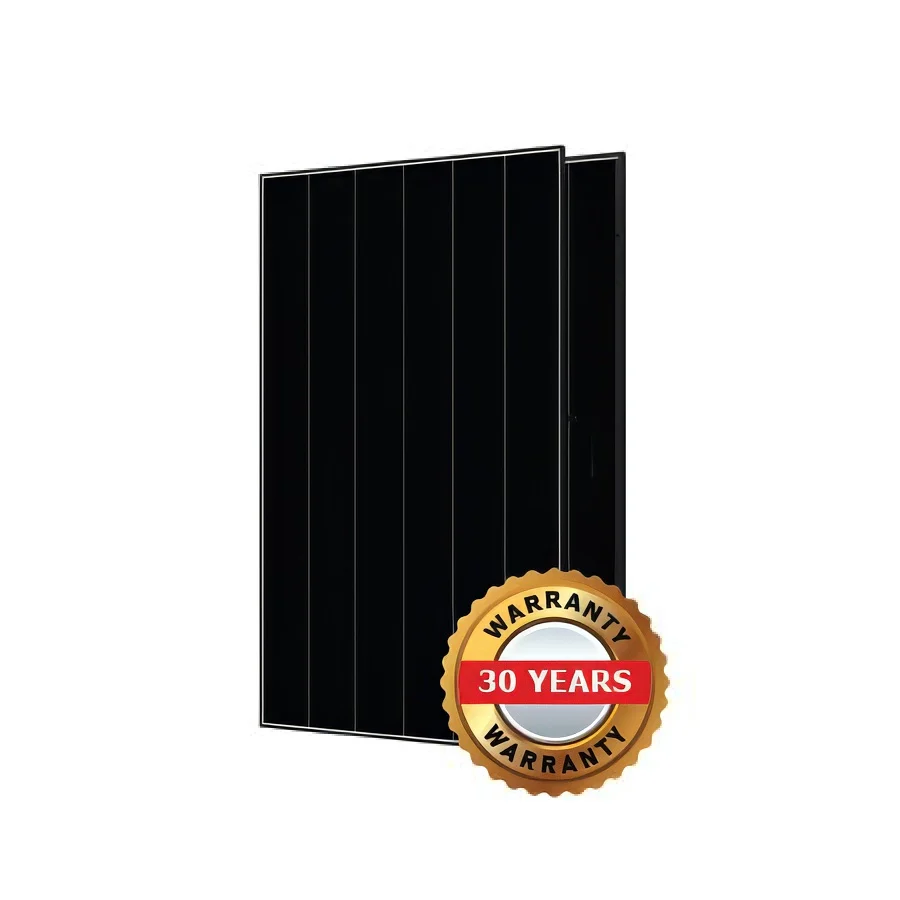
30-Year Linear Performance Guarantee

Aiko’s low degradation rate compounds into a significant output advantage over three decades compared to standard panels.

Year Guaranteed min. output Equivalent annual yield from a 490W panel
Year 1 ≥99 % → ≥485 Wp Only ≤1 % first-year loss
Year 10 ≥96.5 % → ≥473 Wp After 10 years: still near-peak output
Year 25 ≥92.15 % → ≥451 Wp Still producing more than a new standard 440W panel
Year 30 ≥88.85 % → ≥435 Wp Guaranteed minimum — the floor, not the average

Degradation: ≤1 % year 1; ≤0.35 %/year from years 2 – 30. Guaranteed minimum output at year 30: ≥88.85 % of rated power. A typical P-type PERC panel with 0.55 %/year degradation would be at approximately 80 % by year 30.

Key Features
24.5 % Efficiency — No. 1 on the Residential Market
At 24.5 % module efficiency, the Neostar 3P+ is the highest-efficiency residential solar panel currently on the market. The closest TOPCon competitors reach 23 – 23.5 %; standard PERC panels are at 20 – 21 %. In practical terms, on a roof with space for 10 panels, this Aiko module generates approximately 20 % more electricity per year than a standard PERC panel of the same physical size. For a typical south-facing UK rooftop, each panel produces roughly 460 – 480 kWh/year — around 15 – 20 % more than an equivalent JA or Jinko PERC panel.
24.5% efficiencyNo. 1 residential efficiency
ABC Infinite Technology — No Busbars, No Front Contacts, No Cell Gaps
Standard solar cells have metal busbars running across the front surface, blocking a portion of incoming light. ABC (All-Back-Contact) technology moves every electrical contact to the rear, so the entire front face is unobstructed glass and silicon. Aiko’s Infinite Technology goes further, eliminating the spacing gaps between individual cells so the active cell area covers more of the module face. The result is a visually uniform, near-seamless black panel and a measurably higher photon-to-electron conversion rate compared to any busbar-based technology.
All-Back-Contact (ABC)No busbarsInfinite Technology (no cell gaps)
Cell-Level Shading Optimisation — Unique in the Industry
Standard solar modules use three bypass diodes to manage shading: if a portion of the panel is shaded, one-third of the panel is bypassed entirely. Aiko’s ABC architecture enables cell-level shading optimisation, where only the specific shaded cells are bypassed, not an entire third of the module. This means that shading from a chimney, roof vent, aerial or tree branch causes far less output loss than it would on a standard panel. Aiko claims this feature is unique in the industry — no other panel type (TOPCon, PERC, HJT) achieves this at the cell level without an external optimiser device.
Cell-level shading bypass (unique)No external optimiser needed
−0.26 %/°C Temperature Coefficient — Best in CEA PV Tech Lab Tests
Solar panels lose efficiency as cell temperature rises above 25°C. The temperature coefficient measures how much power is lost per degree. At −0.26 %/°C, the Neostar 3P+ loses less power in heat than any other panel tested in the independent CEA PV Tech laboratory evaluation. For comparison: N-type TOPCon is typically −0.29 %/°C; P-type PERC is −0.35 %/°C. On a warm UK summer day with cell temperatures of 50 – 55°C, this Aiko panel retains approximately 3 % more output than a TOPCon competitor and 6 – 8 % more than a PERC panel.
−0.26%/°CCEA PV Tech: best-in-classBetter than TOPCon and PERC
High-Temperature Limitation for Fire Safety — IEC Class A
Aiko’s ABC cell design includes a built-in high-temperature limitation mechanism. In an overheating event (caused by a sustained hot spot from cell damage or shading), the cell architecture naturally limits the temperature rise, reducing the fire risk relative to standard busbar-based technologies. This is reinforced by the panel’s IEC Class A fire rating — the highest possible classification under IEC 60707, indicating the module does not readily propagate flame and self-extinguishes quickly.
IEC Class A fire ratingBuilt-in temperature limitation
Bifacial Dual-Glass — Rear-Side Gain and 30+ Year Durability
The dual 2.0 + 2.0 mm coated semi-tempered glass construction replaces the conventional polymer backsheet with a second sheet of glass. This serves two functions: first, it allows the bifacial cells to capture reflected light from the rear, increasing energy yield in installations with high-albedo surfaces (light gravel, white membrane roofing, elevated ground mounts); second, the dual-glass construction eliminates backsheet degradation, moisture ingress and UV yellowing that affect single-glass panels over time, contributing directly to the panel’s 30-year performance guarantee.
Bifacial dual glass2.0 + 2.0 mm coated semi-temperedNo backsheet degradation
Microcrack Resistance — ABC Rear-Contact Advantage
Microcracks are invisible fractures in the silicon cell caused by mechanical stress during transport, installation or thermal cycling over time. In standard front-contact panels, microcracks can sever the current path between the cell and its surface busbars, isolating sections of the cell and reducing output. In ABC cells, the current path runs to the rear contact network, which is distributed across the entire rear face. A microcrack that severs the cell in one place does not isolate it from the contact network, so microcrack-induced power loss is significantly lower. This contributes to the panel’s long-term output stability and low degradation rate.
ABC rear contact: microcrack resilient≤0.35%/yr degradation
1,500 V DC — Longer Strings, Lower Balance-of-System Cost
The Neostar 3P+ supports a maximum system voltage of 1,500 V DC. This allows more panels to be connected in series per string compared to 1,000 V systems: with Voc of 41.10 V, up to 36 panels can form a single 1,500 V string. Fewer strings means fewer MPPT inputs needed, smaller DC cables, fewer connectors, and reduced labour. On a commercial or large residential installation, this translates to measurable savings in balance-of-system (BOS) costs.
1,500V DC system voltageUp to 36 panels per stringLower BOS cost
Technical Specifications
Electrical Parameters at STC (1,000 W/m², 25°C, AM 1.5)
Model AIKO-A490-MCE54Dw — Neostar 3P+ Dual-Glass
Part number AIK-A-MCE54-490-BF-DG-G3
Rated maximum power (Pmax) 490 Wp (0 / +3 % tolerance)
Module efficiency 24.5 %
Power range (series) 465 – 495 W
Open circuit voltage (Voc) 41.10 V
Short circuit current (Isc) 14.88 A
Maximum power voltage (Vmp) 34.70 V
Maximum power current (Imp) 14.13 A
Temperature Coefficients
Power (Pmax) −0.26 %/°C
Open circuit voltage (Voc) −0.22 %/°C
Short circuit current (Isc) +0.05 %/°C
Cell Technology
Cell type N-type ABC (All-Back-Contact), Infinite Technology
Cell configuration 108 half-cut cells (6 × 18, 54-cell layout)
Front contacts None — all contacts on rear face
Shading optimisation Cell-level (unique to ABC technology)
Construction
Front glass 2.0 mm coated semi-tempered glass
Rear glass 2.0 mm coated semi-tempered glass (bifacial)
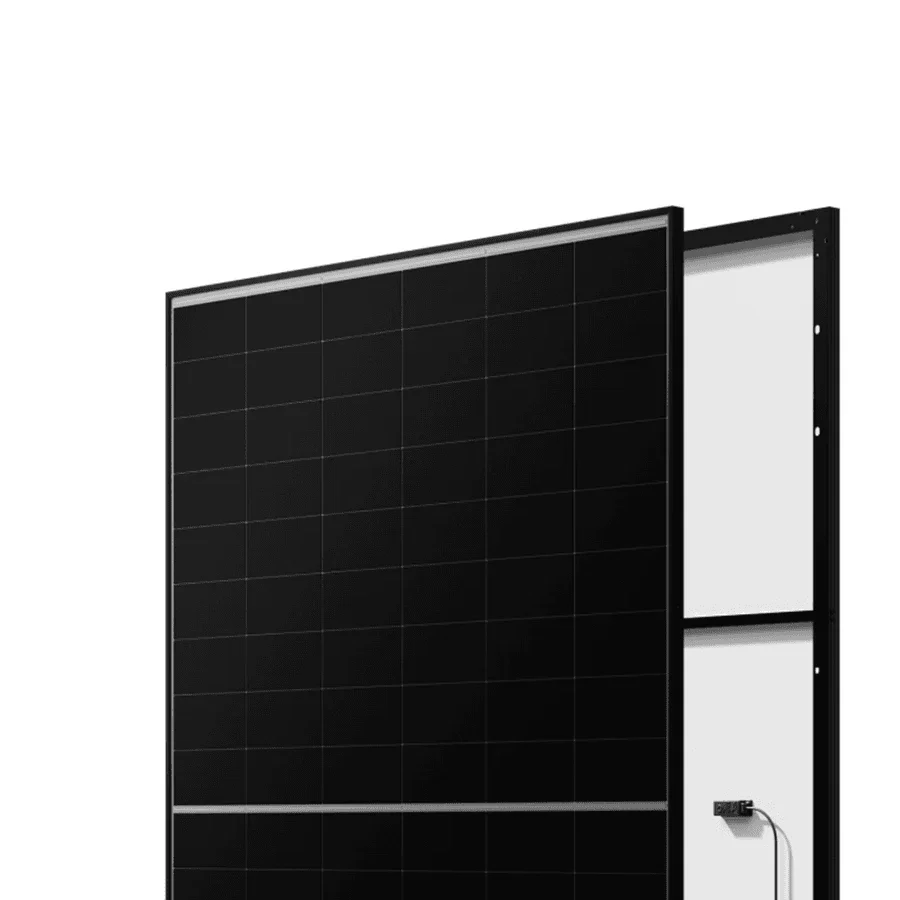
Frame Black anodized aluminium
Junction box IP68, 3 bypass diodes
Connectors MC4-EVO2A (genuine)
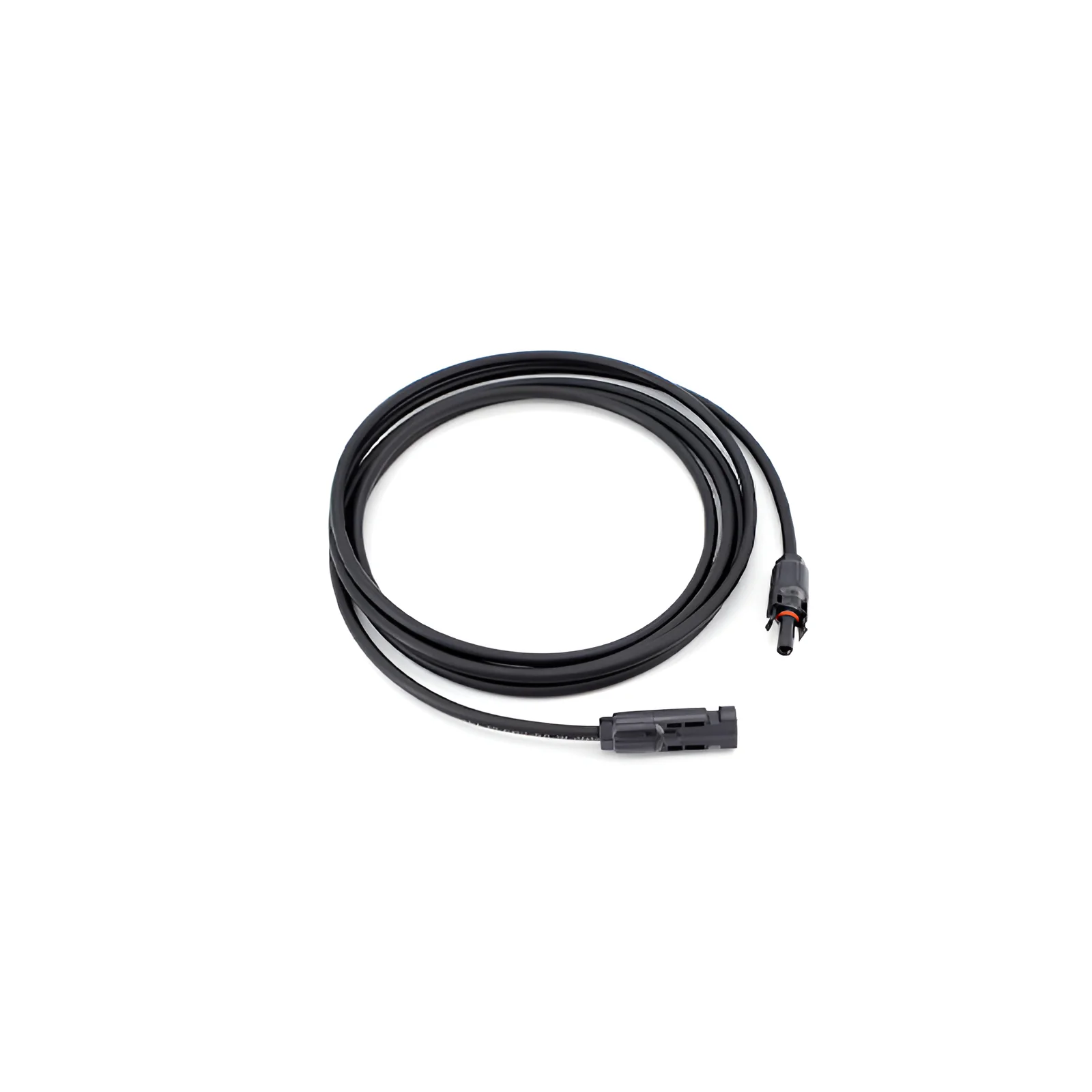
Cable 4 mm², ±1,200 mm
Mechanical
Dimensions (H × W × D) 1,762 × 1,154 × 30 mm
Weight 24.2 kg ±3 %
Maximum system voltage 1,500 V DC
Maximum snow load (front) 5,400 Pa
Maximum wind load (rear) 2,400 Pa
Hail resistance 25 mm diameter @ 23 m/s
Operating temperature −40 – +85°C
Performance and Reliability
Fire rating IEC Class A (highest classification)
First-year degradation ≤1 %
Annual degradation (years 2 – 30) ≤0.35 %/year
Output guarantee at year 30 ≥88.85 % of rated power
Warranty
Product warranty 15 years standard (extendable to 25 years)
Performance warranty 30 years linear
Certifications and Awards
Module certifications IEC 61215, IEC 61730, CE
Fire rating standard IEC Class A (IEC 60707)
MCS eligibility Yes — MCS-eligible for UK Smart Export Guarantee (SEG)
Intersolar Innovation Award 2023 winner
Red Dot Design Award 2023 winner
ESG Transparency Award 2024 winner
Frequently Asked Questions
What makes ABC technology fundamentally different from TOPCon or PERC?
TOPCon and PERC cells both have metal contacts on the front face of the cell, running as busbars or fingers across the surface. These metal contacts physically block a portion of the cell from receiving sunlight. ABC (All-Back-Contact) moves every electrical contact to the rear, so the entire front face of the cell is available for light absorption. There is no shadowing from front contacts at all. This is the fundamental reason ABC cells achieve higher efficiency than TOPCon or PERC: more of the incoming light reaches the silicon, not the metal. The trade-off historically was manufacturing complexity and cost, but Aiko’s Gen 3 production has brought ABC to a price point competitive with premium TOPCon modules.
What does ‘cell-level shading optimisation’ actually mean for my roof?
On a standard panel with three bypass diodes, when part of the panel is shaded, the diode bypasses an entire third of the module (approximately 18 cells). Even if only two or three cells are in shadow, 18 cells’ worth of output is lost. Aiko’s ABC architecture optimises at the individual cell level, so only the cells actually in shadow are bypassed. In a UK context, this matters for chimneys, TV aerials, dormer windows, Velux frames, and partial tree cover. An Aiko panel with one-sixth of its surface shaded loses approximately one-sixth of its output. A standard panel in the same scenario can lose one-third. This is not the same as SolarEdge or Tigo optimisers — it requires no additional hardware and no per-panel electronics.
Is this panel suitable for in-roof (BIPV-style) installations?
The Neostar 3P+ dual-glass is a standard on-roof format panel. At 30 mm depth and 24.2 kg it is compatible with standard rail mounting systems. The dual-glass construction (no backsheet) makes it structurally slightly stiffer than single-glass panels, which can be a practical advantage in installations requiring the panel to bear some mechanical load. For GSE, Viridian or similar in-roof systems, confirm compatibility with your specific mounting system as in-roof rails have different load profiles from on-roof rails.
How does the bifacial design help on a UK pitched roof?
Bifacial gain is highest in ground-mount or elevated-rack installations where reflected light from the ground or a light-coloured surface reaches the rear of the panel. On a standard pitched roof, the rear face is close to the roof tiles and rear-side gain is minimal — typically 2 – 5 %. However, the dual-glass construction still provides meaningful benefits on a rooftop: it eliminates backsheet degradation, reduces water vapour ingress, and improves long-term output stability. For ground mounts with light-coloured surfaces (pale gravel, light membrane), rear-side gain can be 8 – 12 %, meaningfully improving the system yield.
Why is the temperature coefficient important for the UK?
The UK receives a mix of low-irradiance overcast days and, particularly in summer, sunny days when panel temperatures can reach 50 – 65°C even at moderate air temperatures. At 55°C cell temperature (30°C above STC reference), a panel with −0.26 %/°C loses 7.8 % of its rated output. A TOPCon panel at −0.29 %/°C loses 8.7 %; a PERC at −0.35 %/°C loses 10.5 %. For a 10-panel system, this 2.7 % difference between Aiko and PERC represents additional kilowatt-hours generated on every warm day over 30 years.
Does the 25-year product warranty require registration?
The standard product warranty is 15 years. Aiko offer an extended warranty programme to extend this to 25 years. Confirm the registration process and terms with your installer or with Aiko directly. The 30-year linear performance warranty covers the power output guarantee (the guaranteed minimum wattage at each year of the panel’s life) and applies from the date of installation regardless of registration status. Always retain your purchase invoice and installation certificate as evidence of the installation date.
Related Products
Aiko 485W Neostar 3P Mono-Glass Gen 3
Single-glass variant — lighter (20.6 kg), same ABC cell technology
JA Solar 460W N-type TOPCon All-Black
Premium TOPCon alternative — 23% efficiency, all-black, lighter
Solis Hybrid Inverter — RHI Series
Compatible single-phase hybrid inverter for solar + storage
myenergi Eddi Solar PV Diverter
Diverts surplus solar to hot water — maximises self-consumption
$79.36

Original: $226.74

-65%
Aiko 490W Neostar 3P+ N-Type ABC Dual-Glass Bifacial Solar Panel AIKO-A490-MCE54Dw 24.5% Efficiency Gen 3 Black Frame MC4

$226.74

$79.36

More Images

Aiko 490W Neostar 3P+ N-Type ABC Dual-Glass Bifacial Solar Panel AIKO-A490-MCE54Dw 24.5% Efficiency Gen 3 Black Frame MC4 - Image 2
Aiko 490W Neostar 3P+ N-Type ABC Dual-Glass Bifacial Solar Panel AIKO-A490-MCE54Dw 24.5% Efficiency Gen 3 Black Frame MC4 - Image 3

Aiko 490W Neostar 3P+ N-Type ABC Dual-Glass Bifacial Solar Panel AIKO-A490-MCE54Dw 24.5% Efficiency Gen 3 Black Frame MC4

The Aiko 490W Neostar 3P+ Dual-Glass (AIKO-A490-MCE54Dw) is the highest-efficiency residential solar panel currently available on the UK market, delivering 24.5 % module efficiency from Aiko’s third-generation N-type ABC (All-Back-Contact) technology. ABC moves every electrical contact to the rear of the cell, leaving the entire front face unobstructed for maximum light absorption. Combined with Infinite Technology — eliminating busbars and cell gaps — and cell-level partial shading optimisation unique to Aiko, this 54-cell bifacial dual-glass module produces more energy per square metre than any comparable residential panel. The dual 2.0 + 2.0 mm glass construction enables bifacial rear-side gain and provides exceptional mechanical durability (5,400 Pa snow / 2,400 Pa wind). Temperature coefficient of just −0.26 %/°C — confirmed as the best result in the CEA PV Tech laboratory test report. 30-year linear performance warranty; 15-year product warranty (extendable to 25 years). Winner of the Intersolar Innovation Award 2023 and Red Dot Design Award 2023.

490W
Rated output
24.5%
Module efficiency
ABC Infinite
Cell technology
−0.26 %/°C
Temp. coefficient
30 yrs
Performance warranty
Bifacial Dual Glass
Construction
★ Award-winning technology: Intersolar Innovation Award 2023 · Red Dot Design Award 2023 · ESG Transparency Award 2024 · CEA PV Tech laboratory report: best-in-class temperature coefficient of −0.26 %/°C
ABC vs TOPCon vs PERC — Why Cell Architecture Matters
Aiko ABC (this panel) N-type TOPCon P-type PERC
Module efficiency 24.5 % 22 – 23.5 % 20 – 21 %
Front contacts Zero — all moved to rear Busbars on front Busbars on front
Shading optimisation Cell-level (unique) Module-level only Module-level only
Temperature coefficient −0.26 %/°C −0.29 %/°C −0.35 %/°C
Light-induced degradation Virtually zero (N-type) Virtually zero 0.5 – 2 %
Annual degradation (yr 2+) 0.35 %/yr 0.40 %/yr (typ) 0.55 %/yr (typ)
Output at 30 years ≥88.85 % ~87 % ~80 %

Efficiency and degradation values are indicative. STC conditions apply. ABC cell-level shading optimisation is an Aiko proprietary feature with no equivalent in TOPCon or PERC technology.

30-Year Linear Performance Guarantee

Aiko’s low degradation rate compounds into a significant output advantage over three decades compared to standard panels.

Year Guaranteed min. output Equivalent annual yield from a 490W panel
Year 1 ≥99 % → ≥485 Wp Only ≤1 % first-year loss
Year 10 ≥96.5 % → ≥473 Wp After 10 years: still near-peak output
Year 25 ≥92.15 % → ≥451 Wp Still producing more than a new standard 440W panel
Year 30 ≥88.85 % → ≥435 Wp Guaranteed minimum — the floor, not the average

Degradation: ≤1 % year 1; ≤0.35 %/year from years 2 – 30. Guaranteed minimum output at year 30: ≥88.85 % of rated power. A typical P-type PERC panel with 0.55 %/year degradation would be at approximately 80 % by year 30.

Key Features
24.5 % Efficiency — No. 1 on the Residential Market
At 24.5 % module efficiency, the Neostar 3P+ is the highest-efficiency residential solar panel currently on the market. The closest TOPCon competitors reach 23 – 23.5 %; standard PERC panels are at 20 – 21 %. In practical terms, on a roof with space for 10 panels, this Aiko module generates approximately 20 % more electricity per year than a standard PERC panel of the same physical size. For a typical south-facing UK rooftop, each panel produces roughly 460 – 480 kWh/year — around 15 – 20 % more than an equivalent JA or Jinko PERC panel.
24.5% efficiencyNo. 1 residential efficiency
ABC Infinite Technology — No Busbars, No Front Contacts, No Cell Gaps
Standard solar cells have metal busbars running across the front surface, blocking a portion of incoming light. ABC (All-Back-Contact) technology moves every electrical contact to the rear, so the entire front face is unobstructed glass and silicon. Aiko’s Infinite Technology goes further, eliminating the spacing gaps between individual cells so the active cell area covers more of the module face. The result is a visually uniform, near-seamless black panel and a measurably higher photon-to-electron conversion rate compared to any busbar-based technology.
All-Back-Contact (ABC)No busbarsInfinite Technology (no cell gaps)
Cell-Level Shading Optimisation — Unique in the Industry
Standard solar modules use three bypass diodes to manage shading: if a portion of the panel is shaded, one-third of the panel is bypassed entirely. Aiko’s ABC architecture enables cell-level shading optimisation, where only the specific shaded cells are bypassed, not an entire third of the module. This means that shading from a chimney, roof vent, aerial or tree branch causes far less output loss than it would on a standard panel. Aiko claims this feature is unique in the industry — no other panel type (TOPCon, PERC, HJT) achieves this at the cell level without an external optimiser device.
Cell-level shading bypass (unique)No external optimiser needed
−0.26 %/°C Temperature Coefficient — Best in CEA PV Tech Lab Tests
Solar panels lose efficiency as cell temperature rises above 25°C. The temperature coefficient measures how much power is lost per degree. At −0.26 %/°C, the Neostar 3P+ loses less power in heat than any other panel tested in the independent CEA PV Tech laboratory evaluation. For comparison: N-type TOPCon is typically −0.29 %/°C; P-type PERC is −0.35 %/°C. On a warm UK summer day with cell temperatures of 50 – 55°C, this Aiko panel retains approximately 3 % more output than a TOPCon competitor and 6 – 8 % more than a PERC panel.
−0.26%/°CCEA PV Tech: best-in-classBetter than TOPCon and PERC
High-Temperature Limitation for Fire Safety — IEC Class A
Aiko’s ABC cell design includes a built-in high-temperature limitation mechanism. In an overheating event (caused by a sustained hot spot from cell damage or shading), the cell architecture naturally limits the temperature rise, reducing the fire risk relative to standard busbar-based technologies. This is reinforced by the panel’s IEC Class A fire rating — the highest possible classification under IEC 60707, indicating the module does not readily propagate flame and self-extinguishes quickly.
IEC Class A fire ratingBuilt-in temperature limitation
Bifacial Dual-Glass — Rear-Side Gain and 30+ Year Durability
The dual 2.0 + 2.0 mm coated semi-tempered glass construction replaces the conventional polymer backsheet with a second sheet of glass. This serves two functions: first, it allows the bifacial cells to capture reflected light from the rear, increasing energy yield in installations with high-albedo surfaces (light gravel, white membrane roofing, elevated ground mounts); second, the dual-glass construction eliminates backsheet degradation, moisture ingress and UV yellowing that affect single-glass panels over time, contributing directly to the panel’s 30-year performance guarantee.
Bifacial dual glass2.0 + 2.0 mm coated semi-temperedNo backsheet degradation
Microcrack Resistance — ABC Rear-Contact Advantage
Microcracks are invisible fractures in the silicon cell caused by mechanical stress during transport, installation or thermal cycling over time. In standard front-contact panels, microcracks can sever the current path between the cell and its surface busbars, isolating sections of the cell and reducing output. In ABC cells, the current path runs to the rear contact network, which is distributed across the entire rear face. A microcrack that severs the cell in one place does not isolate it from the contact network, so microcrack-induced power loss is significantly lower. This contributes to the panel’s long-term output stability and low degradation rate.
ABC rear contact: microcrack resilient≤0.35%/yr degradation
1,500 V DC — Longer Strings, Lower Balance-of-System Cost
The Neostar 3P+ supports a maximum system voltage of 1,500 V DC. This allows more panels to be connected in series per string compared to 1,000 V systems: with Voc of 41.10 V, up to 36 panels can form a single 1,500 V string. Fewer strings means fewer MPPT inputs needed, smaller DC cables, fewer connectors, and reduced labour. On a commercial or large residential installation, this translates to measurable savings in balance-of-system (BOS) costs.
1,500V DC system voltageUp to 36 panels per stringLower BOS cost
Technical Specifications
Electrical Parameters at STC (1,000 W/m², 25°C, AM 1.5)
Model AIKO-A490-MCE54Dw — Neostar 3P+ Dual-Glass
Part number AIK-A-MCE54-490-BF-DG-G3
Rated maximum power (Pmax) 490 Wp (0 / +3 % tolerance)
Module efficiency 24.5 %
Power range (series) 465 – 495 W
Open circuit voltage (Voc) 41.10 V
Short circuit current (Isc) 14.88 A
Maximum power voltage (Vmp) 34.70 V
Maximum power current (Imp) 14.13 A
Temperature Coefficients
Power (Pmax) −0.26 %/°C
Open circuit voltage (Voc) −0.22 %/°C
Short circuit current (Isc) +0.05 %/°C
Cell Technology
Cell type N-type ABC (All-Back-Contact), Infinite Technology
Cell configuration 108 half-cut cells (6 × 18, 54-cell layout)
Front contacts None — all contacts on rear face
Shading optimisation Cell-level (unique to ABC technology)
Construction
Front glass 2.0 mm coated semi-tempered glass
Rear glass 2.0 mm coated semi-tempered glass (bifacial)
Frame Black anodized aluminium
Junction box IP68, 3 bypass diodes
Connectors MC4-EVO2A (genuine)
Cable 4 mm², ±1,200 mm
Mechanical
Dimensions (H × W × D) 1,762 × 1,154 × 30 mm
Weight 24.2 kg ±3 %
Maximum system voltage 1,500 V DC
Maximum snow load (front) 5,400 Pa
Maximum wind load (rear) 2,400 Pa
Hail resistance 25 mm diameter @ 23 m/s
Operating temperature −40 – +85°C
Performance and Reliability
Fire rating IEC Class A (highest classification)
First-year degradation ≤1 %
Annual degradation (years 2 – 30) ≤0.35 %/year
Output guarantee at year 30 ≥88.85 % of rated power
Warranty
Product warranty 15 years standard (extendable to 25 years)
Performance warranty 30 years linear
Certifications and Awards
Module certifications IEC 61215, IEC 61730, CE
Fire rating standard IEC Class A (IEC 60707)
MCS eligibility Yes — MCS-eligible for UK Smart Export Guarantee (SEG)
Intersolar Innovation Award 2023 winner
Red Dot Design Award 2023 winner
ESG Transparency Award 2024 winner
Frequently Asked Questions
What makes ABC technology fundamentally different from TOPCon or PERC?
TOPCon and PERC cells both have metal contacts on the front face of the cell, running as busbars or fingers across the surface. These metal contacts physically block a portion of the cell from receiving sunlight. ABC (All-Back-Contact) moves every electrical contact to the rear, so the entire front face of the cell is available for light absorption. There is no shadowing from front contacts at all. This is the fundamental reason ABC cells achieve higher efficiency than TOPCon or PERC: more of the incoming light reaches the silicon, not the metal. The trade-off historically was manufacturing complexity and cost, but Aiko’s Gen 3 production has brought ABC to a price point competitive with premium TOPCon modules.
What does ‘cell-level shading optimisation’ actually mean for my roof?
On a standard panel with three bypass diodes, when part of the panel is shaded, the diode bypasses an entire third of the module (approximately 18 cells). Even if only two or three cells are in shadow, 18 cells’ worth of output is lost. Aiko’s ABC architecture optimises at the individual cell level, so only the cells actually in shadow are bypassed. In a UK context, this matters for chimneys, TV aerials, dormer windows, Velux frames, and partial tree cover. An Aiko panel with one-sixth of its surface shaded loses approximately one-sixth of its output. A standard panel in the same scenario can lose one-third. This is not the same as SolarEdge or Tigo optimisers — it requires no additional hardware and no per-panel electronics.
Is this panel suitable for in-roof (BIPV-style) installations?
The Neostar 3P+ dual-glass is a standard on-roof format panel. At 30 mm depth and 24.2 kg it is compatible with standard rail mounting systems. The dual-glass construction (no backsheet) makes it structurally slightly stiffer than single-glass panels, which can be a practical advantage in installations requiring the panel to bear some mechanical load. For GSE, Viridian or similar in-roof systems, confirm compatibility with your specific mounting system as in-roof rails have different load profiles from on-roof rails.
How does the bifacial design help on a UK pitched roof?
Bifacial gain is highest in ground-mount or elevated-rack installations where reflected light from the ground or a light-coloured surface reaches the rear of the panel. On a standard pitched roof, the rear face is close to the roof tiles and rear-side gain is minimal — typically 2 – 5 %. However, the dual-glass construction still provides meaningful benefits on a rooftop: it eliminates backsheet degradation, reduces water vapour ingress, and improves long-term output stability. For ground mounts with light-coloured surfaces (pale gravel, light membrane), rear-side gain can be 8 – 12 %, meaningfully improving the system yield.
Why is the temperature coefficient important for the UK?
The UK receives a mix of low-irradiance overcast days and, particularly in summer, sunny days when panel temperatures can reach 50 – 65°C even at moderate air temperatures. At 55°C cell temperature (30°C above STC reference), a panel with −0.26 %/°C loses 7.8 % of its rated output. A TOPCon panel at −0.29 %/°C loses 8.7 %; a PERC at −0.35 %/°C loses 10.5 %. For a 10-panel system, this 2.7 % difference between Aiko and PERC represents additional kilowatt-hours generated on every warm day over 30 years.
Does the 25-year product warranty require registration?
The standard product warranty is 15 years. Aiko offer an extended warranty programme to extend this to 25 years. Confirm the registration process and terms with your installer or with Aiko directly. The 30-year linear performance warranty covers the power output guarantee (the guaranteed minimum wattage at each year of the panel’s life) and applies from the date of installation regardless of registration status. Always retain your purchase invoice and installation certificate as evidence of the installation date.
Related Products
Aiko 485W Neostar 3P Mono-Glass Gen 3
Single-glass variant — lighter (20.6 kg), same ABC cell technology
JA Solar 460W N-type TOPCon All-Black
Premium TOPCon alternative — 23% efficiency, all-black, lighter
Solis Hybrid Inverter — RHI Series
Compatible single-phase hybrid inverter for solar + storage
myenergi Eddi Solar PV Diverter
Diverts surplus solar to hot water — maximises self-consumption

Product Information

Shipping & Returns

Description

The Aiko 490W Neostar 3P+ Dual-Glass (AIKO-A490-MCE54Dw) is the highest-efficiency residential solar panel currently available on the UK market, delivering 24.5 % module efficiency from Aiko’s third-generation N-type ABC (All-Back-Contact) technology. ABC moves every electrical contact to the rear of the cell, leaving the entire front face unobstructed for maximum light absorption. Combined with Infinite Technology — eliminating busbars and cell gaps — and cell-level partial shading optimisation unique to Aiko, this 54-cell bifacial dual-glass module produces more energy per square metre than any comparable residential panel. The dual 2.0 + 2.0 mm glass construction enables bifacial rear-side gain and provides exceptional mechanical durability (5,400 Pa snow / 2,400 Pa wind). Temperature coefficient of just −0.26 %/°C — confirmed as the best result in the CEA PV Tech laboratory test report. 30-year linear performance warranty; 15-year product warranty (extendable to 25 years). Winner of the Intersolar Innovation Award 2023 and Red Dot Design Award 2023.

490W
Rated output
24.5%
Module efficiency
ABC Infinite
Cell technology
−0.26 %/°C
Temp. coefficient
30 yrs
Performance warranty
Bifacial Dual Glass
Construction
★ Award-winning technology: Intersolar Innovation Award 2023 · Red Dot Design Award 2023 · ESG Transparency Award 2024 · CEA PV Tech laboratory report: best-in-class temperature coefficient of −0.26 %/°C
ABC vs TOPCon vs PERC — Why Cell Architecture Matters
Aiko ABC (this panel) N-type TOPCon P-type PERC
Module efficiency 24.5 % 22 – 23.5 % 20 – 21 %
Front contacts Zero — all moved to rear Busbars on front Busbars on front
Shading optimisation Cell-level (unique) Module-level only Module-level only
Temperature coefficient −0.26 %/°C −0.29 %/°C −0.35 %/°C
Light-induced degradation Virtually zero (N-type) Virtually zero 0.5 – 2 %
Annual degradation (yr 2+) 0.35 %/yr 0.40 %/yr (typ) 0.55 %/yr (typ)
Output at 30 years ≥88.85 % ~87 % ~80 %

Efficiency and degradation values are indicative. STC conditions apply. ABC cell-level shading optimisation is an Aiko proprietary feature with no equivalent in TOPCon or PERC technology.

30-Year Linear Performance Guarantee

Aiko’s low degradation rate compounds into a significant output advantage over three decades compared to standard panels.

Year Guaranteed min. output Equivalent annual yield from a 490W panel
Year 1 ≥99 % → ≥485 Wp Only ≤1 % first-year loss
Year 10 ≥96.5 % → ≥473 Wp After 10 years: still near-peak output
Year 25 ≥92.15 % → ≥451 Wp Still producing more than a new standard 440W panel
Year 30 ≥88.85 % → ≥435 Wp Guaranteed minimum — the floor, not the average

Degradation: ≤1 % year 1; ≤0.35 %/year from years 2 – 30. Guaranteed minimum output at year 30: ≥88.85 % of rated power. A typical P-type PERC panel with 0.55 %/year degradation would be at approximately 80 % by year 30.

Key Features
24.5 % Efficiency — No. 1 on the Residential Market
At 24.5 % module efficiency, the Neostar 3P+ is the highest-efficiency residential solar panel currently on the market. The closest TOPCon competitors reach 23 – 23.5 %; standard PERC panels are at 20 – 21 %. In practical terms, on a roof with space for 10 panels, this Aiko module generates approximately 20 % more electricity per year than a standard PERC panel of the same physical size. For a typical south-facing UK rooftop, each panel produces roughly 460 – 480 kWh/year — around 15 – 20 % more than an equivalent JA or Jinko PERC panel.
24.5% efficiencyNo. 1 residential efficiency
ABC Infinite Technology — No Busbars, No Front Contacts, No Cell Gaps
Standard solar cells have metal busbars running across the front surface, blocking a portion of incoming light. ABC (All-Back-Contact) technology moves every electrical contact to the rear, so the entire front face is unobstructed glass and silicon. Aiko’s Infinite Technology goes further, eliminating the spacing gaps between individual cells so the active cell area covers more of the module face. The result is a visually uniform, near-seamless black panel and a measurably higher photon-to-electron conversion rate compared to any busbar-based technology.
All-Back-Contact (ABC)No busbarsInfinite Technology (no cell gaps)
Cell-Level Shading Optimisation — Unique in the Industry
Standard solar modules use three bypass diodes to manage shading: if a portion of the panel is shaded, one-third of the panel is bypassed entirely. Aiko’s ABC architecture enables cell-level shading optimisation, where only the specific shaded cells are bypassed, not an entire third of the module. This means that shading from a chimney, roof vent, aerial or tree branch causes far less output loss than it would on a standard panel. Aiko claims this feature is unique in the industry — no other panel type (TOPCon, PERC, HJT) achieves this at the cell level without an external optimiser device.
Cell-level shading bypass (unique)No external optimiser needed
−0.26 %/°C Temperature Coefficient — Best in CEA PV Tech Lab Tests
Solar panels lose efficiency as cell temperature rises above 25°C. The temperature coefficient measures how much power is lost per degree. At −0.26 %/°C, the Neostar 3P+ loses less power in heat than any other panel tested in the independent CEA PV Tech laboratory evaluation. For comparison: N-type TOPCon is typically −0.29 %/°C; P-type PERC is −0.35 %/°C. On a warm UK summer day with cell temperatures of 50 – 55°C, this Aiko panel retains approximately 3 % more output than a TOPCon competitor and 6 – 8 % more than a PERC panel.
−0.26%/°CCEA PV Tech: best-in-classBetter than TOPCon and PERC
High-Temperature Limitation for Fire Safety — IEC Class A
Aiko’s ABC cell design includes a built-in high-temperature limitation mechanism. In an overheating event (caused by a sustained hot spot from cell damage or shading), the cell architecture naturally limits the temperature rise, reducing the fire risk relative to standard busbar-based technologies. This is reinforced by the panel’s IEC Class A fire rating — the highest possible classification under IEC 60707, indicating the module does not readily propagate flame and self-extinguishes quickly.
IEC Class A fire ratingBuilt-in temperature limitation
Bifacial Dual-Glass — Rear-Side Gain and 30+ Year Durability
The dual 2.0 + 2.0 mm coated semi-tempered glass construction replaces the conventional polymer backsheet with a second sheet of glass. This serves two functions: first, it allows the bifacial cells to capture reflected light from the rear, increasing energy yield in installations with high-albedo surfaces (light gravel, white membrane roofing, elevated ground mounts); second, the dual-glass construction eliminates backsheet degradation, moisture ingress and UV yellowing that affect single-glass panels over time, contributing directly to the panel’s 30-year performance guarantee.
Bifacial dual glass2.0 + 2.0 mm coated semi-temperedNo backsheet degradation
Microcrack Resistance — ABC Rear-Contact Advantage
Microcracks are invisible fractures in the silicon cell caused by mechanical stress during transport, installation or thermal cycling over time. In standard front-contact panels, microcracks can sever the current path between the cell and its surface busbars, isolating sections of the cell and reducing output. In ABC cells, the current path runs to the rear contact network, which is distributed across the entire rear face. A microcrack that severs the cell in one place does not isolate it from the contact network, so microcrack-induced power loss is significantly lower. This contributes to the panel’s long-term output stability and low degradation rate.
ABC rear contact: microcrack resilient≤0.35%/yr degradation
1,500 V DC — Longer Strings, Lower Balance-of-System Cost
The Neostar 3P+ supports a maximum system voltage of 1,500 V DC. This allows more panels to be connected in series per string compared to 1,000 V systems: with Voc of 41.10 V, up to 36 panels can form a single 1,500 V string. Fewer strings means fewer MPPT inputs needed, smaller DC cables, fewer connectors, and reduced labour. On a commercial or large residential installation, this translates to measurable savings in balance-of-system (BOS) costs.
1,500V DC system voltageUp to 36 panels per stringLower BOS cost
Technical Specifications
Electrical Parameters at STC (1,000 W/m², 25°C, AM 1.5)
Model AIKO-A490-MCE54Dw — Neostar 3P+ Dual-Glass
Part number AIK-A-MCE54-490-BF-DG-G3
Rated maximum power (Pmax) 490 Wp (0 / +3 % tolerance)
Module efficiency 24.5 %
Power range (series) 465 – 495 W
Open circuit voltage (Voc) 41.10 V
Short circuit current (Isc) 14.88 A
Maximum power voltage (Vmp) 34.70 V
Maximum power current (Imp) 14.13 A
Temperature Coefficients
Power (Pmax) −0.26 %/°C
Open circuit voltage (Voc) −0.22 %/°C
Short circuit current (Isc) +0.05 %/°C
Cell Technology
Cell type N-type ABC (All-Back-Contact), Infinite Technology
Cell configuration 108 half-cut cells (6 × 18, 54-cell layout)
Front contacts None — all contacts on rear face
Shading optimisation Cell-level (unique to ABC technology)
Construction
Front glass 2.0 mm coated semi-tempered glass
Rear glass 2.0 mm coated semi-tempered glass (bifacial)
Frame Black anodized aluminium
Junction box IP68, 3 bypass diodes
Connectors MC4-EVO2A (genuine)
Cable 4 mm², ±1,200 mm
Mechanical
Dimensions (H × W × D) 1,762 × 1,154 × 30 mm
Weight 24.2 kg ±3 %
Maximum system voltage 1,500 V DC
Maximum snow load (front) 5,400 Pa
Maximum wind load (rear) 2,400 Pa
Hail resistance 25 mm diameter @ 23 m/s
Operating temperature −40 – +85°C
Performance and Reliability
Fire rating IEC Class A (highest classification)
First-year degradation ≤1 %
Annual degradation (years 2 – 30) ≤0.35 %/year
Output guarantee at year 30 ≥88.85 % of rated power
Warranty
Product warranty 15 years standard (extendable to 25 years)
Performance warranty 30 years linear
Certifications and Awards
Module certifications IEC 61215, IEC 61730, CE
Fire rating standard IEC Class A (IEC 60707)
MCS eligibility Yes — MCS-eligible for UK Smart Export Guarantee (SEG)
Intersolar Innovation Award 2023 winner
Red Dot Design Award 2023 winner
ESG Transparency Award 2024 winner
Frequently Asked Questions
What makes ABC technology fundamentally different from TOPCon or PERC?
TOPCon and PERC cells both have metal contacts on the front face of the cell, running as busbars or fingers across the surface. These metal contacts physically block a portion of the cell from receiving sunlight. ABC (All-Back-Contact) moves every electrical contact to the rear, so the entire front face of the cell is available for light absorption. There is no shadowing from front contacts at all. This is the fundamental reason ABC cells achieve higher efficiency than TOPCon or PERC: more of the incoming light reaches the silicon, not the metal. The trade-off historically was manufacturing complexity and cost, but Aiko’s Gen 3 production has brought ABC to a price point competitive with premium TOPCon modules.
What does ‘cell-level shading optimisation’ actually mean for my roof?
On a standard panel with three bypass diodes, when part of the panel is shaded, the diode bypasses an entire third of the module (approximately 18 cells). Even if only two or three cells are in shadow, 18 cells’ worth of output is lost. Aiko’s ABC architecture optimises at the individual cell level, so only the cells actually in shadow are bypassed. In a UK context, this matters for chimneys, TV aerials, dormer windows, Velux frames, and partial tree cover. An Aiko panel with one-sixth of its surface shaded loses approximately one-sixth of its output. A standard panel in the same scenario can lose one-third. This is not the same as SolarEdge or Tigo optimisers — it requires no additional hardware and no per-panel electronics.
Is this panel suitable for in-roof (BIPV-style) installations?
The Neostar 3P+ dual-glass is a standard on-roof format panel. At 30 mm depth and 24.2 kg it is compatible with standard rail mounting systems. The dual-glass construction (no backsheet) makes it structurally slightly stiffer than single-glass panels, which can be a practical advantage in installations requiring the panel to bear some mechanical load. For GSE, Viridian or similar in-roof systems, confirm compatibility with your specific mounting system as in-roof rails have different load profiles from on-roof rails.
How does the bifacial design help on a UK pitched roof?
Bifacial gain is highest in ground-mount or elevated-rack installations where reflected light from the ground or a light-coloured surface reaches the rear of the panel. On a standard pitched roof, the rear face is close to the roof tiles and rear-side gain is minimal — typically 2 – 5 %. However, the dual-glass construction still provides meaningful benefits on a rooftop: it eliminates backsheet degradation, reduces water vapour ingress, and improves long-term output stability. For ground mounts with light-coloured surfaces (pale gravel, light membrane), rear-side gain can be 8 – 12 %, meaningfully improving the system yield.
Why is the temperature coefficient important for the UK?
The UK receives a mix of low-irradiance overcast days and, particularly in summer, sunny days when panel temperatures can reach 50 – 65°C even at moderate air temperatures. At 55°C cell temperature (30°C above STC reference), a panel with −0.26 %/°C loses 7.8 % of its rated output. A TOPCon panel at −0.29 %/°C loses 8.7 %; a PERC at −0.35 %/°C loses 10.5 %. For a 10-panel system, this 2.7 % difference between Aiko and PERC represents additional kilowatt-hours generated on every warm day over 30 years.
Does the 25-year product warranty require registration?
The standard product warranty is 15 years. Aiko offer an extended warranty programme to extend this to 25 years. Confirm the registration process and terms with your installer or with Aiko directly. The 30-year linear performance warranty covers the power output guarantee (the guaranteed minimum wattage at each year of the panel’s life) and applies from the date of installation regardless of registration status. Always retain your purchase invoice and installation certificate as evidence of the installation date.
Related Products
Aiko 485W Neostar 3P Mono-Glass Gen 3
Single-glass variant — lighter (20.6 kg), same ABC cell technology
JA Solar 460W N-type TOPCon All-Black
Premium TOPCon alternative — 23% efficiency, all-black, lighter
Solis Hybrid Inverter — RHI Series
Compatible single-phase hybrid inverter for solar + storage
myenergi Eddi Solar PV Diverter
Diverts surplus solar to hot water — maximises self-consumption