✨ New Arrivals Just Dropped!Explore
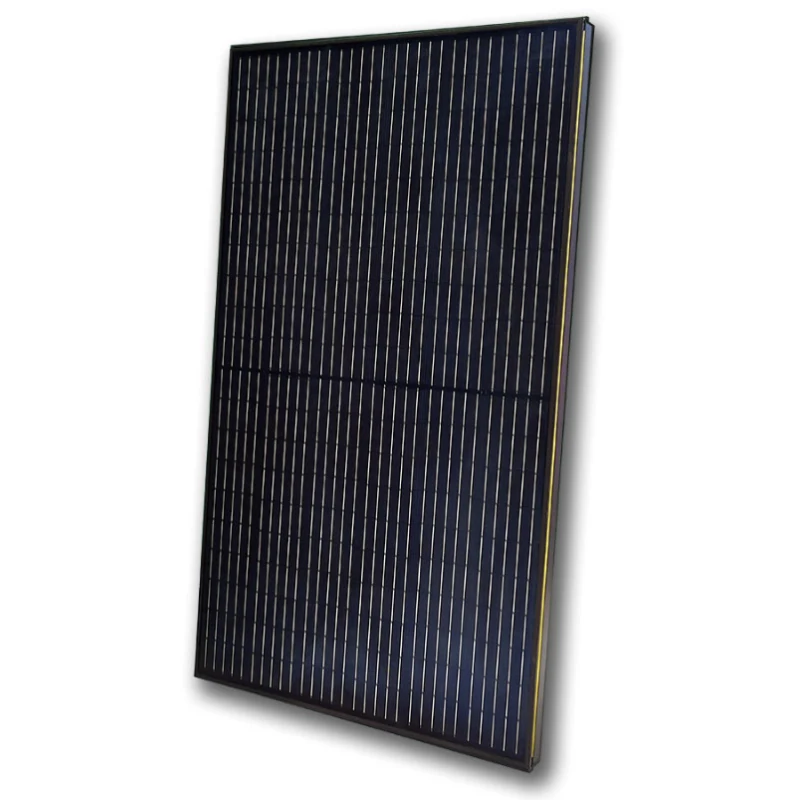
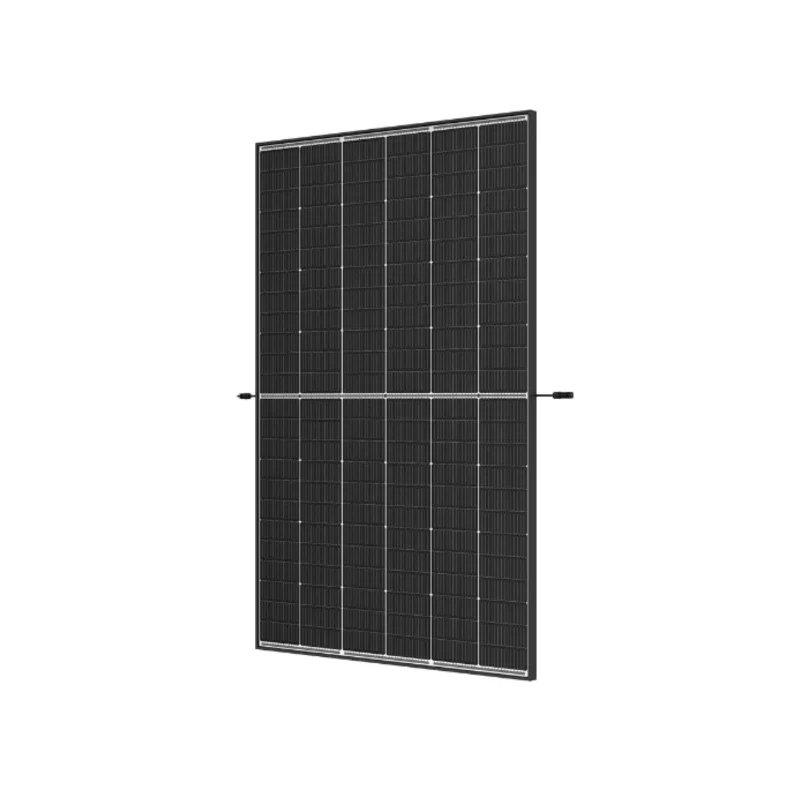
Trinasolar 455W Vertex S+ Dual Glass N-type i-TOPCon Solar Module – Black Frame/White Backsheet | TSM-455NEG9R.28
HomeStore

Trinasolar 455W Vertex S+ Dual Glass N-type i-TOPCon Solar Module – Black Frame/White Backsheet | TSM-455NEG9R.28

Trinasolar 455W Vertex S+ Dual Glass N-type i-TOPCon Solar Module – Black Frame/White Backsheet | TSM-455NEG9R.28

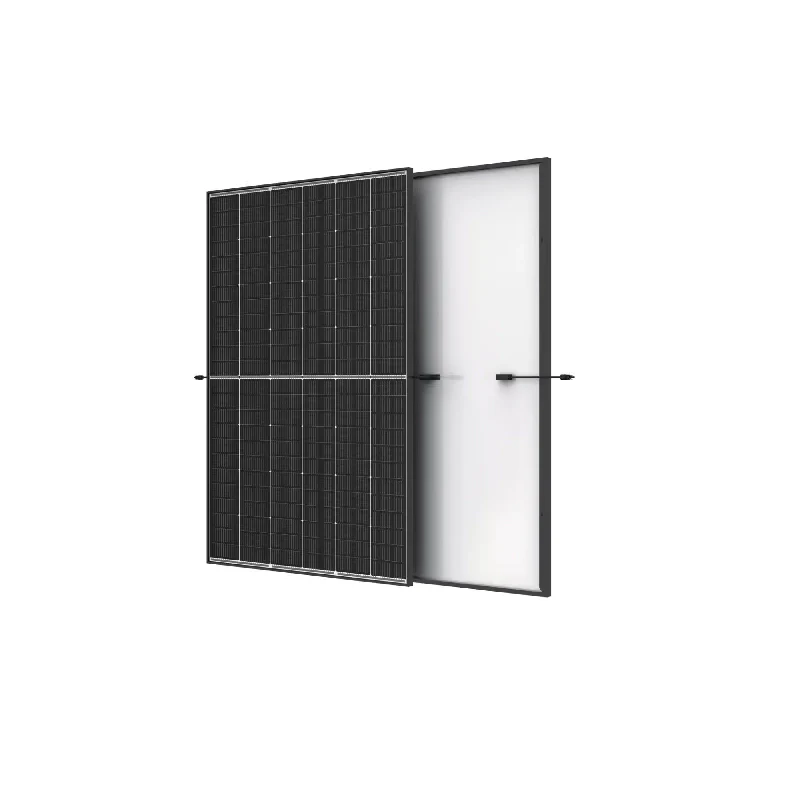
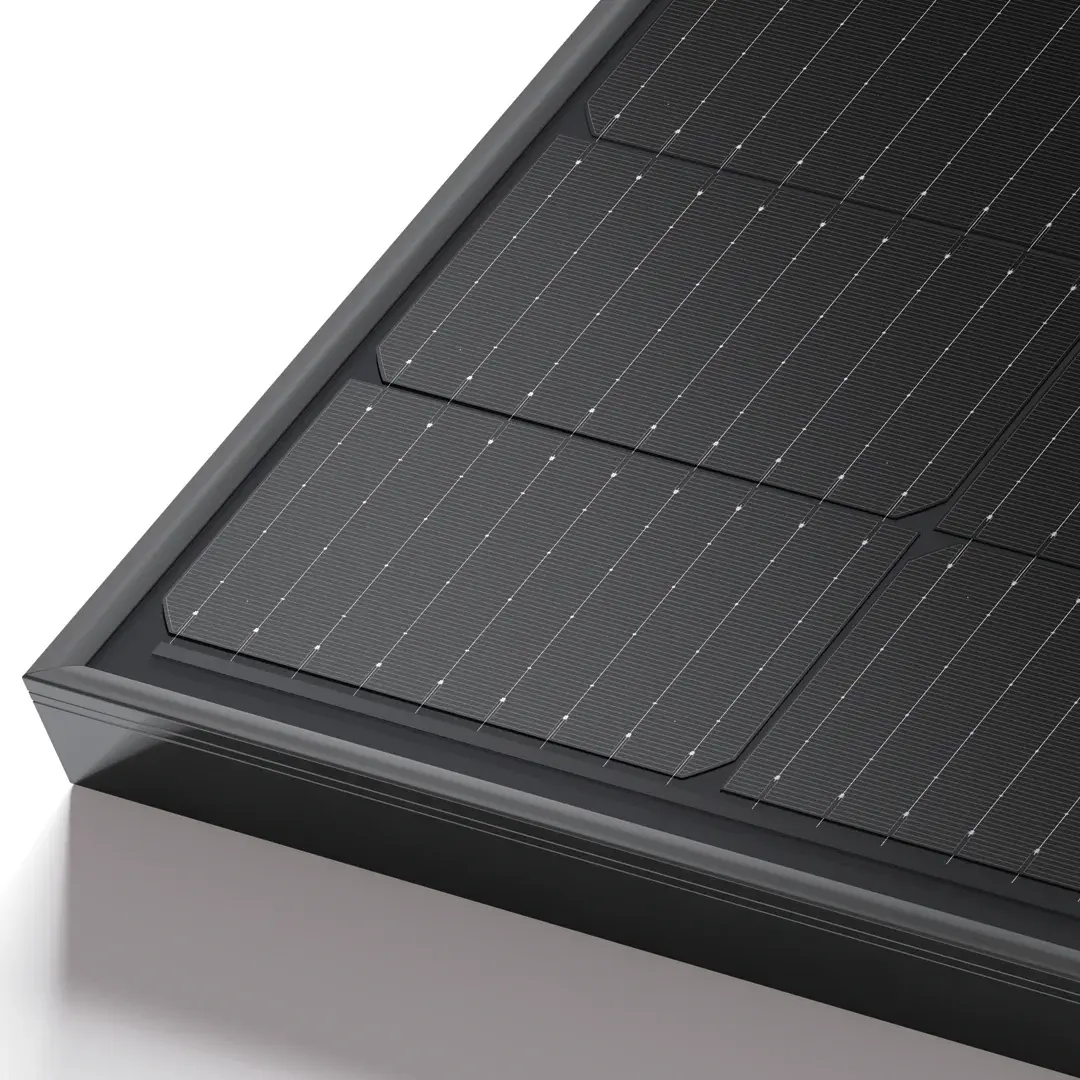
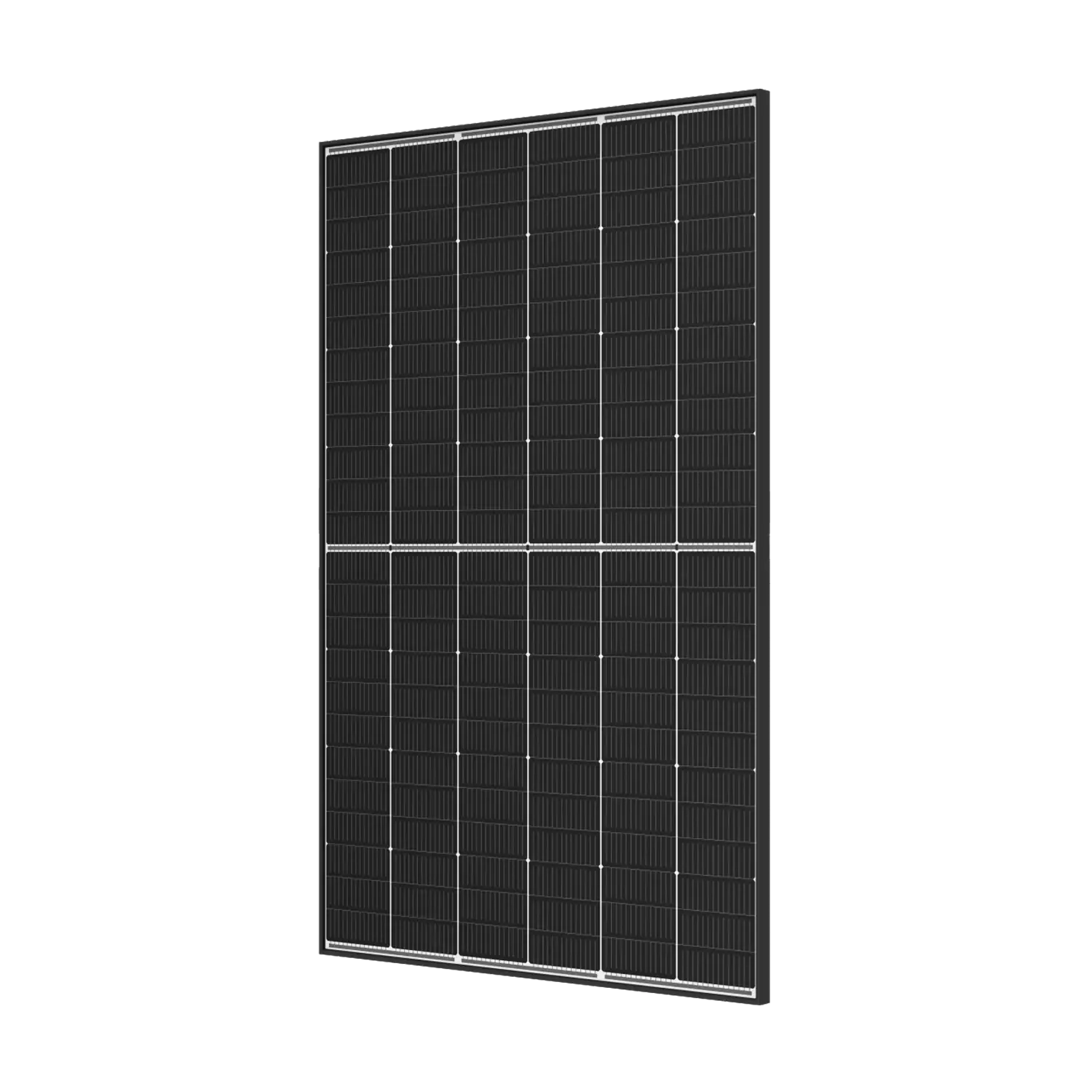
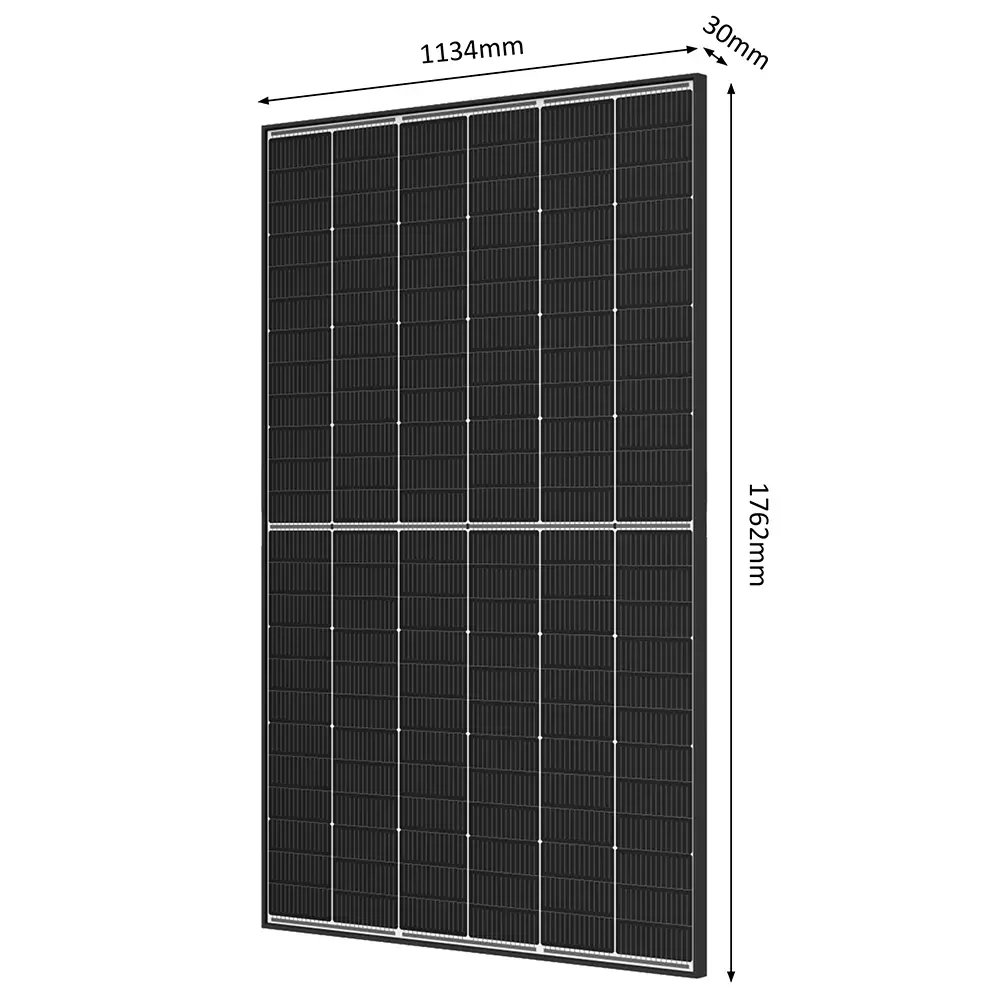
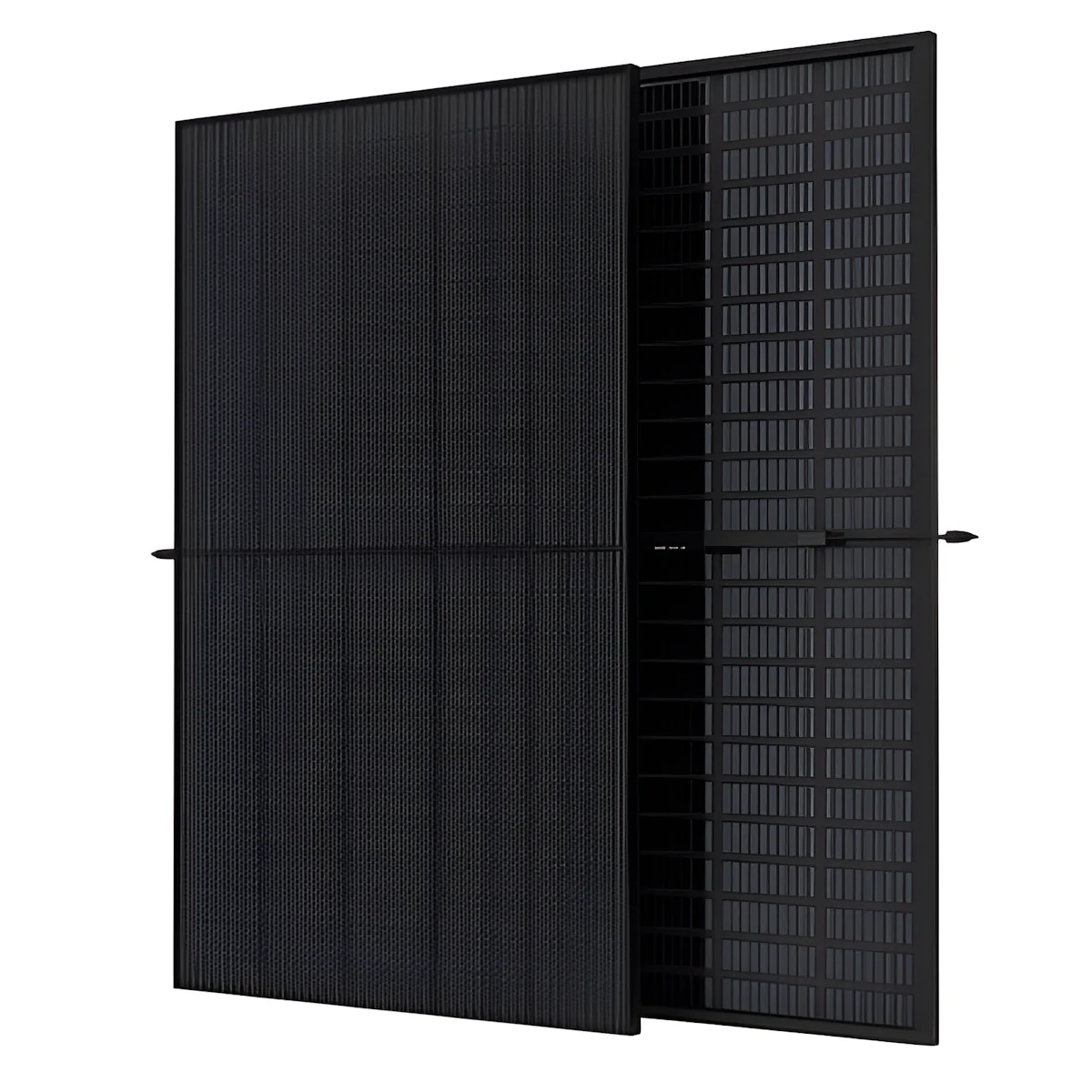
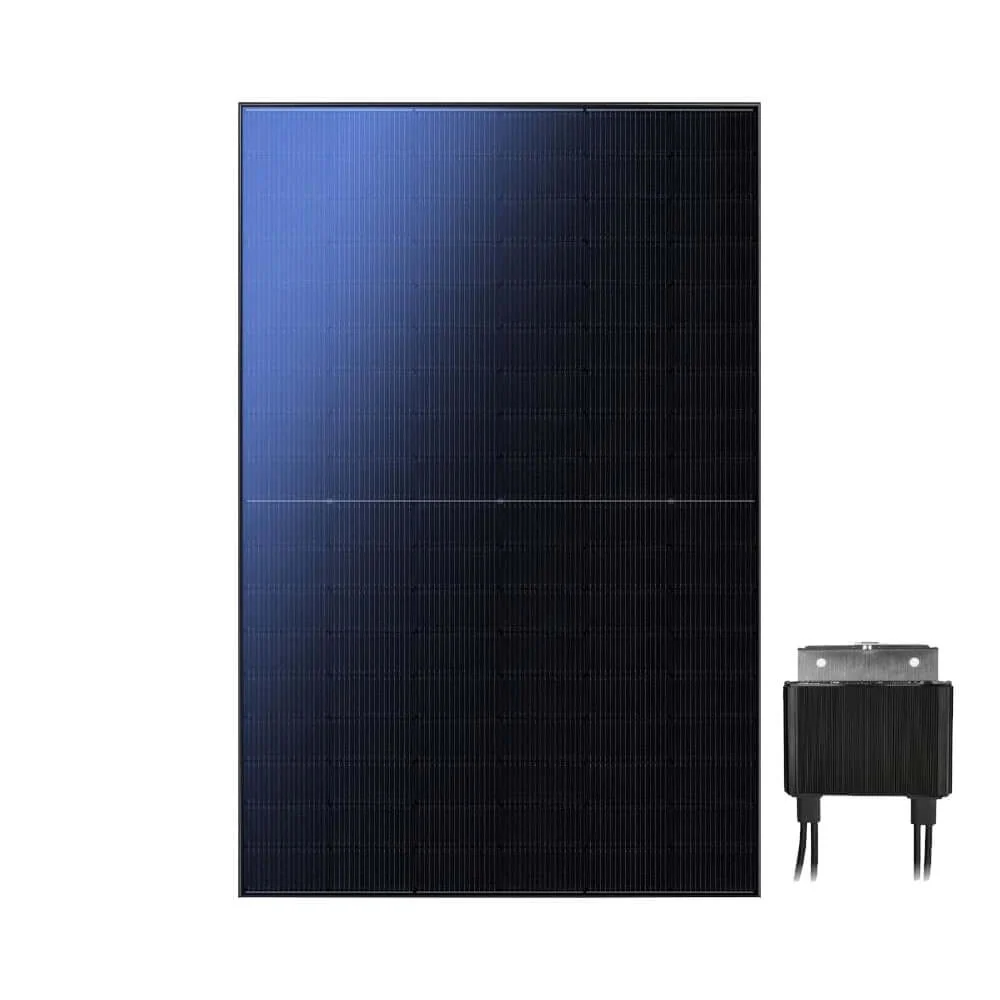
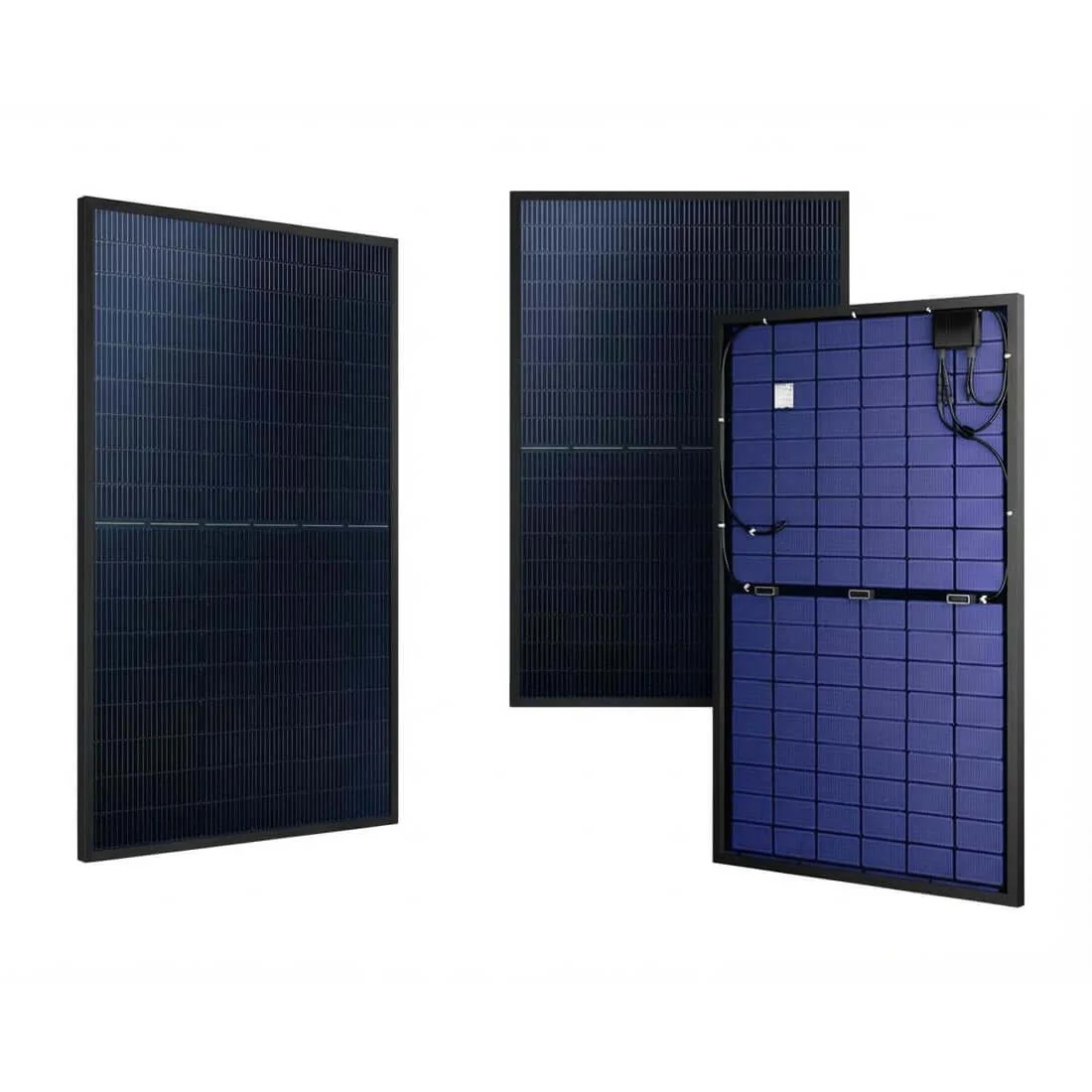
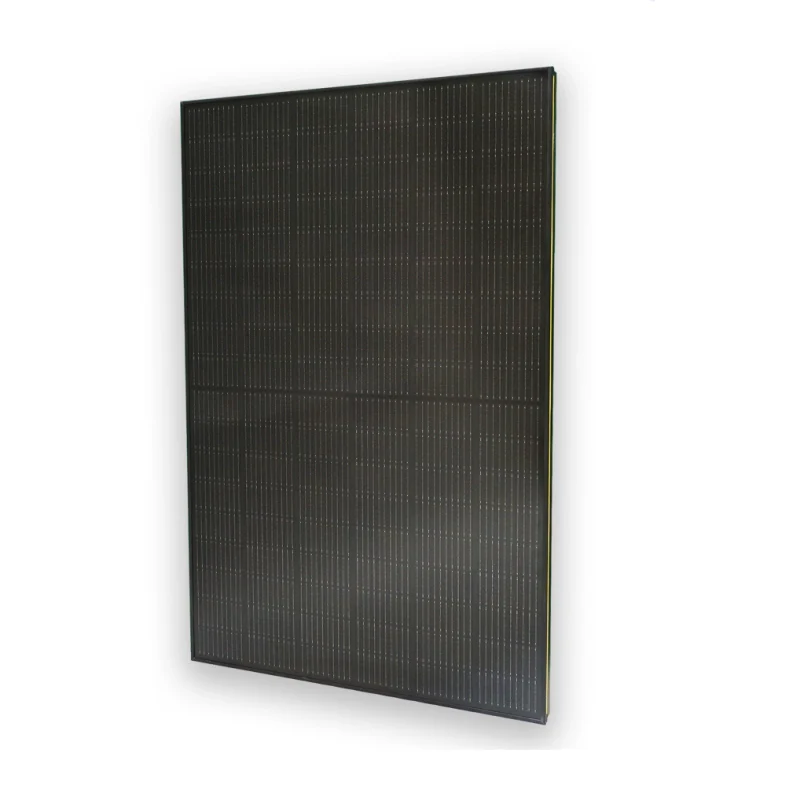
The Trinasolar TSM-455NEG9R.28 is a 455 Wp N-type i-TOPCon dual-glass solar module from the Vertex S+ range, combining high efficiency with a rooftop-friendly compact format. At 22.8 % module efficiency and 21.0 kg despite dual-glass construction, it delivers more power from less roof area than conventional P-type panels at similar weight. The N-type i-TOPCon cell technology underpins two advantages that matter for long-term UK performance: a temperature coefficient of only −0.29 %/°C (versus −0.35 %/°C for typical PERC P-type), and an annual degradation rate of just 0.4 % with a 30-year power warranty guaranteeing 87.4 % of rated output. The dual-glass construction replaces the standard white backsheet with a second 1.6 mm heat-strengthened glass, eliminating PID risk, improving fire class, and making the back surface resistant to micro-cracks during installation. Black anodised aluminium frame, white backsheet (front-side white), IP68 J-Box, 1,762 × 1,134 × 30 mm.

455W
Peak power (STC)
22.8%
Module efficiency
0.4%/yr
Annual degradation
30-year
Power warranty
Dual glass
IP68 J-Box
N-type i-TOPCon
Cell technology
⚠ MCS-accredited installer required for SEG/DNO compliance: Solar PV installation must be designed and installed by an MCS-accredited installer for G98/G99 grid connection notification and Smart Export Guarantee (SEG) eligibility. Always follow Trina Solar’s installation manual during fitting — improper installation will void the product warranty.
ℹ Positive power tolerance only (+0 to +5W) — every panel ships at or above rated power: The TSM-455NEG9R.28 carries a 0 to +5W positive-only tolerance. This means every panel in this range will produce at least 455W under STC conditions, never below. A panel measured at +5W (460W) incurs no cost penalty. This is relevant for string sizing: use the 455W figure for minimum system yield calculations, and 460W for maximum voltage/current safety checks.
How 0.4 %/year degradation affects 30-year yield vs a typical P-type panel
A conventional PERC P-type panel degrades at approximately 0.55 – 0.7 %/year. At 0.55 %/year, a 455 W P-type retains around 82 % of rated output at year 30 (373 W). The TSM-455NEG9R.28 at 0.4 %/year retains 87.4 % (397 W guaranteed, with actual performance potentially higher). On a 10-panel, 4.55 kWp system, this difference in degradation produces approximately 400 kWh more in year 30 alone — and compounded over 30 years, the lower degradation rate adds meaningfully to total lifetime generation.
Dual Glass vs Standard Backsheet — What the Second Glass Adds
Property Standard backsheet Dual glass (this module)
PID (potential induced degradation) Possible over time with certain inverter configs Not applicable — glass back blocks ionic migration
Micro-crack risk at back during installation Higher — flexible polymer can crack under point loads Lower — rigid glass distributes load
Fire class Class C or B depending on backsheet material Class A achievable (glass is inherently fire-resistant)
Weather/UV resistance Depends on backsheet polymer grade Glass: inherently UV-stable, no yellowing
Salt spray / ammonia resistance Polymer-dependent IEC 61701 / IEC 62716 certified
Module weight Slightly lighter 21.0 kg — same as backsheet version per datasheet
30-year power warranty Typically 80 – 85 % 87.4 % guaranteed

Trina Solar note that the Vertex S+ dual glass is designed to be “less prone to micro-cracks and scratches on the back during installation” compared to the original Vertex S backsheet version. This is a practical installation quality benefit on larger residential and C&I jobs where panels are handled, stacked and positioned multiple times.

N-type i-TOPCon vs Conventional P-type PERC — The Performance Difference
Parameter Typical P-type PERC TSM-455NEG9R.28 (N-type i-TOPCon)
Module efficiency (455W, similar size) ~20 – 21 % 22.8 %
Temperature coefficient (Pmax) −0.35 %/°C (typical) −0.29 %/°C
Annual degradation ≈0.55 – 0.7 %/year 0.4 %/year
30-year guaranteed power Typically 80 – 82 % 87.4 %
LID (light-induced degradation) Yes — initial 1 – 3 % loss on first exposure Negligible — N-type cells are LID-free
Power warranty period 25 years (standard) 30 years
Product warranty 10 – 12 years (standard) 15 years (25 upon request)

Temperature coefficient matters in UK conditions: a roof-mounted panel in direct summer sun can reach 60 – 70°C cell temperature. At 60°C (35°C above STC), a P-type panel loses 35×−0.35 % = 12.25 % of rated power. The TSM-455NEG9R.28 loses 35×−0.29 % = 10.15 % — a 2.1 percentage-point advantage at peak summer generation hours.

Key Features
455 Wp in a 1,762 × 1,134 mm Format — 22.8 % Module Efficiency
At 22.8 % module efficiency, the TSM-455NEG9R.28 extracts more power from each square metre of roof than any equivalent conventional PERC module. On a typical 25 m² south-facing UK roof section, the difference between 20 % and 22.8 % efficiency is approximately 1 additional panel’s worth of output from the same area. The compact 1,762 × 1,134 mm footprint is sized for standard UK residential rooftop rail systems with 35 mm end clamps and mid-rail layouts. At 21.0 kg, the weight matches the backsheet version despite the dual-glass construction.
455 Wp22.8 % efficiency21.0 kg
N-type i-TOPCon — No LID, Low Temperature Loss, Long-Term Stability
i-TOPCon (Tunnel Oxide Passivated Contact) is a passivated-contact cell architecture that minimises recombination losses at the cell surface. On an N-type silicon substrate, this combination eliminates light-induced degradation (LID), which affects all P-type cells on first exposure to sunlight. P-type panels typically lose 1 – 3 % permanently in their first hours of operation. The TSM-455NEG9R.28 has a low first-year degradation of 1 % and only 0.4 %/year thereafter, producing meaningfully more energy over a 25 – 30 year system lifetime. The temperature coefficient of −0.29 %/°C also reduces peak summer heat losses compared to standard P-type.
No LID0.4 %/year degradation−0.29 %/°C
Dual Glass Construction — IP68 J-Box, IEC 61701, IEC 62716
The 1.6 mm heat-strengthened glass back replaces the polymer backsheet of standard modules, providing inherent UV stability, improved fire rating, and elimination of PID susceptibility. The back glass is also more resistant to micro-cracks from point-load contact during installation, reducing the risk of invisible damage in logistics and on-roof handling. The IP68-rated junction box provides the highest waterproofing rating for immersed conditions. Certified to IEC 61701 (salt spray) and IEC 62716 (ammonia), making the panel suitable for coastal and agricultural sites in addition to standard residential applications.
1.6mm heat-strengthened back glassIP68 J-BoxIEC 61701 + IEC 62716
30-Year Power Warranty — 87.4 % Guaranteed at Year 30
Trina Solar guarantee 87.4 % of rated output at year 30 for the TSM-NEG9R.28 series. This is substantially above the 80 % at 25 years offered by many standard P-type products. The warranty degradation profile: 99 % after year 1 (1 % first-year allowance), then linear 0.4 %/year to 90 % at year 25 and 87.4 % at year 30. The product workmanship warranty is 15 years standard (25 years available on request). UK systems typically have a 25-year design life; the 30-year power warranty provides coverage beyond that with a meaningful output floor.
87.4 % at year 3030-year power warranty15-year product warranty (25 on request)
5,400 Pa Positive / 4,000 Pa Negative Load Resistance
The dual-glass structure provides high mechanical resistance. 5,400 Pa positive load (snow/ice on front surface) equates to approximately 550 kg/m² — exceeding the UK/EU standard design requirement of 2,400 Pa. 4,000 Pa negative load (wind uplift on rear) represents sustained storm-force suction. These ratings assume installation with approved mounting hardware per Trina Solar’s installation guidelines. Using non-approved clamps or exceeding specified rail spacing will void mechanical warranty coverage.
5,400 Pa positive (snow)4,000 Pa negative (wind)Approved mounting required
Multi-Busbar + Non-Destructive Cutting — Improved Shade Tolerance and Mechanical Strength
The 144-cell multi-busbar layout distributes the current collection path across more conductors, reducing resistive losses and improving performance under partial shading compared to 3-busbar or 4-busbar designs. More busbars also reduce the impact of individual cell micro-cracks on module-level output. Non-destructive cutting splits the full-size 210 mm wafers into the smaller cells that form the module without the edge damage associated with conventional laser or mechanical scribing, resulting in stronger cells with better mechanical integrity and longer potential service life.
144 cells, multi-busbarNon-destructive cuttingBetter shade tolerance
1500 V DC Max System Voltage — Compatible with High-Voltage String Inverters
The TSM-455NEG9R.28 is rated to a maximum system voltage of 1,500 V DC (IEC), and a maximum series fuse of 25 A. This enables longer strings at higher DC voltages, reducing cable losses and simplifying wiring for larger systems. Compatible with all major UK residential and commercial hybrid and string inverters including Solis, SolaX, Huawei, SolarEdge, Fronius and others that accept 455 W panels with these voltage and current parameters. For string sizing: Voc 53.4 V at STC gives a maximum string of approximately 28 panels in series at 1,500 V (apply appropriate correction for minimum expected ambient temperature). Always verify string design using inverter manufacturer tools.
1,500V DC (IEC)25A max fuseVoc 53.4V / Isc 10.77A
Technical Specifications

All data from official Trina Solar datasheet TSM_EN_2024_APAC_A. STC: 1,000 W/m², 25°C cell temperature, AM1.5. Measuring tolerance: ±3 %. Specifications subject to change without notice per manufacturer.

Electrical Data at STC (1,000 W/m², 25°C, AM1.5)
Model TSM-455NEG9R.28
Peak power (Pmax) 455 Wp
Power tolerance 0 to +5 W (positive only)
Module efficiency 22.8 %
Max power voltage (Vmpp) 45.0 V
Max power current (Impp) 10.11 A
Open circuit voltage (Voc) 53.4 V
Short circuit current (Isc) 10.77 A
Electrical Data at NOCT (800 W/m², 20°C ambient, 1 m/s wind)
Peak power (NOCT) 348 W
Vmpp (NOCT) 41.4 V
Impp (NOCT) 8.68 A
Voc (NOCT) 50.6 V
Isc (NOCT) 8.22 A
Temperature Ratings
NOCT 43°C ±2°C
Temperature coefficient of Pmax −0.29 %/°C
Temperature coefficient of Voc −0.24 %/°C
Temperature coefficient of Isc +0.04 %/°C
Operational temperature range −40°C to +85°C
Maximum Ratings
Maximum system voltage 1,500 V DC (IEC)
Maximum series fuse rating 25 A
Mechanical Data
Cell technology N-type monocrystalline i-TOPCon
Number of cells 144
Module dimensions (W × H × D) 1,134 × 1,762 × 30 mm
Weight 21.0 kg
Front glass 1.6 mm high-transmission AR-coated heat-strengthened
Back glass (dual glass) 1.6 mm heat-strengthened glass
Frame 30 mm anodised aluminium alloy, black
Encapsulant POE/EVA
Junction box IP68 rated
Cable 4.0 mm² PV technology cable
Connector TS4 Plus / TS4 compatible
Mechanical Loads (Approved Mounting)
Positive load (snow/ice) 5,400 Pa
Negative load (wind uplift) 4,000 Pa
Packaging
Modules per box (pallet) 36 pieces
Modules per 40’ container 936 pieces
Warranty
Product workmanship warranty 15 years (25 years upon request)
Power warranty 30 years
First-year degradation 1 %
Annual power attenuation 0.4 %/year
Guaranteed power at year 30 87.4 % of rated output
Certifications
Product IEC 61215 / IEC 61730
Salt spray IEC 61701
Ammonia resistance IEC 62716
Quality management ISO 9001
Environmental management ISO 14001
Safety (US) UL 61730
Other ISO 14064, ISO 45001, EU-28 WEEE compliant
Frequently Asked Questions
How many panels do I need for a typical 4 kWp UK system?
At 455 W per panel, a 4 kWp system requires 9 panels (9 × 455W = 4,095W). A 4.55 kWp system uses 10 panels; 5 kWp uses 11 panels. A standard 3 – 4 bed UK semi-detached has approximately 25 m² of usable south-facing roof, which can accommodate roughly 12 – 14 panels in a standard rail/clamp arrangement. At 22.8 % module efficiency, 10 panels generate an annual yield of approximately 3,800 – 4,200 kWh in most UK locations (depending on location, orientation and tilt angle). Always have an MCS-accredited installer produce a site-specific shading analysis and yield estimate before system sizing.
What is the difference between i-TOPCon and standard PERC technology?
PERC (Passivated Emitter and Rear Contact) is the dominant P-type cell architecture used in most residential panels sold in the UK until recently. TOPCon (Tunnel Oxide Passivated Contact) is an N-type cell architecture that adds a thin tunnel oxide and doped polysilicon layer on the rear of the cell, significantly reducing electron-hole recombination. The practical differences for end users: (1) Higher efficiency — TOPCon reaches 22 – 24 % vs 20 – 21 % for PERC at equivalent wafer size. (2) No LID — N-type wafers do not degrade on first light exposure. (3) Lower degradation rate — 0.4 %/year vs 0.55 – 0.7 %/year. (4) Better temperature performance — −0.29 %/°C vs −0.35 %/°C typical PERC.
Can these panels be installed on a tiled or flat roof?
Yes. The TSM-455NEG9R.28 is compatible with standard rail-and-clamp rooftop mounting systems used on pitched tiled roofs (concrete interlocking, clay, slate) via appropriate roof hooks, as well as flat roof ballasted or penetrating systems. The mechanical load ratings (5,400 Pa positive / 4,000 Pa negative) apply when mounted per Trina Solar’s installation manual with approved clamps and specified maximum rail spans. For flat roof installation, the low temperature coefficient is particularly advantageous as panels on flat roofs with low airflow run hotter than on pitched roofs, making the −0.29 %/°C advantage more pronounced.
Is the dual-glass construction significantly heavier than a standard panel?
No. The TSM-455NEG9R.28 weighs 21.0 kg — the same as a comparable backsheet version according to the Trina datasheet. This is unusual for dual-glass construction, which typically adds 1 – 2 kg over a backsheet equivalent. Trina achieve this through the thinness of the back glass (1.6 mm) and the overall compact Vertex S+ format. Roof structural assessments for UK installations typically allow 18 – 20 kg/m² for standard pitched roof panel arrays; at 21.0 kg per 1.997 m² of panel area, this module sits well within standard structural allowances.
What does the 30-year power warranty actually cover?
The Trina Solar 30-year power warranty guarantees that the panel will produce at least the stated percentage of its nameplate (455W) output at STC conditions for each year: 99 % after year 1, declining linearly to 87.4 % at year 30. This is a manufacturer’s guarantee backed by Trina Solar. Claims require proof of purchase and that the installation followed Trina’s installation manual with approved mounting hardware. The 15-year (25 on request) product workmanship warranty covers defects in materials and manufacture separately from the power warranty. Note: this is distinct from the installer’s workmanship guarantee, which is typically 2 – 5 years and should be confirmed with your installer.
Related Products
Aiko 490W Neostar 3P+ ABC Solar Panel
Higher-power ABC N-type alternative
JA Solar 460W N-type All-Black
All-black N-type TOPCon alternative
Solis RHI-5G Hybrid Inverters (3 kW – 6 kW)
Compatible hybrid inverter for solar+storage
Duracell Energy Dura16 LV 16 kWh Battery
Compatible LFP battery for solar self-consumption storage
$61.41

Original: $175.46

-65%
Trinasolar 455W Vertex S+ Dual Glass N-type i-TOPCon Solar Module – Black Frame/White Backsheet | TSM-455NEG9R.28

$175.46

$61.41

More Images

Trinasolar 455W Vertex S+ Dual Glass N-type i-TOPCon Solar Module – Black Frame/White Backsheet | TSM-455NEG9R.28 - Image 2

Trinasolar 455W Vertex S+ Dual Glass N-type i-TOPCon Solar Module – Black Frame/White Backsheet | TSM-455NEG9R.28

The Trinasolar TSM-455NEG9R.28 is a 455 Wp N-type i-TOPCon dual-glass solar module from the Vertex S+ range, combining high efficiency with a rooftop-friendly compact format. At 22.8 % module efficiency and 21.0 kg despite dual-glass construction, it delivers more power from less roof area than conventional P-type panels at similar weight. The N-type i-TOPCon cell technology underpins two advantages that matter for long-term UK performance: a temperature coefficient of only −0.29 %/°C (versus −0.35 %/°C for typical PERC P-type), and an annual degradation rate of just 0.4 % with a 30-year power warranty guaranteeing 87.4 % of rated output. The dual-glass construction replaces the standard white backsheet with a second 1.6 mm heat-strengthened glass, eliminating PID risk, improving fire class, and making the back surface resistant to micro-cracks during installation. Black anodised aluminium frame, white backsheet (front-side white), IP68 J-Box, 1,762 × 1,134 × 30 mm.

455W
Peak power (STC)
22.8%
Module efficiency
0.4%/yr
Annual degradation
30-year
Power warranty
Dual glass
IP68 J-Box
N-type i-TOPCon
Cell technology
⚠ MCS-accredited installer required for SEG/DNO compliance: Solar PV installation must be designed and installed by an MCS-accredited installer for G98/G99 grid connection notification and Smart Export Guarantee (SEG) eligibility. Always follow Trina Solar’s installation manual during fitting — improper installation will void the product warranty.
ℹ Positive power tolerance only (+0 to +5W) — every panel ships at or above rated power: The TSM-455NEG9R.28 carries a 0 to +5W positive-only tolerance. This means every panel in this range will produce at least 455W under STC conditions, never below. A panel measured at +5W (460W) incurs no cost penalty. This is relevant for string sizing: use the 455W figure for minimum system yield calculations, and 460W for maximum voltage/current safety checks.
How 0.4 %/year degradation affects 30-year yield vs a typical P-type panel
A conventional PERC P-type panel degrades at approximately 0.55 – 0.7 %/year. At 0.55 %/year, a 455 W P-type retains around 82 % of rated output at year 30 (373 W). The TSM-455NEG9R.28 at 0.4 %/year retains 87.4 % (397 W guaranteed, with actual performance potentially higher). On a 10-panel, 4.55 kWp system, this difference in degradation produces approximately 400 kWh more in year 30 alone — and compounded over 30 years, the lower degradation rate adds meaningfully to total lifetime generation.
Dual Glass vs Standard Backsheet — What the Second Glass Adds
Property Standard backsheet Dual glass (this module)
PID (potential induced degradation) Possible over time with certain inverter configs Not applicable — glass back blocks ionic migration
Micro-crack risk at back during installation Higher — flexible polymer can crack under point loads Lower — rigid glass distributes load
Fire class Class C or B depending on backsheet material Class A achievable (glass is inherently fire-resistant)
Weather/UV resistance Depends on backsheet polymer grade Glass: inherently UV-stable, no yellowing
Salt spray / ammonia resistance Polymer-dependent IEC 61701 / IEC 62716 certified
Module weight Slightly lighter 21.0 kg — same as backsheet version per datasheet
30-year power warranty Typically 80 – 85 % 87.4 % guaranteed

Trina Solar note that the Vertex S+ dual glass is designed to be “less prone to micro-cracks and scratches on the back during installation” compared to the original Vertex S backsheet version. This is a practical installation quality benefit on larger residential and C&I jobs where panels are handled, stacked and positioned multiple times.

N-type i-TOPCon vs Conventional P-type PERC — The Performance Difference
Parameter Typical P-type PERC TSM-455NEG9R.28 (N-type i-TOPCon)
Module efficiency (455W, similar size) ~20 – 21 % 22.8 %
Temperature coefficient (Pmax) −0.35 %/°C (typical) −0.29 %/°C
Annual degradation ≈0.55 – 0.7 %/year 0.4 %/year
30-year guaranteed power Typically 80 – 82 % 87.4 %
LID (light-induced degradation) Yes — initial 1 – 3 % loss on first exposure Negligible — N-type cells are LID-free
Power warranty period 25 years (standard) 30 years
Product warranty 10 – 12 years (standard) 15 years (25 upon request)

Temperature coefficient matters in UK conditions: a roof-mounted panel in direct summer sun can reach 60 – 70°C cell temperature. At 60°C (35°C above STC), a P-type panel loses 35×−0.35 % = 12.25 % of rated power. The TSM-455NEG9R.28 loses 35×−0.29 % = 10.15 % — a 2.1 percentage-point advantage at peak summer generation hours.

Key Features
455 Wp in a 1,762 × 1,134 mm Format — 22.8 % Module Efficiency
At 22.8 % module efficiency, the TSM-455NEG9R.28 extracts more power from each square metre of roof than any equivalent conventional PERC module. On a typical 25 m² south-facing UK roof section, the difference between 20 % and 22.8 % efficiency is approximately 1 additional panel’s worth of output from the same area. The compact 1,762 × 1,134 mm footprint is sized for standard UK residential rooftop rail systems with 35 mm end clamps and mid-rail layouts. At 21.0 kg, the weight matches the backsheet version despite the dual-glass construction.
455 Wp22.8 % efficiency21.0 kg
N-type i-TOPCon — No LID, Low Temperature Loss, Long-Term Stability
i-TOPCon (Tunnel Oxide Passivated Contact) is a passivated-contact cell architecture that minimises recombination losses at the cell surface. On an N-type silicon substrate, this combination eliminates light-induced degradation (LID), which affects all P-type cells on first exposure to sunlight. P-type panels typically lose 1 – 3 % permanently in their first hours of operation. The TSM-455NEG9R.28 has a low first-year degradation of 1 % and only 0.4 %/year thereafter, producing meaningfully more energy over a 25 – 30 year system lifetime. The temperature coefficient of −0.29 %/°C also reduces peak summer heat losses compared to standard P-type.
No LID0.4 %/year degradation−0.29 %/°C
Dual Glass Construction — IP68 J-Box, IEC 61701, IEC 62716
The 1.6 mm heat-strengthened glass back replaces the polymer backsheet of standard modules, providing inherent UV stability, improved fire rating, and elimination of PID susceptibility. The back glass is also more resistant to micro-cracks from point-load contact during installation, reducing the risk of invisible damage in logistics and on-roof handling. The IP68-rated junction box provides the highest waterproofing rating for immersed conditions. Certified to IEC 61701 (salt spray) and IEC 62716 (ammonia), making the panel suitable for coastal and agricultural sites in addition to standard residential applications.
1.6mm heat-strengthened back glassIP68 J-BoxIEC 61701 + IEC 62716
30-Year Power Warranty — 87.4 % Guaranteed at Year 30
Trina Solar guarantee 87.4 % of rated output at year 30 for the TSM-NEG9R.28 series. This is substantially above the 80 % at 25 years offered by many standard P-type products. The warranty degradation profile: 99 % after year 1 (1 % first-year allowance), then linear 0.4 %/year to 90 % at year 25 and 87.4 % at year 30. The product workmanship warranty is 15 years standard (25 years available on request). UK systems typically have a 25-year design life; the 30-year power warranty provides coverage beyond that with a meaningful output floor.
87.4 % at year 3030-year power warranty15-year product warranty (25 on request)
5,400 Pa Positive / 4,000 Pa Negative Load Resistance
The dual-glass structure provides high mechanical resistance. 5,400 Pa positive load (snow/ice on front surface) equates to approximately 550 kg/m² — exceeding the UK/EU standard design requirement of 2,400 Pa. 4,000 Pa negative load (wind uplift on rear) represents sustained storm-force suction. These ratings assume installation with approved mounting hardware per Trina Solar’s installation guidelines. Using non-approved clamps or exceeding specified rail spacing will void mechanical warranty coverage.
5,400 Pa positive (snow)4,000 Pa negative (wind)Approved mounting required
Multi-Busbar + Non-Destructive Cutting — Improved Shade Tolerance and Mechanical Strength
The 144-cell multi-busbar layout distributes the current collection path across more conductors, reducing resistive losses and improving performance under partial shading compared to 3-busbar or 4-busbar designs. More busbars also reduce the impact of individual cell micro-cracks on module-level output. Non-destructive cutting splits the full-size 210 mm wafers into the smaller cells that form the module without the edge damage associated with conventional laser or mechanical scribing, resulting in stronger cells with better mechanical integrity and longer potential service life.
144 cells, multi-busbarNon-destructive cuttingBetter shade tolerance
1500 V DC Max System Voltage — Compatible with High-Voltage String Inverters
The TSM-455NEG9R.28 is rated to a maximum system voltage of 1,500 V DC (IEC), and a maximum series fuse of 25 A. This enables longer strings at higher DC voltages, reducing cable losses and simplifying wiring for larger systems. Compatible with all major UK residential and commercial hybrid and string inverters including Solis, SolaX, Huawei, SolarEdge, Fronius and others that accept 455 W panels with these voltage and current parameters. For string sizing: Voc 53.4 V at STC gives a maximum string of approximately 28 panels in series at 1,500 V (apply appropriate correction for minimum expected ambient temperature). Always verify string design using inverter manufacturer tools.
1,500V DC (IEC)25A max fuseVoc 53.4V / Isc 10.77A
Technical Specifications

All data from official Trina Solar datasheet TSM_EN_2024_APAC_A. STC: 1,000 W/m², 25°C cell temperature, AM1.5. Measuring tolerance: ±3 %. Specifications subject to change without notice per manufacturer.

Electrical Data at STC (1,000 W/m², 25°C, AM1.5)
Model TSM-455NEG9R.28
Peak power (Pmax) 455 Wp
Power tolerance 0 to +5 W (positive only)
Module efficiency 22.8 %
Max power voltage (Vmpp) 45.0 V
Max power current (Impp) 10.11 A
Open circuit voltage (Voc) 53.4 V
Short circuit current (Isc) 10.77 A
Electrical Data at NOCT (800 W/m², 20°C ambient, 1 m/s wind)
Peak power (NOCT) 348 W
Vmpp (NOCT) 41.4 V
Impp (NOCT) 8.68 A
Voc (NOCT) 50.6 V
Isc (NOCT) 8.22 A
Temperature Ratings
NOCT 43°C ±2°C
Temperature coefficient of Pmax −0.29 %/°C
Temperature coefficient of Voc −0.24 %/°C
Temperature coefficient of Isc +0.04 %/°C
Operational temperature range −40°C to +85°C
Maximum Ratings
Maximum system voltage 1,500 V DC (IEC)
Maximum series fuse rating 25 A
Mechanical Data
Cell technology N-type monocrystalline i-TOPCon
Number of cells 144
Module dimensions (W × H × D) 1,134 × 1,762 × 30 mm
Weight 21.0 kg
Front glass 1.6 mm high-transmission AR-coated heat-strengthened
Back glass (dual glass) 1.6 mm heat-strengthened glass
Frame 30 mm anodised aluminium alloy, black
Encapsulant POE/EVA
Junction box IP68 rated
Cable 4.0 mm² PV technology cable
Connector TS4 Plus / TS4 compatible
Mechanical Loads (Approved Mounting)
Positive load (snow/ice) 5,400 Pa
Negative load (wind uplift) 4,000 Pa
Packaging
Modules per box (pallet) 36 pieces
Modules per 40’ container 936 pieces
Warranty
Product workmanship warranty 15 years (25 years upon request)
Power warranty 30 years
First-year degradation 1 %
Annual power attenuation 0.4 %/year
Guaranteed power at year 30 87.4 % of rated output
Certifications
Product IEC 61215 / IEC 61730
Salt spray IEC 61701
Ammonia resistance IEC 62716
Quality management ISO 9001
Environmental management ISO 14001
Safety (US) UL 61730
Other ISO 14064, ISO 45001, EU-28 WEEE compliant
Frequently Asked Questions
How many panels do I need for a typical 4 kWp UK system?
At 455 W per panel, a 4 kWp system requires 9 panels (9 × 455W = 4,095W). A 4.55 kWp system uses 10 panels; 5 kWp uses 11 panels. A standard 3 – 4 bed UK semi-detached has approximately 25 m² of usable south-facing roof, which can accommodate roughly 12 – 14 panels in a standard rail/clamp arrangement. At 22.8 % module efficiency, 10 panels generate an annual yield of approximately 3,800 – 4,200 kWh in most UK locations (depending on location, orientation and tilt angle). Always have an MCS-accredited installer produce a site-specific shading analysis and yield estimate before system sizing.
What is the difference between i-TOPCon and standard PERC technology?
PERC (Passivated Emitter and Rear Contact) is the dominant P-type cell architecture used in most residential panels sold in the UK until recently. TOPCon (Tunnel Oxide Passivated Contact) is an N-type cell architecture that adds a thin tunnel oxide and doped polysilicon layer on the rear of the cell, significantly reducing electron-hole recombination. The practical differences for end users: (1) Higher efficiency — TOPCon reaches 22 – 24 % vs 20 – 21 % for PERC at equivalent wafer size. (2) No LID — N-type wafers do not degrade on first light exposure. (3) Lower degradation rate — 0.4 %/year vs 0.55 – 0.7 %/year. (4) Better temperature performance — −0.29 %/°C vs −0.35 %/°C typical PERC.
Can these panels be installed on a tiled or flat roof?
Yes. The TSM-455NEG9R.28 is compatible with standard rail-and-clamp rooftop mounting systems used on pitched tiled roofs (concrete interlocking, clay, slate) via appropriate roof hooks, as well as flat roof ballasted or penetrating systems. The mechanical load ratings (5,400 Pa positive / 4,000 Pa negative) apply when mounted per Trina Solar’s installation manual with approved clamps and specified maximum rail spans. For flat roof installation, the low temperature coefficient is particularly advantageous as panels on flat roofs with low airflow run hotter than on pitched roofs, making the −0.29 %/°C advantage more pronounced.
Is the dual-glass construction significantly heavier than a standard panel?
No. The TSM-455NEG9R.28 weighs 21.0 kg — the same as a comparable backsheet version according to the Trina datasheet. This is unusual for dual-glass construction, which typically adds 1 – 2 kg over a backsheet equivalent. Trina achieve this through the thinness of the back glass (1.6 mm) and the overall compact Vertex S+ format. Roof structural assessments for UK installations typically allow 18 – 20 kg/m² for standard pitched roof panel arrays; at 21.0 kg per 1.997 m² of panel area, this module sits well within standard structural allowances.
What does the 30-year power warranty actually cover?
The Trina Solar 30-year power warranty guarantees that the panel will produce at least the stated percentage of its nameplate (455W) output at STC conditions for each year: 99 % after year 1, declining linearly to 87.4 % at year 30. This is a manufacturer’s guarantee backed by Trina Solar. Claims require proof of purchase and that the installation followed Trina’s installation manual with approved mounting hardware. The 15-year (25 on request) product workmanship warranty covers defects in materials and manufacture separately from the power warranty. Note: this is distinct from the installer’s workmanship guarantee, which is typically 2 – 5 years and should be confirmed with your installer.
Related Products
Aiko 490W Neostar 3P+ ABC Solar Panel
Higher-power ABC N-type alternative
JA Solar 460W N-type All-Black
All-black N-type TOPCon alternative
Solis RHI-5G Hybrid Inverters (3 kW – 6 kW)
Compatible hybrid inverter for solar+storage
Duracell Energy Dura16 LV 16 kWh Battery
Compatible LFP battery for solar self-consumption storage

Product Information

Shipping & Returns

Description

The Trinasolar TSM-455NEG9R.28 is a 455 Wp N-type i-TOPCon dual-glass solar module from the Vertex S+ range, combining high efficiency with a rooftop-friendly compact format. At 22.8 % module efficiency and 21.0 kg despite dual-glass construction, it delivers more power from less roof area than conventional P-type panels at similar weight. The N-type i-TOPCon cell technology underpins two advantages that matter for long-term UK performance: a temperature coefficient of only −0.29 %/°C (versus −0.35 %/°C for typical PERC P-type), and an annual degradation rate of just 0.4 % with a 30-year power warranty guaranteeing 87.4 % of rated output. The dual-glass construction replaces the standard white backsheet with a second 1.6 mm heat-strengthened glass, eliminating PID risk, improving fire class, and making the back surface resistant to micro-cracks during installation. Black anodised aluminium frame, white backsheet (front-side white), IP68 J-Box, 1,762 × 1,134 × 30 mm.

455W
Peak power (STC)
22.8%
Module efficiency
0.4%/yr
Annual degradation
30-year
Power warranty
Dual glass
IP68 J-Box
N-type i-TOPCon
Cell technology
⚠ MCS-accredited installer required for SEG/DNO compliance: Solar PV installation must be designed and installed by an MCS-accredited installer for G98/G99 grid connection notification and Smart Export Guarantee (SEG) eligibility. Always follow Trina Solar’s installation manual during fitting — improper installation will void the product warranty.
ℹ Positive power tolerance only (+0 to +5W) — every panel ships at or above rated power: The TSM-455NEG9R.28 carries a 0 to +5W positive-only tolerance. This means every panel in this range will produce at least 455W under STC conditions, never below. A panel measured at +5W (460W) incurs no cost penalty. This is relevant for string sizing: use the 455W figure for minimum system yield calculations, and 460W for maximum voltage/current safety checks.
How 0.4 %/year degradation affects 30-year yield vs a typical P-type panel
A conventional PERC P-type panel degrades at approximately 0.55 – 0.7 %/year. At 0.55 %/year, a 455 W P-type retains around 82 % of rated output at year 30 (373 W). The TSM-455NEG9R.28 at 0.4 %/year retains 87.4 % (397 W guaranteed, with actual performance potentially higher). On a 10-panel, 4.55 kWp system, this difference in degradation produces approximately 400 kWh more in year 30 alone — and compounded over 30 years, the lower degradation rate adds meaningfully to total lifetime generation.
Dual Glass vs Standard Backsheet — What the Second Glass Adds
Property Standard backsheet Dual glass (this module)
PID (potential induced degradation) Possible over time with certain inverter configs Not applicable — glass back blocks ionic migration
Micro-crack risk at back during installation Higher — flexible polymer can crack under point loads Lower — rigid glass distributes load
Fire class Class C or B depending on backsheet material Class A achievable (glass is inherently fire-resistant)
Weather/UV resistance Depends on backsheet polymer grade Glass: inherently UV-stable, no yellowing
Salt spray / ammonia resistance Polymer-dependent IEC 61701 / IEC 62716 certified
Module weight Slightly lighter 21.0 kg — same as backsheet version per datasheet
30-year power warranty Typically 80 – 85 % 87.4 % guaranteed

Trina Solar note that the Vertex S+ dual glass is designed to be “less prone to micro-cracks and scratches on the back during installation” compared to the original Vertex S backsheet version. This is a practical installation quality benefit on larger residential and C&I jobs where panels are handled, stacked and positioned multiple times.

N-type i-TOPCon vs Conventional P-type PERC — The Performance Difference
Parameter Typical P-type PERC TSM-455NEG9R.28 (N-type i-TOPCon)
Module efficiency (455W, similar size) ~20 – 21 % 22.8 %
Temperature coefficient (Pmax) −0.35 %/°C (typical) −0.29 %/°C
Annual degradation ≈0.55 – 0.7 %/year 0.4 %/year
30-year guaranteed power Typically 80 – 82 % 87.4 %
LID (light-induced degradation) Yes — initial 1 – 3 % loss on first exposure Negligible — N-type cells are LID-free
Power warranty period 25 years (standard) 30 years
Product warranty 10 – 12 years (standard) 15 years (25 upon request)

Temperature coefficient matters in UK conditions: a roof-mounted panel in direct summer sun can reach 60 – 70°C cell temperature. At 60°C (35°C above STC), a P-type panel loses 35×−0.35 % = 12.25 % of rated power. The TSM-455NEG9R.28 loses 35×−0.29 % = 10.15 % — a 2.1 percentage-point advantage at peak summer generation hours.

Key Features
455 Wp in a 1,762 × 1,134 mm Format — 22.8 % Module Efficiency
At 22.8 % module efficiency, the TSM-455NEG9R.28 extracts more power from each square metre of roof than any equivalent conventional PERC module. On a typical 25 m² south-facing UK roof section, the difference between 20 % and 22.8 % efficiency is approximately 1 additional panel’s worth of output from the same area. The compact 1,762 × 1,134 mm footprint is sized for standard UK residential rooftop rail systems with 35 mm end clamps and mid-rail layouts. At 21.0 kg, the weight matches the backsheet version despite the dual-glass construction.
455 Wp22.8 % efficiency21.0 kg
N-type i-TOPCon — No LID, Low Temperature Loss, Long-Term Stability
i-TOPCon (Tunnel Oxide Passivated Contact) is a passivated-contact cell architecture that minimises recombination losses at the cell surface. On an N-type silicon substrate, this combination eliminates light-induced degradation (LID), which affects all P-type cells on first exposure to sunlight. P-type panels typically lose 1 – 3 % permanently in their first hours of operation. The TSM-455NEG9R.28 has a low first-year degradation of 1 % and only 0.4 %/year thereafter, producing meaningfully more energy over a 25 – 30 year system lifetime. The temperature coefficient of −0.29 %/°C also reduces peak summer heat losses compared to standard P-type.
No LID0.4 %/year degradation−0.29 %/°C
Dual Glass Construction — IP68 J-Box, IEC 61701, IEC 62716
The 1.6 mm heat-strengthened glass back replaces the polymer backsheet of standard modules, providing inherent UV stability, improved fire rating, and elimination of PID susceptibility. The back glass is also more resistant to micro-cracks from point-load contact during installation, reducing the risk of invisible damage in logistics and on-roof handling. The IP68-rated junction box provides the highest waterproofing rating for immersed conditions. Certified to IEC 61701 (salt spray) and IEC 62716 (ammonia), making the panel suitable for coastal and agricultural sites in addition to standard residential applications.
1.6mm heat-strengthened back glassIP68 J-BoxIEC 61701 + IEC 62716
30-Year Power Warranty — 87.4 % Guaranteed at Year 30
Trina Solar guarantee 87.4 % of rated output at year 30 for the TSM-NEG9R.28 series. This is substantially above the 80 % at 25 years offered by many standard P-type products. The warranty degradation profile: 99 % after year 1 (1 % first-year allowance), then linear 0.4 %/year to 90 % at year 25 and 87.4 % at year 30. The product workmanship warranty is 15 years standard (25 years available on request). UK systems typically have a 25-year design life; the 30-year power warranty provides coverage beyond that with a meaningful output floor.
87.4 % at year 3030-year power warranty15-year product warranty (25 on request)
5,400 Pa Positive / 4,000 Pa Negative Load Resistance
The dual-glass structure provides high mechanical resistance. 5,400 Pa positive load (snow/ice on front surface) equates to approximately 550 kg/m² — exceeding the UK/EU standard design requirement of 2,400 Pa. 4,000 Pa negative load (wind uplift on rear) represents sustained storm-force suction. These ratings assume installation with approved mounting hardware per Trina Solar’s installation guidelines. Using non-approved clamps or exceeding specified rail spacing will void mechanical warranty coverage.
5,400 Pa positive (snow)4,000 Pa negative (wind)Approved mounting required
Multi-Busbar + Non-Destructive Cutting — Improved Shade Tolerance and Mechanical Strength
The 144-cell multi-busbar layout distributes the current collection path across more conductors, reducing resistive losses and improving performance under partial shading compared to 3-busbar or 4-busbar designs. More busbars also reduce the impact of individual cell micro-cracks on module-level output. Non-destructive cutting splits the full-size 210 mm wafers into the smaller cells that form the module without the edge damage associated with conventional laser or mechanical scribing, resulting in stronger cells with better mechanical integrity and longer potential service life.
144 cells, multi-busbarNon-destructive cuttingBetter shade tolerance
1500 V DC Max System Voltage — Compatible with High-Voltage String Inverters
The TSM-455NEG9R.28 is rated to a maximum system voltage of 1,500 V DC (IEC), and a maximum series fuse of 25 A. This enables longer strings at higher DC voltages, reducing cable losses and simplifying wiring for larger systems. Compatible with all major UK residential and commercial hybrid and string inverters including Solis, SolaX, Huawei, SolarEdge, Fronius and others that accept 455 W panels with these voltage and current parameters. For string sizing: Voc 53.4 V at STC gives a maximum string of approximately 28 panels in series at 1,500 V (apply appropriate correction for minimum expected ambient temperature). Always verify string design using inverter manufacturer tools.
1,500V DC (IEC)25A max fuseVoc 53.4V / Isc 10.77A
Technical Specifications

All data from official Trina Solar datasheet TSM_EN_2024_APAC_A. STC: 1,000 W/m², 25°C cell temperature, AM1.5. Measuring tolerance: ±3 %. Specifications subject to change without notice per manufacturer.

Electrical Data at STC (1,000 W/m², 25°C, AM1.5)
Model TSM-455NEG9R.28
Peak power (Pmax) 455 Wp
Power tolerance 0 to +5 W (positive only)
Module efficiency 22.8 %
Max power voltage (Vmpp) 45.0 V
Max power current (Impp) 10.11 A
Open circuit voltage (Voc) 53.4 V
Short circuit current (Isc) 10.77 A
Electrical Data at NOCT (800 W/m², 20°C ambient, 1 m/s wind)
Peak power (NOCT) 348 W
Vmpp (NOCT) 41.4 V
Impp (NOCT) 8.68 A
Voc (NOCT) 50.6 V
Isc (NOCT) 8.22 A
Temperature Ratings
NOCT 43°C ±2°C
Temperature coefficient of Pmax −0.29 %/°C
Temperature coefficient of Voc −0.24 %/°C
Temperature coefficient of Isc +0.04 %/°C
Operational temperature range −40°C to +85°C
Maximum Ratings
Maximum system voltage 1,500 V DC (IEC)
Maximum series fuse rating 25 A
Mechanical Data
Cell technology N-type monocrystalline i-TOPCon
Number of cells 144
Module dimensions (W × H × D) 1,134 × 1,762 × 30 mm
Weight 21.0 kg
Front glass 1.6 mm high-transmission AR-coated heat-strengthened
Back glass (dual glass) 1.6 mm heat-strengthened glass
Frame 30 mm anodised aluminium alloy, black
Encapsulant POE/EVA
Junction box IP68 rated
Cable 4.0 mm² PV technology cable
Connector TS4 Plus / TS4 compatible
Mechanical Loads (Approved Mounting)
Positive load (snow/ice) 5,400 Pa
Negative load (wind uplift) 4,000 Pa
Packaging
Modules per box (pallet) 36 pieces
Modules per 40’ container 936 pieces
Warranty
Product workmanship warranty 15 years (25 years upon request)
Power warranty 30 years
First-year degradation 1 %
Annual power attenuation 0.4 %/year
Guaranteed power at year 30 87.4 % of rated output
Certifications
Product IEC 61215 / IEC 61730
Salt spray IEC 61701
Ammonia resistance IEC 62716
Quality management ISO 9001
Environmental management ISO 14001
Safety (US) UL 61730
Other ISO 14064, ISO 45001, EU-28 WEEE compliant
Frequently Asked Questions
How many panels do I need for a typical 4 kWp UK system?
At 455 W per panel, a 4 kWp system requires 9 panels (9 × 455W = 4,095W). A 4.55 kWp system uses 10 panels; 5 kWp uses 11 panels. A standard 3 – 4 bed UK semi-detached has approximately 25 m² of usable south-facing roof, which can accommodate roughly 12 – 14 panels in a standard rail/clamp arrangement. At 22.8 % module efficiency, 10 panels generate an annual yield of approximately 3,800 – 4,200 kWh in most UK locations (depending on location, orientation and tilt angle). Always have an MCS-accredited installer produce a site-specific shading analysis and yield estimate before system sizing.
What is the difference between i-TOPCon and standard PERC technology?
PERC (Passivated Emitter and Rear Contact) is the dominant P-type cell architecture used in most residential panels sold in the UK until recently. TOPCon (Tunnel Oxide Passivated Contact) is an N-type cell architecture that adds a thin tunnel oxide and doped polysilicon layer on the rear of the cell, significantly reducing electron-hole recombination. The practical differences for end users: (1) Higher efficiency — TOPCon reaches 22 – 24 % vs 20 – 21 % for PERC at equivalent wafer size. (2) No LID — N-type wafers do not degrade on first light exposure. (3) Lower degradation rate — 0.4 %/year vs 0.55 – 0.7 %/year. (4) Better temperature performance — −0.29 %/°C vs −0.35 %/°C typical PERC.
Can these panels be installed on a tiled or flat roof?
Yes. The TSM-455NEG9R.28 is compatible with standard rail-and-clamp rooftop mounting systems used on pitched tiled roofs (concrete interlocking, clay, slate) via appropriate roof hooks, as well as flat roof ballasted or penetrating systems. The mechanical load ratings (5,400 Pa positive / 4,000 Pa negative) apply when mounted per Trina Solar’s installation manual with approved clamps and specified maximum rail spans. For flat roof installation, the low temperature coefficient is particularly advantageous as panels on flat roofs with low airflow run hotter than on pitched roofs, making the −0.29 %/°C advantage more pronounced.
Is the dual-glass construction significantly heavier than a standard panel?
No. The TSM-455NEG9R.28 weighs 21.0 kg — the same as a comparable backsheet version according to the Trina datasheet. This is unusual for dual-glass construction, which typically adds 1 – 2 kg over a backsheet equivalent. Trina achieve this through the thinness of the back glass (1.6 mm) and the overall compact Vertex S+ format. Roof structural assessments for UK installations typically allow 18 – 20 kg/m² for standard pitched roof panel arrays; at 21.0 kg per 1.997 m² of panel area, this module sits well within standard structural allowances.
What does the 30-year power warranty actually cover?
The Trina Solar 30-year power warranty guarantees that the panel will produce at least the stated percentage of its nameplate (455W) output at STC conditions for each year: 99 % after year 1, declining linearly to 87.4 % at year 30. This is a manufacturer’s guarantee backed by Trina Solar. Claims require proof of purchase and that the installation followed Trina’s installation manual with approved mounting hardware. The 15-year (25 on request) product workmanship warranty covers defects in materials and manufacture separately from the power warranty. Note: this is distinct from the installer’s workmanship guarantee, which is typically 2 – 5 years and should be confirmed with your installer.
Related Products
Aiko 490W Neostar 3P+ ABC Solar Panel
Higher-power ABC N-type alternative
JA Solar 460W N-type All-Black
All-black N-type TOPCon alternative
Solis RHI-5G Hybrid Inverters (3 kW – 6 kW)
Compatible hybrid inverter for solar+storage
Duracell Energy Dura16 LV 16 kWh Battery
Compatible LFP battery for solar self-consumption storage