✨ New Arrivals Just Dropped!Explore
Projoy PEBS-L Battery Isolator with Enclosure – DC MCB 80A/100A/125A 160V, IP66, IEC/EN 60947-2, Solar BESS Battery-Inverter Protection
HomeStore

Projoy PEBS-L Battery Isolator with Enclosure – DC MCB 80A/100A/125A 160V, IP66, IEC/EN 60947-2, Solar BESS Battery-Inverter Protection

Projoy PEBS-L Battery Isolator with Enclosure – DC MCB 80A/100A/125A 160V, IP66, IEC/EN 60947-2, Solar BESS Battery-Inverter Protection

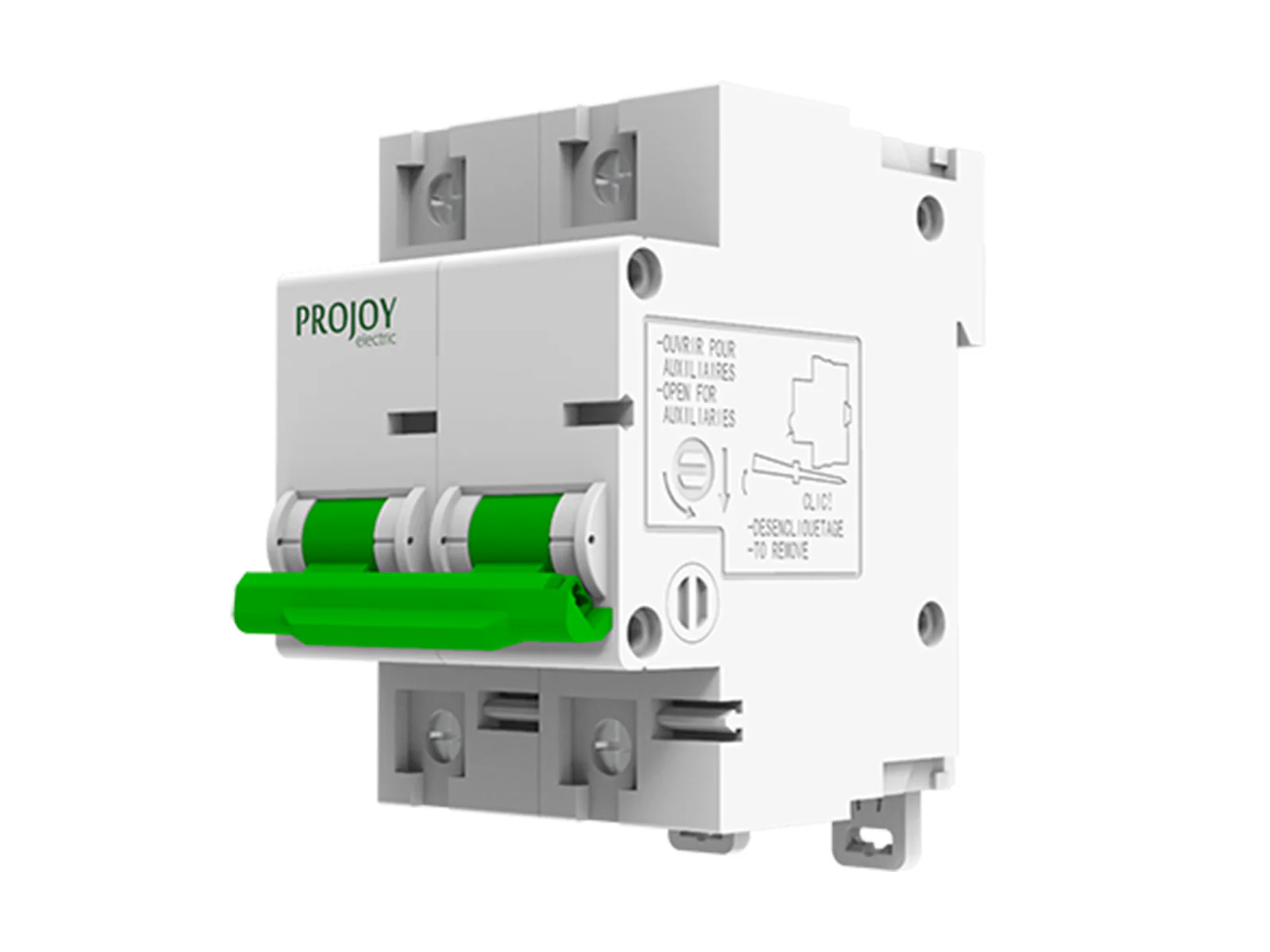
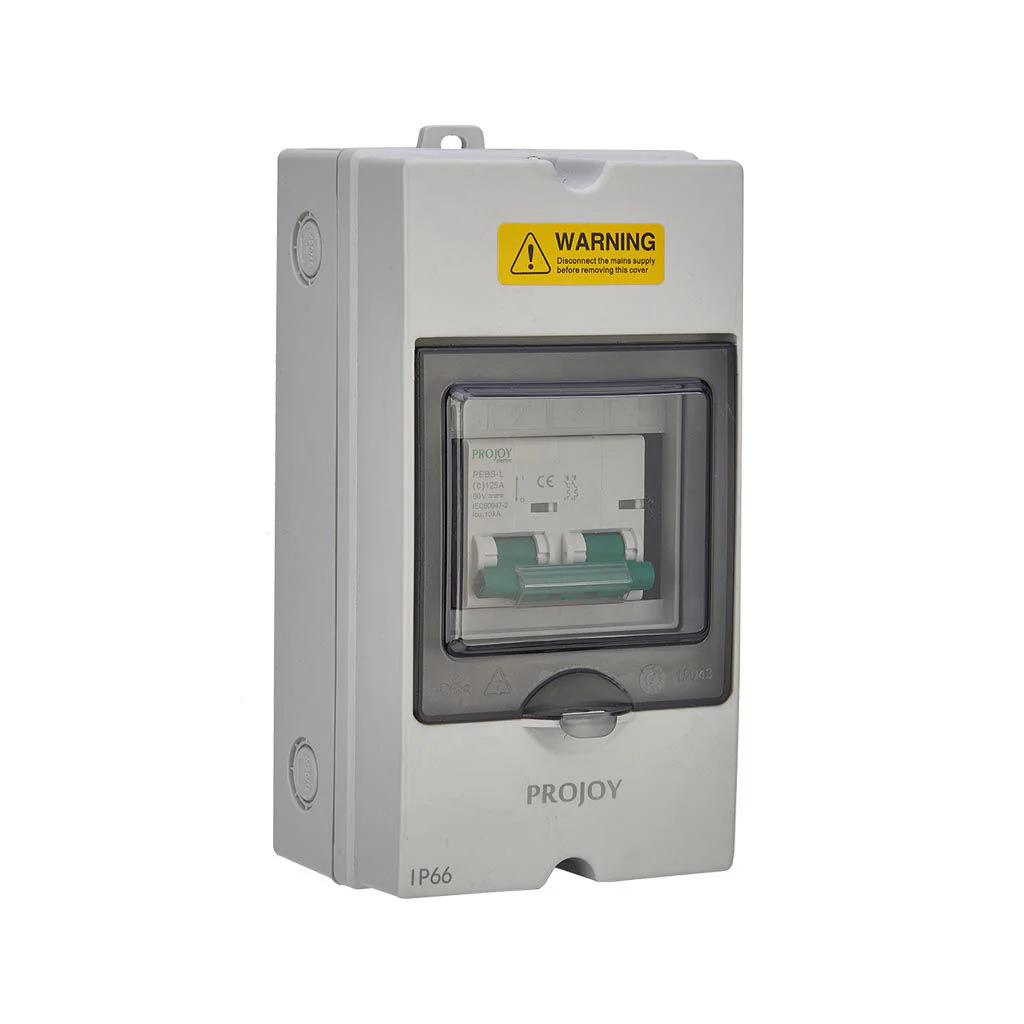
The Projoy PEBS-L Series Battery Isolator is a purpose-built DC miniature circuit breaker (MCB) designed to protect the cable and circuit between a battery energy storage system (BESS) and a hybrid inverter. Unlike standard AC MCBs — which must never be used on DC circuits due to the risk of sustained arcing — the PEBS-L uses a dedicated DC arc extinguishing and flash barrier technology to interrupt fault current safely. Rated to 160V DC and available in 80A, 100A and 125A, with a 10 kA short-circuit breaking capacity (Icu), it covers the full range of residential and light-commercial BESS applications including LFP (lithium iron phosphate), NMC and other 48V or higher-voltage DC battery systems. Tested and certified to IEC/EN 60947-2 and GB/T 14048.2. Available as a bare MCB for panel integration, or in an IP65/IP66 flame-retardant polycarbonate enclosure with screwed or hinged lid for standalone wall-mount installation indoors or outdoors. Also available: a standalone empty IP66 enclosure (4-module capacity) for custom wiring configurations. Manufactured by Projoy Electric Co., Ltd. — ISO 9001 and ISO 14001 certified specialist DC safety component manufacturer.

160V DC
Max Voltage
125A
Max Current
10 kA
Breaking Capacity
IP66
Enclosure Rating
IEC/EN 60947-2
Standard
⚠ DC Circuits: Use Only DC-Rated Devices Standard AC MCBs are not safe for battery or DC PV circuits. DC arcs do not self-extinguish and can cause fire or fatal injury if an AC breaker is used. Always use a device rated and certified for DC use at the appropriate voltage and current. Installation must be carried out by a qualified electrician to BS 7671.
Range Overview — Which Variant Do You Need?
SKU Rating Poles Enclosure Typical Use
PEBS-L-80A-160V-2P‑DC 80A / 160V DC 2P (MCB only) No enclosure Panel-mount or add to own enclosure
PEBS-L-100A-160V-2P‑DC 100A / 160V DC 2P (MCB only) No enclosure Panel-mount or add to own enclosure
PEBS-L-125A-160V-2P‑DC 125A / 160V DC 2P (MCB only) No enclosure Panel-mount or add to own enclosure
PEBS-L-80A-160V-2PL‑ENCL 80A / 160V DC 2-pole MCB + IP66 enclosure IP66 weatherproof Battery–inverter connection, indoor or outdoor
PEBS-L-100A-160V-2PL‑ENCL 100A / 160V DC 2-pole MCB + IP66 enclosure IP66 weatherproof Battery–inverter connection, indoor or outdoor
PEBS-L-125A-160V-2PL‑ENCL 125A / 160V DC 2-pole MCB + IP66 enclosure IP66 weatherproof High-current battery–inverter, 125A max
PEBS-L-IP66-4P‑ENCLOSURE N/A (empty enclosure) 4-module capacity IP66 weatherproof Spare or custom wiring enclosure for 2×MCB

For most residential BESS installations with a 48V battery system: the 80A or 100A 160V variant is typical. 125A is required for high-capacity systems or larger inverters drawing sustained high current. Always size to the battery manufacturer's recommended fuse or breaker rating for the specific system.

Key Features
PEBS-L Series DC MCB — Designed Specifically for Battery–Inverter Circuits
Standard AC miniature circuit breakers cannot safely interrupt DC current. DC arcs do not self-extinguish at the zero-crossing point the way AC arcs do — they are sustained, hotter and far more likely to cause damage or fire if an AC MCB is used on a DC circuit. The Projoy PEBS-L is purpose-designed for DC applications, using a dedicated arc extinguishing and flash barrier chamber that quenches the DC arc reliably at rated interrupting capacity. It is tested and certified to IEC/EN 60947-2 and GB/T 14048.2 specifically for DC use.
Purpose-built DC MCBIEC/EN 60947-2 certifiedNot an AC MCB
10 kA Short-Circuit Breaking Capacity (Icu) — Handles Real-World Fault Currents
The PEBS-L is rated at Icu 10 kA — the maximum prospective short-circuit current it can safely interrupt without damage to the device, installation or personnel. Battery systems, particularly lithium-based BESS, can deliver extremely high fault currents because the internal impedance of a healthy battery is very low. A 10 kA breaking capacity provides a substantial safety margin for residential and light commercial BESS installations where prospective fault currents are typically well below this level.
10 kA IcuBattery fault protectionHigh-current BESS safe
Non-Polarity Design — Flexible Wiring in Either Direction
The PEBS-L is non-polarity sensitive — the positive and negative DC terminals can be connected to either the line or load side without affecting performance or safety. This simplifies installation, reduces the chance of wiring errors, and gives installers flexibility when routing cables in the battery enclosure or consumer unit.
Non-polarityEither terminal can be L or NReduces wiring errors
IP65/IP66 Weatherproof Enclosure — Indoor and Outdoor Installation
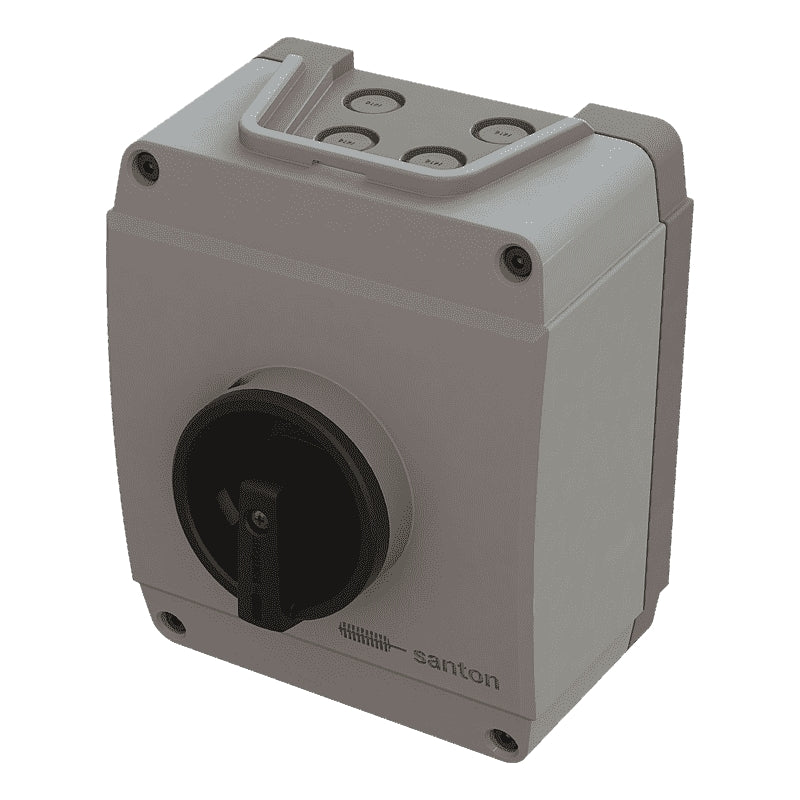
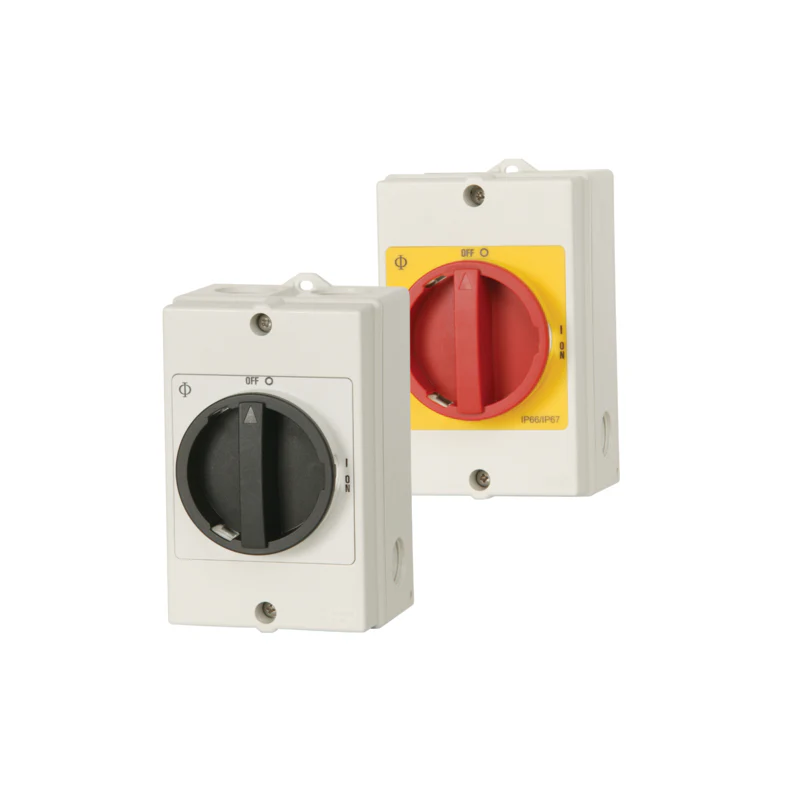
The enclosure variants ship with a polycarbonate IP66-rated weatherproof enclosure that is fully dustproof and protected against powerful water jets from any direction. This makes them suitable for battery installations in garages, outbuildings, meter cupboards, loft spaces and outdoor weatherproof enclosures alike. The enclosure is flame-retardant polycarbonate — it will not propagate fire even in the event of a sustained arc or external flame exposure.
IP65/IP66Flame-retardant polycarbonateOutdoor-rated
Screwed or Hinged Lid — Fast Commissioning and Future Access
Enclosure variants are available with either a screwed lid (fully sealed, tamper-resistant) or hinged lid (fast access for commissioning, inspection and maintenance). Both styles provide the same IP66 rating when correctly closed. Knockout cable entry points are provided on multiple faces to accommodate different cable run directions without additional drilling.
Screwed or hinged lid optionsMultiple cable knockoutsIP66 both styles
160V DC Maximum Rated Voltage — Correct for LFP and Other 48V Battery Systems
The PEBS-L is rated to 160V DC maximum. A typical 48V nominal lithium iron phosphate (LFP) BESS has a maximum charge voltage of approximately 58–60V. The 160V rating is deliberately conservative to accommodate higher-voltage battery configurations such as stacked 48V packs or 96V/120V nominal systems, where the fully-charged open-circuit voltage can approach or exceed 120V DC. It also provides a significant safety margin above the working voltage for any single 48V system.
160V DC rated48V to ~120V systemsVoltage safety margin
Overload and Short-Circuit Protection — Two Functions in One Device
The PEBS-L provides both overload protection (bimetallic thermal trip — trips when current exceeds rated value for a sustained period) and short-circuit protection (magnetic instantaneous trip — trips within milliseconds when a hard fault occurs). This replaces the combination of a fuse plus separate isolator that older battery installations sometimes use, and provides automatic re-settable protection rather than a one-shot fuse that must be replaced after a fault.
Overload + short-circuit protectionBimetallic + magnetic tripRe-settable
ISO 9001 and ISO 14001 Certified Manufacturer — Quality Assured
Projoy Electric Co., Ltd. holds ISO 9001 quality management and ISO 14001 environmental management system certifications. All PEBS-L circuit breakers undergo rigorous environmental and electrical testing, including temperature cycling, vibration, humidity and dielectric strength tests, before release. Projoy is a specialist solar and energy storage electrical component manufacturer with dedicated design, production and test facilities in Suzhou, China.
ISO 9001ISO 14001Dedicated BESS specialist
Technical Specifications
MCB Electrical Ratings (PEBS-L Series)
Rated Voltage (Ue) 160V DC maximum
Available Current Ratings (In) 80A / 100A / 125A
Rated Short-Circuit Breaking Capacity (Icu) 10 kA
Protection Functions Overload (thermal) and short circuit (magnetic)
Poles 2P (two-pole)
Polarity Non-polarity — line and load can be on either terminal
Applications PV systems, battery energy storage systems (BESS), DC distribution
Typical Position in System Between battery and hybrid inverter
Certifications and Standards
Test Standard IEC/EN 60947-2 and GB/T 14048.2
Quality System ISO 9001 (quality management)
Environmental System ISO 14001 (environmental management)
Note Not to be used as a switch under load
Enclosure (Enclosure Variants)
Enclosure Material Flame-retardant polycarbonate
Enclosure IP Rating IP65/IP66 (dust-tight, water-jet proof)
Lid Type Screwed or hinged (variant-dependent)
Cable Entry Multiple knockout entries on various faces
Mounting Wall-mount, indoor or outdoor
Environment Suitable for indoor and exposed outdoor locations
Available SKUs at a Glance
MCB-only (no enclosure) 80A, 100A, 125A — 2P DC MCB bare unit
MCB + enclosure 80A, 100A, 125A — 2P MCB in IP66 polycarbonate enclosure
Empty enclosure only PEBS-L-IP66-4P-ENCLOSURE — 4-module capacity weatherproof enclosure
Manufacturer
Manufacturer Projoy Electric Co., Ltd.
Website projoy-electric.com
Frequently Asked Questions
Can I use a standard AC MCB as a battery isolator?
No. Standard AC MCBs must not be used on DC circuits. AC circuit breakers rely on the natural zero-crossing of alternating current to extinguish the arc when they trip. DC current has no zero-crossing — the arc is sustained and significantly hotter. Using an AC MCB on a battery circuit creates a serious fire and electrocution risk. The Projoy PEBS-L is purpose-designed with a dedicated DC arc extinguishing chamber and is certified to IEC/EN 60947-2 specifically for DC applications.
Which current rating (80A, 100A or 125A) do I need?
Size to the maximum continuous DC current the battery system can deliver to the inverter — typically found in the battery manufacturer's datasheet as the maximum discharge current. As a rule of thumb for common UK residential BESS: a 3.6–7.2 kWh LFP battery with a 48V nominal bus will typically draw 50–80A at maximum inverter load. 80A is suitable for most systems up to ~4 kW inverter output; 100A for systems up to ~5 kW; 125A for high-capacity or multi-battery systems. Always verify against the battery manufacturer’s recommended breaker/fuse rating.
Do I need the enclosure version, or can I buy just the MCB?
If you are installing into an existing DIN-rail consumer unit or combiner box that already provides appropriate IP rating and enclosure, the bare MCB (no enclosure) version is sufficient. If the battery isolator will be mounted in a separate location — such as a garage wall, loft, outbuilding or outside the main consumer unit — choose the enclosure version for IP65/IP66 protection and flame-retardant housing.
Is this suitable for LFP (lithium iron phosphate) battery systems like SolaX, myenergi libbi, or similar?
Yes. The PEBS-L is rated to 160V DC, which comfortably covers 48V nominal LFP systems (fully charged open-circuit voltage typically 54–58V for a single pack). It is also suitable for stacked or higher-voltage configurations up to 160V DC. Always check the specific battery inverter manufacturer's installation guidance for the required isolator rating at the battery terminals.
Can it be used as a switch to turn the battery off under load?
No. The PEBS-L is a circuit breaker, not a load-break switch. It is designed to trip automatically under fault conditions, or to be operated manually only when the circuit is de-energised. Operating it as a routine on/off switch while current is flowing will cause contact wear, arcing and premature failure. For routine battery isolation with load present, use a dedicated DC load-break isolator switch.
Related Products
Projoy DC Surge Protection Device (SPD)
Surge protection for PV and battery DC circuits
SolaX X3-Hybrid Inverter
Compatible hybrid inverter for BESS installations
myenergi libbi Battery Storage
Compatible home battery system requiring DC isolation
Solar iBoost+ Solar Diverter
PV diverter for solar-to-immersion applications
Select Type
From $10.39

Original: $29.69

-65%
Projoy PEBS-L Battery Isolator with Enclosure – DC MCB 80A/100A/125A 160V, IP66, IEC/EN 60947-2, Solar BESS Battery-Inverter Protection

$29.69

$10.39

More Images

Projoy PEBS-L Battery Isolator with Enclosure – DC MCB 80A/100A/125A 160V, IP66, IEC/EN 60947-2, Solar BESS Battery-Inverter Protection - Image 2

Projoy PEBS-L Battery Isolator with Enclosure – DC MCB 80A/100A/125A 160V, IP66, IEC/EN 60947-2, Solar BESS Battery-Inverter Protection

The Projoy PEBS-L Series Battery Isolator is a purpose-built DC miniature circuit breaker (MCB) designed to protect the cable and circuit between a battery energy storage system (BESS) and a hybrid inverter. Unlike standard AC MCBs — which must never be used on DC circuits due to the risk of sustained arcing — the PEBS-L uses a dedicated DC arc extinguishing and flash barrier technology to interrupt fault current safely. Rated to 160V DC and available in 80A, 100A and 125A, with a 10 kA short-circuit breaking capacity (Icu), it covers the full range of residential and light-commercial BESS applications including LFP (lithium iron phosphate), NMC and other 48V or higher-voltage DC battery systems. Tested and certified to IEC/EN 60947-2 and GB/T 14048.2. Available as a bare MCB for panel integration, or in an IP65/IP66 flame-retardant polycarbonate enclosure with screwed or hinged lid for standalone wall-mount installation indoors or outdoors. Also available: a standalone empty IP66 enclosure (4-module capacity) for custom wiring configurations. Manufactured by Projoy Electric Co., Ltd. — ISO 9001 and ISO 14001 certified specialist DC safety component manufacturer.

160V DC
Max Voltage
125A
Max Current
10 kA
Breaking Capacity
IP66
Enclosure Rating
IEC/EN 60947-2
Standard
⚠ DC Circuits: Use Only DC-Rated Devices Standard AC MCBs are not safe for battery or DC PV circuits. DC arcs do not self-extinguish and can cause fire or fatal injury if an AC breaker is used. Always use a device rated and certified for DC use at the appropriate voltage and current. Installation must be carried out by a qualified electrician to BS 7671.
Range Overview — Which Variant Do You Need?
SKU Rating Poles Enclosure Typical Use
PEBS-L-80A-160V-2P‑DC 80A / 160V DC 2P (MCB only) No enclosure Panel-mount or add to own enclosure
PEBS-L-100A-160V-2P‑DC 100A / 160V DC 2P (MCB only) No enclosure Panel-mount or add to own enclosure
PEBS-L-125A-160V-2P‑DC 125A / 160V DC 2P (MCB only) No enclosure Panel-mount or add to own enclosure
PEBS-L-80A-160V-2PL‑ENCL 80A / 160V DC 2-pole MCB + IP66 enclosure IP66 weatherproof Battery–inverter connection, indoor or outdoor
PEBS-L-100A-160V-2PL‑ENCL 100A / 160V DC 2-pole MCB + IP66 enclosure IP66 weatherproof Battery–inverter connection, indoor or outdoor
PEBS-L-125A-160V-2PL‑ENCL 125A / 160V DC 2-pole MCB + IP66 enclosure IP66 weatherproof High-current battery–inverter, 125A max
PEBS-L-IP66-4P‑ENCLOSURE N/A (empty enclosure) 4-module capacity IP66 weatherproof Spare or custom wiring enclosure for 2×MCB

For most residential BESS installations with a 48V battery system: the 80A or 100A 160V variant is typical. 125A is required for high-capacity systems or larger inverters drawing sustained high current. Always size to the battery manufacturer's recommended fuse or breaker rating for the specific system.

Key Features
PEBS-L Series DC MCB — Designed Specifically for Battery–Inverter Circuits
Standard AC miniature circuit breakers cannot safely interrupt DC current. DC arcs do not self-extinguish at the zero-crossing point the way AC arcs do — they are sustained, hotter and far more likely to cause damage or fire if an AC MCB is used on a DC circuit. The Projoy PEBS-L is purpose-designed for DC applications, using a dedicated arc extinguishing and flash barrier chamber that quenches the DC arc reliably at rated interrupting capacity. It is tested and certified to IEC/EN 60947-2 and GB/T 14048.2 specifically for DC use.
Purpose-built DC MCBIEC/EN 60947-2 certifiedNot an AC MCB
10 kA Short-Circuit Breaking Capacity (Icu) — Handles Real-World Fault Currents
The PEBS-L is rated at Icu 10 kA — the maximum prospective short-circuit current it can safely interrupt without damage to the device, installation or personnel. Battery systems, particularly lithium-based BESS, can deliver extremely high fault currents because the internal impedance of a healthy battery is very low. A 10 kA breaking capacity provides a substantial safety margin for residential and light commercial BESS installations where prospective fault currents are typically well below this level.
10 kA IcuBattery fault protectionHigh-current BESS safe
Non-Polarity Design — Flexible Wiring in Either Direction
The PEBS-L is non-polarity sensitive — the positive and negative DC terminals can be connected to either the line or load side without affecting performance or safety. This simplifies installation, reduces the chance of wiring errors, and gives installers flexibility when routing cables in the battery enclosure or consumer unit.
Non-polarityEither terminal can be L or NReduces wiring errors
IP65/IP66 Weatherproof Enclosure — Indoor and Outdoor Installation
The enclosure variants ship with a polycarbonate IP66-rated weatherproof enclosure that is fully dustproof and protected against powerful water jets from any direction. This makes them suitable for battery installations in garages, outbuildings, meter cupboards, loft spaces and outdoor weatherproof enclosures alike. The enclosure is flame-retardant polycarbonate — it will not propagate fire even in the event of a sustained arc or external flame exposure.
IP65/IP66Flame-retardant polycarbonateOutdoor-rated
Screwed or Hinged Lid — Fast Commissioning and Future Access
Enclosure variants are available with either a screwed lid (fully sealed, tamper-resistant) or hinged lid (fast access for commissioning, inspection and maintenance). Both styles provide the same IP66 rating when correctly closed. Knockout cable entry points are provided on multiple faces to accommodate different cable run directions without additional drilling.
Screwed or hinged lid optionsMultiple cable knockoutsIP66 both styles
160V DC Maximum Rated Voltage — Correct for LFP and Other 48V Battery Systems
The PEBS-L is rated to 160V DC maximum. A typical 48V nominal lithium iron phosphate (LFP) BESS has a maximum charge voltage of approximately 58–60V. The 160V rating is deliberately conservative to accommodate higher-voltage battery configurations such as stacked 48V packs or 96V/120V nominal systems, where the fully-charged open-circuit voltage can approach or exceed 120V DC. It also provides a significant safety margin above the working voltage for any single 48V system.
160V DC rated48V to ~120V systemsVoltage safety margin
Overload and Short-Circuit Protection — Two Functions in One Device
The PEBS-L provides both overload protection (bimetallic thermal trip — trips when current exceeds rated value for a sustained period) and short-circuit protection (magnetic instantaneous trip — trips within milliseconds when a hard fault occurs). This replaces the combination of a fuse plus separate isolator that older battery installations sometimes use, and provides automatic re-settable protection rather than a one-shot fuse that must be replaced after a fault.
Overload + short-circuit protectionBimetallic + magnetic tripRe-settable
ISO 9001 and ISO 14001 Certified Manufacturer — Quality Assured
Projoy Electric Co., Ltd. holds ISO 9001 quality management and ISO 14001 environmental management system certifications. All PEBS-L circuit breakers undergo rigorous environmental and electrical testing, including temperature cycling, vibration, humidity and dielectric strength tests, before release. Projoy is a specialist solar and energy storage electrical component manufacturer with dedicated design, production and test facilities in Suzhou, China.
ISO 9001ISO 14001Dedicated BESS specialist
Technical Specifications
MCB Electrical Ratings (PEBS-L Series)
Rated Voltage (Ue) 160V DC maximum
Available Current Ratings (In) 80A / 100A / 125A
Rated Short-Circuit Breaking Capacity (Icu) 10 kA
Protection Functions Overload (thermal) and short circuit (magnetic)
Poles 2P (two-pole)
Polarity Non-polarity — line and load can be on either terminal
Applications PV systems, battery energy storage systems (BESS), DC distribution
Typical Position in System Between battery and hybrid inverter
Certifications and Standards
Test Standard IEC/EN 60947-2 and GB/T 14048.2
Quality System ISO 9001 (quality management)
Environmental System ISO 14001 (environmental management)
Note Not to be used as a switch under load
Enclosure (Enclosure Variants)
Enclosure Material Flame-retardant polycarbonate
Enclosure IP Rating IP65/IP66 (dust-tight, water-jet proof)
Lid Type Screwed or hinged (variant-dependent)
Cable Entry Multiple knockout entries on various faces
Mounting Wall-mount, indoor or outdoor
Environment Suitable for indoor and exposed outdoor locations
Available SKUs at a Glance
MCB-only (no enclosure) 80A, 100A, 125A — 2P DC MCB bare unit
MCB + enclosure 80A, 100A, 125A — 2P MCB in IP66 polycarbonate enclosure
Empty enclosure only PEBS-L-IP66-4P-ENCLOSURE — 4-module capacity weatherproof enclosure
Manufacturer
Manufacturer Projoy Electric Co., Ltd.
Website projoy-electric.com
Frequently Asked Questions
Can I use a standard AC MCB as a battery isolator?
No. Standard AC MCBs must not be used on DC circuits. AC circuit breakers rely on the natural zero-crossing of alternating current to extinguish the arc when they trip. DC current has no zero-crossing — the arc is sustained and significantly hotter. Using an AC MCB on a battery circuit creates a serious fire and electrocution risk. The Projoy PEBS-L is purpose-designed with a dedicated DC arc extinguishing chamber and is certified to IEC/EN 60947-2 specifically for DC applications.
Which current rating (80A, 100A or 125A) do I need?
Size to the maximum continuous DC current the battery system can deliver to the inverter — typically found in the battery manufacturer's datasheet as the maximum discharge current. As a rule of thumb for common UK residential BESS: a 3.6–7.2 kWh LFP battery with a 48V nominal bus will typically draw 50–80A at maximum inverter load. 80A is suitable for most systems up to ~4 kW inverter output; 100A for systems up to ~5 kW; 125A for high-capacity or multi-battery systems. Always verify against the battery manufacturer’s recommended breaker/fuse rating.
Do I need the enclosure version, or can I buy just the MCB?
If you are installing into an existing DIN-rail consumer unit or combiner box that already provides appropriate IP rating and enclosure, the bare MCB (no enclosure) version is sufficient. If the battery isolator will be mounted in a separate location — such as a garage wall, loft, outbuilding or outside the main consumer unit — choose the enclosure version for IP65/IP66 protection and flame-retardant housing.
Is this suitable for LFP (lithium iron phosphate) battery systems like SolaX, myenergi libbi, or similar?
Yes. The PEBS-L is rated to 160V DC, which comfortably covers 48V nominal LFP systems (fully charged open-circuit voltage typically 54–58V for a single pack). It is also suitable for stacked or higher-voltage configurations up to 160V DC. Always check the specific battery inverter manufacturer's installation guidance for the required isolator rating at the battery terminals.
Can it be used as a switch to turn the battery off under load?
No. The PEBS-L is a circuit breaker, not a load-break switch. It is designed to trip automatically under fault conditions, or to be operated manually only when the circuit is de-energised. Operating it as a routine on/off switch while current is flowing will cause contact wear, arcing and premature failure. For routine battery isolation with load present, use a dedicated DC load-break isolator switch.
Related Products
Projoy DC Surge Protection Device (SPD)
Surge protection for PV and battery DC circuits
SolaX X3-Hybrid Inverter
Compatible hybrid inverter for BESS installations
myenergi libbi Battery Storage
Compatible home battery system requiring DC isolation
Solar iBoost+ Solar Diverter
PV diverter for solar-to-immersion applications

Product Information

Shipping & Returns

Description

The Projoy PEBS-L Series Battery Isolator is a purpose-built DC miniature circuit breaker (MCB) designed to protect the cable and circuit between a battery energy storage system (BESS) and a hybrid inverter. Unlike standard AC MCBs — which must never be used on DC circuits due to the risk of sustained arcing — the PEBS-L uses a dedicated DC arc extinguishing and flash barrier technology to interrupt fault current safely. Rated to 160V DC and available in 80A, 100A and 125A, with a 10 kA short-circuit breaking capacity (Icu), it covers the full range of residential and light-commercial BESS applications including LFP (lithium iron phosphate), NMC and other 48V or higher-voltage DC battery systems. Tested and certified to IEC/EN 60947-2 and GB/T 14048.2. Available as a bare MCB for panel integration, or in an IP65/IP66 flame-retardant polycarbonate enclosure with screwed or hinged lid for standalone wall-mount installation indoors or outdoors. Also available: a standalone empty IP66 enclosure (4-module capacity) for custom wiring configurations. Manufactured by Projoy Electric Co., Ltd. — ISO 9001 and ISO 14001 certified specialist DC safety component manufacturer.

160V DC
Max Voltage
125A
Max Current
10 kA
Breaking Capacity
IP66
Enclosure Rating
IEC/EN 60947-2
Standard
⚠ DC Circuits: Use Only DC-Rated Devices Standard AC MCBs are not safe for battery or DC PV circuits. DC arcs do not self-extinguish and can cause fire or fatal injury if an AC breaker is used. Always use a device rated and certified for DC use at the appropriate voltage and current. Installation must be carried out by a qualified electrician to BS 7671.
Range Overview — Which Variant Do You Need?
SKU Rating Poles Enclosure Typical Use
PEBS-L-80A-160V-2P‑DC 80A / 160V DC 2P (MCB only) No enclosure Panel-mount or add to own enclosure
PEBS-L-100A-160V-2P‑DC 100A / 160V DC 2P (MCB only) No enclosure Panel-mount or add to own enclosure
PEBS-L-125A-160V-2P‑DC 125A / 160V DC 2P (MCB only) No enclosure Panel-mount or add to own enclosure
PEBS-L-80A-160V-2PL‑ENCL 80A / 160V DC 2-pole MCB + IP66 enclosure IP66 weatherproof Battery–inverter connection, indoor or outdoor
PEBS-L-100A-160V-2PL‑ENCL 100A / 160V DC 2-pole MCB + IP66 enclosure IP66 weatherproof Battery–inverter connection, indoor or outdoor
PEBS-L-125A-160V-2PL‑ENCL 125A / 160V DC 2-pole MCB + IP66 enclosure IP66 weatherproof High-current battery–inverter, 125A max
PEBS-L-IP66-4P‑ENCLOSURE N/A (empty enclosure) 4-module capacity IP66 weatherproof Spare or custom wiring enclosure for 2×MCB

For most residential BESS installations with a 48V battery system: the 80A or 100A 160V variant is typical. 125A is required for high-capacity systems or larger inverters drawing sustained high current. Always size to the battery manufacturer's recommended fuse or breaker rating for the specific system.

Key Features
PEBS-L Series DC MCB — Designed Specifically for Battery–Inverter Circuits
Standard AC miniature circuit breakers cannot safely interrupt DC current. DC arcs do not self-extinguish at the zero-crossing point the way AC arcs do — they are sustained, hotter and far more likely to cause damage or fire if an AC MCB is used on a DC circuit. The Projoy PEBS-L is purpose-designed for DC applications, using a dedicated arc extinguishing and flash barrier chamber that quenches the DC arc reliably at rated interrupting capacity. It is tested and certified to IEC/EN 60947-2 and GB/T 14048.2 specifically for DC use.
Purpose-built DC MCBIEC/EN 60947-2 certifiedNot an AC MCB
10 kA Short-Circuit Breaking Capacity (Icu) — Handles Real-World Fault Currents
The PEBS-L is rated at Icu 10 kA — the maximum prospective short-circuit current it can safely interrupt without damage to the device, installation or personnel. Battery systems, particularly lithium-based BESS, can deliver extremely high fault currents because the internal impedance of a healthy battery is very low. A 10 kA breaking capacity provides a substantial safety margin for residential and light commercial BESS installations where prospective fault currents are typically well below this level.
10 kA IcuBattery fault protectionHigh-current BESS safe
Non-Polarity Design — Flexible Wiring in Either Direction
The PEBS-L is non-polarity sensitive — the positive and negative DC terminals can be connected to either the line or load side without affecting performance or safety. This simplifies installation, reduces the chance of wiring errors, and gives installers flexibility when routing cables in the battery enclosure or consumer unit.
Non-polarityEither terminal can be L or NReduces wiring errors
IP65/IP66 Weatherproof Enclosure — Indoor and Outdoor Installation
The enclosure variants ship with a polycarbonate IP66-rated weatherproof enclosure that is fully dustproof and protected against powerful water jets from any direction. This makes them suitable for battery installations in garages, outbuildings, meter cupboards, loft spaces and outdoor weatherproof enclosures alike. The enclosure is flame-retardant polycarbonate — it will not propagate fire even in the event of a sustained arc or external flame exposure.
IP65/IP66Flame-retardant polycarbonateOutdoor-rated
Screwed or Hinged Lid — Fast Commissioning and Future Access
Enclosure variants are available with either a screwed lid (fully sealed, tamper-resistant) or hinged lid (fast access for commissioning, inspection and maintenance). Both styles provide the same IP66 rating when correctly closed. Knockout cable entry points are provided on multiple faces to accommodate different cable run directions without additional drilling.
Screwed or hinged lid optionsMultiple cable knockoutsIP66 both styles
160V DC Maximum Rated Voltage — Correct for LFP and Other 48V Battery Systems
The PEBS-L is rated to 160V DC maximum. A typical 48V nominal lithium iron phosphate (LFP) BESS has a maximum charge voltage of approximately 58–60V. The 160V rating is deliberately conservative to accommodate higher-voltage battery configurations such as stacked 48V packs or 96V/120V nominal systems, where the fully-charged open-circuit voltage can approach or exceed 120V DC. It also provides a significant safety margin above the working voltage for any single 48V system.
160V DC rated48V to ~120V systemsVoltage safety margin
Overload and Short-Circuit Protection — Two Functions in One Device
The PEBS-L provides both overload protection (bimetallic thermal trip — trips when current exceeds rated value for a sustained period) and short-circuit protection (magnetic instantaneous trip — trips within milliseconds when a hard fault occurs). This replaces the combination of a fuse plus separate isolator that older battery installations sometimes use, and provides automatic re-settable protection rather than a one-shot fuse that must be replaced after a fault.
Overload + short-circuit protectionBimetallic + magnetic tripRe-settable
ISO 9001 and ISO 14001 Certified Manufacturer — Quality Assured
Projoy Electric Co., Ltd. holds ISO 9001 quality management and ISO 14001 environmental management system certifications. All PEBS-L circuit breakers undergo rigorous environmental and electrical testing, including temperature cycling, vibration, humidity and dielectric strength tests, before release. Projoy is a specialist solar and energy storage electrical component manufacturer with dedicated design, production and test facilities in Suzhou, China.
ISO 9001ISO 14001Dedicated BESS specialist
Technical Specifications
MCB Electrical Ratings (PEBS-L Series)
Rated Voltage (Ue) 160V DC maximum
Available Current Ratings (In) 80A / 100A / 125A
Rated Short-Circuit Breaking Capacity (Icu) 10 kA
Protection Functions Overload (thermal) and short circuit (magnetic)
Poles 2P (two-pole)
Polarity Non-polarity — line and load can be on either terminal
Applications PV systems, battery energy storage systems (BESS), DC distribution
Typical Position in System Between battery and hybrid inverter
Certifications and Standards
Test Standard IEC/EN 60947-2 and GB/T 14048.2
Quality System ISO 9001 (quality management)
Environmental System ISO 14001 (environmental management)
Note Not to be used as a switch under load
Enclosure (Enclosure Variants)
Enclosure Material Flame-retardant polycarbonate
Enclosure IP Rating IP65/IP66 (dust-tight, water-jet proof)
Lid Type Screwed or hinged (variant-dependent)
Cable Entry Multiple knockout entries on various faces
Mounting Wall-mount, indoor or outdoor
Environment Suitable for indoor and exposed outdoor locations
Available SKUs at a Glance
MCB-only (no enclosure) 80A, 100A, 125A — 2P DC MCB bare unit
MCB + enclosure 80A, 100A, 125A — 2P MCB in IP66 polycarbonate enclosure
Empty enclosure only PEBS-L-IP66-4P-ENCLOSURE — 4-module capacity weatherproof enclosure
Manufacturer
Manufacturer Projoy Electric Co., Ltd.
Website projoy-electric.com
Frequently Asked Questions
Can I use a standard AC MCB as a battery isolator?
No. Standard AC MCBs must not be used on DC circuits. AC circuit breakers rely on the natural zero-crossing of alternating current to extinguish the arc when they trip. DC current has no zero-crossing — the arc is sustained and significantly hotter. Using an AC MCB on a battery circuit creates a serious fire and electrocution risk. The Projoy PEBS-L is purpose-designed with a dedicated DC arc extinguishing chamber and is certified to IEC/EN 60947-2 specifically for DC applications.
Which current rating (80A, 100A or 125A) do I need?
Size to the maximum continuous DC current the battery system can deliver to the inverter — typically found in the battery manufacturer's datasheet as the maximum discharge current. As a rule of thumb for common UK residential BESS: a 3.6–7.2 kWh LFP battery with a 48V nominal bus will typically draw 50–80A at maximum inverter load. 80A is suitable for most systems up to ~4 kW inverter output; 100A for systems up to ~5 kW; 125A for high-capacity or multi-battery systems. Always verify against the battery manufacturer’s recommended breaker/fuse rating.
Do I need the enclosure version, or can I buy just the MCB?
If you are installing into an existing DIN-rail consumer unit or combiner box that already provides appropriate IP rating and enclosure, the bare MCB (no enclosure) version is sufficient. If the battery isolator will be mounted in a separate location — such as a garage wall, loft, outbuilding or outside the main consumer unit — choose the enclosure version for IP65/IP66 protection and flame-retardant housing.
Is this suitable for LFP (lithium iron phosphate) battery systems like SolaX, myenergi libbi, or similar?
Yes. The PEBS-L is rated to 160V DC, which comfortably covers 48V nominal LFP systems (fully charged open-circuit voltage typically 54–58V for a single pack). It is also suitable for stacked or higher-voltage configurations up to 160V DC. Always check the specific battery inverter manufacturer's installation guidance for the required isolator rating at the battery terminals.
Can it be used as a switch to turn the battery off under load?
No. The PEBS-L is a circuit breaker, not a load-break switch. It is designed to trip automatically under fault conditions, or to be operated manually only when the circuit is de-energised. Operating it as a routine on/off switch while current is flowing will cause contact wear, arcing and premature failure. For routine battery isolation with load present, use a dedicated DC load-break isolator switch.
Related Products
Projoy DC Surge Protection Device (SPD)
Surge protection for PV and battery DC circuits
SolaX X3-Hybrid Inverter
Compatible hybrid inverter for BESS installations
myenergi libbi Battery Storage
Compatible home battery system requiring DC isolation
Solar iBoost+ Solar Diverter
PV diverter for solar-to-immersion applications