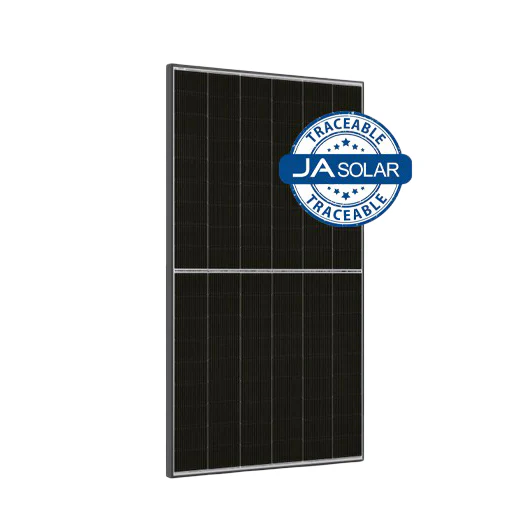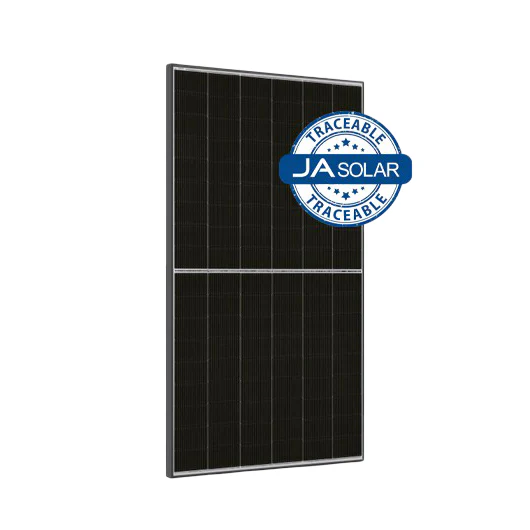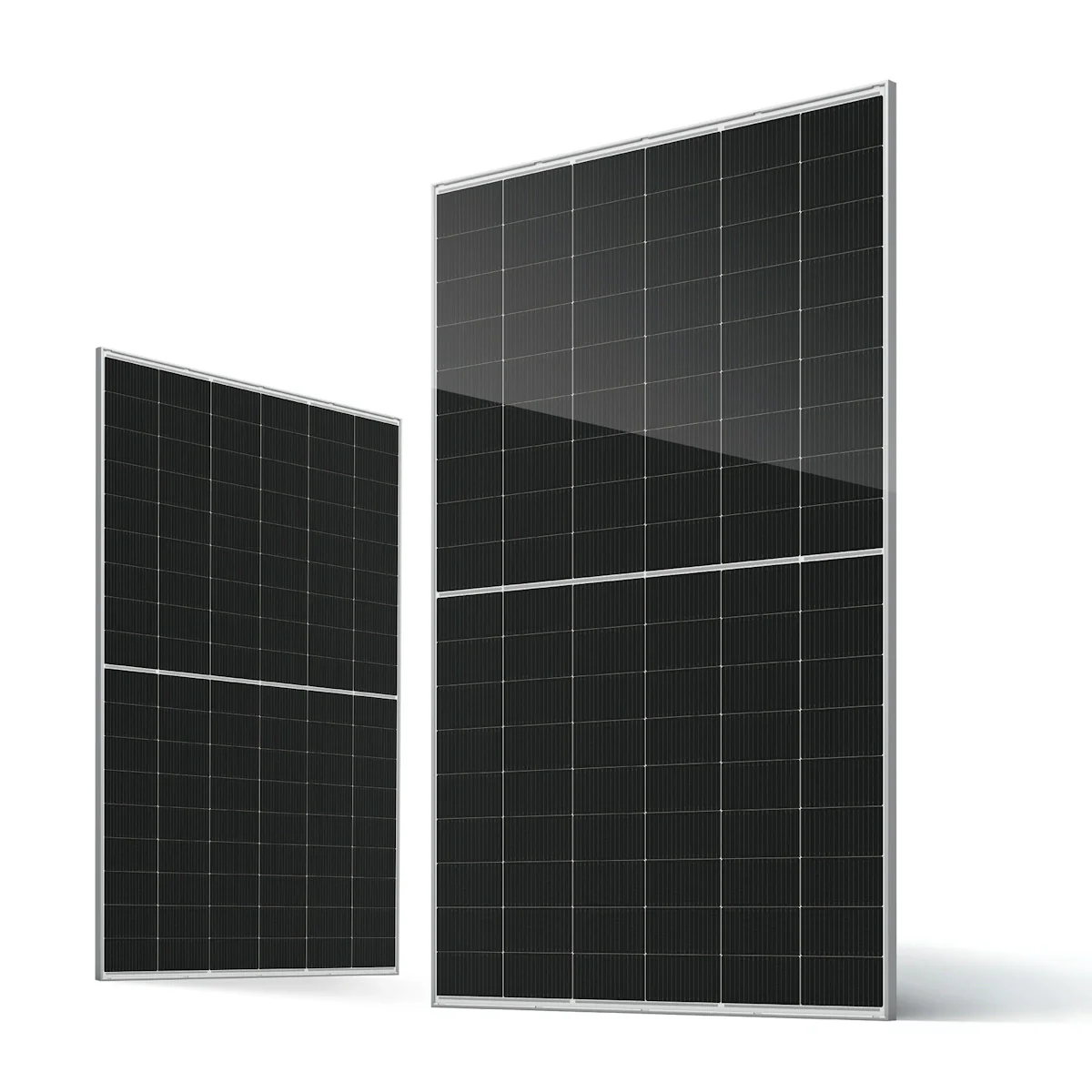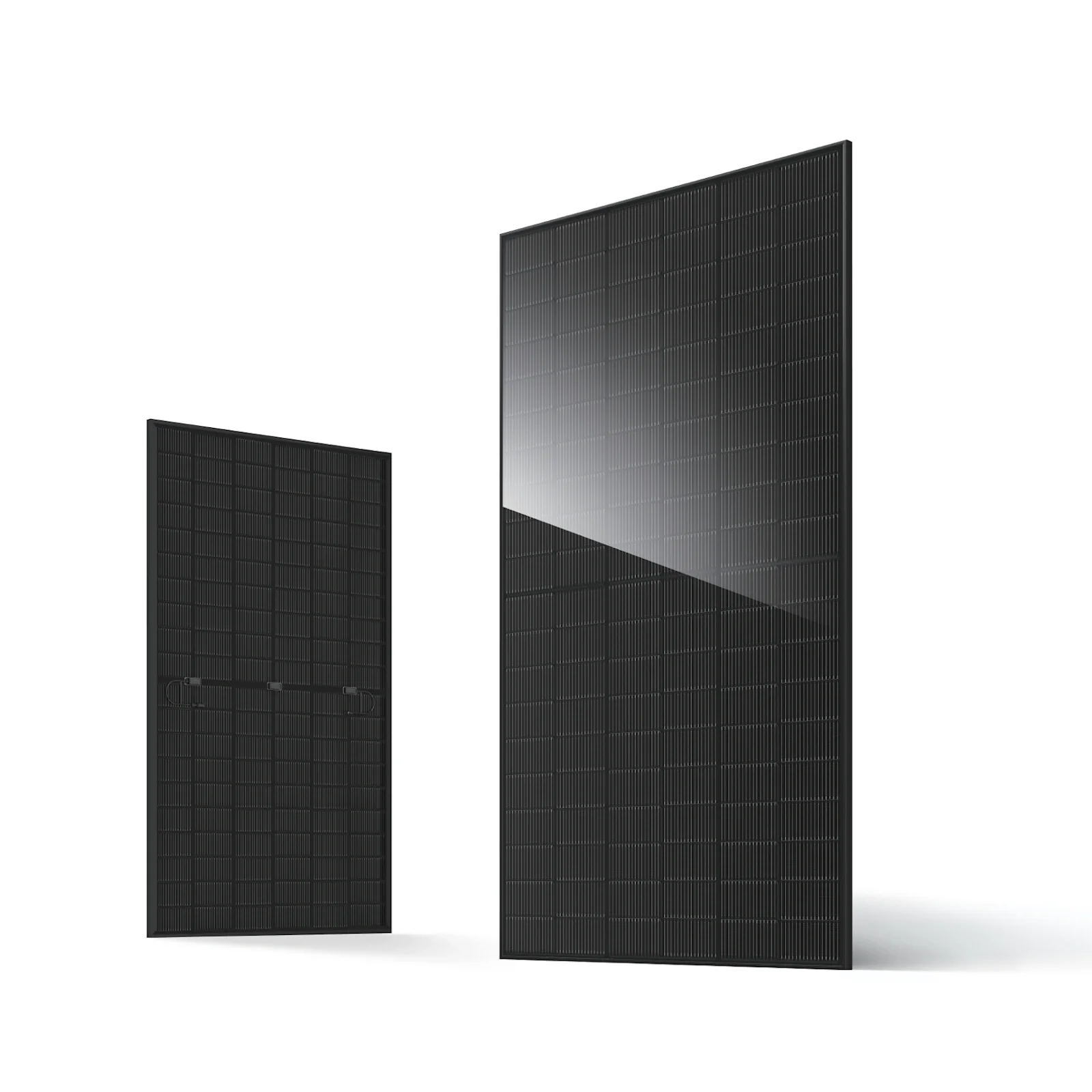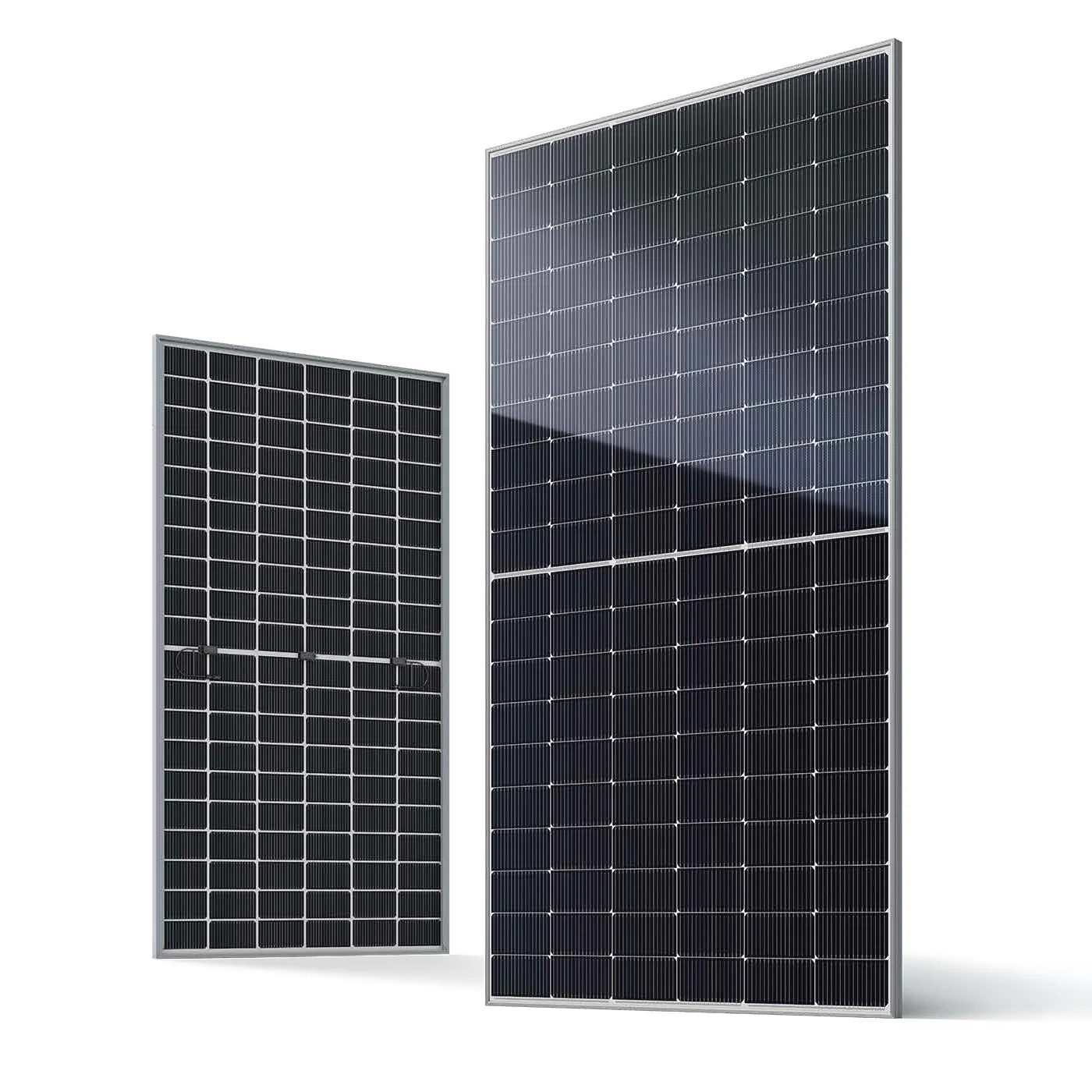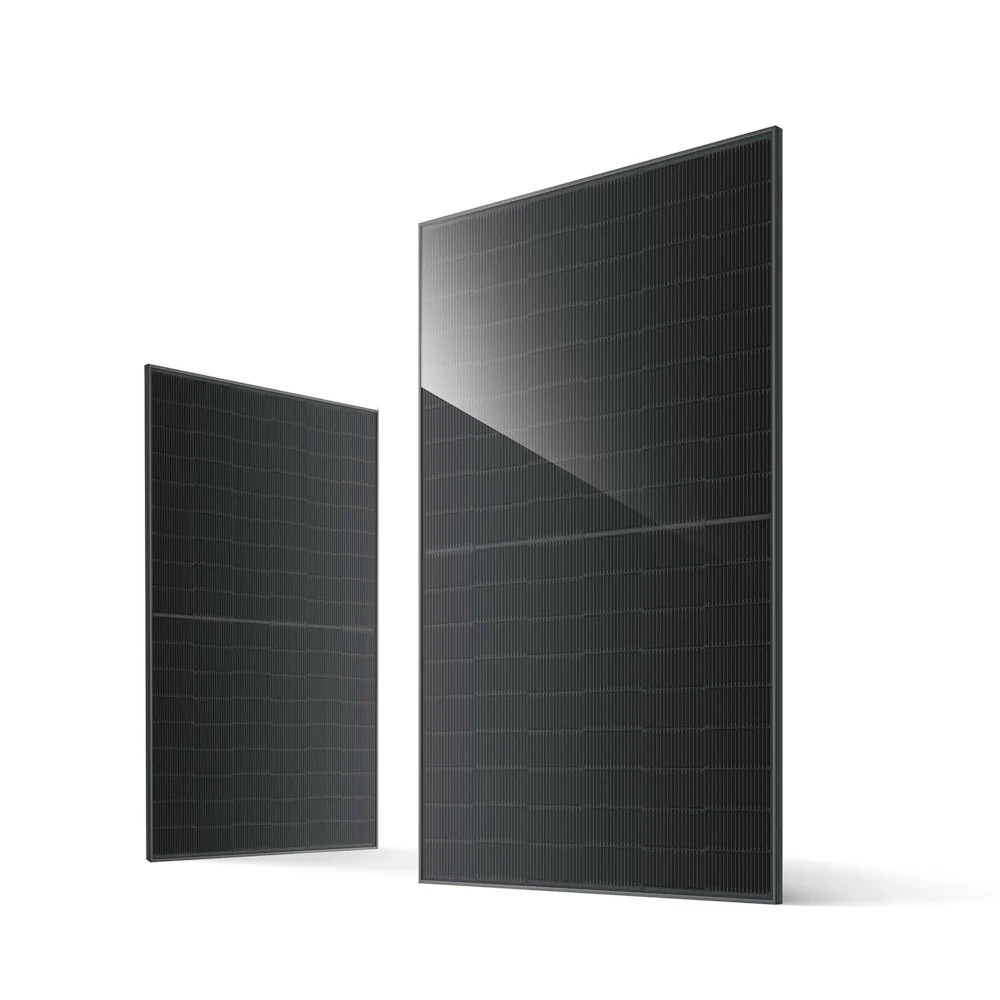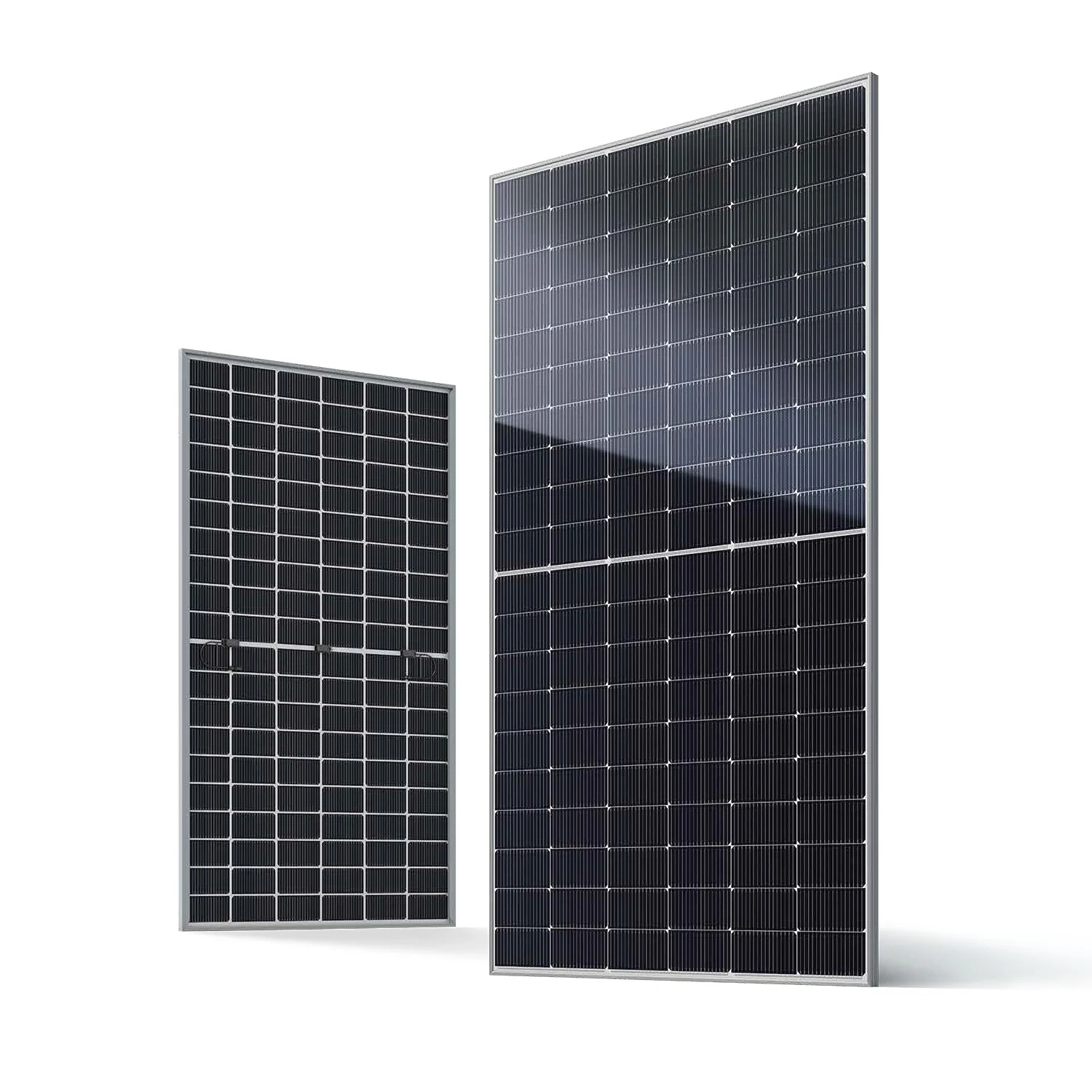
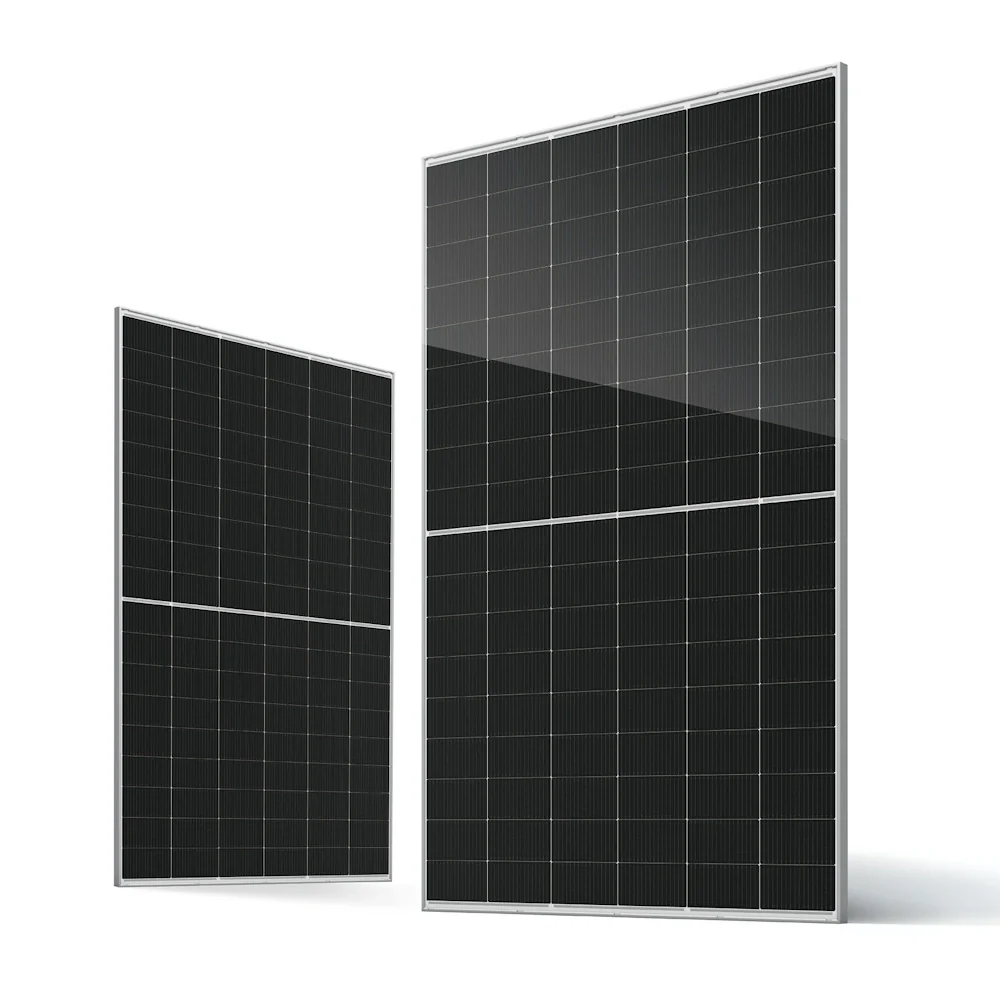
JA Solar DeepBlue 4.0 Pro 455W N-Type TOPCon Bifacial Double Glass Solar Panel – Black Frame, Traceable, MC4-EVO2A
JA Solar DeepBlue 4.0 Pro 455W N-Type TOPCon Bifacial Double Glass Solar Panel – Black Frame, Traceable, MC4-EVO2A
JA Solar | Part No: JAM54D-40-455-LB-TS-MC4 | MPN: JAM54D40-455/LB | Series: DeepBlue 4.0 Pro
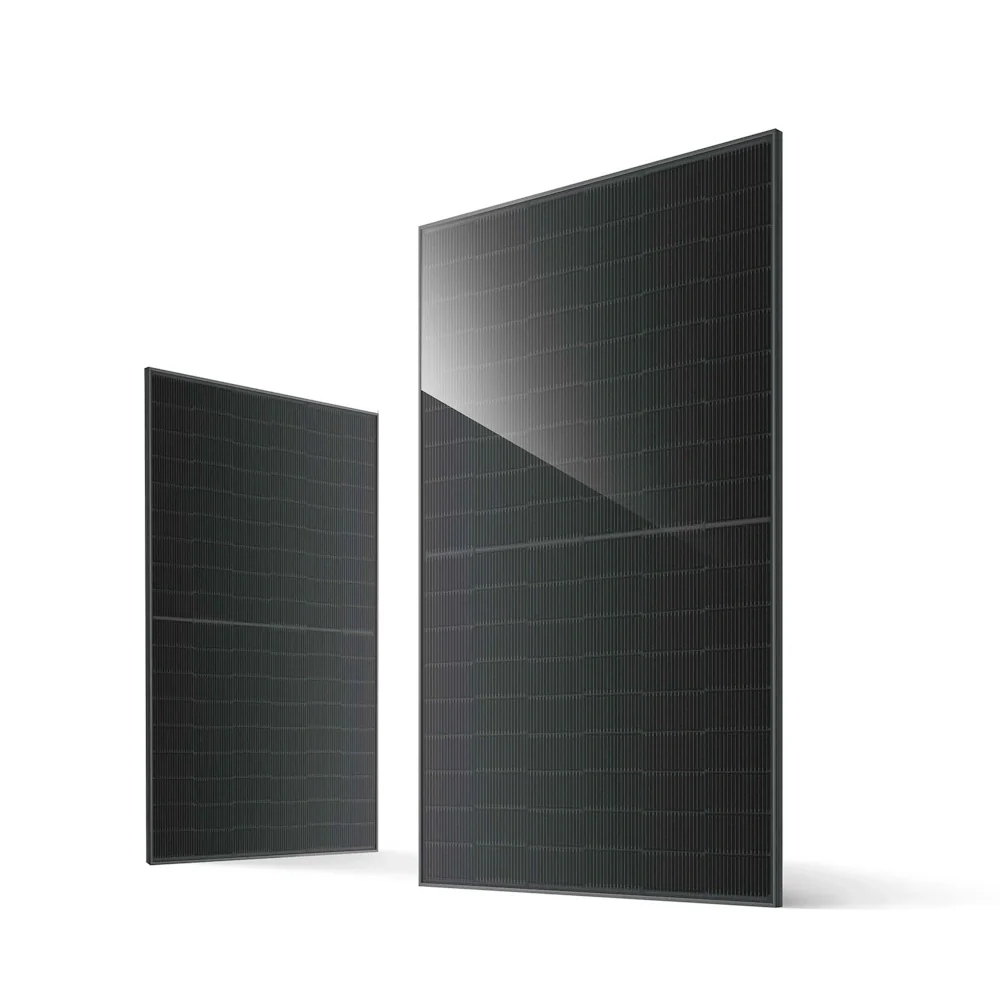
The JA Solar DeepBlue 4.0 Pro 455W is a Tier 1-rated bifacial double glass solar module built on N-type TOPCon cell technology — the architecture that now sets the performance standard for residential and commercial rooftop installations worldwide. Delivering 22.8% efficiency from a compact 1,762 × 1,134mm footprint, and capable of generating additional energy from reflected light on its rear surface, this panel offers a higher lifetime energy yield than any equivalent P-type module at the same rated wattage.
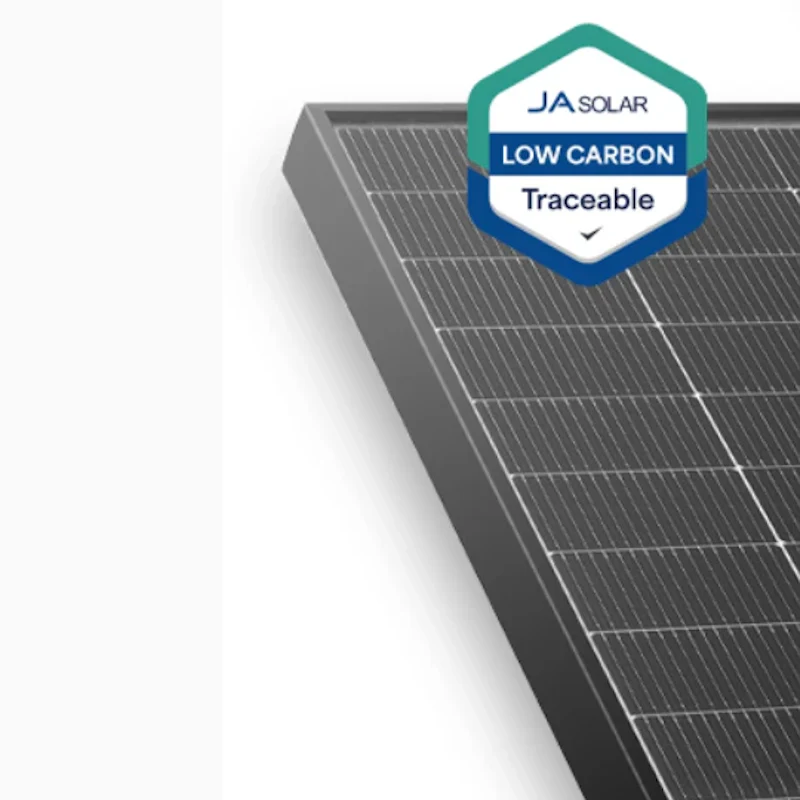
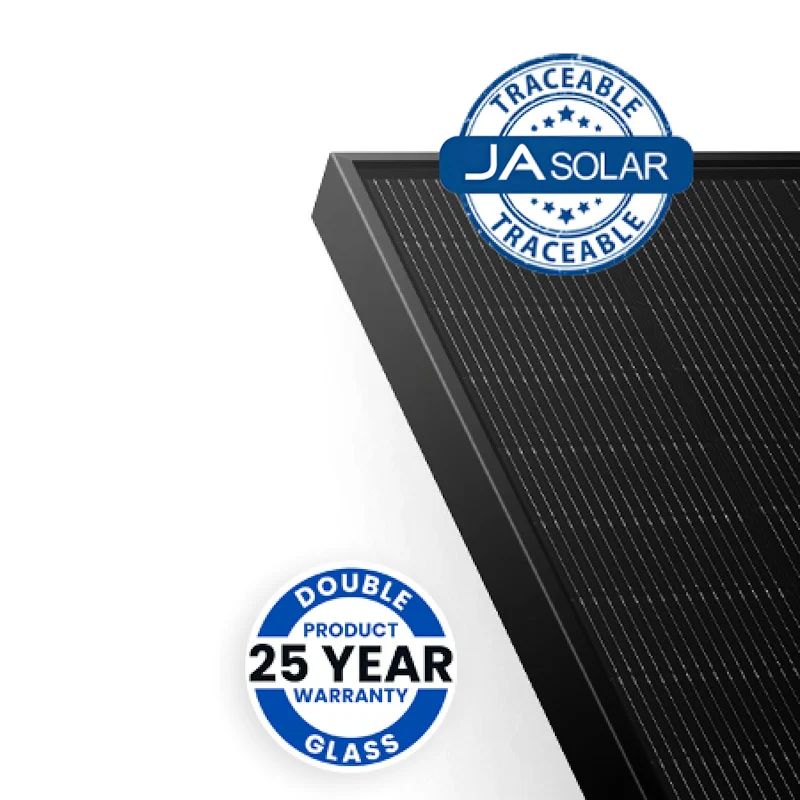
The "Traceable" designation on this variant reflects JA Solar's commitment to full supply chain transparency. Every panel carries documentation linking it to verified, audited raw material sources — supporting responsible procurement requirements for commercial projects, DNO applications, and developers working to ESG or due diligence standards.
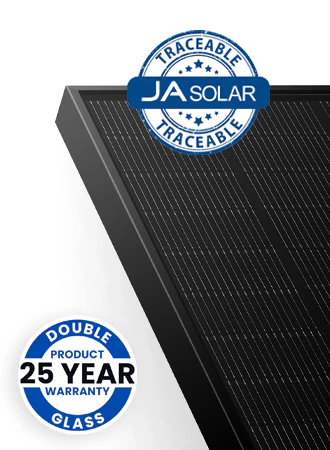
Backed by a 25-year product warranty and a 30-year linear performance warranty guaranteeing at least 87.4% of rated output at year 30, the DeepBlue 4.0 Pro is engineered for long-term bankability and minimum total cost of ownership across its operating life.
DeepBlue 4.0 Pro Technology Explained
N-Type TOPCon — Why It Outperforms P-Type PERC
Most solar panels installed in the UK over the past decade use P-type PERC cells. P-type silicon contains boron dopants that react with oxygen under light exposure to cause light-induced degradation (LID) — a measurable performance loss in the first months of operation and a source of ongoing degradation over time. N-type silicon, used in the DeepBlue 4.0 Pro, contains phosphorus dopants that do not exhibit this reaction. The result is lower first-year degradation (≤1% vs typically 2–3% for P-type), lower ongoing annual degradation (≤0.4% vs ≤0.5–0.55%), and a higher guaranteed output at year 30. Over a 30-year installation life, this difference in degradation curve translates to meaningfully more cumulative energy yield from the same rated panel.
TOPCon Passivated Contact — Higher Voltage, Higher Efficiency
TOPCon (Tunnel Oxide Passivated Contact) improves on standard N-type cells by adding an ultra-thin tunnel oxide and polysilicon passivation layer to the rear contact. This passivation dramatically reduces electron recombination at the rear surface — the primary source of efficiency loss in conventional cells. JA Solar's Bycium+ passivation technology achieves a cell-level open circuit voltage of 725mV, enabling the high module Voc of 39.50V at just 108 half-cut cells. This high voltage per cell also reduces the current required for a given wattage, lowering resistive losses in cabling and improving inverter MPPT efficiency.
16BB SMBB Half-Cut Cell Design
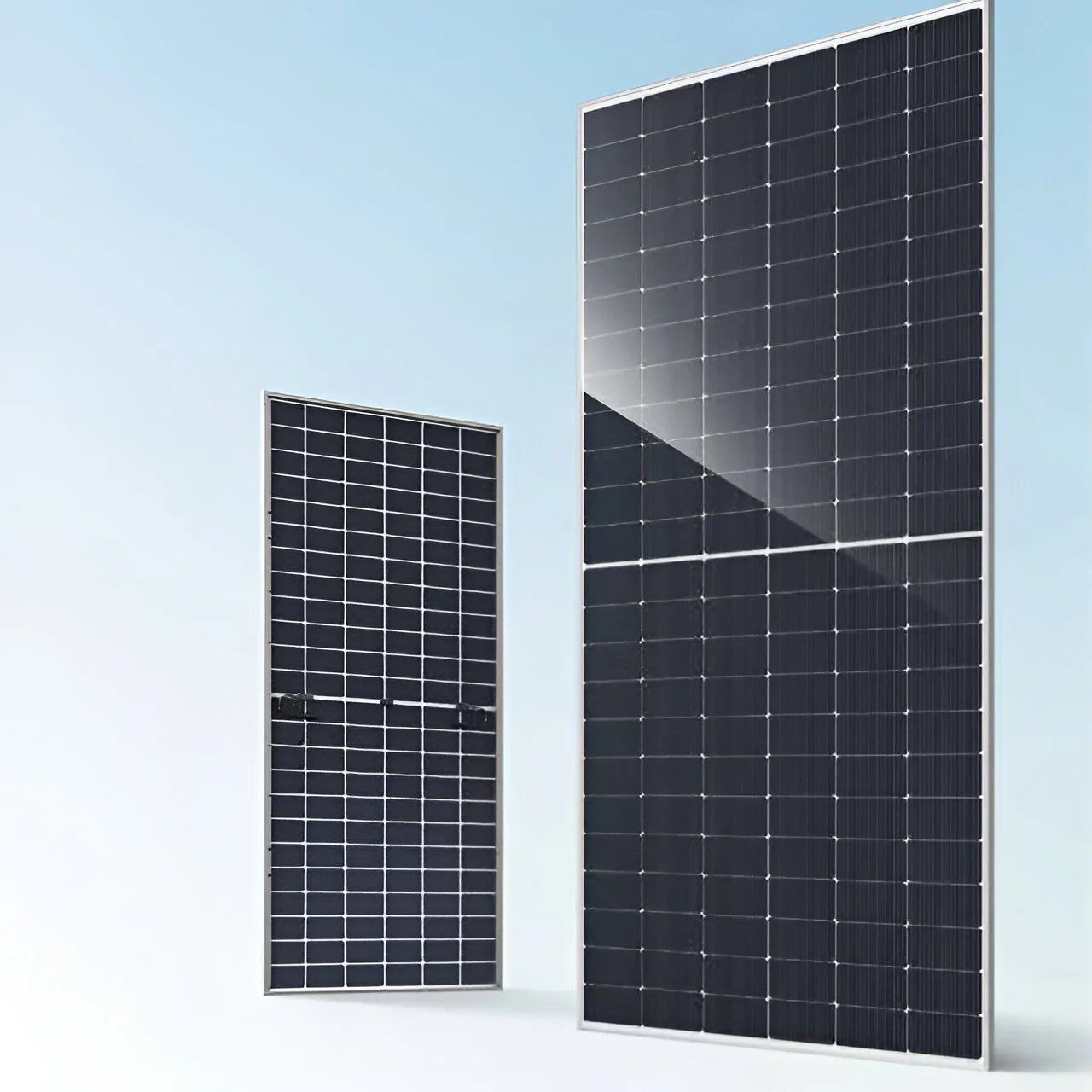
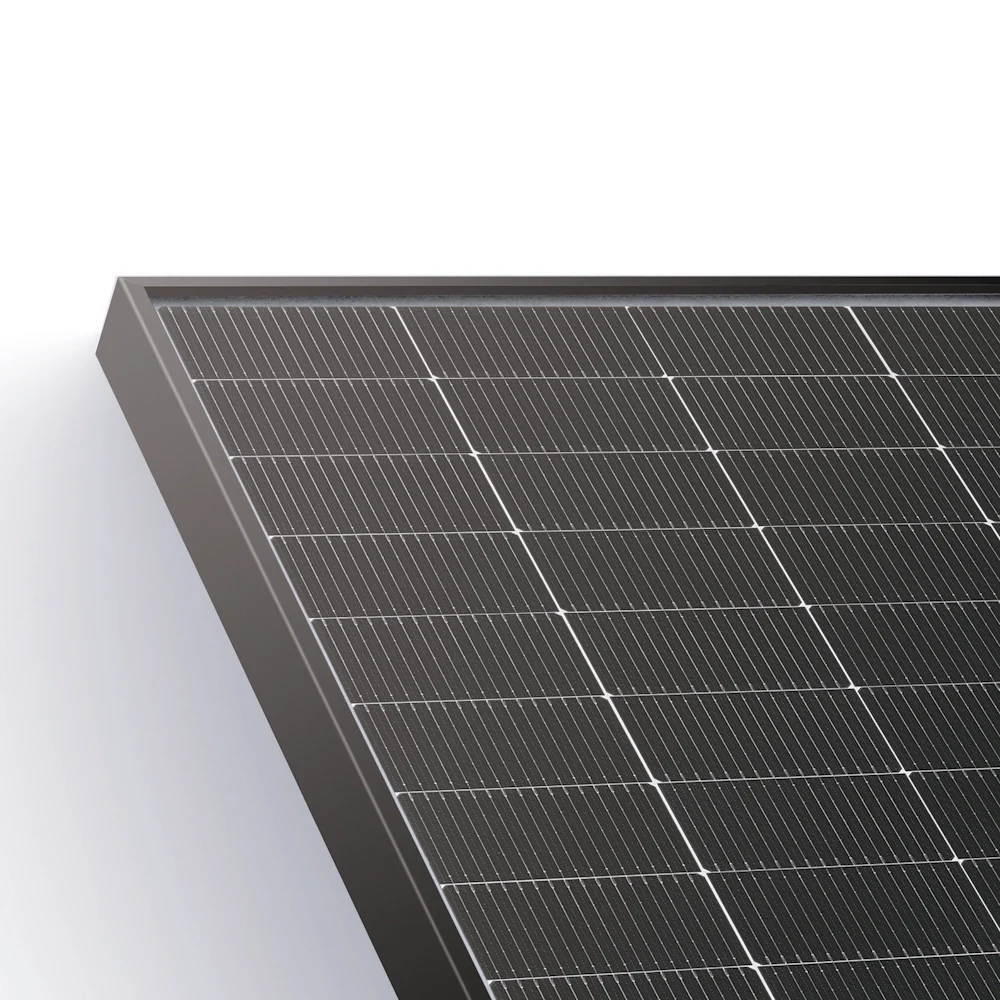
Standard solar cells use 3–5 busbars to collect current across the cell face. The DeepBlue 4.0 Pro uses 16 multi-busbars (16BB) in a Super Multi-Busbar (SMBB) configuration. More busbars means shorter current paths between the cell surface and the collection point, which reduces resistive losses, improves current collection uniformity, and makes the cell significantly more resistant to micro-crack propagation — because even if a crack forms, 16 parallel collection paths means the affected area is much smaller. Half-cut cells halve each cell's current, which squares the reduction in resistive (I²R) losses, further improving efficiency and reducing hotspot risk under partial shading.
Bifacial Generation — Rear-Side Energy Gain
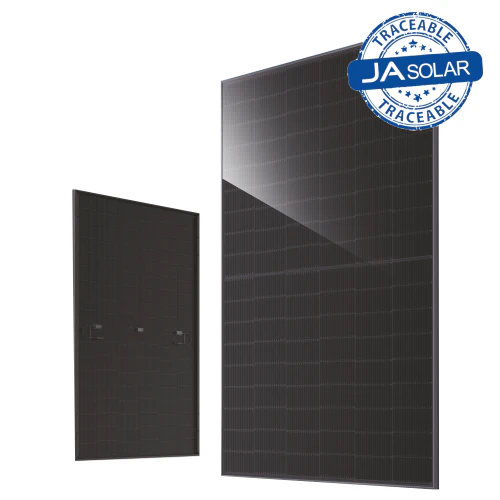
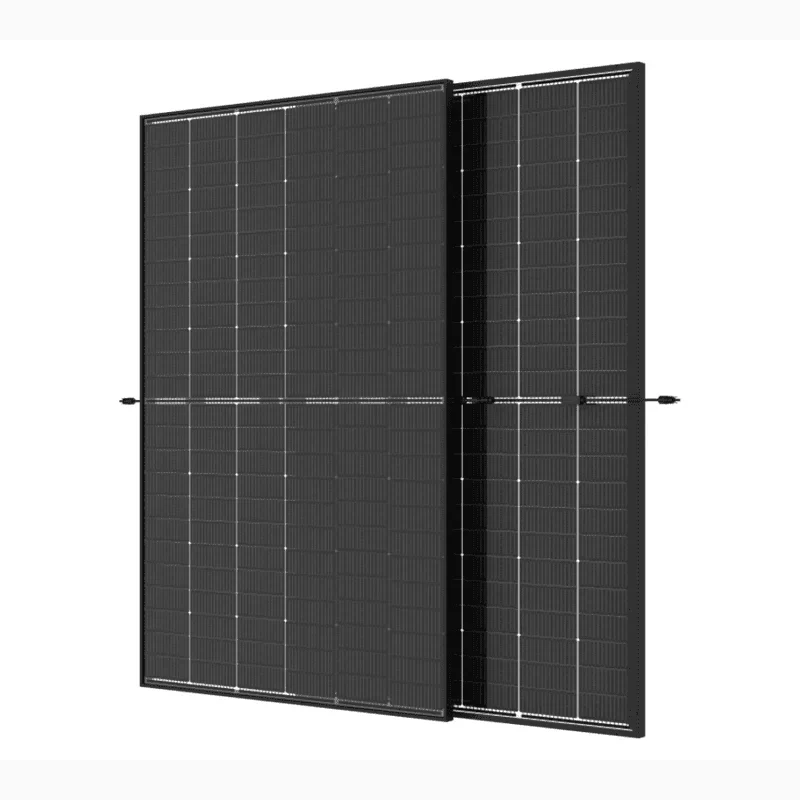
The double glass construction transmits light through the rear surface, allowing the panel to generate power from reflected and diffuse light hitting the back of the module. This is quantified as bifaciality: the DeepBlue 4.0 Pro has 80% bifaciality (±10%). In practice, rear-side gain depends heavily on installation conditions — the albedo (reflectivity) of the surface below the panels, tilt angle, ground clearance, and mounting orientation. On a typical UK residential rooftop with a light-coloured roof membrane or weathered tile, rear-side gain of 5–15% above the front-side rated output is achievable, increasing the effective output of a 455W panel toward 475–520W under real operating conditions. Ground-mounted installations with light gravel or concrete beneath can achieve gains toward the top of this range.
Double Glass Durability — No Backsheet Degradation
Conventional framed panels use a polymer backsheet on the rear surface. Over a 25–30 year operating life, backsheets are subject to UV degradation, delamination, moisture ingress, and cracking — all of which compromise electrical insulation and structural integrity. The DeepBlue 4.0 Pro replaces the backsheet with a second 1.6mm tempered glass panel. Glass is immune to UV degradation, provides superior moisture barrier performance, and does not crack or delaminate over the module's operating lifetime. For bifacial modules, glass rear construction is essential to allow rear-side light transmission; it also makes the module suitable for environments that would degrade polymer backsheets, including high-humidity, coastal, and agricultural installations.
Better Temperature Coefficient — More Output on Hot Days
The temperature coefficient of Pmax for the DeepBlue 4.0 Pro is -0.29%/°C. This means for every degree the cell temperature rises above the STC reference of 25°C, output falls by 0.29%. On a warm UK summer day when a rooftop panel might reach 55–65°C, a cell at 60°C is operating 35°C above STC. At -0.29%/°C this produces a loss of approximately 10.2% — compared to 12.25% for a standard P-type panel at -0.35%/°C. That 2% difference is measurable at system level and compounds across every hot day of the installation's life.
Supply Chain Traceability
The "Traceable" variant designation indicates that this module meets JA Solar's documented supply chain traceability standards. JA Solar's Traceability programme provides module-level documentation of material origin, enabling specifiers and developers to verify sourcing against responsible procurement policies, Uyghur Forced Labour Prevention Act (UFLPA) compliance requirements, or corporate ESG supplier frameworks. For commercial and industrial installations where procurement due diligence is required, or for developers accessing finance where supply chain standards are a condition, Traceable modules provide the documentation trail that standard modules may not.
Electrical Specifications (STC & NOCT)
STC: AM1.5, 1,000 W/m², 25°C | NOCT: AM1.5, 800 W/m², 20°C, 1 m/s | Power tolerance: 0 / +3%
| Parameter | STC Value | NOCT Value |
|---|---|---|
| Rated Power (Pmax) | 455 W | ~346 W |
| Module Efficiency | 22.8% | — |
| Open-Circuit Voltage (Voc) | 39.50 V | ~37.16 V |
| Max Power Voltage (Vmp) | 33.00 V | ~31.11 V |
| Short-Circuit Current (Isc) | 14.56 A | ~11.76 A |
| Max Power Current (Imp) | 13.79 A | ~11.12 A |
| Rear-Side Power (Bifacial, 10% irradiation ratio) | 491 W (front + rear) | — |
NOCT values are approximated from STC using the published temperature coefficients and NOCT conditions. Rear-side combined output is based on datasheet bifacial test at 10% rear irradiation ratio; actual rear-side gain in field conditions will vary.
Temperature Ratings
| Temp. Coefficient of Pmax | -0.29%/°C |
| Temp. Coefficient of Voc | -0.25%/°C |
| Temp. Coefficient of Isc | +0.045%/°C |
| Operating Temperature Range | -40°C to +85°C |
Physical & Mechanical Specifications
| Dimensions (L × W × D) | 1,762 × 1,134 × 30 mm |
| Weight | 22 kg |
| Cell Type | N-Type TOPCon (Bycium+), 182mm M10 wafer |
| Number of Cells | 108 half-cut cells (6 × 18) — referred to as "54 cell" in product naming |
| Busbar Configuration | 16BB SMBB (Super Multi-Busbar) |
| Front Glass | 1.6 mm tempered glass |
| Rear Glass | 1.6 mm tempered glass (bifacial double glass) |
| Frame | Black anodised aluminium |
| Bifaciality | 80% ±10% |
| Junction Box | IP68 |
| Cable | 4mm², 1,200mm (+) / 1,200mm (−) |
| Connector | MC4-EVO2A (Stäubli) |
| Max System Voltage | DC 1500V |
| Max Series Fuse Rating | 30A |
| Max Static Load (front / rear) | +3,600 Pa / -1,600 Pa |
| Hail Resistance | 25 mm diameter at 23 m/s |
| Fire Rating | IEC Class C |
| Pallet Quantity | 36 panels per pallet |
| Part No (Traceable, MC4-EVO2A) | JAM54D-40-455-LB-TS-MC4 |
| MPN | JAM54D40-455/LB |
Warranty & Degradation
| Product (Materials & Workmanship) Warranty | 25 years |
| Linear Performance Warranty | 30 years |
| Year 1 Maximum Degradation | ≤1% (min. 99% of rated power) |
| Annual Degradation (Year 2–30) | ≤0.4% per year |
| Year 30 Guaranteed Output | ≥87.4% of rated power |
Certifications
IEC 61215 | IEC 61730 | IEC 62941 | ISO 9001:2015 | ISO 14001:2015 | ISO 45001:2018
The JAM54D40-455/LB bifacial double glass module requires a minimum 10cm clearance between the rear glass and the roof/mounting surface to allow both air circulation and rear-side light access for bifacial gain. Clamping must engage the aluminium frame — do not clamp directly onto the glass edge. The Stäubli MC4-EVO2A connectors supplied must be mated with EVO2-compatible counterparts to maintain the IP68 junction box rating; do not use with older MC4 connectors of unknown compatibility. For string inverter design, apply the -0.25%/°C Voc coefficient to calculate maximum string voltage at minimum UK winter ambient temperature. Maximum series fuse rating is 30A — confirm this against inverter input protection specifications before commissioning.
Frequently Asked Questions
What is the difference between this and a standard JAM54D40-455/LB?
The "TS" (Traceable) designation in the part number indicates that this variant comes with JA Solar's full supply chain traceability documentation. Electrically and physically it is identical to the standard module — same cell technology, efficiency, dimensions, and warranty. The distinction is in procurement documentation: Traceable panels provide module-level supply chain records that can be used to demonstrate responsible sourcing. This is increasingly required by commercial lenders, insurance providers, and institutional buyers operating under ESG or responsible procurement policies, and to satisfy due diligence requirements related to labour practice standards in the solar supply chain.
How much extra power will I get from the bifacial rear surface?
Rear-side gain depends on installation conditions rather than the panel itself. The module's bifaciality of 80% (±10%) means it can convert rear-incident light at 80% of the efficiency of front-incident light. In practical UK rooftop terms, rear-side gain of 5–12% above the rated front-side output is typical for south-facing roof-mounted installations on light or medium-coloured roof surfaces. Ground-mounted installations with light gravel, concrete, or snow beneath can yield gains toward 15%. On dark or heavily shadowed rear surfaces, gains will be lower. The bifacial rating does not guarantee additional output regardless of conditions — it confirms the panel's capability to benefit from rear-side light when it is available.
Is this panel suitable for in-roof or integrated mounting systems?
Double glass bifacial modules like this one are designed primarily for on-roof mounting where rear-surface clearance is maintained and both glass surfaces can flex within their design tolerances. For in-roof mounting systems (BIPV-style systems where panels form the roof surface), specialist framed or frameless glass-glass modules designed for direct weather exposure and specific racking systems are usually required. Check compatibility with your in-roof mounting system supplier before specifying this module for integrated applications. For standard on-roof installations with mid-clamp and end-clamp rail systems, the DeepBlue 4.0 Pro is fully compatible with all mainstream racking hardware.
Why does the product name say "54 cell" when the panel has 108 cells?
JA Solar's naming convention counts physical wafers: 54 wafers are cut in half to produce 108 half-cells in a 6×18 layout. Half-cut cell technology halves each cell's current, which reduces resistive losses and improves shade tolerance compared to full-cell modules. The "54" figure refers to the number of original wafers; all electrical specifications (Voc, Isc, etc.) reflect the complete 108 half-cell module as tested under STC.
How does the 30-year warranty work and what does it cover?
JA Solar provides two separate warranties. The 25-year product warranty covers defects in materials and workmanship — physical failures such as delamination, frame corrosion, junction box failure, or glass breakage resulting from manufacturing defects. The 30-year linear performance warranty is a power output guarantee: JA Solar commits to a minimum of 99% of rated output after year 1, declining by no more than 0.4% per year thereafter, reaching a guaranteed minimum of 87.4% at year 30. If the panel falls below these thresholds at any point during the warranty period, JA Solar will repair or replace it. Both warranties are supported by JA Solar as the manufacturer and are transferable with the property.
What inverters are compatible with this panel?
The JAM54D40-455/LB is compatible with all mainstream string inverters (GivEnergy, Solis, Huawei, SolarEdge, SMA, Fronius, Growatt, Fox ESS, Sunsynk, Solax, etc.) and micro-inverter or power optimiser systems. Key parameters to verify: maximum DC input voltage (string Voc × number of panels, corrected for minimum UK winter temperature using -0.25%/°C Voc coefficient); MPPT current rating (Imp is 13.79A at STC, Isc 14.56A — check against inverter MPPT input current limit); maximum string fuse rating 30A. For hybrid inverters with battery storage, confirm the MPPT voltage window is appropriate for the intended string configuration using the STC Vmp of 33.00V as the reference.
Original: $368.46
-65%$368.46
$128.96More Images
JA Solar DeepBlue 4.0 Pro 455W N-Type TOPCon Bifacial Double Glass Solar Panel – Black Frame, Traceable, MC4-EVO2A
JA Solar | Part No: JAM54D-40-455-LB-TS-MC4 | MPN: JAM54D40-455/LB | Series: DeepBlue 4.0 Pro
The JA Solar DeepBlue 4.0 Pro 455W is a Tier 1-rated bifacial double glass solar module built on N-type TOPCon cell technology — the architecture that now sets the performance standard for residential and commercial rooftop installations worldwide. Delivering 22.8% efficiency from a compact 1,762 × 1,134mm footprint, and capable of generating additional energy from reflected light on its rear surface, this panel offers a higher lifetime energy yield than any equivalent P-type module at the same rated wattage.
The "Traceable" designation on this variant reflects JA Solar's commitment to full supply chain transparency. Every panel carries documentation linking it to verified, audited raw material sources — supporting responsible procurement requirements for commercial projects, DNO applications, and developers working to ESG or due diligence standards.
Backed by a 25-year product warranty and a 30-year linear performance warranty guaranteeing at least 87.4% of rated output at year 30, the DeepBlue 4.0 Pro is engineered for long-term bankability and minimum total cost of ownership across its operating life.
DeepBlue 4.0 Pro Technology Explained
N-Type TOPCon — Why It Outperforms P-Type PERC
Most solar panels installed in the UK over the past decade use P-type PERC cells. P-type silicon contains boron dopants that react with oxygen under light exposure to cause light-induced degradation (LID) — a measurable performance loss in the first months of operation and a source of ongoing degradation over time. N-type silicon, used in the DeepBlue 4.0 Pro, contains phosphorus dopants that do not exhibit this reaction. The result is lower first-year degradation (≤1% vs typically 2–3% for P-type), lower ongoing annual degradation (≤0.4% vs ≤0.5–0.55%), and a higher guaranteed output at year 30. Over a 30-year installation life, this difference in degradation curve translates to meaningfully more cumulative energy yield from the same rated panel.
TOPCon Passivated Contact — Higher Voltage, Higher Efficiency
TOPCon (Tunnel Oxide Passivated Contact) improves on standard N-type cells by adding an ultra-thin tunnel oxide and polysilicon passivation layer to the rear contact. This passivation dramatically reduces electron recombination at the rear surface — the primary source of efficiency loss in conventional cells. JA Solar's Bycium+ passivation technology achieves a cell-level open circuit voltage of 725mV, enabling the high module Voc of 39.50V at just 108 half-cut cells. This high voltage per cell also reduces the current required for a given wattage, lowering resistive losses in cabling and improving inverter MPPT efficiency.
16BB SMBB Half-Cut Cell Design
Standard solar cells use 3–5 busbars to collect current across the cell face. The DeepBlue 4.0 Pro uses 16 multi-busbars (16BB) in a Super Multi-Busbar (SMBB) configuration. More busbars means shorter current paths between the cell surface and the collection point, which reduces resistive losses, improves current collection uniformity, and makes the cell significantly more resistant to micro-crack propagation — because even if a crack forms, 16 parallel collection paths means the affected area is much smaller. Half-cut cells halve each cell's current, which squares the reduction in resistive (I²R) losses, further improving efficiency and reducing hotspot risk under partial shading.
Bifacial Generation — Rear-Side Energy Gain
The double glass construction transmits light through the rear surface, allowing the panel to generate power from reflected and diffuse light hitting the back of the module. This is quantified as bifaciality: the DeepBlue 4.0 Pro has 80% bifaciality (±10%). In practice, rear-side gain depends heavily on installation conditions — the albedo (reflectivity) of the surface below the panels, tilt angle, ground clearance, and mounting orientation. On a typical UK residential rooftop with a light-coloured roof membrane or weathered tile, rear-side gain of 5–15% above the front-side rated output is achievable, increasing the effective output of a 455W panel toward 475–520W under real operating conditions. Ground-mounted installations with light gravel or concrete beneath can achieve gains toward the top of this range.
Double Glass Durability — No Backsheet Degradation
Conventional framed panels use a polymer backsheet on the rear surface. Over a 25–30 year operating life, backsheets are subject to UV degradation, delamination, moisture ingress, and cracking — all of which compromise electrical insulation and structural integrity. The DeepBlue 4.0 Pro replaces the backsheet with a second 1.6mm tempered glass panel. Glass is immune to UV degradation, provides superior moisture barrier performance, and does not crack or delaminate over the module's operating lifetime. For bifacial modules, glass rear construction is essential to allow rear-side light transmission; it also makes the module suitable for environments that would degrade polymer backsheets, including high-humidity, coastal, and agricultural installations.
Better Temperature Coefficient — More Output on Hot Days
The temperature coefficient of Pmax for the DeepBlue 4.0 Pro is -0.29%/°C. This means for every degree the cell temperature rises above the STC reference of 25°C, output falls by 0.29%. On a warm UK summer day when a rooftop panel might reach 55–65°C, a cell at 60°C is operating 35°C above STC. At -0.29%/°C this produces a loss of approximately 10.2% — compared to 12.25% for a standard P-type panel at -0.35%/°C. That 2% difference is measurable at system level and compounds across every hot day of the installation's life.
Supply Chain Traceability
The "Traceable" variant designation indicates that this module meets JA Solar's documented supply chain traceability standards. JA Solar's Traceability programme provides module-level documentation of material origin, enabling specifiers and developers to verify sourcing against responsible procurement policies, Uyghur Forced Labour Prevention Act (UFLPA) compliance requirements, or corporate ESG supplier frameworks. For commercial and industrial installations where procurement due diligence is required, or for developers accessing finance where supply chain standards are a condition, Traceable modules provide the documentation trail that standard modules may not.
Electrical Specifications (STC & NOCT)
STC: AM1.5, 1,000 W/m², 25°C | NOCT: AM1.5, 800 W/m², 20°C, 1 m/s | Power tolerance: 0 / +3%
| Parameter | STC Value | NOCT Value |
|---|---|---|
| Rated Power (Pmax) | 455 W | ~346 W |
| Module Efficiency | 22.8% | — |
| Open-Circuit Voltage (Voc) | 39.50 V | ~37.16 V |
| Max Power Voltage (Vmp) | 33.00 V | ~31.11 V |
| Short-Circuit Current (Isc) | 14.56 A | ~11.76 A |
| Max Power Current (Imp) | 13.79 A | ~11.12 A |
| Rear-Side Power (Bifacial, 10% irradiation ratio) | 491 W (front + rear) | — |
NOCT values are approximated from STC using the published temperature coefficients and NOCT conditions. Rear-side combined output is based on datasheet bifacial test at 10% rear irradiation ratio; actual rear-side gain in field conditions will vary.
Temperature Ratings
| Temp. Coefficient of Pmax | -0.29%/°C |
| Temp. Coefficient of Voc | -0.25%/°C |
| Temp. Coefficient of Isc | +0.045%/°C |
| Operating Temperature Range | -40°C to +85°C |
Physical & Mechanical Specifications
| Dimensions (L × W × D) | 1,762 × 1,134 × 30 mm |
| Weight | 22 kg |
| Cell Type | N-Type TOPCon (Bycium+), 182mm M10 wafer |
| Number of Cells | 108 half-cut cells (6 × 18) — referred to as "54 cell" in product naming |
| Busbar Configuration | 16BB SMBB (Super Multi-Busbar) |
| Front Glass | 1.6 mm tempered glass |
| Rear Glass | 1.6 mm tempered glass (bifacial double glass) |
| Frame | Black anodised aluminium |
| Bifaciality | 80% ±10% |
| Junction Box | IP68 |
| Cable | 4mm², 1,200mm (+) / 1,200mm (−) |
| Connector | MC4-EVO2A (Stäubli) |
| Max System Voltage | DC 1500V |
| Max Series Fuse Rating | 30A |
| Max Static Load (front / rear) | +3,600 Pa / -1,600 Pa |
| Hail Resistance | 25 mm diameter at 23 m/s |
| Fire Rating | IEC Class C |
| Pallet Quantity | 36 panels per pallet |
| Part No (Traceable, MC4-EVO2A) | JAM54D-40-455-LB-TS-MC4 |
| MPN | JAM54D40-455/LB |
Warranty & Degradation
| Product (Materials & Workmanship) Warranty | 25 years |
| Linear Performance Warranty | 30 years |
| Year 1 Maximum Degradation | ≤1% (min. 99% of rated power) |
| Annual Degradation (Year 2–30) | ≤0.4% per year |
| Year 30 Guaranteed Output | ≥87.4% of rated power |
Certifications
IEC 61215 | IEC 61730 | IEC 62941 | ISO 9001:2015 | ISO 14001:2015 | ISO 45001:2018
The JAM54D40-455/LB bifacial double glass module requires a minimum 10cm clearance between the rear glass and the roof/mounting surface to allow both air circulation and rear-side light access for bifacial gain. Clamping must engage the aluminium frame — do not clamp directly onto the glass edge. The Stäubli MC4-EVO2A connectors supplied must be mated with EVO2-compatible counterparts to maintain the IP68 junction box rating; do not use with older MC4 connectors of unknown compatibility. For string inverter design, apply the -0.25%/°C Voc coefficient to calculate maximum string voltage at minimum UK winter ambient temperature. Maximum series fuse rating is 30A — confirm this against inverter input protection specifications before commissioning.
Frequently Asked Questions
What is the difference between this and a standard JAM54D40-455/LB?
The "TS" (Traceable) designation in the part number indicates that this variant comes with JA Solar's full supply chain traceability documentation. Electrically and physically it is identical to the standard module — same cell technology, efficiency, dimensions, and warranty. The distinction is in procurement documentation: Traceable panels provide module-level supply chain records that can be used to demonstrate responsible sourcing. This is increasingly required by commercial lenders, insurance providers, and institutional buyers operating under ESG or responsible procurement policies, and to satisfy due diligence requirements related to labour practice standards in the solar supply chain.
How much extra power will I get from the bifacial rear surface?
Rear-side gain depends on installation conditions rather than the panel itself. The module's bifaciality of 80% (±10%) means it can convert rear-incident light at 80% of the efficiency of front-incident light. In practical UK rooftop terms, rear-side gain of 5–12% above the rated front-side output is typical for south-facing roof-mounted installations on light or medium-coloured roof surfaces. Ground-mounted installations with light gravel, concrete, or snow beneath can yield gains toward 15%. On dark or heavily shadowed rear surfaces, gains will be lower. The bifacial rating does not guarantee additional output regardless of conditions — it confirms the panel's capability to benefit from rear-side light when it is available.
Is this panel suitable for in-roof or integrated mounting systems?
Double glass bifacial modules like this one are designed primarily for on-roof mounting where rear-surface clearance is maintained and both glass surfaces can flex within their design tolerances. For in-roof mounting systems (BIPV-style systems where panels form the roof surface), specialist framed or frameless glass-glass modules designed for direct weather exposure and specific racking systems are usually required. Check compatibility with your in-roof mounting system supplier before specifying this module for integrated applications. For standard on-roof installations with mid-clamp and end-clamp rail systems, the DeepBlue 4.0 Pro is fully compatible with all mainstream racking hardware.
Why does the product name say "54 cell" when the panel has 108 cells?
JA Solar's naming convention counts physical wafers: 54 wafers are cut in half to produce 108 half-cells in a 6×18 layout. Half-cut cell technology halves each cell's current, which reduces resistive losses and improves shade tolerance compared to full-cell modules. The "54" figure refers to the number of original wafers; all electrical specifications (Voc, Isc, etc.) reflect the complete 108 half-cell module as tested under STC.
How does the 30-year warranty work and what does it cover?
JA Solar provides two separate warranties. The 25-year product warranty covers defects in materials and workmanship — physical failures such as delamination, frame corrosion, junction box failure, or glass breakage resulting from manufacturing defects. The 30-year linear performance warranty is a power output guarantee: JA Solar commits to a minimum of 99% of rated output after year 1, declining by no more than 0.4% per year thereafter, reaching a guaranteed minimum of 87.4% at year 30. If the panel falls below these thresholds at any point during the warranty period, JA Solar will repair or replace it. Both warranties are supported by JA Solar as the manufacturer and are transferable with the property.
What inverters are compatible with this panel?
The JAM54D40-455/LB is compatible with all mainstream string inverters (GivEnergy, Solis, Huawei, SolarEdge, SMA, Fronius, Growatt, Fox ESS, Sunsynk, Solax, etc.) and micro-inverter or power optimiser systems. Key parameters to verify: maximum DC input voltage (string Voc × number of panels, corrected for minimum UK winter temperature using -0.25%/°C Voc coefficient); MPPT current rating (Imp is 13.79A at STC, Isc 14.56A — check against inverter MPPT input current limit); maximum string fuse rating 30A. For hybrid inverters with battery storage, confirm the MPPT voltage window is appropriate for the intended string configuration using the STC Vmp of 33.00V as the reference.
Product Information
Product Information
Shipping & Returns
Shipping & Returns
Description
JA Solar | Part No: JAM54D-40-455-LB-TS-MC4 | MPN: JAM54D40-455/LB | Series: DeepBlue 4.0 Pro
The JA Solar DeepBlue 4.0 Pro 455W is a Tier 1-rated bifacial double glass solar module built on N-type TOPCon cell technology — the architecture that now sets the performance standard for residential and commercial rooftop installations worldwide. Delivering 22.8% efficiency from a compact 1,762 × 1,134mm footprint, and capable of generating additional energy from reflected light on its rear surface, this panel offers a higher lifetime energy yield than any equivalent P-type module at the same rated wattage.
The "Traceable" designation on this variant reflects JA Solar's commitment to full supply chain transparency. Every panel carries documentation linking it to verified, audited raw material sources — supporting responsible procurement requirements for commercial projects, DNO applications, and developers working to ESG or due diligence standards.
Backed by a 25-year product warranty and a 30-year linear performance warranty guaranteeing at least 87.4% of rated output at year 30, the DeepBlue 4.0 Pro is engineered for long-term bankability and minimum total cost of ownership across its operating life.
DeepBlue 4.0 Pro Technology Explained
N-Type TOPCon — Why It Outperforms P-Type PERC
Most solar panels installed in the UK over the past decade use P-type PERC cells. P-type silicon contains boron dopants that react with oxygen under light exposure to cause light-induced degradation (LID) — a measurable performance loss in the first months of operation and a source of ongoing degradation over time. N-type silicon, used in the DeepBlue 4.0 Pro, contains phosphorus dopants that do not exhibit this reaction. The result is lower first-year degradation (≤1% vs typically 2–3% for P-type), lower ongoing annual degradation (≤0.4% vs ≤0.5–0.55%), and a higher guaranteed output at year 30. Over a 30-year installation life, this difference in degradation curve translates to meaningfully more cumulative energy yield from the same rated panel.
TOPCon Passivated Contact — Higher Voltage, Higher Efficiency
TOPCon (Tunnel Oxide Passivated Contact) improves on standard N-type cells by adding an ultra-thin tunnel oxide and polysilicon passivation layer to the rear contact. This passivation dramatically reduces electron recombination at the rear surface — the primary source of efficiency loss in conventional cells. JA Solar's Bycium+ passivation technology achieves a cell-level open circuit voltage of 725mV, enabling the high module Voc of 39.50V at just 108 half-cut cells. This high voltage per cell also reduces the current required for a given wattage, lowering resistive losses in cabling and improving inverter MPPT efficiency.
16BB SMBB Half-Cut Cell Design
Standard solar cells use 3–5 busbars to collect current across the cell face. The DeepBlue 4.0 Pro uses 16 multi-busbars (16BB) in a Super Multi-Busbar (SMBB) configuration. More busbars means shorter current paths between the cell surface and the collection point, which reduces resistive losses, improves current collection uniformity, and makes the cell significantly more resistant to micro-crack propagation — because even if a crack forms, 16 parallel collection paths means the affected area is much smaller. Half-cut cells halve each cell's current, which squares the reduction in resistive (I²R) losses, further improving efficiency and reducing hotspot risk under partial shading.
Bifacial Generation — Rear-Side Energy Gain
The double glass construction transmits light through the rear surface, allowing the panel to generate power from reflected and diffuse light hitting the back of the module. This is quantified as bifaciality: the DeepBlue 4.0 Pro has 80% bifaciality (±10%). In practice, rear-side gain depends heavily on installation conditions — the albedo (reflectivity) of the surface below the panels, tilt angle, ground clearance, and mounting orientation. On a typical UK residential rooftop with a light-coloured roof membrane or weathered tile, rear-side gain of 5–15% above the front-side rated output is achievable, increasing the effective output of a 455W panel toward 475–520W under real operating conditions. Ground-mounted installations with light gravel or concrete beneath can achieve gains toward the top of this range.
Double Glass Durability — No Backsheet Degradation
Conventional framed panels use a polymer backsheet on the rear surface. Over a 25–30 year operating life, backsheets are subject to UV degradation, delamination, moisture ingress, and cracking — all of which compromise electrical insulation and structural integrity. The DeepBlue 4.0 Pro replaces the backsheet with a second 1.6mm tempered glass panel. Glass is immune to UV degradation, provides superior moisture barrier performance, and does not crack or delaminate over the module's operating lifetime. For bifacial modules, glass rear construction is essential to allow rear-side light transmission; it also makes the module suitable for environments that would degrade polymer backsheets, including high-humidity, coastal, and agricultural installations.
Better Temperature Coefficient — More Output on Hot Days
The temperature coefficient of Pmax for the DeepBlue 4.0 Pro is -0.29%/°C. This means for every degree the cell temperature rises above the STC reference of 25°C, output falls by 0.29%. On a warm UK summer day when a rooftop panel might reach 55–65°C, a cell at 60°C is operating 35°C above STC. At -0.29%/°C this produces a loss of approximately 10.2% — compared to 12.25% for a standard P-type panel at -0.35%/°C. That 2% difference is measurable at system level and compounds across every hot day of the installation's life.
Supply Chain Traceability
The "Traceable" variant designation indicates that this module meets JA Solar's documented supply chain traceability standards. JA Solar's Traceability programme provides module-level documentation of material origin, enabling specifiers and developers to verify sourcing against responsible procurement policies, Uyghur Forced Labour Prevention Act (UFLPA) compliance requirements, or corporate ESG supplier frameworks. For commercial and industrial installations where procurement due diligence is required, or for developers accessing finance where supply chain standards are a condition, Traceable modules provide the documentation trail that standard modules may not.
Electrical Specifications (STC & NOCT)
STC: AM1.5, 1,000 W/m², 25°C | NOCT: AM1.5, 800 W/m², 20°C, 1 m/s | Power tolerance: 0 / +3%
| Parameter | STC Value | NOCT Value |
|---|---|---|
| Rated Power (Pmax) | 455 W | ~346 W |
| Module Efficiency | 22.8% | — |
| Open-Circuit Voltage (Voc) | 39.50 V | ~37.16 V |
| Max Power Voltage (Vmp) | 33.00 V | ~31.11 V |
| Short-Circuit Current (Isc) | 14.56 A | ~11.76 A |
| Max Power Current (Imp) | 13.79 A | ~11.12 A |
| Rear-Side Power (Bifacial, 10% irradiation ratio) | 491 W (front + rear) | — |
NOCT values are approximated from STC using the published temperature coefficients and NOCT conditions. Rear-side combined output is based on datasheet bifacial test at 10% rear irradiation ratio; actual rear-side gain in field conditions will vary.
Temperature Ratings
| Temp. Coefficient of Pmax | -0.29%/°C |
| Temp. Coefficient of Voc | -0.25%/°C |
| Temp. Coefficient of Isc | +0.045%/°C |
| Operating Temperature Range | -40°C to +85°C |
Physical & Mechanical Specifications
| Dimensions (L × W × D) | 1,762 × 1,134 × 30 mm |
| Weight | 22 kg |
| Cell Type | N-Type TOPCon (Bycium+), 182mm M10 wafer |
| Number of Cells | 108 half-cut cells (6 × 18) — referred to as "54 cell" in product naming |
| Busbar Configuration | 16BB SMBB (Super Multi-Busbar) |
| Front Glass | 1.6 mm tempered glass |
| Rear Glass | 1.6 mm tempered glass (bifacial double glass) |
| Frame | Black anodised aluminium |
| Bifaciality | 80% ±10% |
| Junction Box | IP68 |
| Cable | 4mm², 1,200mm (+) / 1,200mm (−) |
| Connector | MC4-EVO2A (Stäubli) |
| Max System Voltage | DC 1500V |
| Max Series Fuse Rating | 30A |
| Max Static Load (front / rear) | +3,600 Pa / -1,600 Pa |
| Hail Resistance | 25 mm diameter at 23 m/s |
| Fire Rating | IEC Class C |
| Pallet Quantity | 36 panels per pallet |
| Part No (Traceable, MC4-EVO2A) | JAM54D-40-455-LB-TS-MC4 |
| MPN | JAM54D40-455/LB |
Warranty & Degradation
| Product (Materials & Workmanship) Warranty | 25 years |
| Linear Performance Warranty | 30 years |
| Year 1 Maximum Degradation | ≤1% (min. 99% of rated power) |
| Annual Degradation (Year 2–30) | ≤0.4% per year |
| Year 30 Guaranteed Output | ≥87.4% of rated power |
Certifications
IEC 61215 | IEC 61730 | IEC 62941 | ISO 9001:2015 | ISO 14001:2015 | ISO 45001:2018
The JAM54D40-455/LB bifacial double glass module requires a minimum 10cm clearance between the rear glass and the roof/mounting surface to allow both air circulation and rear-side light access for bifacial gain. Clamping must engage the aluminium frame — do not clamp directly onto the glass edge. The Stäubli MC4-EVO2A connectors supplied must be mated with EVO2-compatible counterparts to maintain the IP68 junction box rating; do not use with older MC4 connectors of unknown compatibility. For string inverter design, apply the -0.25%/°C Voc coefficient to calculate maximum string voltage at minimum UK winter ambient temperature. Maximum series fuse rating is 30A — confirm this against inverter input protection specifications before commissioning.
Frequently Asked Questions
What is the difference between this and a standard JAM54D40-455/LB?
The "TS" (Traceable) designation in the part number indicates that this variant comes with JA Solar's full supply chain traceability documentation. Electrically and physically it is identical to the standard module — same cell technology, efficiency, dimensions, and warranty. The distinction is in procurement documentation: Traceable panels provide module-level supply chain records that can be used to demonstrate responsible sourcing. This is increasingly required by commercial lenders, insurance providers, and institutional buyers operating under ESG or responsible procurement policies, and to satisfy due diligence requirements related to labour practice standards in the solar supply chain.
How much extra power will I get from the bifacial rear surface?
Rear-side gain depends on installation conditions rather than the panel itself. The module's bifaciality of 80% (±10%) means it can convert rear-incident light at 80% of the efficiency of front-incident light. In practical UK rooftop terms, rear-side gain of 5–12% above the rated front-side output is typical for south-facing roof-mounted installations on light or medium-coloured roof surfaces. Ground-mounted installations with light gravel, concrete, or snow beneath can yield gains toward 15%. On dark or heavily shadowed rear surfaces, gains will be lower. The bifacial rating does not guarantee additional output regardless of conditions — it confirms the panel's capability to benefit from rear-side light when it is available.
Is this panel suitable for in-roof or integrated mounting systems?
Double glass bifacial modules like this one are designed primarily for on-roof mounting where rear-surface clearance is maintained and both glass surfaces can flex within their design tolerances. For in-roof mounting systems (BIPV-style systems where panels form the roof surface), specialist framed or frameless glass-glass modules designed for direct weather exposure and specific racking systems are usually required. Check compatibility with your in-roof mounting system supplier before specifying this module for integrated applications. For standard on-roof installations with mid-clamp and end-clamp rail systems, the DeepBlue 4.0 Pro is fully compatible with all mainstream racking hardware.
Why does the product name say "54 cell" when the panel has 108 cells?
JA Solar's naming convention counts physical wafers: 54 wafers are cut in half to produce 108 half-cells in a 6×18 layout. Half-cut cell technology halves each cell's current, which reduces resistive losses and improves shade tolerance compared to full-cell modules. The "54" figure refers to the number of original wafers; all electrical specifications (Voc, Isc, etc.) reflect the complete 108 half-cell module as tested under STC.
How does the 30-year warranty work and what does it cover?
JA Solar provides two separate warranties. The 25-year product warranty covers defects in materials and workmanship — physical failures such as delamination, frame corrosion, junction box failure, or glass breakage resulting from manufacturing defects. The 30-year linear performance warranty is a power output guarantee: JA Solar commits to a minimum of 99% of rated output after year 1, declining by no more than 0.4% per year thereafter, reaching a guaranteed minimum of 87.4% at year 30. If the panel falls below these thresholds at any point during the warranty period, JA Solar will repair or replace it. Both warranties are supported by JA Solar as the manufacturer and are transferable with the property.
What inverters are compatible with this panel?
The JAM54D40-455/LB is compatible with all mainstream string inverters (GivEnergy, Solis, Huawei, SolarEdge, SMA, Fronius, Growatt, Fox ESS, Sunsynk, Solax, etc.) and micro-inverter or power optimiser systems. Key parameters to verify: maximum DC input voltage (string Voc × number of panels, corrected for minimum UK winter temperature using -0.25%/°C Voc coefficient); MPPT current rating (Imp is 13.79A at STC, Isc 14.56A — check against inverter MPPT input current limit); maximum string fuse rating 30A. For hybrid inverters with battery storage, confirm the MPPT voltage window is appropriate for the intended string configuration using the STC Vmp of 33.00V as the reference.