✨ New Arrivals Just Dropped!Explore
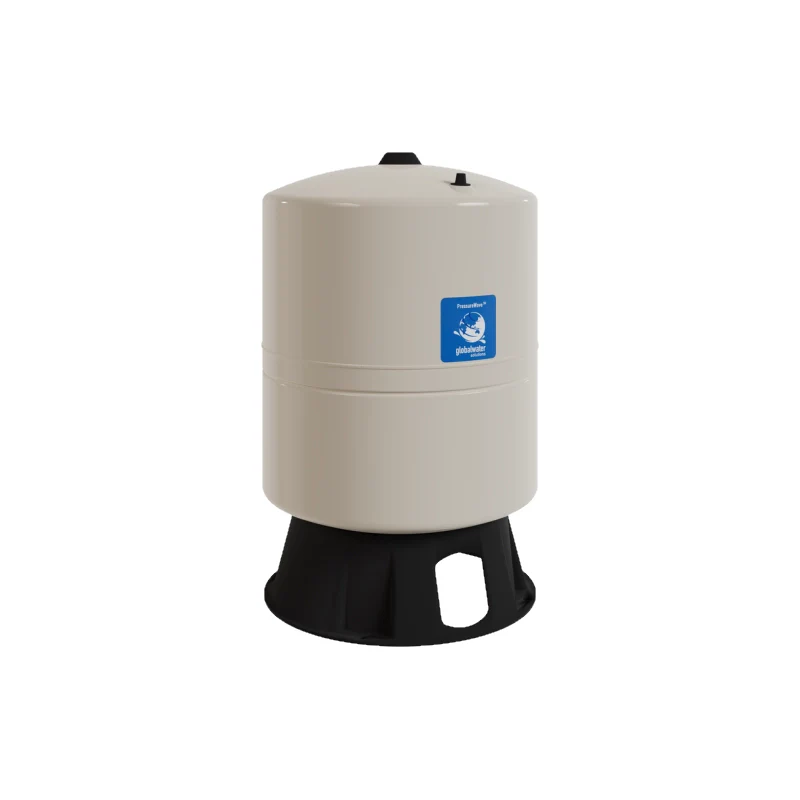
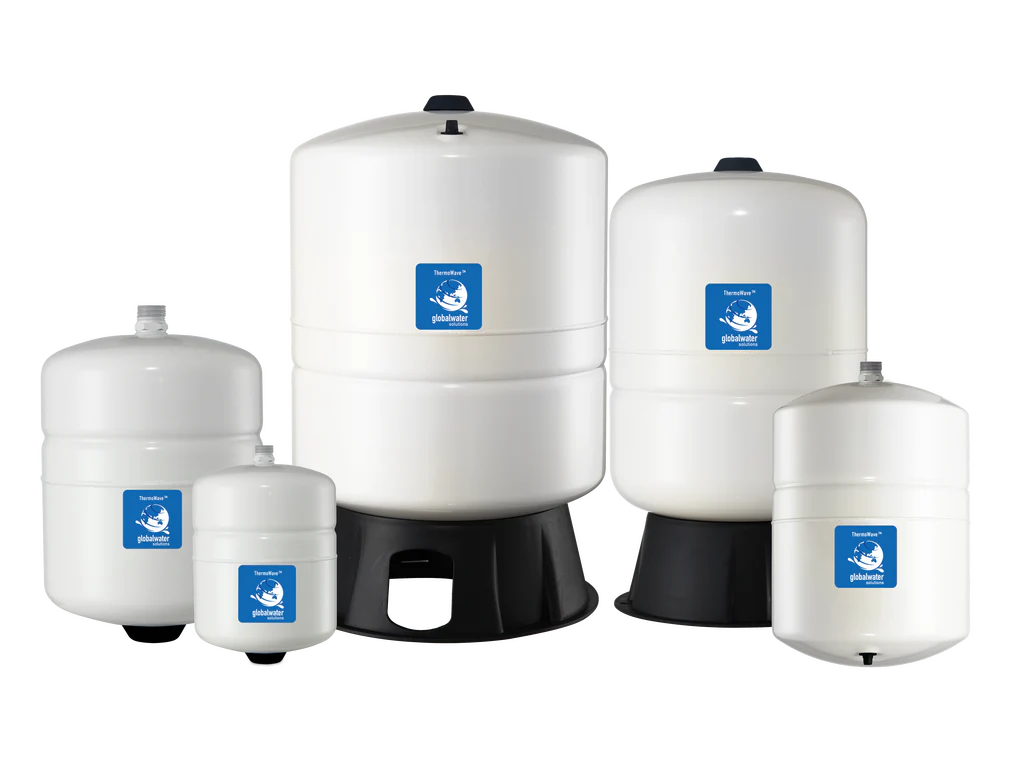
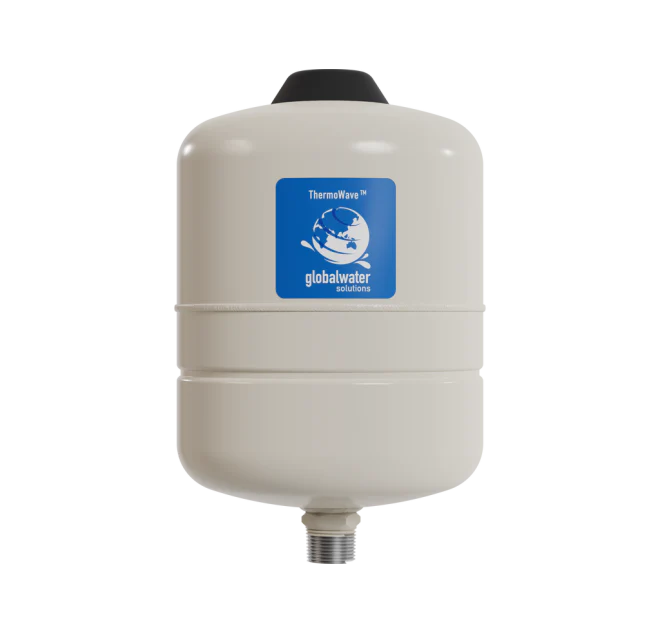
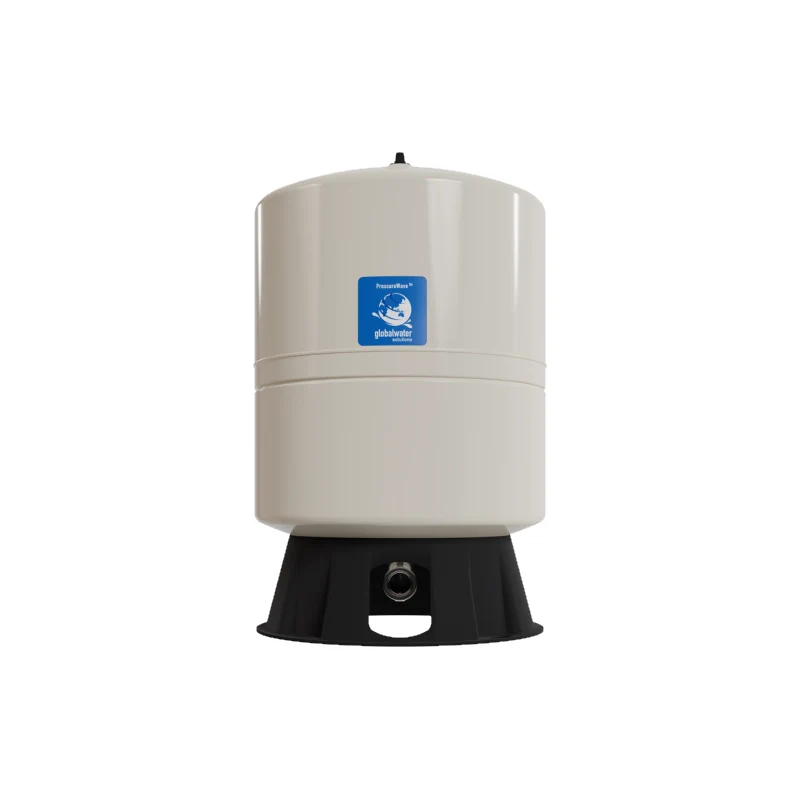
GWS ThermoWave TWB-60LV 60 Litre Vertical Potable Expansion Vessel
HomeStore

GWS ThermoWave TWB-60LV 60 Litre Vertical Potable Expansion Vessel

GWS ThermoWave TWB-60LV 60 Litre Vertical Potable Expansion Vessel

The Global Water Solutions ThermoWave TWB-60LV is a 60-litre WRAS-approved vertical potable water expansion vessel designed for thermal expansion management in large domestic and light commercial unvented hot water cylinder installations. As water is heated in a sealed system it expands — the ThermoWave vessel absorbs this expanded volume through a high-grade butyl diaphragm, preventing excess pressure from forcing water through the temperature and pressure relief valve and wasting energy. The vessel is factory pre-charged to 1.9 bar and connects via a ¾" BSPT male connection. Constructed with a virgin polypropylene liner, patented stainless-steel water connection providing a dual water/air seal, O-ring sealed air valve, and a corrosion-resistant carbon steel shell with dual-layer polyurethane coating. Maximum working pressure 10 bar; maximum temperature 90°C. WRAS approved for potable water, fully maintenance-free, and backed by a 5-year warranty.

ℹ Unvented Cylinders & Expansion Vessels — Why You Need One
Unvented hot water cylinders operate at mains pressure in a sealed system. When water is heated, it expands — a 60-litre cylinder of cold water at 10°C expands by approximately 1.5 litres when heated to 60°C. Without an expansion vessel, this expanded volume has nowhere to go and the system pressure rises until the temperature and pressure relief valve (T&P ERV) discharges water to waste. A correctly sized expansion vessel absorbs the expansion silently and maintains system pressure within limits, preventing continuous relief valve cycling, conserving water, and protecting system components. Building Regulations Part G and the Water Supply (Water Fittings) Regulations 1999 require an approved expansion vessel in every unvented hot water installation.
⚠ G3 Qualified Installation Required — Unvented hot water systems including expansion vessels must be installed, commissioned, and maintained by a G3 (Unvented Hot Water Storage) qualified competent person. The installation must be notified to Building Control. The vessel pre-charge pressure must be verified against the incoming mains pressure and cylinder working pressure before commissioning — an incorrectly charged vessel will not function correctly. Fixings are not included.
60 litres
Capacity
10 bar
Max pressure
90°C
Max temperature
WRAS
Potable approved
5 years
Warranty
Features & Benefits
✔ WRAS Approved — Safe for Potable Water
WRAS (Water Regulations Advisory Scheme) approval confirms that the ThermoWave vessel meets the requirements of the Water Supply (Water Fittings) Regulations 1999 for contact with drinking water. This is a mandatory requirement for expansion vessels installed on unvented hot water cylinders in the UK — only WRAS-approved vessels may legally be used in systems connected to the potable supply. The vessel's virgin polypropylene liner and butyl diaphragm are materials approved for continuous contact with drinking water, ensuring the potable supply remains safe and uncontaminated.
✔ High-Grade Butyl Diaphragm — Virgin Polypropylene Liner
The high-grade butyl diaphragm is flexible, durable, and impermeable to air — it maintains the air charge separation from the potable water side for the life of the vessel without gradual pressure loss. Butyl is one of the most resistant elastomers to water, heat, and oxidation, making it the material of choice for long-life expansion vessels in hot water applications up to 90°C. The virgin polypropylene liner on the water side provides a chemically inert, non-leaching surface in contact with the potable supply, with no risk of metallic contamination or taste transfer to the water.
✔ Patented Stainless Steel Connection — Dual Water/Air Seal
The patented stainless-steel water connection provides a dual water/air seal — the connection seals against both the water pressure from the system side and the air pressure from the gas side simultaneously. This design eliminates the risk of air migrating into the water circuit or water entering the gas chamber through the connection point — one of the most common failure modes on conventional expansion vessels with brass or plastic connections. The stainless-steel construction is also resistant to dezincification and chloride corrosion in hard and treated water systems.
✔ O-Ring Sealed Air Valve — Maintenance Free
The O-ring sealed air valve cap prevents air pressure loss from the gas side of the vessel over time — a common cause of expansion vessel failure on older designs where the Schrader-type valve gradually seeps air. The sealed cap design means the vessel is fully maintenance free in normal operation: the air charge is set at manufacture and maintained for the product's service life without periodic top-up. There is no rubber valve core to replace and no need for annual pressure checks on the gas side during routine cylinder servicing.
✔ Carbon Steel Shell — Dual-Layer Polyurethane Coating
The carbon steel shell is protected externally by a dual-layer polyurethane paint system over an epoxy primer — the same coating approach used in GWS's other pressure vessel ranges, providing hundreds of hours of UV and salt spray resistance in independent testing. This protects the vessel against surface rust in damp plant rooms, airing cupboards, and garage installations where humidity is higher than in a dry living space. The coating is applied to the fully formed vessel after manufacture, ensuring complete coverage including welds and joints.
✔ Pre-Charged 1.9 bar — ¾" BSPT Connection
Factory pre-charged to 1.9 bar (28 psi), matching the standard mains supply cold pressure in most UK residential installations. The ¾" connection is the most common size used for cylinder expansion vessel tails, allowing direct connection without reducers in the majority of unvented cylinder installations. As with all expansion vessels, the installer must verify the pre-charge pressure matches the static cold fill pressure of the system before commissioning — the vessel charge should equal the cold fill pressure, typically the mains static pressure at the vessel connection point. Re-charge via the Schrader valve on the air side if adjustment is needed.
Technical Specifications — ThermoWave TWB-60LV
Manufacturer / MPN Global Water Solutions (GWS) — TWB-60LV
Range ThermoWave™ — potable hot water expansion vessel
EAN 5055916801048
Capacity 60 litres
Orientation Vertical (LV)
Connection ¾" BSPT male
Factory Pre-Charge 1.9 bar (28 psi)
Max. Working Pressure 10 bar
Max. Working Temperature 90°C
Diaphragm Material High-grade butyl
Liner Material Virgin polypropylene (potable water safe)
Water Connection Material Stainless steel — patented dual water/air seal
Shell Material Carbon steel — dual-layer polyurethane over epoxy primer
Air Valve O-ring sealed — leak-free, maintenance free
Gross Weight (inc. packaging) approx. 11.6 kg
Approvals WRAS approved (potable water); CE/PED; ISO 9001
Warranty 5 years (GWS manufacturer's warranty)
Frequently Asked Questions
What size expansion vessel do I need for my unvented cylinder?
Expansion vessel sizing depends on four factors: the cylinder storage volume, the cold fill (mains) pressure, the maximum working pressure of the system, and the heating temperature. As a rough guide, a 60-litre expansion vessel is typically appropriate for unvented cylinders between approximately 180–300 litres with standard mains pressures of 2–4 bar. The G3-qualified installer is responsible for correctly sizing the vessel using the calculation in BS 7206 or the cylinder manufacturer's installation manual — an incorrectly sized vessel will either not absorb sufficient expansion (leading to repeated T&P valve discharge) or be unnecessarily large. GWS provides a tank sizing calculator on their website for guidance, but the final selection must be validated by the installer.
How do I set the correct pre-charge pressure?
The vessel is factory pre-charged to 1.9 bar, which suits most UK residential mains supplies at typical static pressures. To verify and adjust: 1) Isolate the vessel from the water system and release all water pressure from the system side of the vessel. 2) Check the gas-side pressure using a tyre gauge on the Schrader valve. 3) The correct pre-charge should equal the cold static fill pressure of the system at the vessel connection point — typically the mains static pressure at the vessel. If the mains pressure is 3 bar, set the vessel to 3 bar. If the vessel pre-charge is too low, it will be partly compressed by cold water and have insufficient expansion capacity; if too high, it will remain uninflated and the system will hit the expansion relief valve at lower temperatures. Re-charge using a bicycle pump or compressor via the Schrader valve if adjustment is needed.
Why does my expansion vessel need to be WRAS approved?
Under the Water Supply (Water Fittings) Regulations 1999 (England and Wales), any fitting, material, or device connected to the potable (drinking) water supply must be of a type approved or acceptable under the regulations. For expansion vessels, this means WRAS approval — which certifies that the vessel's materials (liner, diaphragm, connection) do not leach harmful substances into the drinking water, cannot contaminate the supply, and are physically suitable for the pressures and temperatures encountered. Using a non-WRAS expansion vessel on a potable system is a breach of the Water Fittings Regulations and could invalidate the installation's Building Control notification and the cylinder manufacturer's warranty. The TWB-60LV carries full WRAS approval.
How do I know if my expansion vessel has failed and needs replacing?
The most common signs of a failed expansion vessel are: (a) the T&P relief valve repeatedly discharges small amounts of water — the expanding water has nowhere to go because the vessel is waterlogged; (b) the system pressure rises rapidly when the cylinder heats up — visible on the pressure gauge on the unvented kit; (c) the vessel feels completely full of water — a healthy vessel should have some give when tapped; it should feel partly hollow. The most definitive test is to check the gas-side pressure when the system is cold and depressurised: if there is no air pressure at all (the gas has fully leaked or the diaphragm has ruptured), the vessel needs replacement. Annual servicing of the unvented system by a G3 competent person should include checking the expansion vessel condition.
Can this expansion vessel be used on a heating (non-potable) system?
The ThermoWave range is specifically designed and approved for potable water systems — the WRAS approval, polypropylene liner, and butyl diaphragm are specified for drinking water contact. It can be used on a heating circuit (central heating expansion), but a standard heating expansion vessel (typically red, with an EPDM diaphragm and no polypropylene liner) would be the more cost-effective and appropriate choice for a non-potable application. Heating system water contains inhibitor chemicals that are not present in a potable system, and the vessel does not need to be WRAS approved for heating use. Using a potable-rated vessel on a heating system is not harmful, but you would be paying for WRAS approval you do not need. For unvented cylinder installations, always use the WRAS-approved potable vessel.
$153.86
GWS ThermoWave TWB-60LV 60 Litre Vertical Potable Expansion Vessel
$153.86

More Images

GWS ThermoWave TWB-60LV 60 Litre Vertical Potable Expansion Vessel - Image 2
GWS ThermoWave TWB-60LV 60 Litre Vertical Potable Expansion Vessel - Image 3

GWS ThermoWave TWB-60LV 60 Litre Vertical Potable Expansion Vessel

The Global Water Solutions ThermoWave TWB-60LV is a 60-litre WRAS-approved vertical potable water expansion vessel designed for thermal expansion management in large domestic and light commercial unvented hot water cylinder installations. As water is heated in a sealed system it expands — the ThermoWave vessel absorbs this expanded volume through a high-grade butyl diaphragm, preventing excess pressure from forcing water through the temperature and pressure relief valve and wasting energy. The vessel is factory pre-charged to 1.9 bar and connects via a ¾" BSPT male connection. Constructed with a virgin polypropylene liner, patented stainless-steel water connection providing a dual water/air seal, O-ring sealed air valve, and a corrosion-resistant carbon steel shell with dual-layer polyurethane coating. Maximum working pressure 10 bar; maximum temperature 90°C. WRAS approved for potable water, fully maintenance-free, and backed by a 5-year warranty.

ℹ Unvented Cylinders & Expansion Vessels — Why You Need One
Unvented hot water cylinders operate at mains pressure in a sealed system. When water is heated, it expands — a 60-litre cylinder of cold water at 10°C expands by approximately 1.5 litres when heated to 60°C. Without an expansion vessel, this expanded volume has nowhere to go and the system pressure rises until the temperature and pressure relief valve (T&P ERV) discharges water to waste. A correctly sized expansion vessel absorbs the expansion silently and maintains system pressure within limits, preventing continuous relief valve cycling, conserving water, and protecting system components. Building Regulations Part G and the Water Supply (Water Fittings) Regulations 1999 require an approved expansion vessel in every unvented hot water installation.
⚠ G3 Qualified Installation Required — Unvented hot water systems including expansion vessels must be installed, commissioned, and maintained by a G3 (Unvented Hot Water Storage) qualified competent person. The installation must be notified to Building Control. The vessel pre-charge pressure must be verified against the incoming mains pressure and cylinder working pressure before commissioning — an incorrectly charged vessel will not function correctly. Fixings are not included.
60 litres
Capacity
10 bar
Max pressure
90°C
Max temperature
WRAS
Potable approved
5 years
Warranty
Features & Benefits
✔ WRAS Approved — Safe for Potable Water
WRAS (Water Regulations Advisory Scheme) approval confirms that the ThermoWave vessel meets the requirements of the Water Supply (Water Fittings) Regulations 1999 for contact with drinking water. This is a mandatory requirement for expansion vessels installed on unvented hot water cylinders in the UK — only WRAS-approved vessels may legally be used in systems connected to the potable supply. The vessel's virgin polypropylene liner and butyl diaphragm are materials approved for continuous contact with drinking water, ensuring the potable supply remains safe and uncontaminated.
✔ High-Grade Butyl Diaphragm — Virgin Polypropylene Liner
The high-grade butyl diaphragm is flexible, durable, and impermeable to air — it maintains the air charge separation from the potable water side for the life of the vessel without gradual pressure loss. Butyl is one of the most resistant elastomers to water, heat, and oxidation, making it the material of choice for long-life expansion vessels in hot water applications up to 90°C. The virgin polypropylene liner on the water side provides a chemically inert, non-leaching surface in contact with the potable supply, with no risk of metallic contamination or taste transfer to the water.
✔ Patented Stainless Steel Connection — Dual Water/Air Seal
The patented stainless-steel water connection provides a dual water/air seal — the connection seals against both the water pressure from the system side and the air pressure from the gas side simultaneously. This design eliminates the risk of air migrating into the water circuit or water entering the gas chamber through the connection point — one of the most common failure modes on conventional expansion vessels with brass or plastic connections. The stainless-steel construction is also resistant to dezincification and chloride corrosion in hard and treated water systems.
✔ O-Ring Sealed Air Valve — Maintenance Free
The O-ring sealed air valve cap prevents air pressure loss from the gas side of the vessel over time — a common cause of expansion vessel failure on older designs where the Schrader-type valve gradually seeps air. The sealed cap design means the vessel is fully maintenance free in normal operation: the air charge is set at manufacture and maintained for the product's service life without periodic top-up. There is no rubber valve core to replace and no need for annual pressure checks on the gas side during routine cylinder servicing.
✔ Carbon Steel Shell — Dual-Layer Polyurethane Coating
The carbon steel shell is protected externally by a dual-layer polyurethane paint system over an epoxy primer — the same coating approach used in GWS's other pressure vessel ranges, providing hundreds of hours of UV and salt spray resistance in independent testing. This protects the vessel against surface rust in damp plant rooms, airing cupboards, and garage installations where humidity is higher than in a dry living space. The coating is applied to the fully formed vessel after manufacture, ensuring complete coverage including welds and joints.
✔ Pre-Charged 1.9 bar — ¾" BSPT Connection
Factory pre-charged to 1.9 bar (28 psi), matching the standard mains supply cold pressure in most UK residential installations. The ¾" connection is the most common size used for cylinder expansion vessel tails, allowing direct connection without reducers in the majority of unvented cylinder installations. As with all expansion vessels, the installer must verify the pre-charge pressure matches the static cold fill pressure of the system before commissioning — the vessel charge should equal the cold fill pressure, typically the mains static pressure at the vessel connection point. Re-charge via the Schrader valve on the air side if adjustment is needed.
Technical Specifications — ThermoWave TWB-60LV
Manufacturer / MPN Global Water Solutions (GWS) — TWB-60LV
Range ThermoWave™ — potable hot water expansion vessel
EAN 5055916801048
Capacity 60 litres
Orientation Vertical (LV)
Connection ¾" BSPT male
Factory Pre-Charge 1.9 bar (28 psi)
Max. Working Pressure 10 bar
Max. Working Temperature 90°C
Diaphragm Material High-grade butyl
Liner Material Virgin polypropylene (potable water safe)
Water Connection Material Stainless steel — patented dual water/air seal
Shell Material Carbon steel — dual-layer polyurethane over epoxy primer
Air Valve O-ring sealed — leak-free, maintenance free
Gross Weight (inc. packaging) approx. 11.6 kg
Approvals WRAS approved (potable water); CE/PED; ISO 9001
Warranty 5 years (GWS manufacturer's warranty)
Frequently Asked Questions
What size expansion vessel do I need for my unvented cylinder?
Expansion vessel sizing depends on four factors: the cylinder storage volume, the cold fill (mains) pressure, the maximum working pressure of the system, and the heating temperature. As a rough guide, a 60-litre expansion vessel is typically appropriate for unvented cylinders between approximately 180–300 litres with standard mains pressures of 2–4 bar. The G3-qualified installer is responsible for correctly sizing the vessel using the calculation in BS 7206 or the cylinder manufacturer's installation manual — an incorrectly sized vessel will either not absorb sufficient expansion (leading to repeated T&P valve discharge) or be unnecessarily large. GWS provides a tank sizing calculator on their website for guidance, but the final selection must be validated by the installer.
How do I set the correct pre-charge pressure?
The vessel is factory pre-charged to 1.9 bar, which suits most UK residential mains supplies at typical static pressures. To verify and adjust: 1) Isolate the vessel from the water system and release all water pressure from the system side of the vessel. 2) Check the gas-side pressure using a tyre gauge on the Schrader valve. 3) The correct pre-charge should equal the cold static fill pressure of the system at the vessel connection point — typically the mains static pressure at the vessel. If the mains pressure is 3 bar, set the vessel to 3 bar. If the vessel pre-charge is too low, it will be partly compressed by cold water and have insufficient expansion capacity; if too high, it will remain uninflated and the system will hit the expansion relief valve at lower temperatures. Re-charge using a bicycle pump or compressor via the Schrader valve if adjustment is needed.
Why does my expansion vessel need to be WRAS approved?
Under the Water Supply (Water Fittings) Regulations 1999 (England and Wales), any fitting, material, or device connected to the potable (drinking) water supply must be of a type approved or acceptable under the regulations. For expansion vessels, this means WRAS approval — which certifies that the vessel's materials (liner, diaphragm, connection) do not leach harmful substances into the drinking water, cannot contaminate the supply, and are physically suitable for the pressures and temperatures encountered. Using a non-WRAS expansion vessel on a potable system is a breach of the Water Fittings Regulations and could invalidate the installation's Building Control notification and the cylinder manufacturer's warranty. The TWB-60LV carries full WRAS approval.
How do I know if my expansion vessel has failed and needs replacing?
The most common signs of a failed expansion vessel are: (a) the T&P relief valve repeatedly discharges small amounts of water — the expanding water has nowhere to go because the vessel is waterlogged; (b) the system pressure rises rapidly when the cylinder heats up — visible on the pressure gauge on the unvented kit; (c) the vessel feels completely full of water — a healthy vessel should have some give when tapped; it should feel partly hollow. The most definitive test is to check the gas-side pressure when the system is cold and depressurised: if there is no air pressure at all (the gas has fully leaked or the diaphragm has ruptured), the vessel needs replacement. Annual servicing of the unvented system by a G3 competent person should include checking the expansion vessel condition.
Can this expansion vessel be used on a heating (non-potable) system?
The ThermoWave range is specifically designed and approved for potable water systems — the WRAS approval, polypropylene liner, and butyl diaphragm are specified for drinking water contact. It can be used on a heating circuit (central heating expansion), but a standard heating expansion vessel (typically red, with an EPDM diaphragm and no polypropylene liner) would be the more cost-effective and appropriate choice for a non-potable application. Heating system water contains inhibitor chemicals that are not present in a potable system, and the vessel does not need to be WRAS approved for heating use. Using a potable-rated vessel on a heating system is not harmful, but you would be paying for WRAS approval you do not need. For unvented cylinder installations, always use the WRAS-approved potable vessel.

Product Information

Shipping & Returns

Description

The Global Water Solutions ThermoWave TWB-60LV is a 60-litre WRAS-approved vertical potable water expansion vessel designed for thermal expansion management in large domestic and light commercial unvented hot water cylinder installations. As water is heated in a sealed system it expands — the ThermoWave vessel absorbs this expanded volume through a high-grade butyl diaphragm, preventing excess pressure from forcing water through the temperature and pressure relief valve and wasting energy. The vessel is factory pre-charged to 1.9 bar and connects via a ¾" BSPT male connection. Constructed with a virgin polypropylene liner, patented stainless-steel water connection providing a dual water/air seal, O-ring sealed air valve, and a corrosion-resistant carbon steel shell with dual-layer polyurethane coating. Maximum working pressure 10 bar; maximum temperature 90°C. WRAS approved for potable water, fully maintenance-free, and backed by a 5-year warranty.

ℹ Unvented Cylinders & Expansion Vessels — Why You Need One
Unvented hot water cylinders operate at mains pressure in a sealed system. When water is heated, it expands — a 60-litre cylinder of cold water at 10°C expands by approximately 1.5 litres when heated to 60°C. Without an expansion vessel, this expanded volume has nowhere to go and the system pressure rises until the temperature and pressure relief valve (T&P ERV) discharges water to waste. A correctly sized expansion vessel absorbs the expansion silently and maintains system pressure within limits, preventing continuous relief valve cycling, conserving water, and protecting system components. Building Regulations Part G and the Water Supply (Water Fittings) Regulations 1999 require an approved expansion vessel in every unvented hot water installation.
⚠ G3 Qualified Installation Required — Unvented hot water systems including expansion vessels must be installed, commissioned, and maintained by a G3 (Unvented Hot Water Storage) qualified competent person. The installation must be notified to Building Control. The vessel pre-charge pressure must be verified against the incoming mains pressure and cylinder working pressure before commissioning — an incorrectly charged vessel will not function correctly. Fixings are not included.
60 litres
Capacity
10 bar
Max pressure
90°C
Max temperature
WRAS
Potable approved
5 years
Warranty
Features & Benefits
✔ WRAS Approved — Safe for Potable Water
WRAS (Water Regulations Advisory Scheme) approval confirms that the ThermoWave vessel meets the requirements of the Water Supply (Water Fittings) Regulations 1999 for contact with drinking water. This is a mandatory requirement for expansion vessels installed on unvented hot water cylinders in the UK — only WRAS-approved vessels may legally be used in systems connected to the potable supply. The vessel's virgin polypropylene liner and butyl diaphragm are materials approved for continuous contact with drinking water, ensuring the potable supply remains safe and uncontaminated.
✔ High-Grade Butyl Diaphragm — Virgin Polypropylene Liner
The high-grade butyl diaphragm is flexible, durable, and impermeable to air — it maintains the air charge separation from the potable water side for the life of the vessel without gradual pressure loss. Butyl is one of the most resistant elastomers to water, heat, and oxidation, making it the material of choice for long-life expansion vessels in hot water applications up to 90°C. The virgin polypropylene liner on the water side provides a chemically inert, non-leaching surface in contact with the potable supply, with no risk of metallic contamination or taste transfer to the water.
✔ Patented Stainless Steel Connection — Dual Water/Air Seal
The patented stainless-steel water connection provides a dual water/air seal — the connection seals against both the water pressure from the system side and the air pressure from the gas side simultaneously. This design eliminates the risk of air migrating into the water circuit or water entering the gas chamber through the connection point — one of the most common failure modes on conventional expansion vessels with brass or plastic connections. The stainless-steel construction is also resistant to dezincification and chloride corrosion in hard and treated water systems.
✔ O-Ring Sealed Air Valve — Maintenance Free
The O-ring sealed air valve cap prevents air pressure loss from the gas side of the vessel over time — a common cause of expansion vessel failure on older designs where the Schrader-type valve gradually seeps air. The sealed cap design means the vessel is fully maintenance free in normal operation: the air charge is set at manufacture and maintained for the product's service life without periodic top-up. There is no rubber valve core to replace and no need for annual pressure checks on the gas side during routine cylinder servicing.
✔ Carbon Steel Shell — Dual-Layer Polyurethane Coating
The carbon steel shell is protected externally by a dual-layer polyurethane paint system over an epoxy primer — the same coating approach used in GWS's other pressure vessel ranges, providing hundreds of hours of UV and salt spray resistance in independent testing. This protects the vessel against surface rust in damp plant rooms, airing cupboards, and garage installations where humidity is higher than in a dry living space. The coating is applied to the fully formed vessel after manufacture, ensuring complete coverage including welds and joints.
✔ Pre-Charged 1.9 bar — ¾" BSPT Connection
Factory pre-charged to 1.9 bar (28 psi), matching the standard mains supply cold pressure in most UK residential installations. The ¾" connection is the most common size used for cylinder expansion vessel tails, allowing direct connection without reducers in the majority of unvented cylinder installations. As with all expansion vessels, the installer must verify the pre-charge pressure matches the static cold fill pressure of the system before commissioning — the vessel charge should equal the cold fill pressure, typically the mains static pressure at the vessel connection point. Re-charge via the Schrader valve on the air side if adjustment is needed.
Technical Specifications — ThermoWave TWB-60LV
Manufacturer / MPN Global Water Solutions (GWS) — TWB-60LV
Range ThermoWave™ — potable hot water expansion vessel
EAN 5055916801048
Capacity 60 litres
Orientation Vertical (LV)
Connection ¾" BSPT male
Factory Pre-Charge 1.9 bar (28 psi)
Max. Working Pressure 10 bar
Max. Working Temperature 90°C
Diaphragm Material High-grade butyl
Liner Material Virgin polypropylene (potable water safe)
Water Connection Material Stainless steel — patented dual water/air seal
Shell Material Carbon steel — dual-layer polyurethane over epoxy primer
Air Valve O-ring sealed — leak-free, maintenance free
Gross Weight (inc. packaging) approx. 11.6 kg
Approvals WRAS approved (potable water); CE/PED; ISO 9001
Warranty 5 years (GWS manufacturer's warranty)
Frequently Asked Questions
What size expansion vessel do I need for my unvented cylinder?
Expansion vessel sizing depends on four factors: the cylinder storage volume, the cold fill (mains) pressure, the maximum working pressure of the system, and the heating temperature. As a rough guide, a 60-litre expansion vessel is typically appropriate for unvented cylinders between approximately 180–300 litres with standard mains pressures of 2–4 bar. The G3-qualified installer is responsible for correctly sizing the vessel using the calculation in BS 7206 or the cylinder manufacturer's installation manual — an incorrectly sized vessel will either not absorb sufficient expansion (leading to repeated T&P valve discharge) or be unnecessarily large. GWS provides a tank sizing calculator on their website for guidance, but the final selection must be validated by the installer.
How do I set the correct pre-charge pressure?
The vessel is factory pre-charged to 1.9 bar, which suits most UK residential mains supplies at typical static pressures. To verify and adjust: 1) Isolate the vessel from the water system and release all water pressure from the system side of the vessel. 2) Check the gas-side pressure using a tyre gauge on the Schrader valve. 3) The correct pre-charge should equal the cold static fill pressure of the system at the vessel connection point — typically the mains static pressure at the vessel. If the mains pressure is 3 bar, set the vessel to 3 bar. If the vessel pre-charge is too low, it will be partly compressed by cold water and have insufficient expansion capacity; if too high, it will remain uninflated and the system will hit the expansion relief valve at lower temperatures. Re-charge using a bicycle pump or compressor via the Schrader valve if adjustment is needed.
Why does my expansion vessel need to be WRAS approved?
Under the Water Supply (Water Fittings) Regulations 1999 (England and Wales), any fitting, material, or device connected to the potable (drinking) water supply must be of a type approved or acceptable under the regulations. For expansion vessels, this means WRAS approval — which certifies that the vessel's materials (liner, diaphragm, connection) do not leach harmful substances into the drinking water, cannot contaminate the supply, and are physically suitable for the pressures and temperatures encountered. Using a non-WRAS expansion vessel on a potable system is a breach of the Water Fittings Regulations and could invalidate the installation's Building Control notification and the cylinder manufacturer's warranty. The TWB-60LV carries full WRAS approval.
How do I know if my expansion vessel has failed and needs replacing?
The most common signs of a failed expansion vessel are: (a) the T&P relief valve repeatedly discharges small amounts of water — the expanding water has nowhere to go because the vessel is waterlogged; (b) the system pressure rises rapidly when the cylinder heats up — visible on the pressure gauge on the unvented kit; (c) the vessel feels completely full of water — a healthy vessel should have some give when tapped; it should feel partly hollow. The most definitive test is to check the gas-side pressure when the system is cold and depressurised: if there is no air pressure at all (the gas has fully leaked or the diaphragm has ruptured), the vessel needs replacement. Annual servicing of the unvented system by a G3 competent person should include checking the expansion vessel condition.
Can this expansion vessel be used on a heating (non-potable) system?
The ThermoWave range is specifically designed and approved for potable water systems — the WRAS approval, polypropylene liner, and butyl diaphragm are specified for drinking water contact. It can be used on a heating circuit (central heating expansion), but a standard heating expansion vessel (typically red, with an EPDM diaphragm and no polypropylene liner) would be the more cost-effective and appropriate choice for a non-potable application. Heating system water contains inhibitor chemicals that are not present in a potable system, and the vessel does not need to be WRAS approved for heating use. Using a potable-rated vessel on a heating system is not harmful, but you would be paying for WRAS approval you do not need. For unvented cylinder installations, always use the WRAS-approved potable vessel.